
How to Remove the Stone from an Avocado (Two Steps, No Mess)
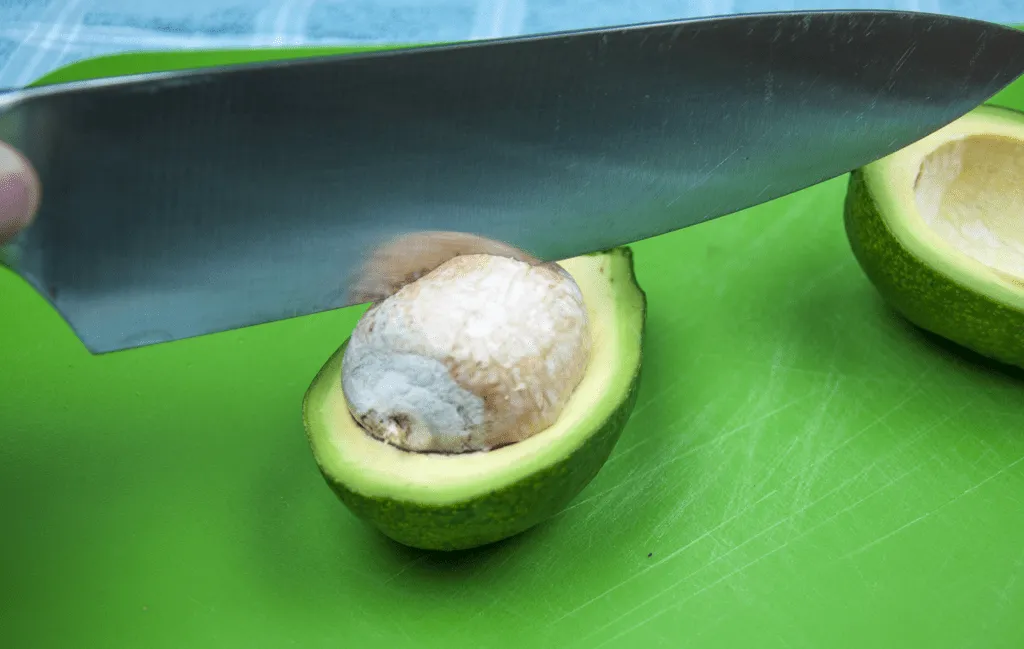
Table of Contents
Removing the stone from an avocado cleanly — without gouging half the flesh out with a spoon, or leaving bits of shell embedded in the fruit — is one of those small kitchen skills that takes about thirty seconds to learn and then becomes completely automatic. I use it every time, and I have never had a knife-related avocado injury, despite the dramatic name “avocado hand” that surgeons apparently use for this particular A&E presentation.
The technique is two steps. That is genuinely all it takes.
Updated June 2026 — by Steve Deacon
Why does avocado stone removal go wrong?
Most people either try to spoon the stone out (which takes half the flesh with it) or they hack at it repeatedly with a knife until something shifts. The spoon method leaves a ragged crater. The repeated hacking is how people cut themselves — the stone is dense and round, so the knife glances off unpredictably.
The correct method uses one controlled chop, then a twist. The knife goes in once, finds its grip on the stone, and the stone rotates out cleanly. You end up with a perfect avocado half, clean flesh, and all your fingers intact.
How to remove an avocado stone safely — step by step
Step 1: Halve the avocado
Take a large, sharp kitchen knife and cut the avocado lengthways, starting at the narrow top end and running the blade all the way around the stone. You will feel the knife hit the stone — keep the blade against it and work around rather than forcing through. Once you have run the blade all the way round, hold both halves and twist them in opposite directions. They will separate cleanly.
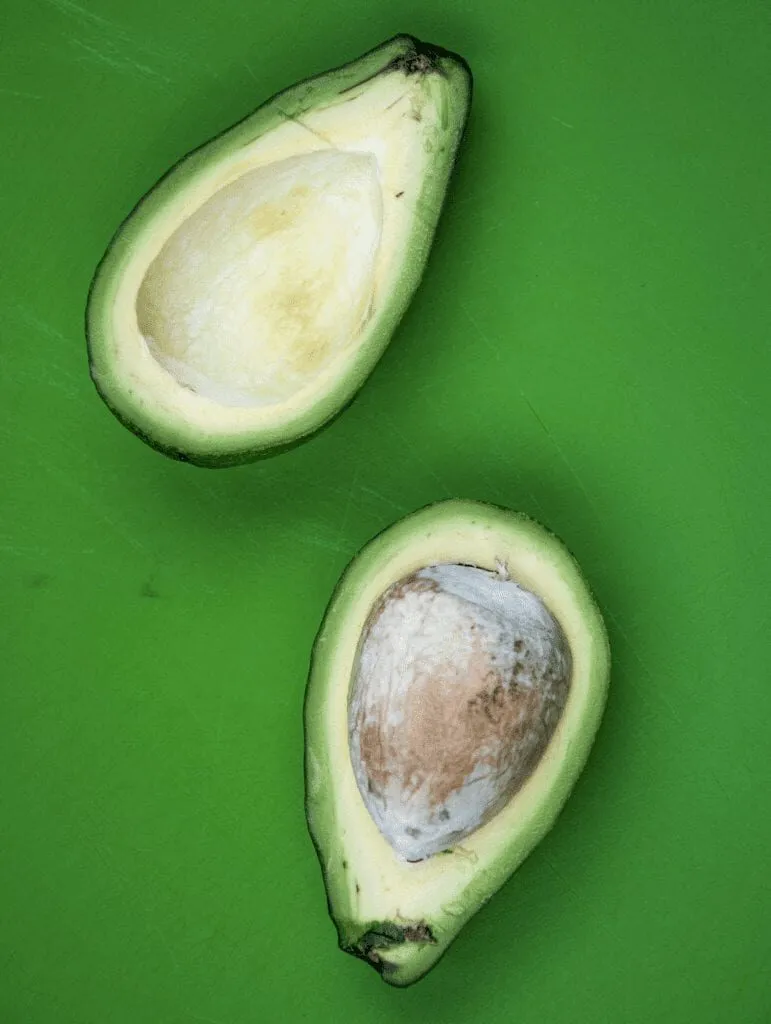
The stone will be sitting in one of the halves. The other half is clean and ready to use — scoop, slice, or dice it directly from the skin.
Step 2: Remove the stone
Hold the avocado half with the stone in your non-dominant hand, palm up, and place a folded tea towel underneath it for grip. Take your knife and, with one firm controlled chop, strike the stone squarely in the centre. Not a hack — a deliberate downward motion, aimed at the middle of the stone. The knife should bite in about 1 cm and stick.
Now hold the avocado half firmly with one hand and the knife handle with the other. Twist both in opposite directions simultaneously. The stone will lever out of the flesh. Hold the knife over a bin or compost bowl and tap the spine of the blade on the edge to knock the stone free. Done.
The key word here is “controlled.” This is not about force — it is about accuracy. A sharp knife aimed at the centre of the stone will embed itself with a light chop. If your knife is dull, the stone will deflect the blade. Sharp knife, confident chop, then twist.
Is the knife method actually safe?
Yes, provided you do it correctly. The dangerous version is gripping the avocado in your palm with no support and hacking repeatedly. The safe version is the one above: avocado on a flat surface or held with a cloth, single deliberate chop into the stone centre, then twist. I have done this hundreds of times. The important safety rule is never to hold the avocado loosely in a bare hand while swinging a knife at it.
If you are genuinely uncomfortable using a knife on a rounded stone, there is an alternative: once the stone is exposed, push the tip of a spoon under the edge of the stone and lever it out from underneath. It takes a bit more effort and sometimes drags a little flesh, but it works and involves no blade at all.
What to do with an avocado once the stone is out
If you are using the avocado immediately, scoop the flesh out in one piece with a large spoon, running it as close to the skin as possible — you get more flesh and a cleaner half that holds its shape better for slicing. If you are not using it straight away, leave it in the skin, press cling film directly onto the cut surface, and refrigerate. The stone-free half will stay green for up to 24 hours this way. The flesh browns where it meets air, so the tighter the seal, the better.
Avocado works well as a base for bruschetta toppings — mash it roughly with lemon juice, salt, and black pepper and spread it on toasted sourdough. Or use it as a creamy element in a salad, or as a side alongside seafood dishes where something rich and cool balances the heat.
Frequently asked questions about preparing avocado
How do you know when an avocado is ripe enough to prepare?
Gentle pressure near the stem end. A ripe avocado gives slightly — not mushy, but yielding. Firm means unripe; very soft or with large soft patches means overripe. The skin colour is less reliable — some varieties stay green even when ripe. Pressure is the test.
Can you prepare an avocado in advance?
Yes, but oxidation starts immediately once the flesh is exposed. Coat the cut surface with lemon or lime juice, press cling film directly onto the flesh (no air gap), and refrigerate. Use within 24 hours. The stone-in-bowl trick helps a little but the acid and airtight wrap does most of the work.
How do you ripen an avocado quickly?
Wrap it in a sheet of newspaper or place it in a paper bag with a banana. The ethylene gas the banana releases speeds ripening. At room temperature this usually takes 24 to 48 hours. Do not put an unripe avocado in the fridge — cold temperatures halt ripening entirely.
What is the best way to slice avocado cleanly?
Remove the stone, then score the flesh (still inside the skin) into slices or cubes with a small knife, then scoop out with a large spoon. You get clean, even pieces without having to handle the soft flesh much. For sliced avocado on toast, this method gives you clean strips every time.
Find more simple kitchen techniques on The Cookery Techniques Larder.

You might also love
More in Kitchen Tips & How-To
Use Texas Olive Oil To Stay Cool & Healthy This Summer
Updated: July 12, 2026The last thing you want to do when the summer sun is out is spend countless hours next to…
Read
Healthy Recipes For Weight Loss Foods
Updated: July 12, 2026 Introduction Maintaining a healthy weight is essential for overall well-being and can help prevent a variety of health…
Read
The Importance of Properly Storing Leftovers: Tips for Safe and Delicious Meals
Updated: July 12, 2026 From an unexpected second helping of mashed potatoes to the leftovers from a large family gathering, many have…
Read
5 Secret Tips on How to Make a Cooking YouTube Video
Updated: July 12, 2026 Make a Cooking YouTube Video A lot of people have sharpened their culinary skills during the pandemic. As…
Read
Top 10 Foods That Will Help You Build Lean Muscle
Updated: July 12, 2026 Both physical activity and nutrition play a significant role if you want to achieve success while gaining lean…
Read
All Things You Wanted to Know About Chaga Mushroom
Updated: July 12, 2026 Chaga mushroom is a type of fungus commonly used as a medicine to boost immunity and improve overall…
Read
Hello ,
I saw your tweets and thought I will check your website. Have to say it looks really nice!
I’m also interested in this topic + have recently started my journey as young entrepreneur.
I’m also looking for the ways on how to promote my website. I have tried AdSense and Facebok Ads, however it is getting very expensive. Was thinking about starting using analytics. Do you recommend it?
Can you recommend something what works best for you?
I also want to improve SEO of my website. Would appreciate, if you can have a quick look at my website and give me an advice what I should improve: https://janzac.com/
(Recently I have added a new page about Rockwall Investments and the way how normal people can make money with this company.)
I wanted to subscribe to your newsletter, but I couldn’t find it. Do you have it?
Hope to hear from you soon.
P.S.
Maybe I will add link to your website on my website and you will add link to my website on your website? It will improve SEO of our websites, right? What do you think?
Regards
Jan Zac
Hi Jan Zac,
Many thanks for the note. I’m intrigued. I know we are not connected on twitter so how did you see my tweets? Through my hash tags? I’ve been trying to expand on twitter so any advice would be great.
Apologies but I can’t comment on analytics yet. I use it but only to see who is on line. My focus out present is to get a good number of quality posts out there and generate traffic. Then I’ll focus on the analytics.
Regards the SEO, I have looked at your site but I’m no expert on this type of blog. What I would propose is adding the Yoast plugin if you have access. It’s free and the tutorials are great for learning about SEO and the plug helps this with a great traffic light system.
Regards the newsletter, you should be able to subscribe half way down the home page. Please have a look and let me know.
Finally, re links to other sites, many thanks for the offer but as we have quite different subject matters I think I’d like to leave it for now.
Good luck and keep in touch,
Steve.