How to Design a Pantry (Even in a Small Kitchen)
Table of Contents
This post may contain affiliate links. As an Amazon Associate we earn from qualifying purchases.
A pantry is a system for keeping the ingredients you cook with where you can see them and reach them. Once you think of it that way, almost any kitchen can have one, including the narrow galley in a terrace and the L-shape with a single run of wall units.
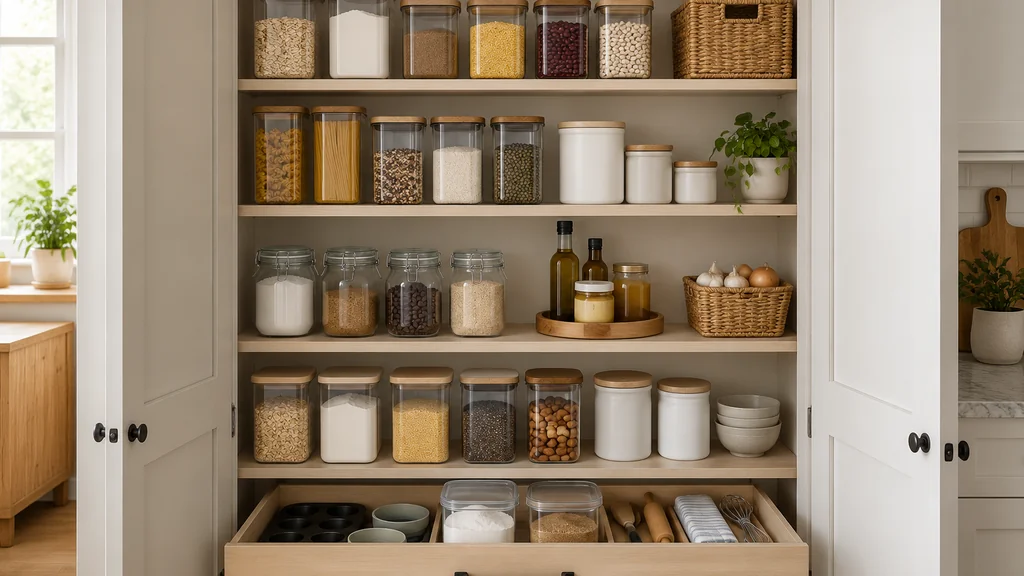
This guide covers how to work out what you actually need to store, the four pantry formats that suit different kitchens, and how to arrange the inside so you stop buying a third jar of smoked paprika because the first two were hiding at the back.
Start with what you cook, not what you own
Most pantries are designed for the contents of the cupboards at the time of planning, which is why they fill up with things nobody uses. Design around your cooking instead.
Weeknight staples. Pasta, rice, tinned tomatoes, stock, oils. These need the easiest shelf, roughly between hip and eye level.
Baking. Flours, sugars, raising agents, chocolate. Heavy and bought in bulk, so they belong low down, ideally in a drawer you can lift from rather than a shelf you have to drag them off.
Spices and small jars. The things you lose. They need shallow storage, one jar deep, so nothing can sit behind anything else.
Tall and awkward. Cereal boxes, bottles, the stand mixer. These dictate shelf heights, so measure them before you decide anything.
Spend a week noticing what you reach for. Anything you have not touched in six months does not need prime position, and probably does not need to be in the pantry at all.
Four pantry formats, from a full room to a single cupboard
The right format depends less on how much space you have than on how it is shaped. A long wall and a spare corner want different solutions.
The walk-in pantry
If you have a utility room, an under-stairs void or a redundant chimney breast beside the kitchen, a walk-in can be as small as a metre deep. Shallow shelving on three sides beats deep shelving on one, because deep shelves hide things. Keep the floor clear for the big items you lift out, such as the mixer, the bread bin and the sack of rice.
The built-in larder unit
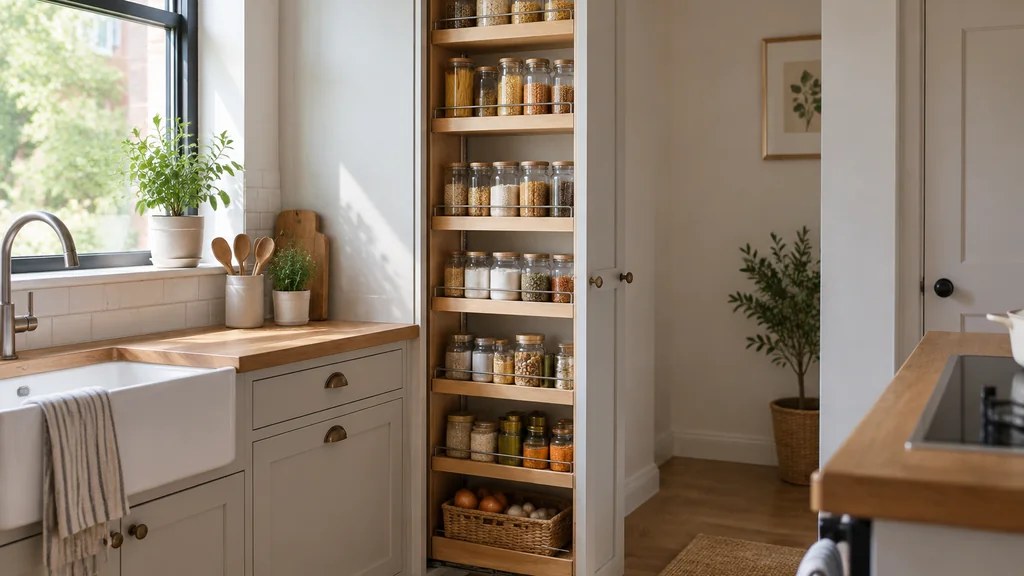
The most useful option for most kitchens, and the one to consider if you are planning a new kitchen from scratch. A full-height larder cabinet with internal drawers, pull-out shelves and door racks puts an entire pantry behind a single door that matches the rest of the room. Pull-out versions bring the whole contents out to you, so you see every shelf front-on instead of peering into the dark. Corner larders use the dead space where two runs of units meet, which is usually the least used cupboard in the kitchen. For a walk through the main formats, from pull-out larders and corner units to a full butler’s pantry, this guide to the best kitchen storage solutions from Smile Kitchens shows each one in a real kitchen.
The pantry wall
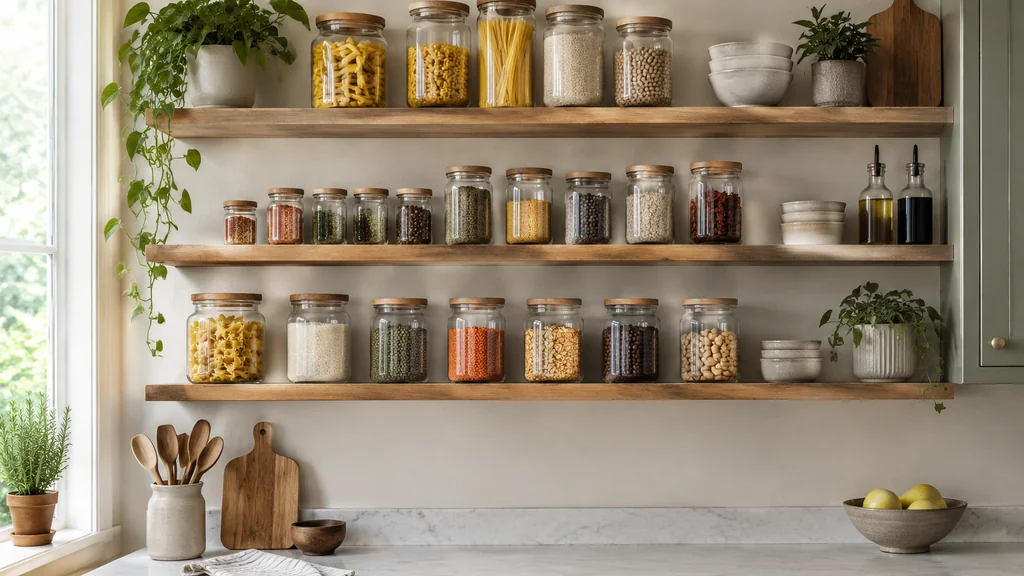
Where there is no room for a full-height unit, a wall of shallow open shelving, 150mm to 200mm deep, holds a surprising amount. Everything is one jar deep, so nothing hides. It works best on a wall that is not above a worktop, so steam and grease from the hob stay away from the open jars.
The pantry cupboard
One existing base or wall cupboard, emptied and refitted. Add a second shelf to halve the wasted height, a tiered riser so you can see the back row, and a rack on the inside of the door for spices and small packets. It is plain, and it is the pantry most people can have this weekend.
Designing the inside
The outside of a pantry is a door. The inside is where the design happens.
Shelf depth
Most kitchen cupboards are around 300mm deep on the wall and 560mm deep at the base. Both are too deep for pantry goods. Anything beyond about 300mm becomes a place where tins go to be forgotten. If you are fitting a larder, ask for pull-out shelves or internal drawers in the base section so the full depth is usable. If you are shelving a wall or a walk-in, keep the shelves shallow and add more of them.
Shelf height
Fixed shelves at equal spacing waste space. Measure your tallest regular items (a bottle of oil, a cereal box, a bag of flour standing up) and set the shelf heights to suit, with the tallest at the bottom. Adjustable shelving costs little more and lets you change the plan when your cooking changes.
Drawers beat shelves at low level
Below the knee, a drawer is always better than a shelf. You look down into it and see everything at once, and you lift heavy bags up and never drag them out. If a larder unit has the option of drawers in the lower section, take it.
The door is storage too
A rack on the inside of a larder door is the best spice storage in the kitchen. It is shallow, at eye level and visible every time you open the door. It also suits sachets, stock cubes and the small packets that otherwise fall down the back.
Lighting
A pantry without light is a cupboard. A single LED strip on the underside of each shelf, or a motion-sensor light inside a larder, makes a bigger difference than any organiser you can buy.
Small kitchen pantry ideas that actually work
Go up, not out. A 300mm wide full-height pull-out larder holds more than two standard base cupboards and takes less floor space than a bin.
Use the corner. A corner larder with rotating or swing-out shelving turns the kitchen’s worst cupboard into its best.
Steal from the hallway. A pantry does not have to be in the kitchen. Shallow shelving in an adjoining hall or utility room, behind a door, keeps overflow out of the cooking space.
Decant the bulk, store the rest. Keep a small container of flour, sugar and rice in the pantry and the bulk bags somewhere less valuable.
One in, one out. A small pantry stays usable only if it is edited. If a new jar goes in, something finished or forgotten comes out.
Arranging a pantry so it stays organised
Group by how you cook rather than by type. A “weeknight pasta” zone with pasta, tinned tomatoes, oil, garlic and parmesan in one place saves more time than a tidy row of every tin you own. Put breakfast together, baking together, and the things the children reach for on the lowest shelf they can see into.
Clear containers only for the things you decant and use often. Labelled opaque containers hide what is running low. And leave a gap. A pantry packed to the edges on the day it is finished has nowhere to go but back to chaos.
Frequently asked questions
How small can a pantry be?
A pantry can be as small as a single 300mm wide pull-out larder unit. In plain terms, if you have the width of a tall bin, you have the width of a pantry that holds a week’s dry goods one shelf deep.
Should a pantry have deep or shallow shelves?
Shallow shelves, around 150mm to 300mm, are better for pantry storage because everything stays visible. Deeper shelves work only when they pull out or are fitted as drawers.
What is the difference between a larder and a pantry?
Historically a larder was a cool room for perishables and a pantry stored bread and dry goods. Today the words are used interchangeably, and in UK kitchen design a larder usually means a full-height storage cabinet with internal shelving and drawers.
Where should a pantry go in a kitchen?
A pantry belongs close to the main prep area and away from the hob, so ingredients are a step away but open jars are not sitting in steam and grease.