
Fresh Fig and Almond Galette: A Rustic Pudding That Never Disappoints
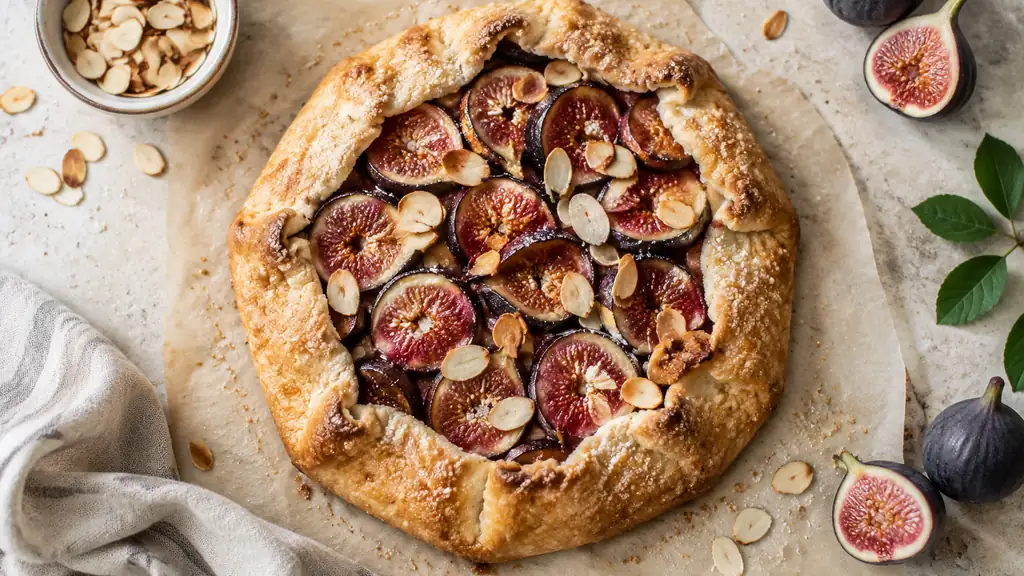
Table of Contents
This rustic fig galette is what happens when you fancy a proper pudding but can’t be faffed with a tart tin. A buttery, flaky pastry folded roughly around sweet figs, a bit of honey and a scatter of almonds. It looks like you’ve made an effort. You haven’t, really. That’s the beauty of it.
Jen calls it “the lazy tart” and she’s not wrong. I call it dinner-party insurance. Either way, it works.
The Yum Yum Club · Kitchen Tested Recipe
Rustic Fig Galette Recipe | The Yum Yum Club
Prep: 30 mins · Cook: 40 mins · Total: 1 hr 10 mins
Ingredients
8 servingsNutrition Facts
Per Serving: 1 serving
Nutrition values are estimates calculated per serving from the ingredient list.
Instructions
-
1
Whisk the flour, almond flour, sugar, and salt in a bowl. Cut in the cold butter until the mixture has coarse, pea-sized pieces.
-
2
Drizzle in ice water a little at a time, mixing just until the dough holds together. Shape into a disk, wrap, and chill for at least 30 minutes.
-
3
Heat the oven to 200°C (400°F). Toss the fig slices with brown sugar, honey, vanilla, cinnamon, and cornstarch.
-
4
Roll the chilled dough into a roughly 30 cm (12-inch) circle on a sheet of baking parchment. Arrange the figs in the center, leaving a 5 cm (2-inch) border.
-
5
Fold the pastry border over the outer edge of the filling, pleating as needed. Brush the crust with milk or beaten egg if desired, then scatter sliced almonds over the figs and crust.
-
6
Bake for 35–40 minutes, until the pastry is deeply golden and the filling is bubbling. Cool for at least 15 minutes before slicing.
Kitchen Notes & Tips
Use ripe but firm figs so they keep their shape. A little juice may escape during baking; the cornstarch helps thicken the filling. Make ahead: Make and chill the dough up to 2 days ahead, or freeze it for up to 2 months. Thaw overnight in the refrigerator before rolling.
Storage & Reheating
Storage: Cover and refrigerate leftovers for up to 3 days.
Reheating: Warm slices in a 160°C (325°F) oven for 8–10 minutes, or until heated through.
Equipment
- mixing bowl
- pastry cutter or fork
- rolling pin
- baking parchment
- baking sheet
- oven
Substitutions & Variations
Why This Galette Works
Now, I didn’t grow up eating galettes. I’m not sure I could even pronounce it until about five years ago. But Jen came back from the market with a glut of figs and there we were, a bag of fruit going soft on the counter and me flicking through a French cookbook wondering what I’d let myself in for. Turns out the word comes from the French galet, a pebble, and the flat, free-form shape is a Brittany classic. So it’s been around a while. Longer than my fig problem, anyway.
Pastry is the whole game here. Get that right and the rest is just arranging fruit and hoping for the best. I use a mix of plain flour and a little almond flour, which keeps things short and gives a faint nutty background that figs seem to like.
The butter must be cold. Properly cold. If it’s soft, you’ll end up with something that resembles a biscuit, and nobody wants that. I cube it and stick it back in the fridge while I weigh out the dry stuff. Sounds fussy. Takes two minutes.
Figs are forgiving. Unlike apples, which need cooking down, or berries, which turn to soup, figs hold their shape and go jammy at the edges. Ripe but firm is what you’re after. If they’re squishy, eat them over the sink and buy more.
Now, the cornstarch (cornflour, if you’re in the UK). This is the bit people skip and then wonder why their galette has a puddle. A spoonful tossed through the fruit thickens the juices just enough. Don’t leave it out.
One thing I’ll say before we go further. I once shoved a warm galette straight in the fridge because I was in a rush, and the pastry went soggy as anything. Learn from my mistakes. Let it cool properly first.
How to Make It, Step by Step
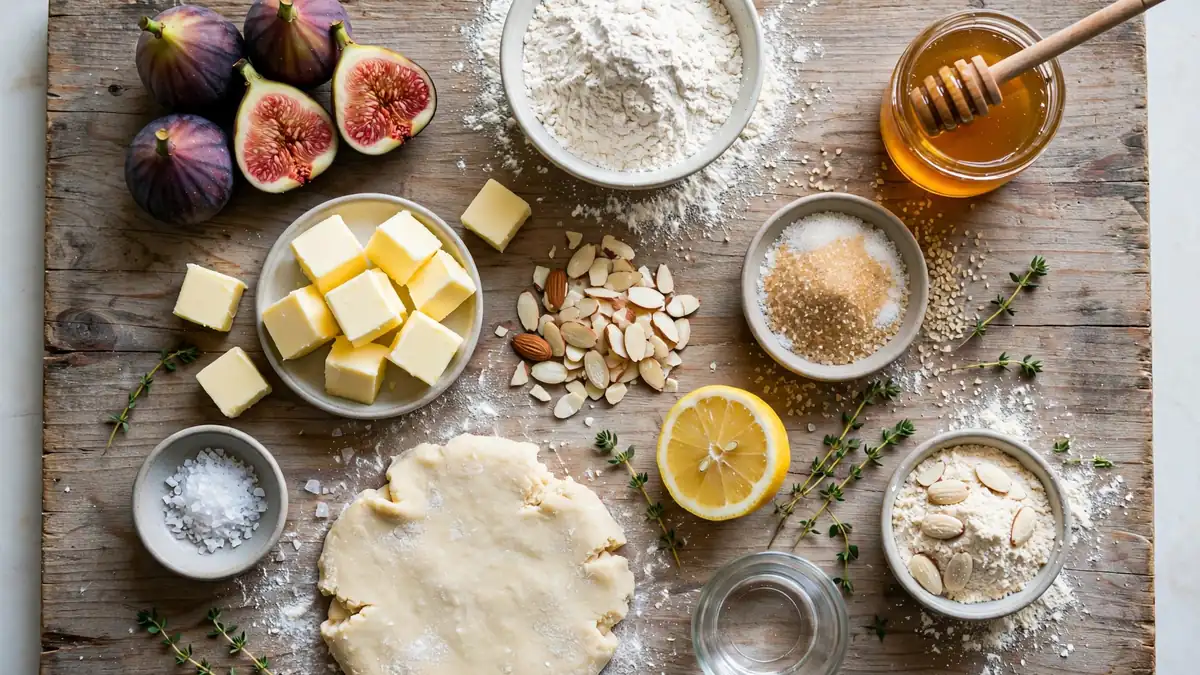
Start with the pastry. Whisk your flours, salt and sugar together, then cut in the cold butter until you’ve got pieces roughly the size of peas. Some bigger bits are fine. You’re not looking for sand.
Drizzle in ice water a spoonful at a time, tossing with a fork until the dough just holds when you squeeze it. It should look a bit shaggy. Squeeze a handful. If it stays together, stop adding water. If it crumbles, add another spoonful. If it’s too crumbly to roll later, a teaspoon more water and a gentle bring-together will sort it. Don’t knead it, whatever you do.
Shape it into a disk, wrap it in clingfilm and chill it. Half an hour minimum. Longer is better. This is the bit where I usually make a cup of tea and pretend I’m being productive.
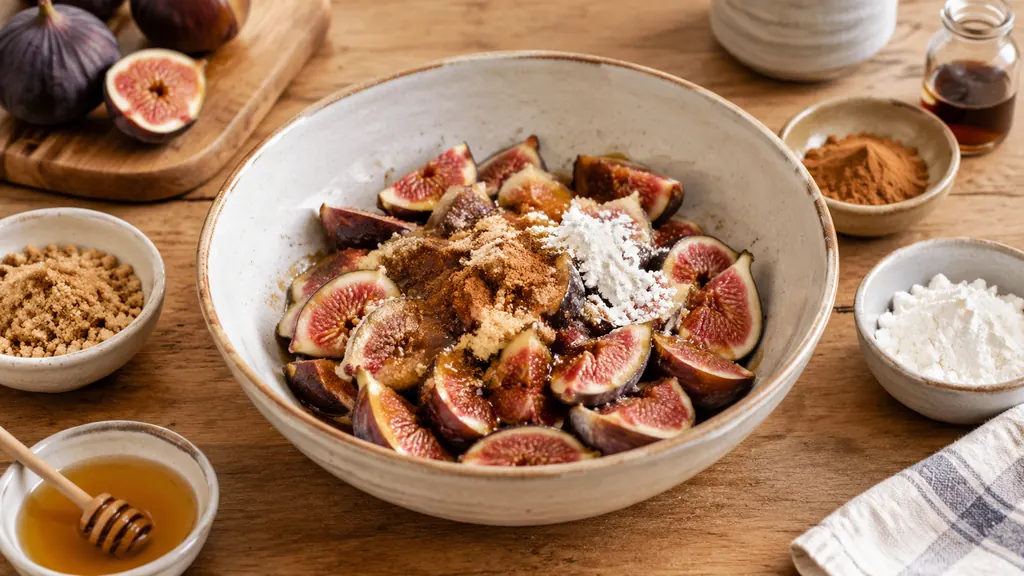
Heat the oven to 200°C (180°C fan, gas mark 6). Toss your sliced figs with brown sugar, cornstarch, honey, vanilla and cinnamon. Give them a gentle stir so everything’s coated. Have a taste. If your figs are very sweet, you might want less honey. If they’re shy, add a bit more.
Roll the chilled dough on a floured surface into a rough circle. It doesn’t need to be perfect. Transfer it to a parchment-lined baking sheet. If it tears, patch it. Nobody will know.
Pile the figs in the middle, leaving a border. Fold that border up and over, pleating as you go. Some pleats will look better than others. That’s the point. If the filling escapes during baking, your pleats weren’t quite high enough or the fruit was too juicy. It’ll still taste good. Scoop up the escaped jam with a spoon and call it a chef’s treat.
Scatter over the sliced almonds and sprinkle coarse sugar on the crust if you’ve got it. This gives a little crunch and a bit of sparkle.
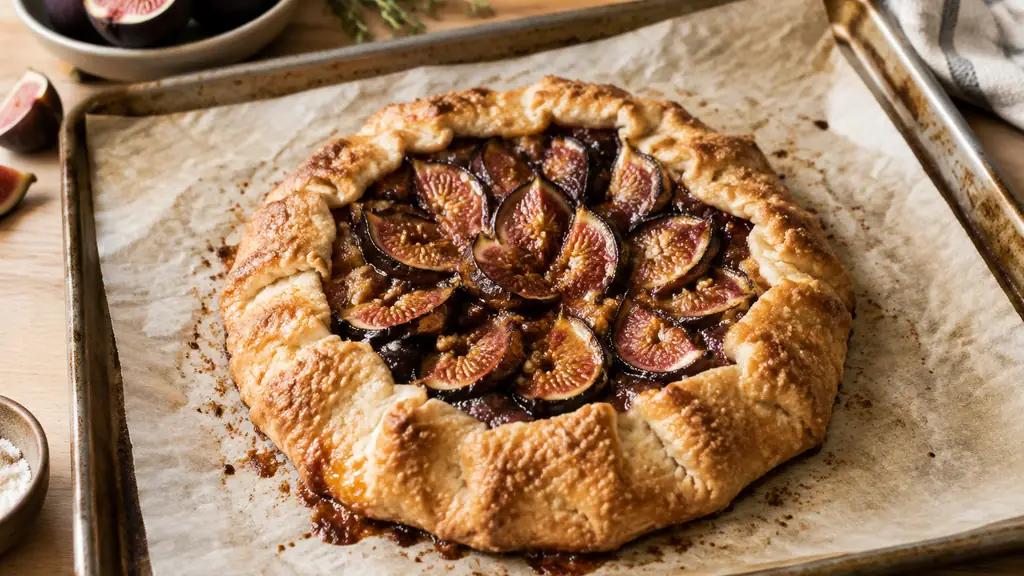
Bake for 35 to 40 minutes, until the crust is deeply golden and the filling is bubbling at the edges. You’ll smell it before you see it. If the crust is browning too fast, tent it loosely with foil. A fan oven will run hot, so drop the temperature slightly and check earlier if that’s what you’ve got.
Then the hard part. Let it cool before you cut it. I know. I’ve ignored this advice many times and I’ve had the burnt tongue to prove it. The filling needs to set. Give it a quarter of an hour at least.
As a tip, if your kitchen is warm, chill the shaped galette in the fridge for ten minutes before it goes in the oven. It helps the pastry hold its shape and gives a flakier result.
Tips for Getting It Right
Keep everything cold. Cold butter, cold water, cold hands if you can manage it. Warm pastry is sad pastry. And don’t overwork the dough. You want flaky layers, not a smooth block. Stop mixing when it just comes together.
Taste your figs before you sweeten them. Some are honey-sweet, some are almost savoury. Adjust accordingly. If they’re on the dry side, they weren’t ripe enough. A drizzle of extra honey before baking helps, but ripe fruit is the real answer.
And if the bottom comes out soggy, the oven wasn’t hot enough or the galette sat too long before baking. Preheat properly and get it in the oven promptly. That’s the whole trick.
Make Ahead, Freezing and Reheating
The dough can be made ahead and kept in the fridge for a couple of days, or frozen for longer. Thaw it overnight in the fridge before you roll it. If you’re short on time, you can shape the galette, chill it on the tray, and bake it straight from cold.
Leftovers keep in the fridge, covered, for a few days. Let them cool fully first, and I mean fully. To reheat, warm slices in a moderate oven until the crust crisps up again and the filling is piping hot throughout. The microwave will make it soggy. Don’t do that.
You can freeze baked slices, wrapped well, for up to a couple of months. Reheat from frozen in a low oven, giving them longer than you would from chilled. They’ll come back nicely.
Variations and What to Serve With It
Pears work beautifully here, especially with a little grated ginger in the filling. Plums are lovely too, though they need a touch more sugar. Peaches in summer are a treat. The method stays the same.
For a nut-free version, leave out the almond flour and the sliced almonds, and add a bit more plain flour to the pastry. It’ll be slightly less tender but still good.
Serve it warm with creme fraiche or a scoop of vanilla ice cream. A drizzle of honey doesn’t hurt. Jen likes it with a strong coffee in the afternoon, which I think is a very civilised habit.
If tarts are your thing, you might also like our lemon meringue pie, a classic egg custard tart, or the peanut butter bakewell tart.
Rustic Fig Galette: The Verdict
This is one of those puddings that looks like more work than it is. The pastry comes together quickly, the figs do their own thing in the oven, and you end up with something that feels like autumn on a plate. Jen turned her nose up at the idea of a “rustic” tart. “So it’s gone wrong, has it?” she said. It hadn’t. Mostly. C’mon, give it a go.
Frequently Asked Questions
Can I use frozen figs for this galette?
You can, but thaw them first and drain off any excess liquid. Frozen figs tend to be softer, so the filling will be juicier. Add a little extra cornstarch to compensate. The texture won’t be quite the same as fresh, but it’ll still taste good.
What if I don’t have almond flour?
Just use more plain flour. The almond flour adds a subtle nuttiness and tenderness, but it’s not essential. If you’re avoiding nuts entirely, skip the sliced almonds on top too. A scatter of demerara sugar works nicely instead.
How do I stop the base going soggy?
Make sure your oven is properly preheated and bake on parchment on a metal tray. If your figs are very ripe, toss them with a bit more cornstarch. You can also brush the pastry base with a little beaten egg before adding the fruit, which creates a barrier.
Can I make this vegan?
For a vegan version, use a plant-based butter or a good quality vegan block for the pastry, and swap the honey for maple syrup or agave nectar. Check that your sugar is vegan-friendly, as some are processed with bone char. The texture will be slightly different but still flaky.
How long does it keep?
Covered in the fridge, it keeps for a few days. The pastry will soften over time, so it’s best on the day it’s made. Reheat in a moderate oven to crisp it up again. Freezing works well for up to a couple of months.

You might also love
More in Dessert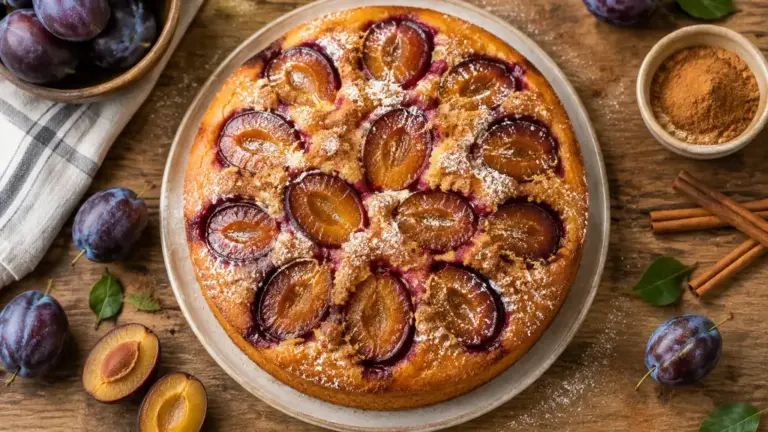
Plum Cinnamon Cake: A Golden, Juicy Bake for Autumn
Updated: November 1, 2026 Now, Jen will tell you I can’t walk past reduced fruit in the supermarket. Last Tuesday I came…
Read