
Plum Cinnamon Cake: A Golden, Juicy Bake for Autumn
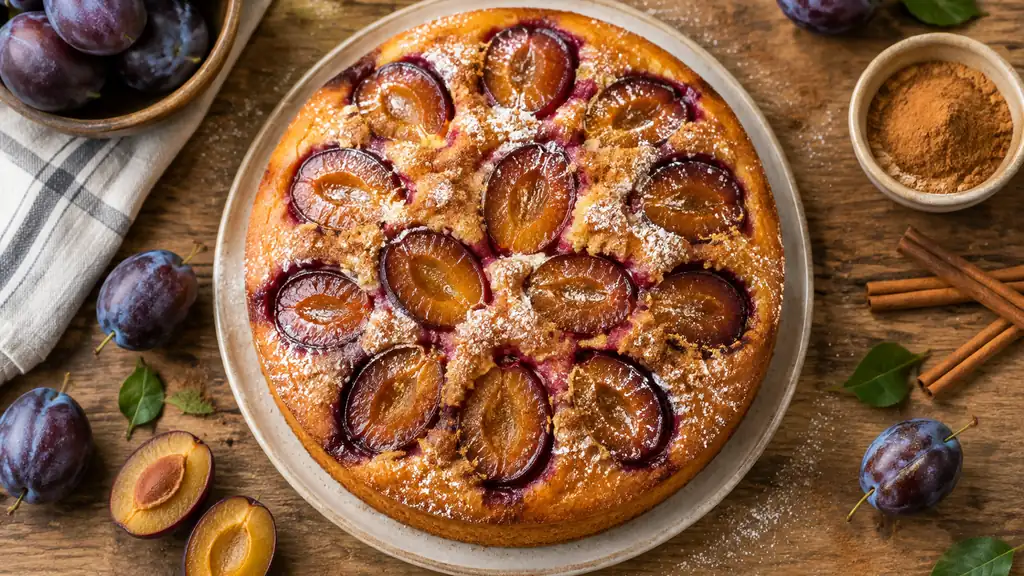
Table of Contents
Now, Jen will tell you I can’t walk past reduced fruit in the supermarket. Last Tuesday I came home with a punnet of plums and she just sighed and said “cake then, is it?” She knows me too well. So this plum cinnamon cake is what happened next — a golden, buttery sponge with glossy plum halves sunk into the top, a whisper of cinnamon, and just enough sugar to make the fruit sing.
The Yum Yum Club · Kitchen Tested Recipe
Plum Cinnamon Cake Recipe | The Yum Yum Club
Prep: 20 mins · Cook: 50 mins · Total: 1 hr 10 mins
Ingredients
8 servingsNutrition Facts
Per Serving: 1 serving
Nutrition values are estimates calculated per serving from the ingredient list.
Instructions
-
1
Heat the oven to 350°F (175°C). Grease and flour a 9-inch round cake pan.
-
2
Whisk together the flour, baking powder, and salt in a bowl.
-
3
In a separate bowl, beat the softened butter and 3/4 cup sugar until light and fluffy. Beat in the eggs one at a time.
-
4
Add the dry ingredients and mix just until combined. Spread the batter evenly in the prepared pan.
-
5
Arrange the plum halves, cut side up, over the batter. Sprinkle with cinnamon and 1–2 tablespoons sugar.
-
6
Bake for 45–55 minutes, until golden and a toothpick inserted in the center comes out clean.
-
7
Cool in the pan for 15 minutes, then transfer to a rack or serve slightly warm.
Kitchen Notes & Tips
Choose ripe but firm plums. The cake is done when the center is set and the edges are golden. Make ahead: Bake a day ahead and store covered. Dust with a little extra sugar just before serving if desired.
Storage & Reheating
Storage: Cover and keep at room temperature for up to 1 day, or refrigerate for up to 4 days.
Reheating: Warm individual slices in a 300°F (150°C) oven for 8–10 minutes, or microwave briefly.
Equipment
- 9-inch round cake pan
- mixing bowls
- whisk
- hand mixer or stand mixer
- rubber spatula
- wire rack
Substitutions & Variations
Why this plum cinnamon cake works
This isn’t complicated. The plums do most of the work. They’re tart enough to cut through the buttery sponge, and when they bake they go jammy and glossy. Cinnamon ties it all together without shouting. It’s the kind of cake that feels like autumn even in July.
I’ve made this with apricots when the plums looked sad, and once with peaches that were a bit too juicy. Both worked, though the peaches made the middle a touch wet. Stick with plums if you can. The batter is thick, almost like a soft cookie dough, which means the fruit sits on top rather than sinking to the bottom. That’s a good thing.
As a tip, don’t overmix once the flour goes in. You want a tender crumb, not a rubbery one. Just fold until you can’t see dry flour. A few lumps are fine.
How to make it, step by step
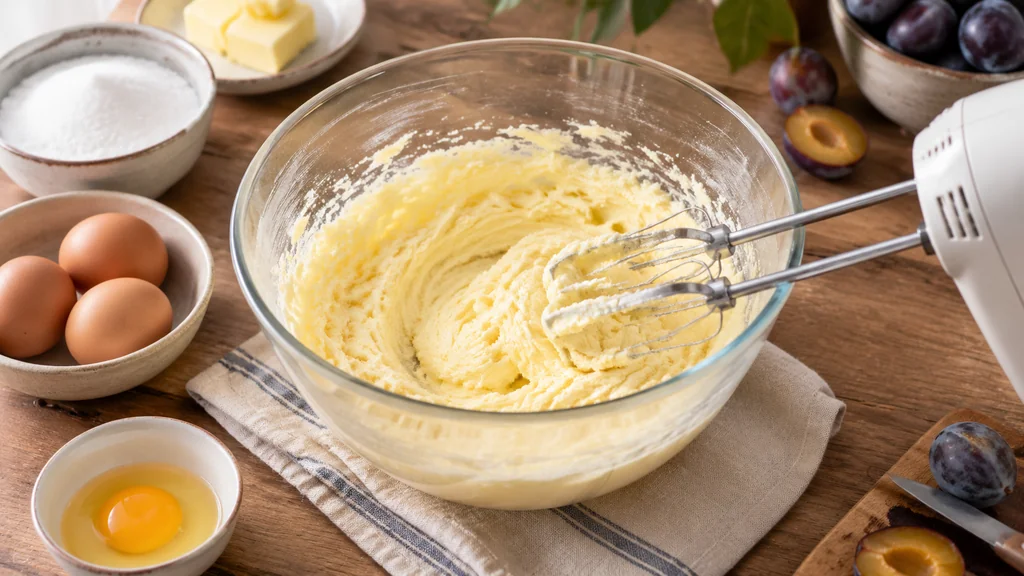
First, get everything ready. Heat the oven, grease your pan, and line the bottom with parchment. If you’ve got a springform, even better, but a regular round tin works fine. Just be generous with the greasing.
Next, whisk the dry things together in a small bowl. Flour, baking powder, salt. Set aside. In a bigger bowl, beat the softened butter and sugar until it’s pale and fluffy. This takes a few minutes, so don’t rush it. Then beat in the eggs one at a time. If the mixture looks like it’s curdling, add a spoonful of the flour mix to bring it back.
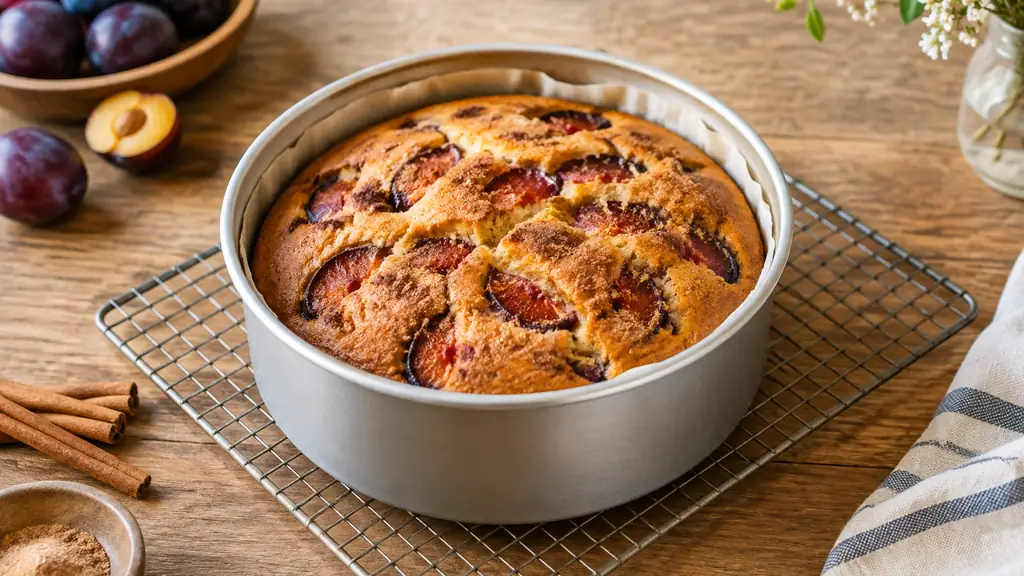
Now fold in the dry ingredients. Stop as soon as it’s combined. Spread the batter in the pan. It will be thick, so use a spatula to level it. Arrange the plum halves cut-side up on top. Sprinkle with cinnamon and a little extra sugar. The sugar helps the fruit caramelise and gives the top a lovely crunch.
Bake until golden and a toothpick comes out clean. The plums should be bubbling and soft. Let it cool in the pan for a bit before moving to a rack. Dust with powdered sugar just before serving, if you like.
Tips for a better bake
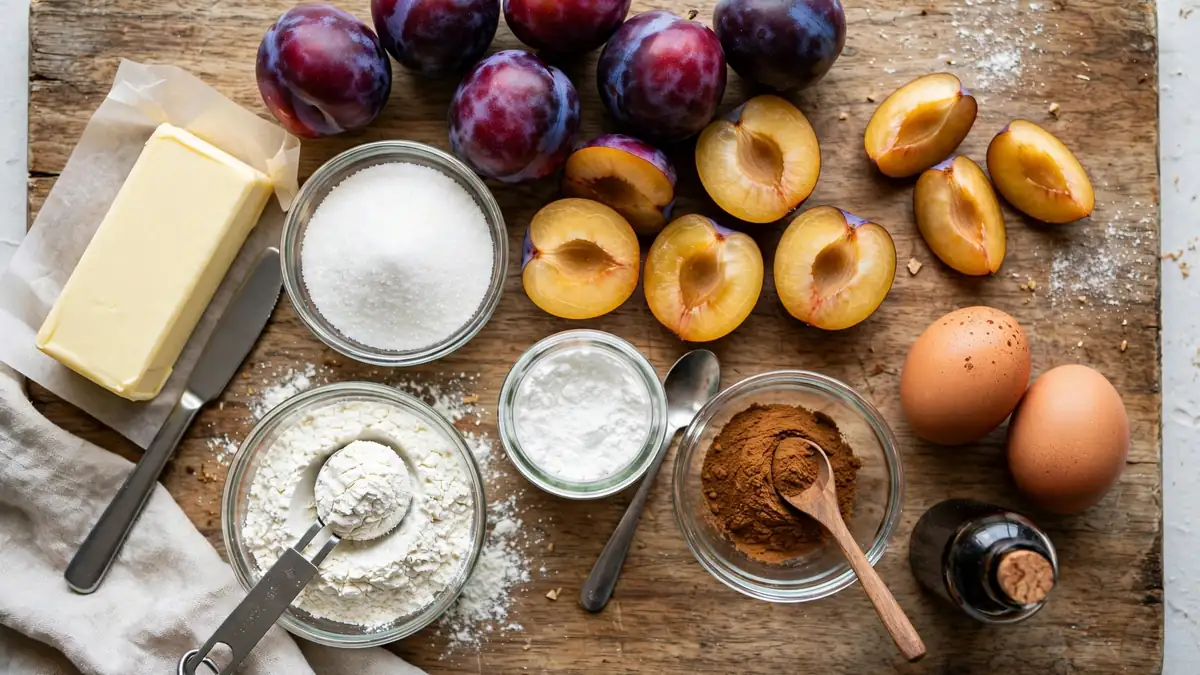
- Use ripe but firm plums. Overripe ones release too much juice and make the middle soggy.
- Don’t skip the parchment. Plums can stick something awful.
- If your plums are very tart, use the full amount of topping sugar. Taste a piece first.
- Let the cake cool completely before dusting with powdered sugar, or it’ll just melt into the crust.
As a tip, if the top is browning before the middle is set, a loose tent of foil saves the day. I’ve learned that one the hard way.
Make ahead, freezing and reheating
This cake keeps well. Cover it and leave it at room temperature for a day, or put it in the fridge for up to four days. The flavour actually improves on day two, once the cinnamon has had a chance to settle in. If you’re serving it with cream or yoghurt, keep those chilled until the last minute.
To freeze, wrap individual slices in clingfilm and then foil. Thaw at room temperature. If you want it warm, a few minutes in a low oven does the trick. From frozen, give it longer, maybe fifteen minutes or so, until it’s heated through. A quick blast in the microwave works too, but the texture suffers a bit.
Make it ahead for a pudding and just add the powdered sugar before it goes to the table. Jen always knows if I’ve done the sugar in advance because it disappears into the crust. She’s sharp like that.
Troubleshooting
If the cake is browning too fast but the middle is raw, cover it with foil and turn the oven down a notch. If the plums sink, your batter was too thin. Next time, chill the batter for ten minutes before spreading. If the cake sticks to the pan, you didn’t grease it enough. Run a knife around the edge and hope for the best.
And if it’s a bit dry? That means you overbaked it. Serve it with cream or ice cream and nobody will notice. I’ve done it myself, more than once.
Variations and what to serve with it
Apricots work beautifully instead of plums. So do peaches, though you might want to pat them dry first. A handful of flaked almonds scattered on top before baking adds a nice crunch. For a boozier version, soak the plums in a little brandy for half an hour. Not for the kids, obviously.
Serve it warm with pouring cream, crème fraîche, or a scoop of vanilla ice cream. Cold with a cup of tea is also excellent. Jen likes it with Greek yoghurt, which I think is a bit virtuous, but there you go.
For more autumn baking, try our strawberry muffins, a tray of extra soft and chewy flapjacks, or the bakery-style cinnamon rolls.
More ideas for using up plums
If you’ve got extra plums, stew them with a little sugar and star anise for a quick compote. Spoon it over porridge or yoghurt. Or roast them with honey and serve alongside the cake for double plum action. Jen counted the plums as one of our five a day, which I’m fairly sure doesn’t cancel out the butter and sugar, but I wasn’t going to argue.
As always, many thanks for reading and until next time…Steve.
Can I use tinned plums instead of fresh?
You can, but drain them well first and pat them dry. Tinned plums are softer, so they’ll break down more in the oven. The cake will still taste good, but the texture won’t be quite the same. Fresh is best here.
How do I know when the cake is done?
A toothpick inserted into the centre should come out clean, and the plums should be bubbling at the edges. If the top is golden and the kitchen smells like cinnamon and butter, you’re probably there. Give it another couple of minutes if you’re unsure.
Can I make this gluten-free?
Yes, use a good gluten-free flour blend. Add a little extra liquid if the batter seems stiff. The texture will be slightly different, a bit more crumbly, but it works. I’ve done it for a friend who can’t have gluten and she went back for seconds.
What if my plums are very sour?
Sprinkle the full amount of topping sugar over them before baking. You could also toss the plum halves in a little sugar first. Taste a piece of raw plum. If it makes you wince, be generous with the sugar.
Can I bake this in a different size tin?
You can, but the baking time will change. A larger tin means a thinner cake, so start checking earlier. A smaller tin means a deeper cake, so give it longer. Stick with the nine-inch round if you can. It’s the sweet spot.

You might also love
More in Dessert
Fresh Fig and Almond Galette: A Rustic Pudding That Never Disappoints
Updated: November 1, 2026 This rustic fig galette is what happens when you fancy a proper pudding but can’t be faffed with…
Read