
How to Cook Padron Peppers (The Only Method You Need)
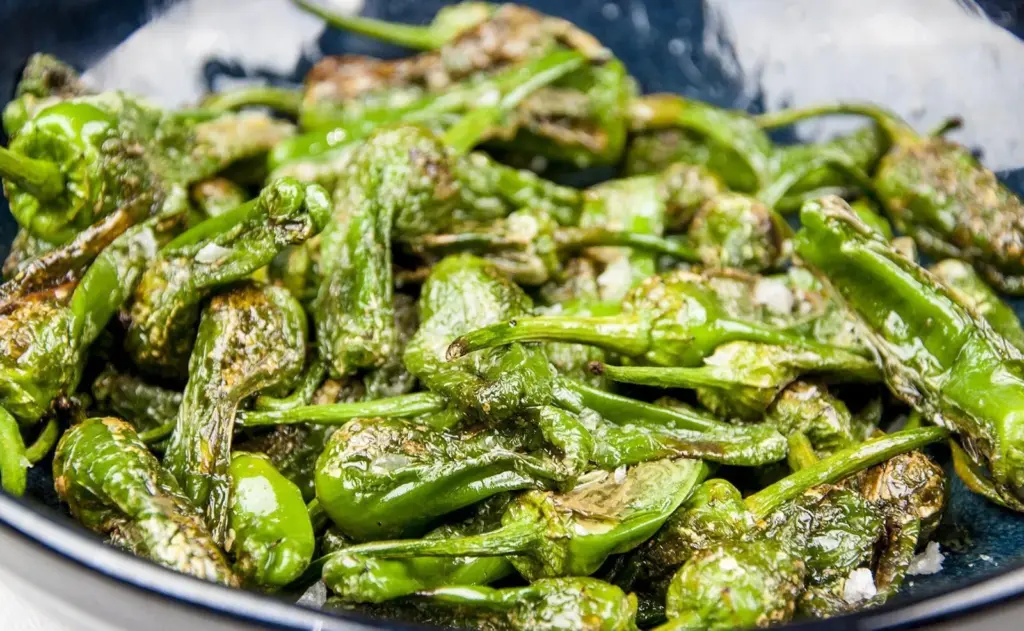
Table of Contents
This post may contain affiliate links. As an Amazon Associate we earn from qualifying purchases.
Padron peppers take five minutes. Three ingredients. And yet, somehow, I’ve watched people overcook them, undercook them, salt them wrong, and serve them lukewarm — which is the one thing guaranteed to kill them.
Here’s what actually works, based on making these at home more times than I can count since I first ate them at a tiny tapas bar in Barcelona about eight years ago.
What Are Padron Peppers?
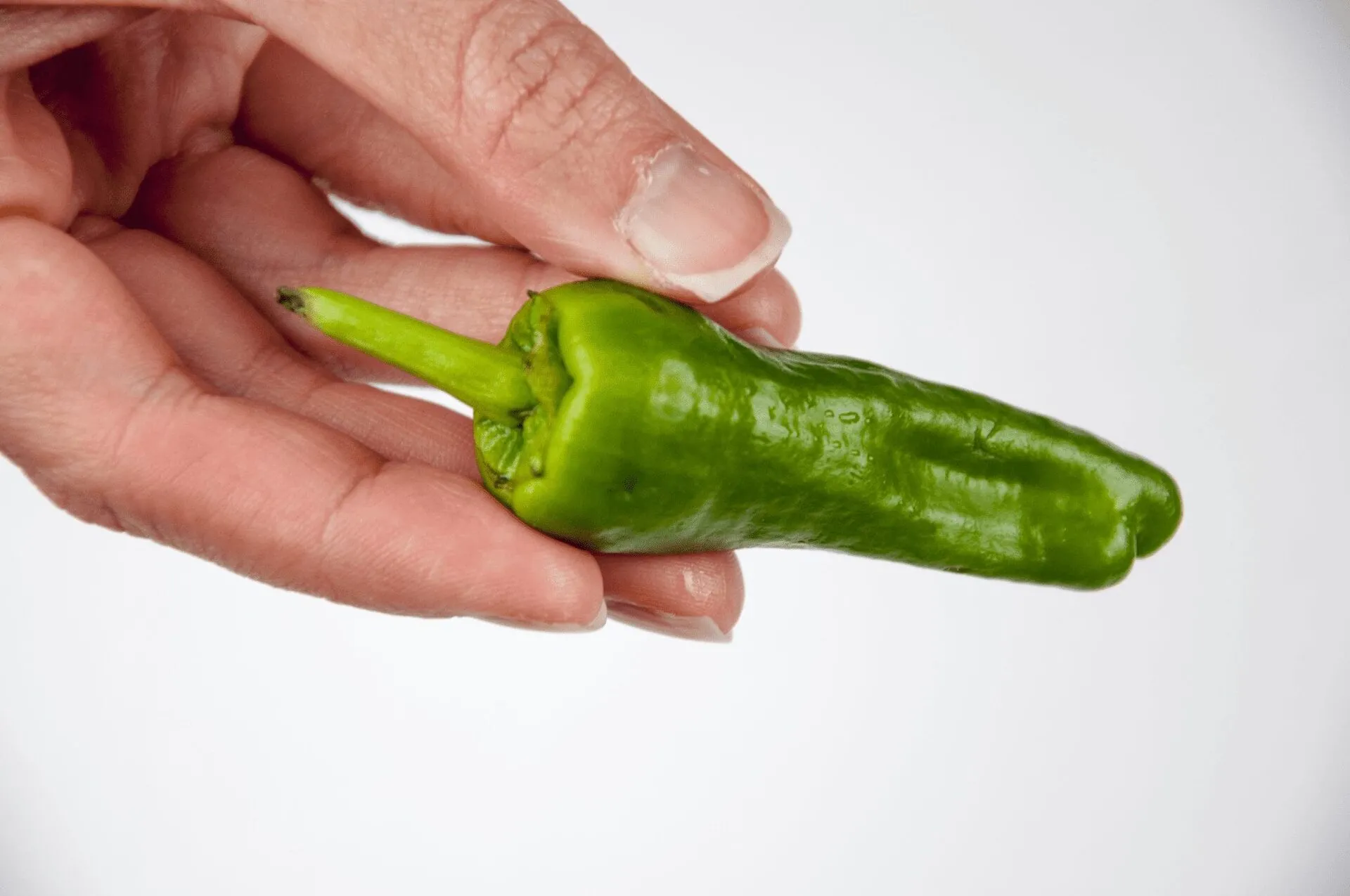
Padron peppers — properly called Pimiento de Padrón — come from the municipality of Padrón in Galicia, northwest Spain. They’re small, roughly 2 inches long, almost always green. Sweet, grassy, slightly smoky when blistered. And yes, the famous thing: roughly 1 in 10 will be properly hot. Not face-meltingly hot, but enough to make you sit up.
In eight years of eating these, I’ve hit maybe four genuinely spicy ones. My partner hit two in a single bowl one Sunday and declared the whole batch ruined. She’s wrong, but I understand the position.
Do Padron Peppers Need to Be Prepared Before Cooking?
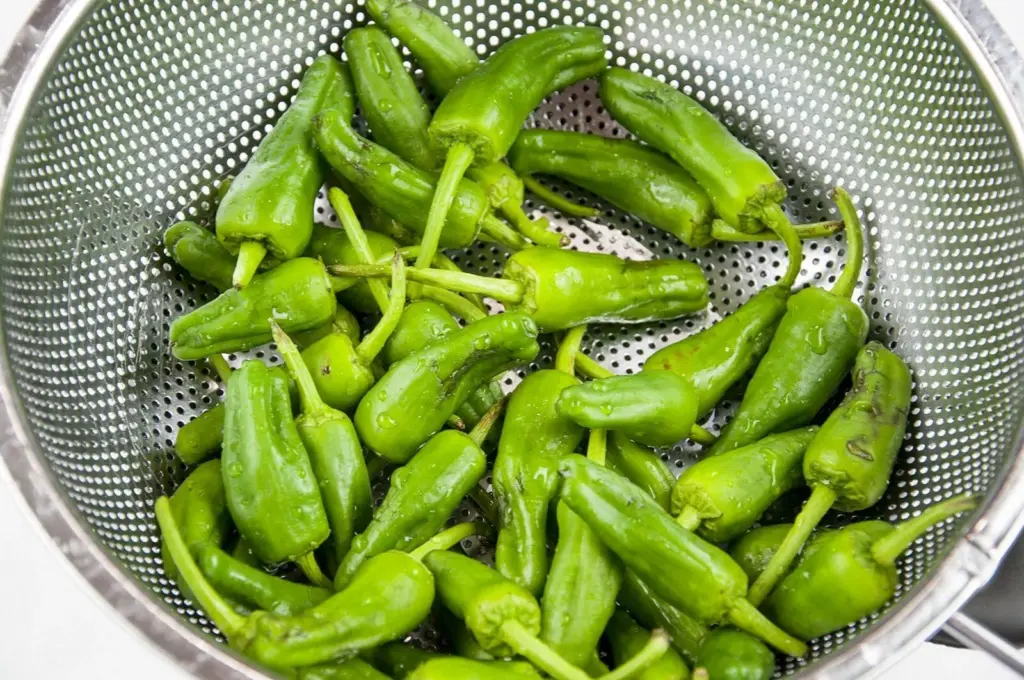
Not really. Wash them and dry them. That’s it.
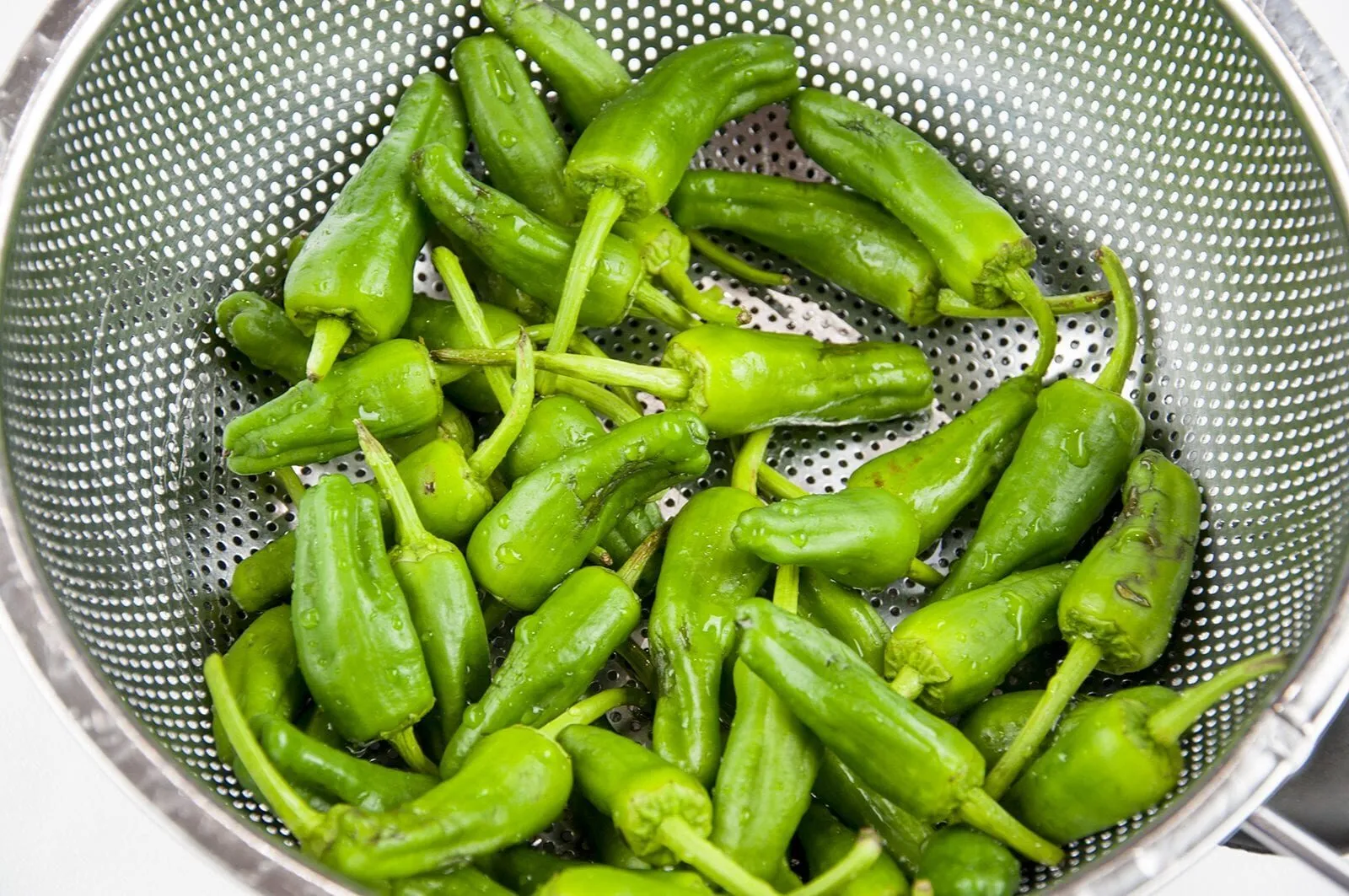
Don’t trim the stems — they act as handles when you’re eating them, which is how they’re meant to be eaten: fingers only, by the stalk. Don’t cut them open, don’t score them, don’t remove seeds. The whole point is that they blister and steam inside that skin.
Pat them dry properly after washing. Wet peppers in a hot pan = oil spitting everywhere and steaming instead of frying. Takes an extra 30 seconds to dry them but saves you a burned arm.
How Do You Cook Padron Peppers?
Cast iron or heavy stainless steel pan. Not non-stick — you want retained heat and a proper blister.
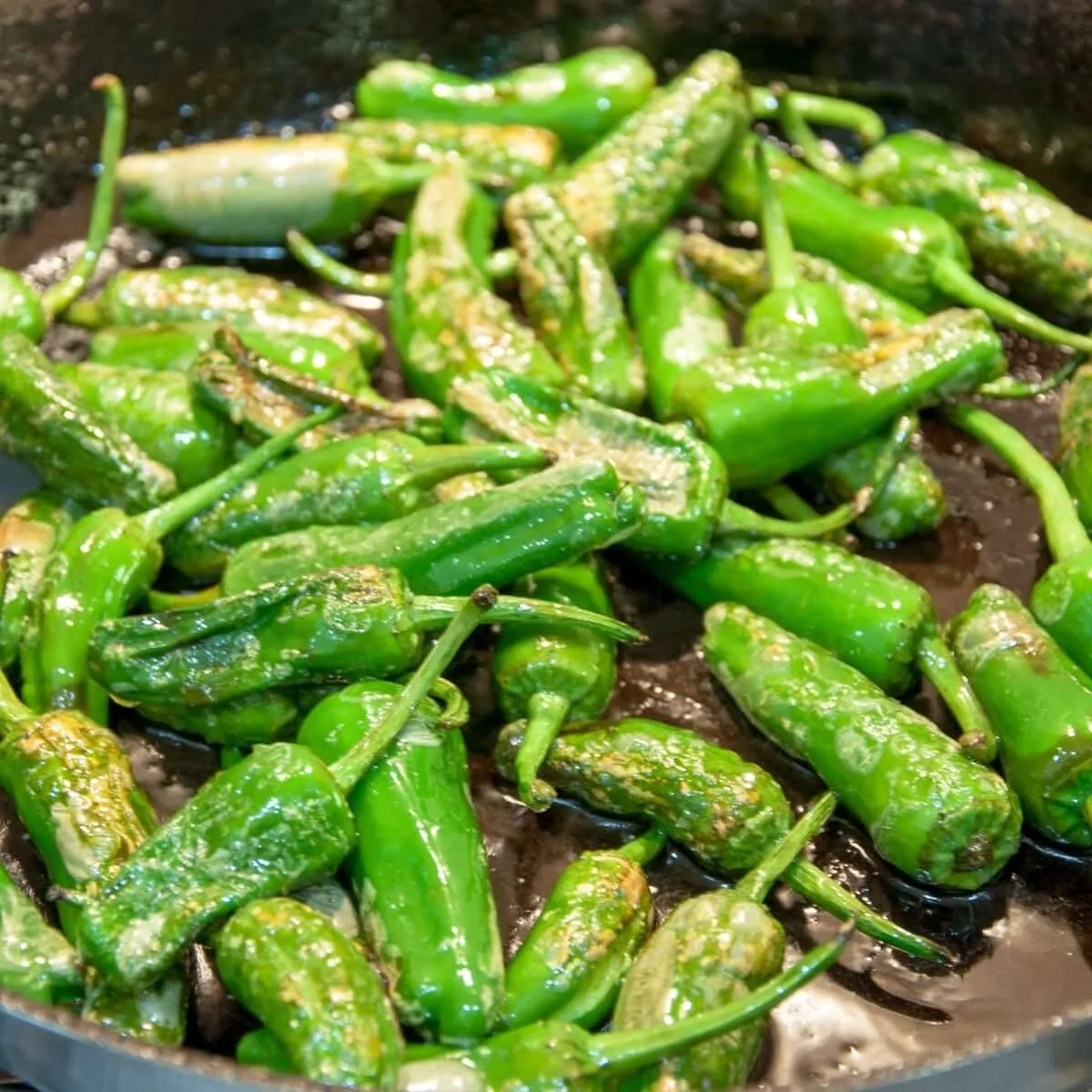
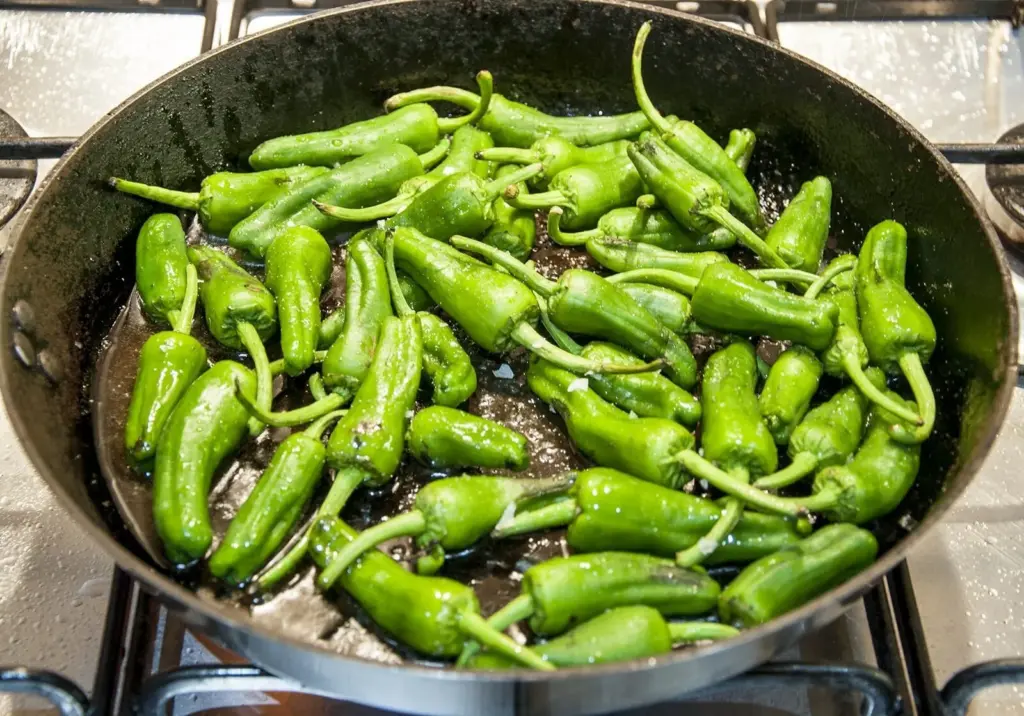
Get the pan hot over medium-high heat first. Add 1 to 1.5 tablespoons of good olive oil — I use a Spanish extra virgin, which feels right, but any decent EVO works. Let the oil heat for about 30 seconds until it shimmers.
Add the peppers. Don’t crowd them. For a single layer you want roughly 200–250g per batch in a standard 28cm pan. If you pile them in, they steam rather than blister.
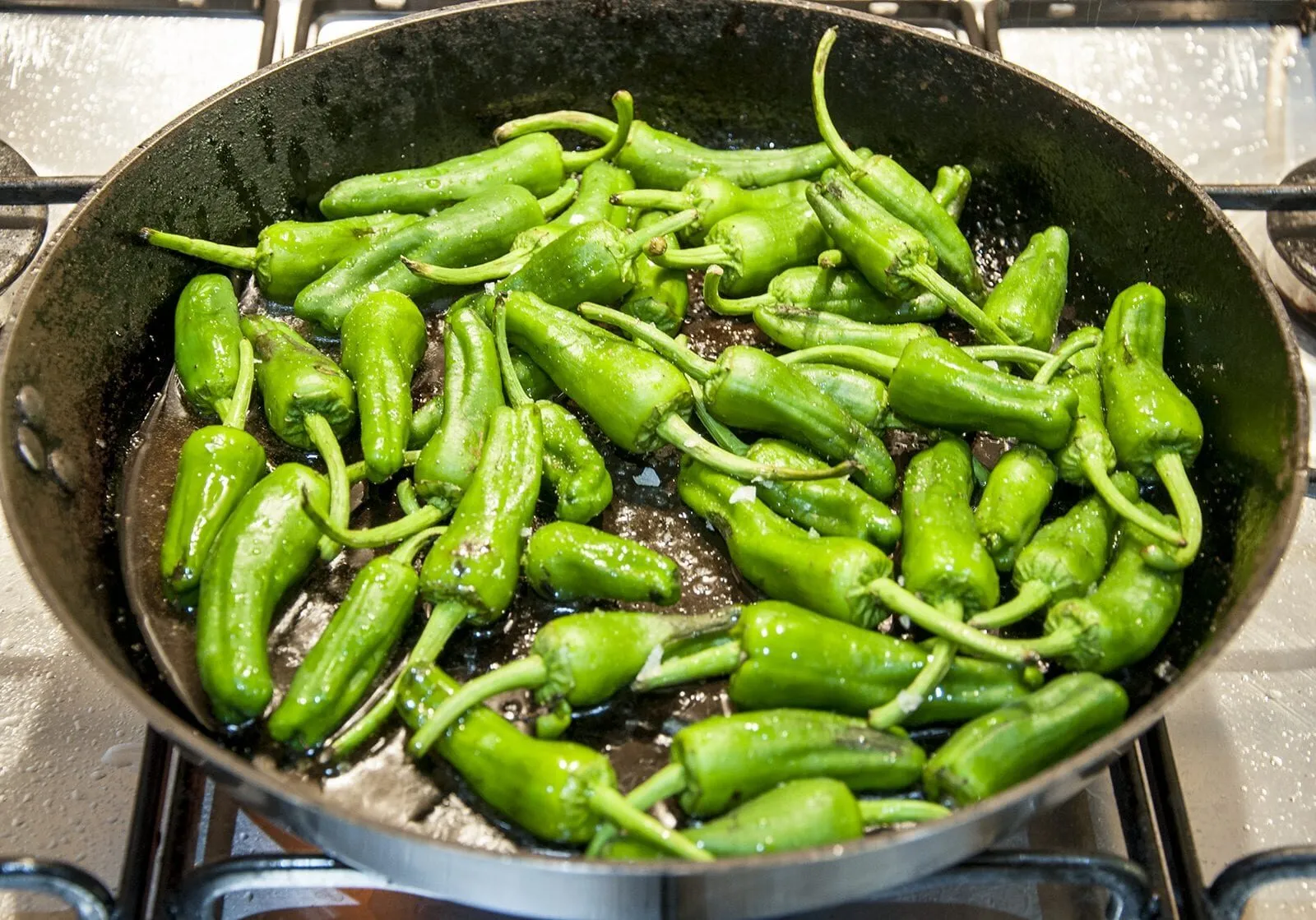
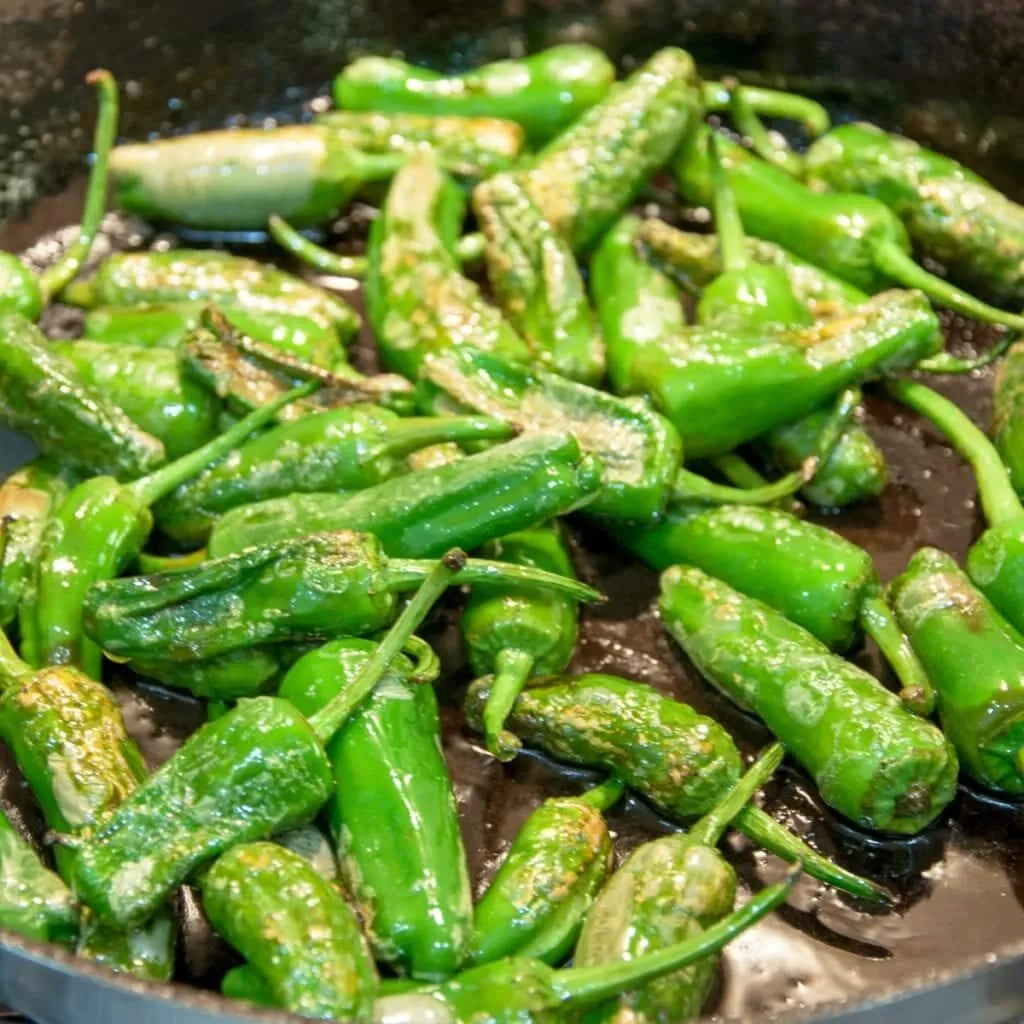
Leave them alone for 2 minutes. Don’t stir, don’t shake, don’t prod. Then toss them and let the other side blister for another 1–2 minutes. Total cooking time: 4–5 minutes from a cold start, 3–4 minutes if the pan was properly preheated.
You want the skin visibly blistered — dark patches, maybe a few almost-charred spots. That’s what releases the flavour. Undercooked Padron peppers are just… raw-tasting green peppers. Slightly pointless.
How Much Salt Do Padron Peppers Need?
More than you think.
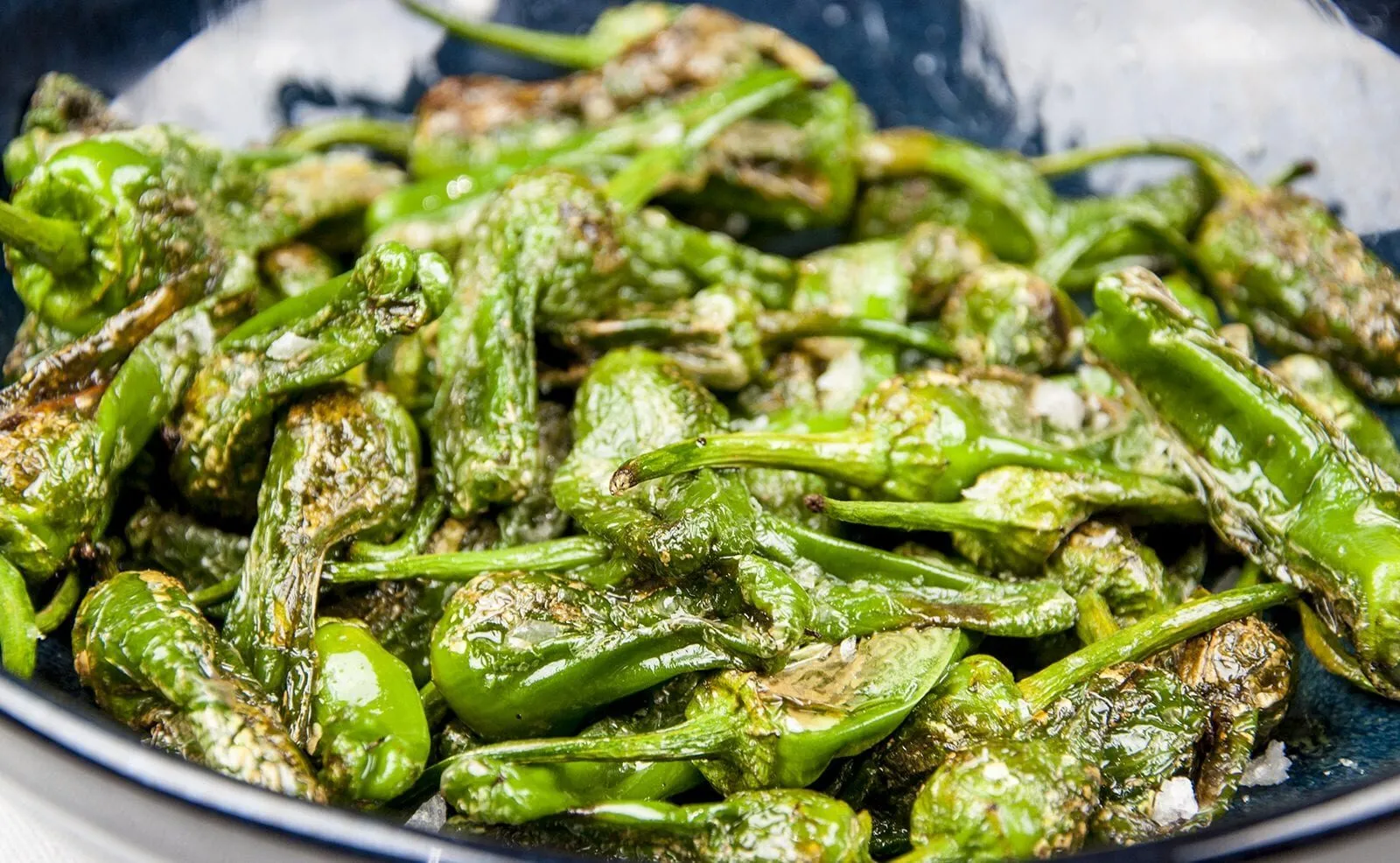
Transfer them straight from the pan to a bowl or plate. Then hit them with sea salt flakes immediately — Maldon is the standard, and it works because the flakes are big enough to add texture as well as flavour. Grind or fine salt disappears into the oil and tastes flat.
I use roughly 1/2 teaspoon of Maldon flakes for 200g of peppers. That sounds like a lot. It isn’t.
The salt goes on hot peppers, the moment they come off the heat. Salt on cold peppers just sits there. Salt on hot, oily, blistered peppers actually adheres and seasons the whole thing.
Don’t add anything else. No lemon. No garlic. No chilli flakes. Some tapas restaurants add these, and they’re good restaurants, but they’re also missing the point. The pepper itself is the flavour.
Can You Cook Padron Peppers in the Oven or Air Fryer?
You can. I’ve tried both.
Oven (200°C fan, 10–12 minutes): decent blister if you toss them in oil and roast on a preheated tray. The problem is uneven heat — half the peppers blister properly, the rest don’t. Takes longer. I only do this when I’m cooking a large batch (500g+) and the hob feels impractical.
Air fryer (190°C, 8 minutes, shake halfway): surprisingly good. The circulating air gives a more even blister than the oven. Texture is slightly different from pan-fried — a bit drier — but honestly not bad. If you’re doing peppers as a side and your hob is full, the air fryer is a solid option.
Pan is still the best for speed, flavour, and that specific oily-blistered texture you get from contact with a hot surface.
What to Serve with Padron Peppers
They’re a classic Spanish tapas dish, so they pair naturally with other things you’d eat with your hands: bread, olives, cured meats. I’ve put them next to grilled fish and they work well there too.
The one thing I’d say is serve them first, on their own, while they’re hot. Padron peppers at room temperature are significantly less good than Padron peppers straight from the pan. If you’re doing a spread, cook these last.
They also go very well next to something creamy to cut the oil — a bowl of homemade tzatziki works, or a simple homemade pesto for dipping.
If you want to turn them into a more substantial vegetarian plate, try them alongside vegetarian stuffed bell peppers — different textures, same pepper-forward flavour logic.
What Surprised Me About Padron Peppers
The heat variance is real but also overstated. In my experience, most batches are mild. The “1 in 10” rule seems accurate for bought-from-a-good-deli peppers, but supermarket Padrons in the UK tend to run even milder than that. The ones I’ve bought from Waitrose in recent years rarely had a hot one in the bag.
The texture change when you overcook them is dramatic and fast. Go 2 minutes past the blister and they go from firm-with-give to collapsed and a bit slimy. Watch the pan.
And the serving size: I initially thought 6–8 per person as a starter was stingy. It isn’t. They’re richer than they look. For a pre-dinner nibble, 6 peppers per person with drinks is right. For a tapas spread, 8–10.
What I’d Change If I Were Starting Again
I spent the first year cooking these at too-low a heat, convinced that “medium” on my gas hob was enough. It wasn’t. They’d colour but not properly blister. Pushed the heat to medium-high, got a proper blister in under 4 minutes. Game-changer.
I’d also buy a small cast iron pan specifically for these (and for mussels and similar high-heat things). A 24cm cast iron holds heat far better than the thin stainless pan I was using, and you get fewer uneven spots.
Frequently Asked Questions
How long do Padron peppers take to cook?
In a hot pan with olive oil, 4–5 minutes total. 2 minutes per side over medium-high heat until visibly blistered. Don’t stir constantly — let each side sit in contact with the pan. Pulling them too early gives you under-blistered peppers with a raw, grassy taste.
Why are some Padron peppers hot and some not?
It’s a natural variance in capsaicin levels within the variety, not a different type of pepper. Stress during growing — heat, drought, soil conditions — increases capsaicin in individual fruits. Roughly 1 in 10 are noticeably spicy, though this varies by batch and supplier. There’s no way to tell from the outside which one it’ll be.
Can you eat the whole Padron pepper, including the stem?
The stem is technically edible but most people hold it as a handle and don’t eat it. The seeds and skin are fully edible and should be eaten — that’s where a lot of the flavour is.
Do Padron peppers need to be refrigerated?
Yes — store unwashed in the fridge in a paper bag or produce bag, for up to 5 days. Wash and dry only immediately before cooking. Leftover cooked peppers reheat poorly (they go soft) — cook only what you’ll eat fresh.
Can you freeze Padron peppers?
Technically yes, but the texture after freezing is significantly worse — they go limp and the skin gets chewy. Better to buy fresh and cook what you need. If you have too many, roast the lot, peel and freeze as roasted pepper strips — useful in other dishes even if they’re no longer whole Padrons.
The Yum Yum Club · Kitchen Tested Recipe
Padron Peppers
Ingredients
4 servingsNutrition Facts
Per Serving: 1 serving
Nutrition values are estimates calculated per serving from the ingredient list.
Instructions
-
1
Wash the peppers.
-
2
Heat a tablespoon of good quality extra virgin olive oil over medium heat.
-
3
Add the peppers to the pan a fry until they blister.
-
4
Serve immediately with a good sprinkling of Maldons sea salt.
-
5
Just enjoy...????
Kitchen Notes & Tips
Nutrition values are an estimate calculated from the ingredient list, not a lab analysis.

You might also love
More in Kitchen Tips & How-To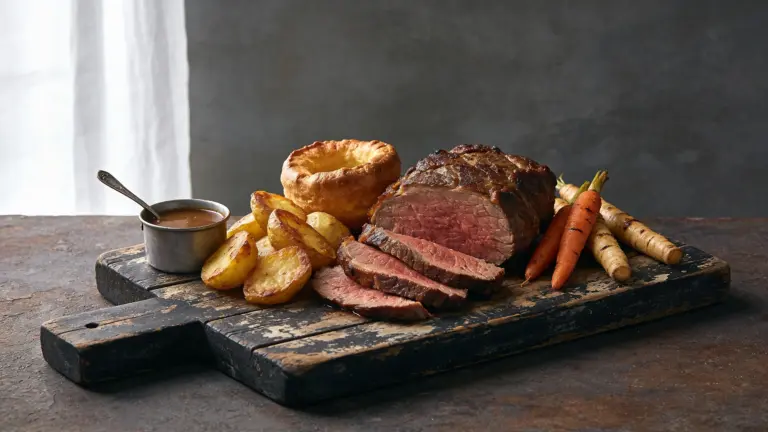
The Sunday Roast Timing Cheat Sheet (+ What to Prep the Day Before)
Updated: July 12, 2026This post may contain affiliate links. As an Amazon Associate we earn from qualifying purchases. Updated June 2026. The…
Read
Top 5 Tips to Treat Your Loved One’s Appetite Naturally
Updated: July 12, 2026This post may contain affiliate links. As an Amazon Associate we earn from qualifying purchases. Low appetite is popularly…
Read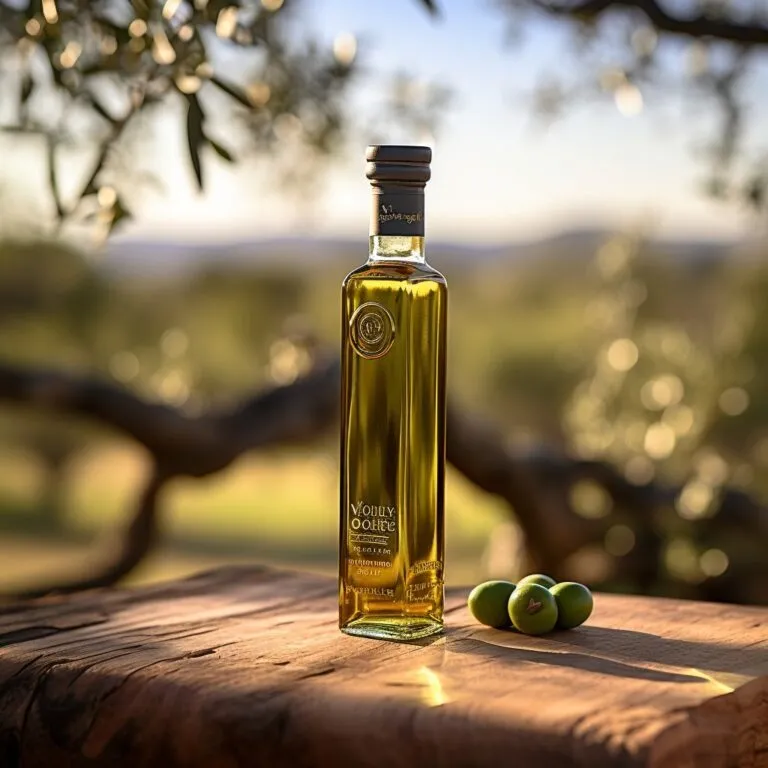
Use Texas Olive Oil To Stay Cool & Healthy This Summer
Updated: July 12, 2026This post may contain affiliate links. As an Amazon Associate we earn from qualifying purchases. The last thing you…
Read
All Things You Wanted to Know About Chaga Mushroom
Updated: July 12, 2026This post may contain affiliate links. As an Amazon Associate we earn from qualifying purchases. Chaga mushroom is a…
Read
How to start your own blog in 3 easy steps
Updated: July 12, 2026This post may contain affiliate links. As an Amazon Associate we earn from qualifying purchases. The fact that your…
Read
Seasonal Foods In Spring
Updated: July 12, 2026This post may contain affiliate links. As an Amazon Associate we earn from qualifying purchases. Consuming a diet rich…
Read
One comment