
Pumpkin Gnocchi with Sage Butter: My First Go at Homemade Gnocchi
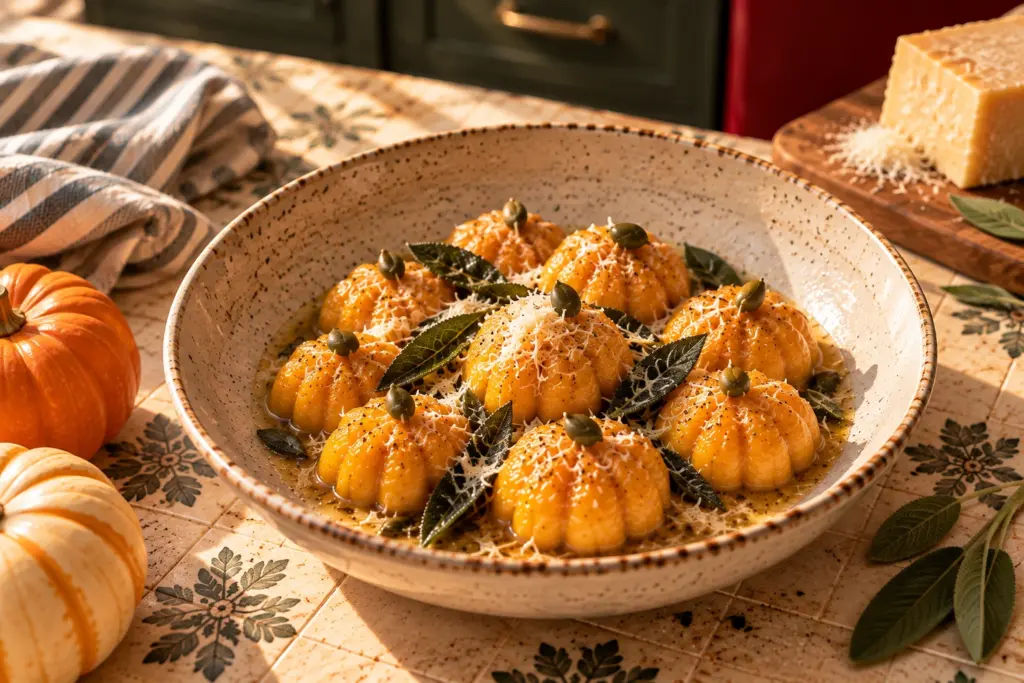
Table of Contents
I’d never made gnocchi from scratch before. Always bought the packet ones and felt quietly ashamed. But there was half a can of pumpkin purée left over from a pie and Jen said if I was going to make a mess I should at least make it worth eating. So here we are. Soft little orange beauties, a bit fiddly, worth every minute. C’mon, I’ll show you how.
The Yum Yum Club · Kitchen Tested Recipe
Pumpkin Gnocchi with Sage Butter: My First Go at Homemade Gnocchi
Prep: 35 mins · Cook: 20 mins · Total: 55 mins
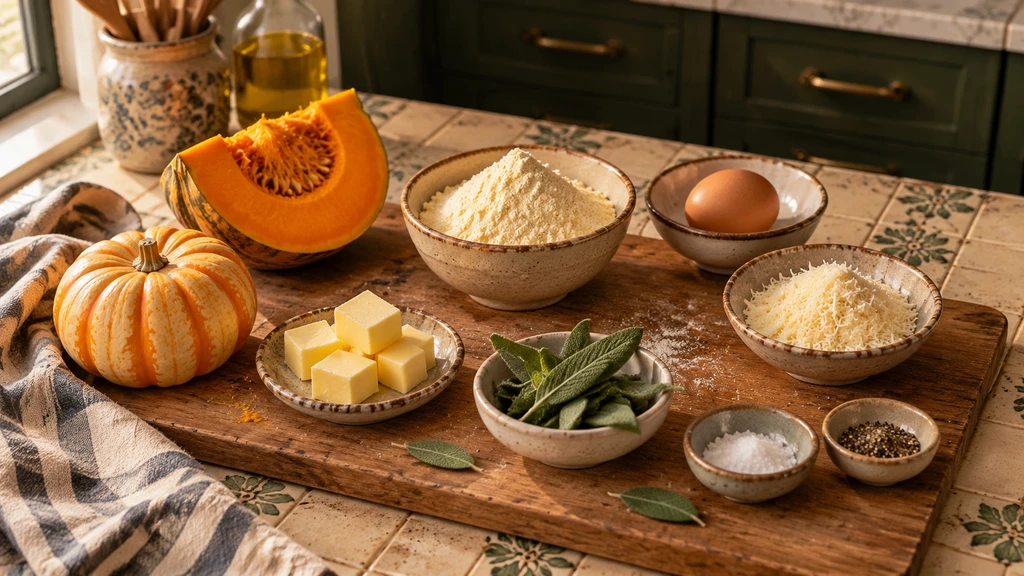
Ingredients
4 servingsNutrition Facts
Per Serving: 1 serving
Nutrition values are estimates calculated per serving from the ingredient list.
Instructions
-
1
Spread the pumpkin purée in a wide skillet over medium heat and cook for 5 to 8 minutes, stirring often, until visibly drier; cool completely.
-
2
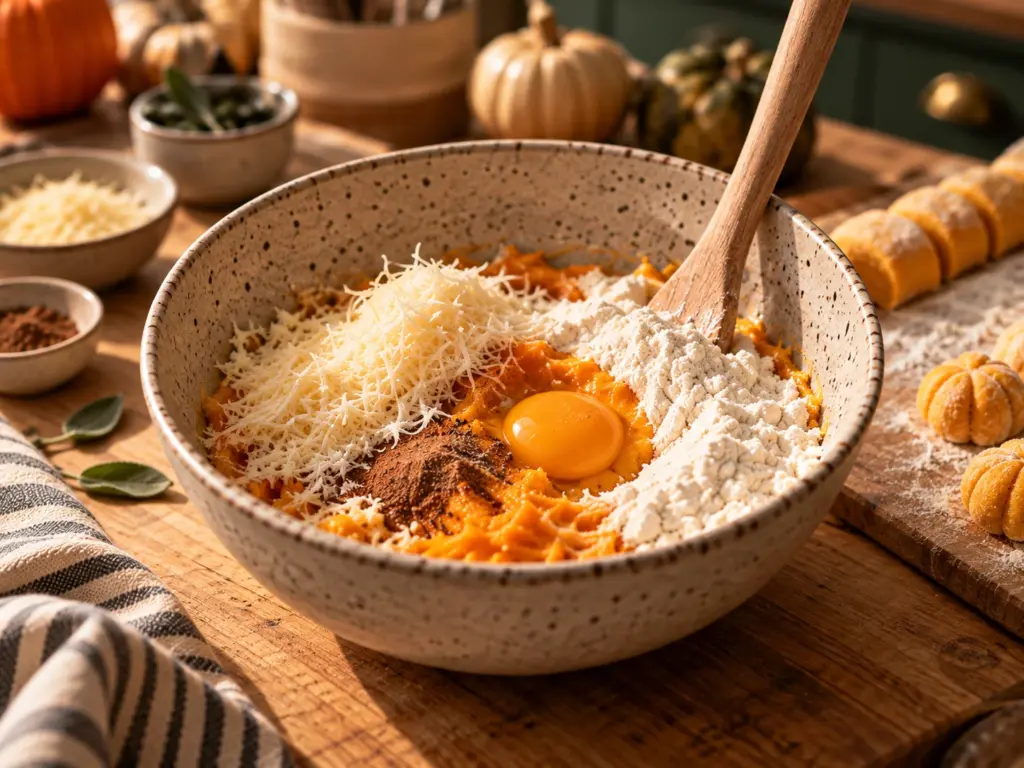
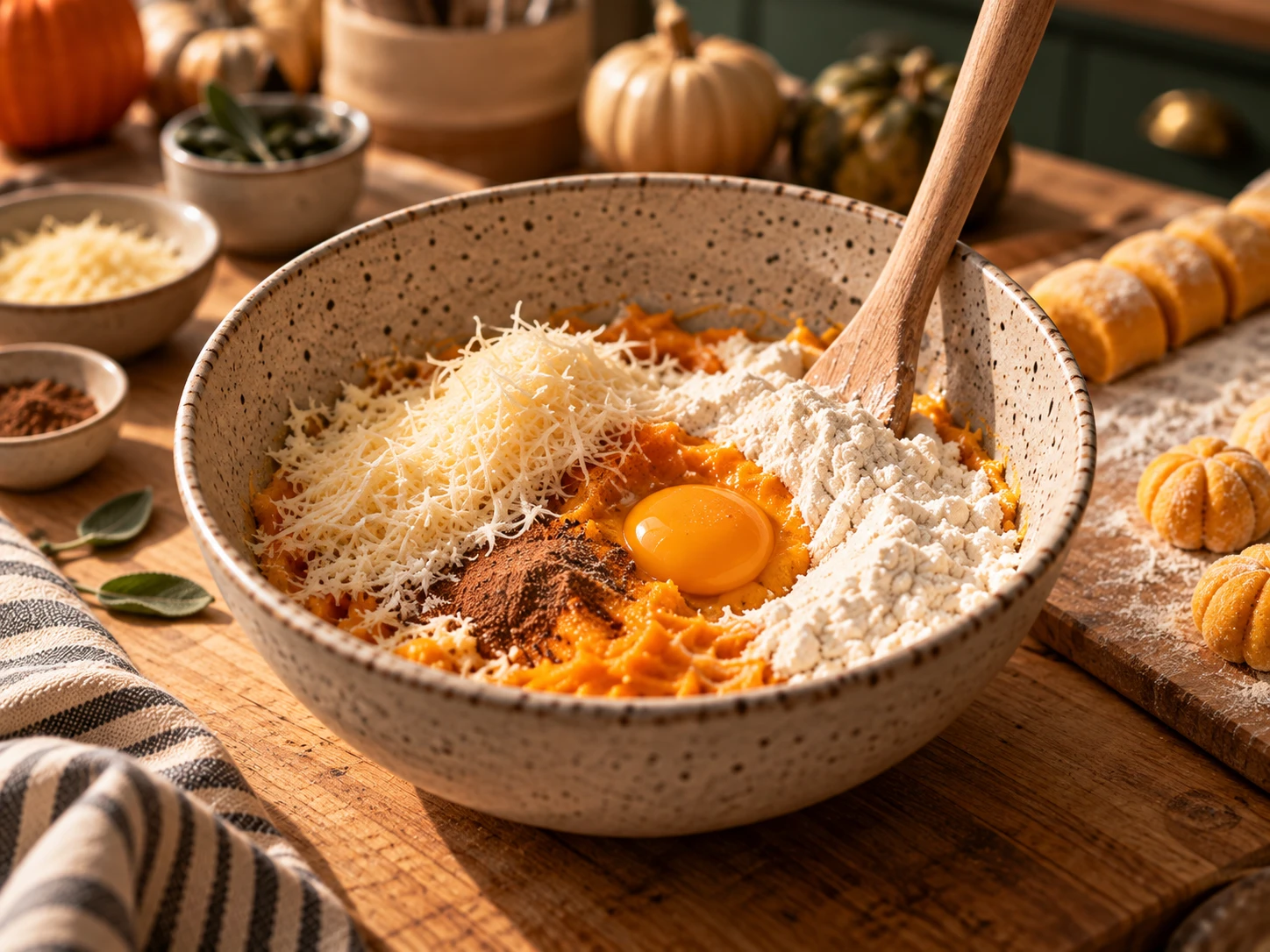
Mix the cooled pumpkin, egg yolk, Parmesan, salt, nutmeg, and black pepper in a bowl.
-
3
Fold in the flour gradually until a soft, slightly tacky dough forms; stop adding flour as soon as the dough holds together.
-
4
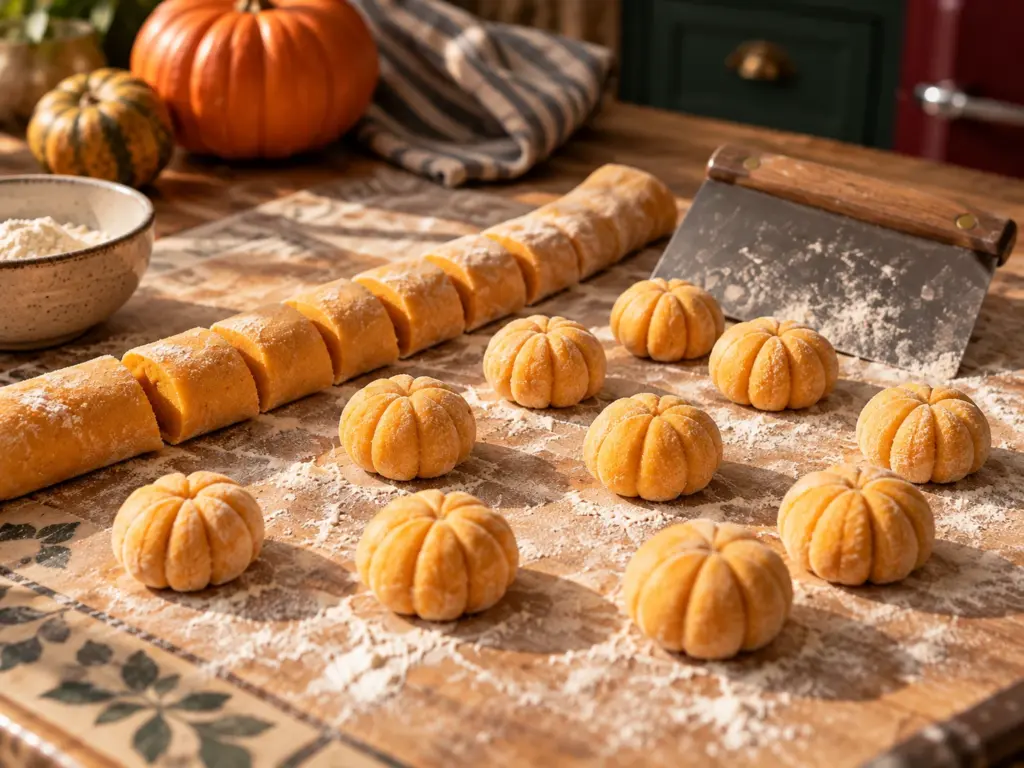
Turn the dough onto a lightly floured surface, divide it into four portions, and roll each into a 2 cm-thick rope.
-
5
Cut the ropes into 2 cm pieces and lightly press each piece over a floured fork or gnocchi board; chill the shaped gnocchi for 15 minutes.
-
6
Bring a large pot of well-salted water to a gentle boil. Cook the gnocchi in batches, stirring once, until they float and remain tender, about 2 to 3 minutes.
-
7
Melt the butter in a large skillet over medium heat. Add the sage leaves and cook until the butter foams, smells nutty, and turns golden brown, about 3 to 5 minutes.
-
8
Transfer the cooked gnocchi directly into the sage butter and toss gently for 1 to 2 minutes, adding a splash of pasta water if needed.
-
9
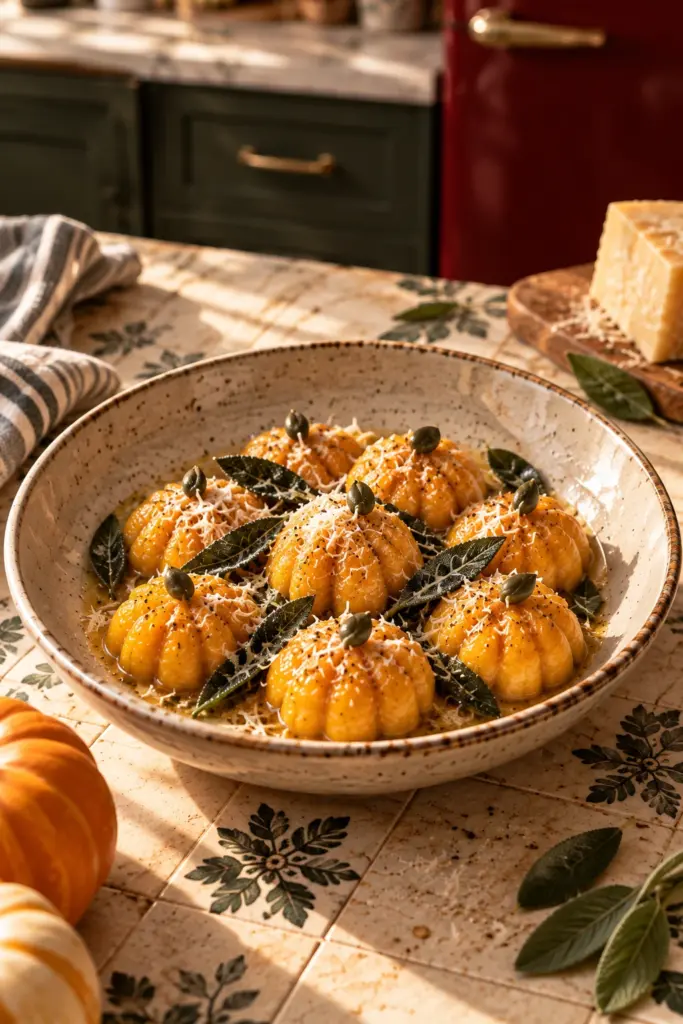
Plate with extra Parmesan, crispy sage, pumpkin seeds, and black pepper.
Kitchen Notes & Tips
- Dry the pumpkin thoroughly before mixing because excess moisture makes the gnocchi heavy and forces you to add too much flour.
- Avoid overworking the dough, since kneading develops gluten and can make the gnocchi chewy.
- Keep the water at a gentle simmer rather than a vigorous boil so the soft gnocchi do not break apart.
- Brown the butter over medium heat and remove it from the burner as soon as the milk solids turn amber to prevent burning.
- Cook the gnocchi in batches without crowding the pot so the water temperature stays steady.
Storage & Reheating
Storage: Refrigerate cooked gnocchi and sauce in an airtight container for up to 3 days.
Reheating: Reheat gently in a skillet over medium-low heat with 1 to 2 tablespoons of water or stock, tossing until hot.
Equipment
- Large skillet
- Mixing bowl
- Fork or gnocchi board
- Large pot
- Slotted spoon
- Bench scraper or knife
Substitutions & Variations
Why This Pumpkin Gnocchi Works
I used canned pumpkin purée. Purists, look away now. Roasting and sieving a whole pumpkin on a Tuesday night is not happening in this house. The canned stuff is consistent, it’s dry enough, and it saves a job. If you do roast your own, pass it through a sieve and then dry it in a pan, because wet purée means sticky dough and you’ll add too much flour to compensate.
The egg yolk binds without making the dough heavy, and the Parmesan gives a savoury note that stops the whole thing tasting like baby food. Flour is where it gets tricky: you want just enough to bring the dough together, no more, and the exact amount depends on how wet your pumpkin is. I start with most of it and stop as soon as the dough holds. Overworking develops gluten and you end up with chewy bullets instead of pillowy gnocchi. Nutmeg is a classic partner for pumpkin, and black pepper keeps things from getting too sweet.
If you’re wondering about ricotta, I didn’t use any. Plenty of recipes call for it, but I wanted the pumpkin to lead. The egg yolk and Parmesan do the binding, and the result is a little firmer than ricotta versions, which I actually prefer because they hold their shape in the water. If you’re used to ricotta gnocchi, this is a different beast, but a good one.
How to Make Pumpkin Gnocchi: Step by Step
1. Dry the pumpkin. Spread the purée in a wide skillet over medium heat and stir often until it looks thicker and drier, pulling away from the sides a bit. Let it cool completely before mixing, because warm purée makes sticky dough and you’ll be tempted to add too much flour. I know, because I did.
2. Mix the base. In a bowl, combine the cooled pumpkin, egg yolk, Parmesan, salt, nutmeg and pepper. Stir until evenly blended. It should look like a thick, slightly grainy paste. Taste it. It should be well seasoned now, because the flour will dilute it.
3. Add the flour. Fold it in gradually. Stop as soon as the dough comes together and feels soft and slightly tacky, not sticky. If it’s still too wet, add a spoonful more flour, but go carefully. Turn it out onto a lightly floured surface and give it a couple of gentle folds, no more. Don’t knead it like bread.
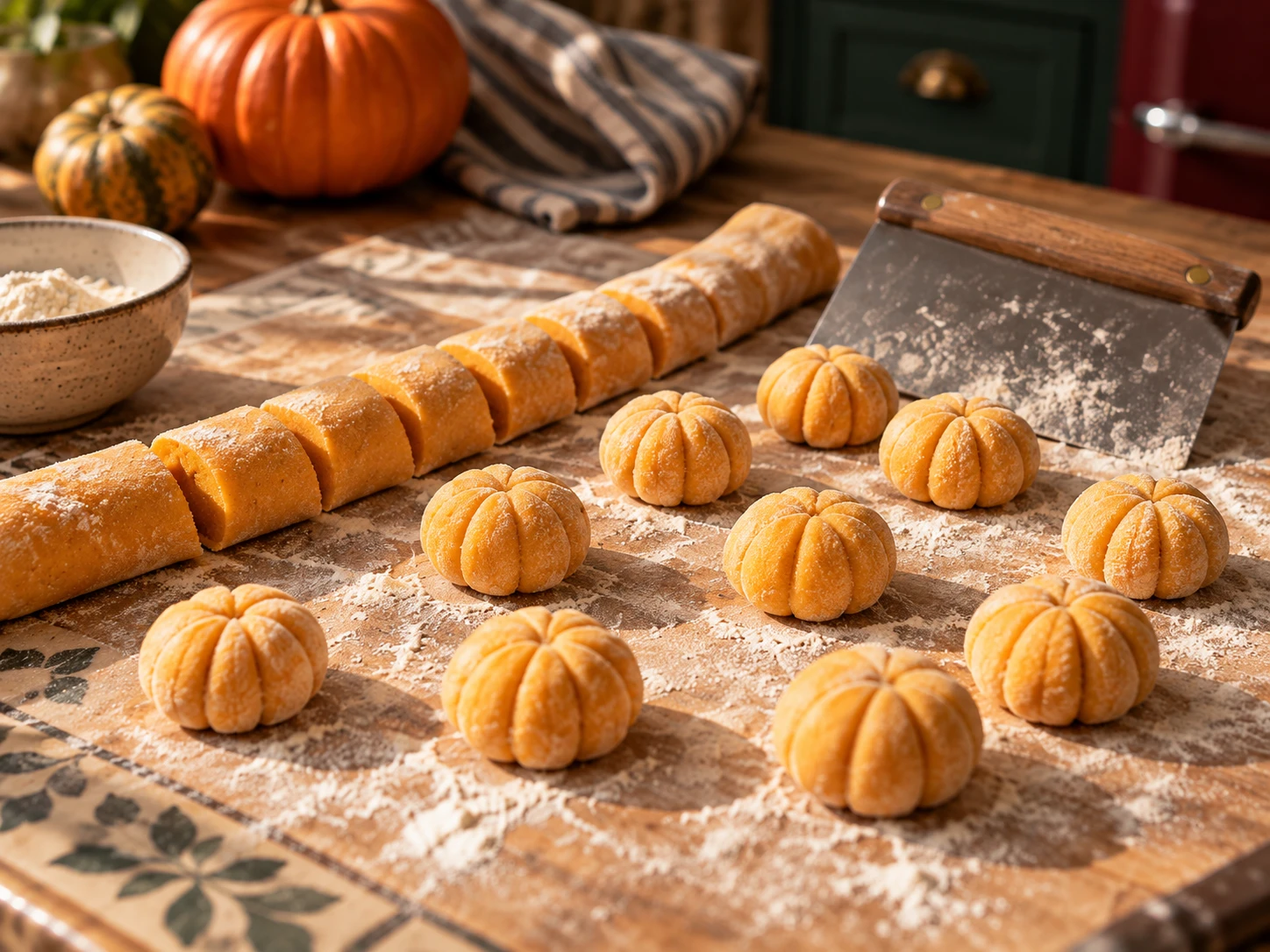
4. Shape the gnocchi. Divide the dough into four portions. Roll each into a rope about two centimetres thick, then cut into two-centimetre pieces. Press each piece lightly over a floured fork or gnocchi board to give it ridges. Put the shaped gnocchi on a floured tray and chill for a quarter of an hour; this helps them hold together in the water. Just as a side note, if you don’t have a gnocchi board, a fork works just fine.
5. Cook and sauce. Bring a large pot of well-salted water to a gentle boil. Cook the gnocchi in batches and don’t crowd the pot. I did, first batch, and ended up with one very large sad dumpling. They’re done when they float to the surface and stay tender, which takes a couple of minutes. Meanwhile, melt the butter in a large skillet over medium heat. Add the sage leaves and cook until the butter foams, smells nutty and turns golden brown. Keep an eye on it, burnt butter is bitter and there’s no coming back from it. Transfer the cooked gnocchi straight into the sage butter with a slotted spoon, toss gently, and add a splash of pasta water if it needs loosening. Finish with lemon juice if you like, then plate with extra Parmesan, the crispy sage, pumpkin seeds and black pepper.
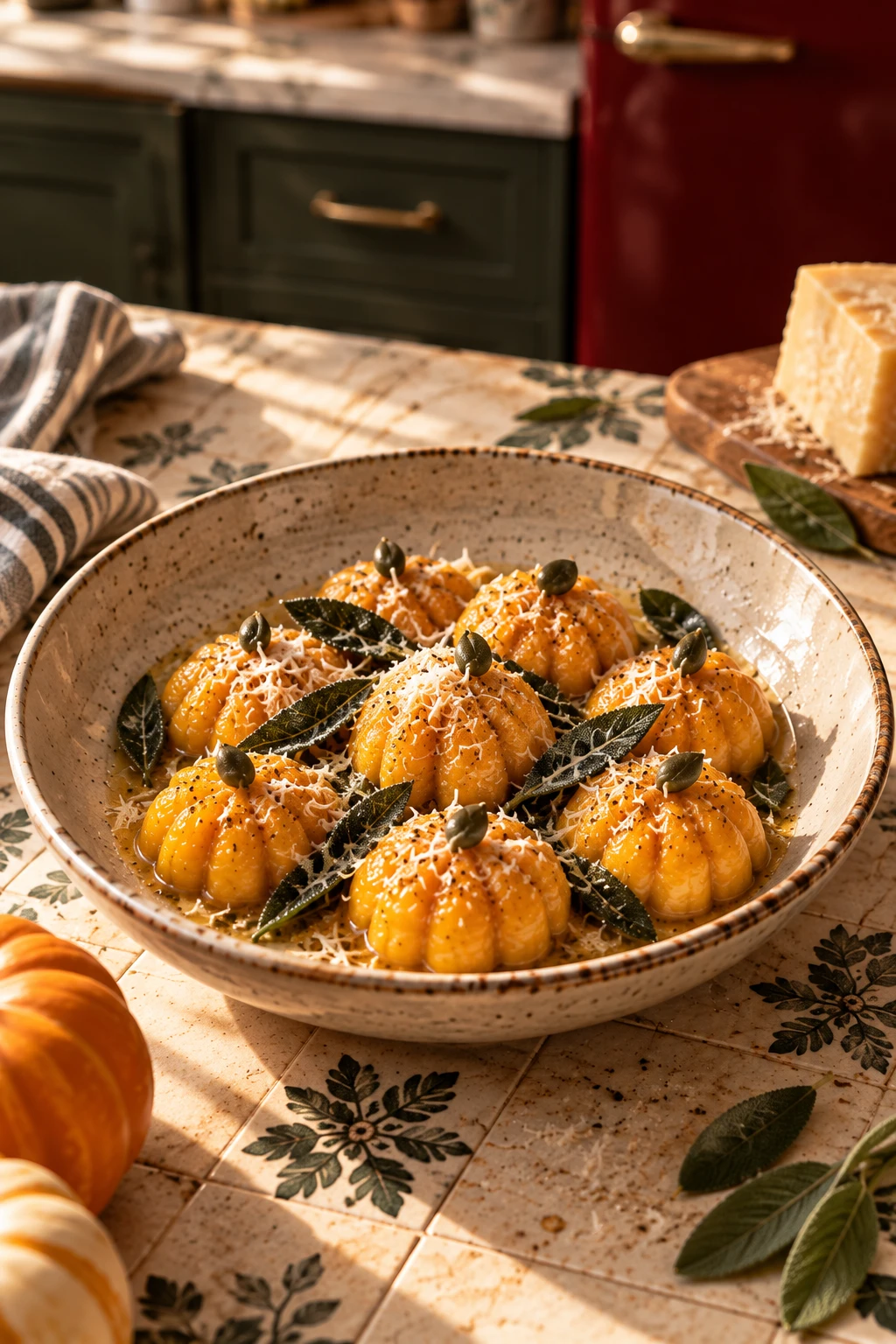
Tip: If you’re unsure about the texture, scoop one gnocchi out after it floats and bite it. It should be tender all the way through with no chalky centre. If it’s still firm, give the batch another minute.
Variations
Swap the pumpkin for roasted butternut squash, same method and same weights. If you want a softer, richer dough, fold in a couple of tablespoons of well-drained ricotta and reduce the flour slightly. For a gluten-free version, use a gluten-free all-purpose flour blend in the same weight; the dough may need a little less. Pecorino instead of Parmesan gives a sharper, saltier kick, and if sage isn’t your thing, try rosemary or thyme in the butter. Use less, as they’re stronger. Jen turned her nose up at the pumpkin initially. ‘Orange mash,’ were the words I heard as she left the kitchen. Of course, she had seconds.
More gnocchi and cosy dinners on the blog include creamy chicken gnocchi, a jar of homemade pesto to stir through, and a pot of butternut squash soup on the side.
Serving
Serve these gnocchi straight from the pan, with a generous grating of Parmesan and a scatter of toasted pumpkin seeds for crunch. A green salad on the side is plenty. This makes enough for four as a main, or six as a starter. Jen likes a glass of something crisp with it, and I won’t argue.
Storage, Make-Ahead and Reheating
You can shape the gnocchi up to a day ahead. Arrange them in a single layer on a floured tray, cover and refrigerate, then cook straight from the fridge. Any leftover cooked gnocchi and sauce will keep in an airtight container in the fridge for up to three days. Reheat gently in a skillet over medium-low heat with a tablespoon or two of water or stock, tossing until hot. Don’t blast it or the gnocchi will toughen. I haven’t tried freezing this one, but if you do, freeze the shaped gnocchi on a tray first, then bag them, and cook from frozen allowing a little extra time.
Pumpkin Gnocchi with Sage Butter: Final Thoughts
This is proper comfort food, and it doesn’t take long once you’ve got the dough together. Give it a go and let me know how you get on. As always, many thanks for reading and until next time…Steve.
Frequently Asked Questions
Can I use fresh pumpkin instead of canned purée?
Yes. Roast peeled, cubed pumpkin until tender, then mash or blend and pass through a sieve. Spread it in a pan over low heat to dry it out a bit before mixing. Fresh pumpkin can be wetter than canned, so you may need a little more flour. Weigh the purée after drying to keep the ratio right.
Why did my gnocchi fall apart in the water?
Usually it’s too much moisture in the dough or not enough flour. Make sure the pumpkin purée is dried well. Also, chill the shaped gnocchi before boiling, this helps them set. And make sure the water is at a gentle simmer rather than a rolling boil, which can break up the soft dough.
What’s the difference between this and ricotta gnocchi?
Ricotta gnocchi are softer and richer, and they rely on the cheese for structure. This version uses egg yolk and Parmesan to bind, so the pumpkin flavour comes through more clearly and the gnocchi hold their shape better in the pot. Neither is better, they’re just different tools for different dinners.
What can I use instead of sage?
Rosemary, thyme or even a few basil leaves added off the heat work well. Rosemary and thyme are stronger, so use about half the amount. Toasted hazelnuts or walnuts in the butter are also lovely for crunch.
How do I know when the gnocchi are cooked?
They’ll float to the surface and stay there. Give them another thirty seconds or so after floating, then scoop them out with a slotted spoon. If they’re still firm in the middle, give them a little longer, but don’t overcook or they’ll go mushy.