What Does it Mean to Dress for Culinary Success?

Table of Contents
OK, my Foodie Friends, a chef’s clothes say a lot. They aren’t just a look, they shape how you perform, how safe you are and how you come across to peers and customers. Let’s walk through what dressing for culinary success really means.
Why dressing right matters in the kitchen
Here’s the thing. A kitchen is a busy, hazardous place. Hot liquids, sharp tools and open flames are all part of the day. So the right clothes do three jobs at once.
Firstly, professionalism. Chefs represent their craft, and often their restaurant too. A clean, polished appearance shows respect for the work and gives diners confidence.
Secondly, safety. Proper attire, like a double-breasted chef coat or an apron, helps protect against burns, spills and cuts. Just as a side note, that’s why it’s worth getting right.
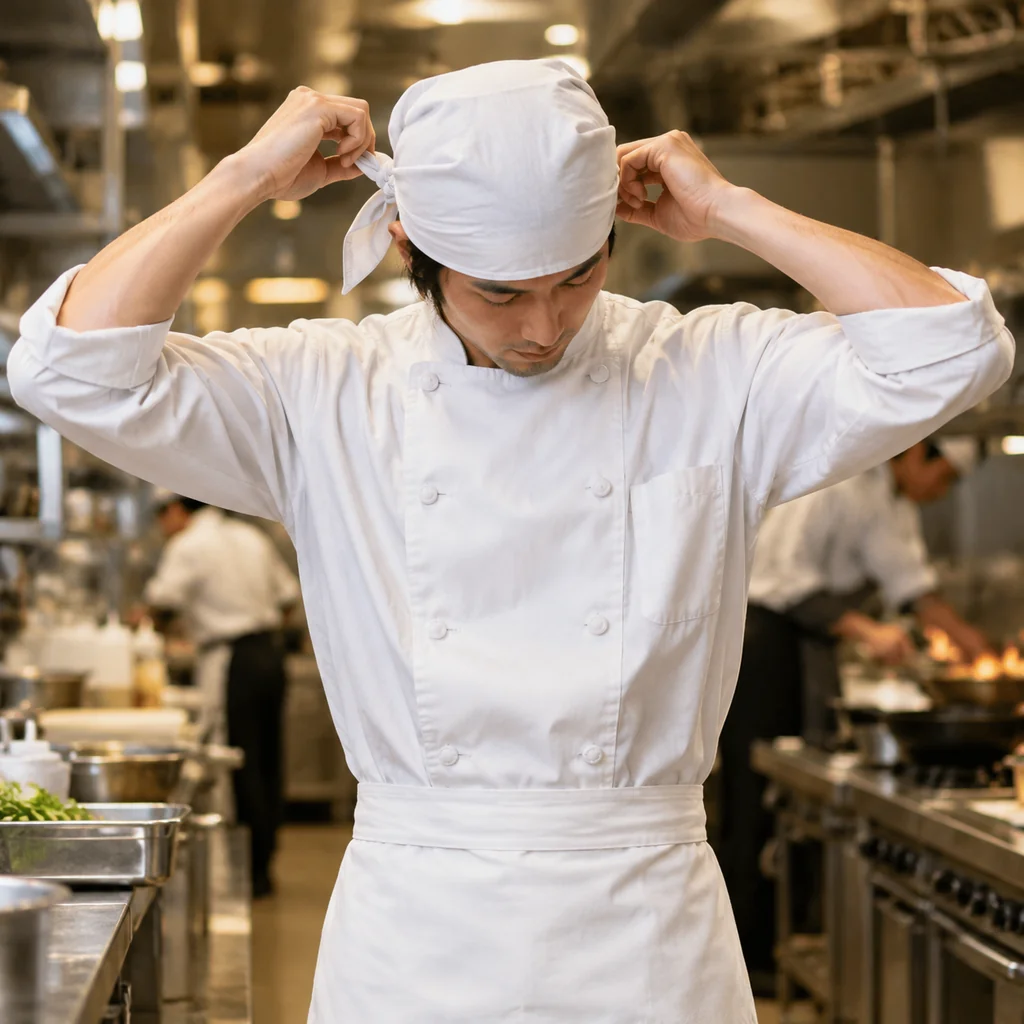
Finally, hygiene. The industry runs on strict health codes, and clean, well-kept clothing helps stop contamination. A chef hat or hairnet keeps hair out of the food. Simple as that.
How a shared uniform builds the team
When everyone follows the same dress code, the kitchen looks and feels like one unit. That consistency shows diners a professional operation, and it can lift morale too, because staff feel part of a polished, well-organised crew.
Now, shared standards also set clear expectations, which means less confusion and fewer clashes. A unified team tends to run more smoothly, and that’s a big deal in a high-pressure kitchen.

The essential pieces of a professional outfit
A professional culinary outfit is built for both practicality and presentation. Here’s what’s in it, piece by piece.
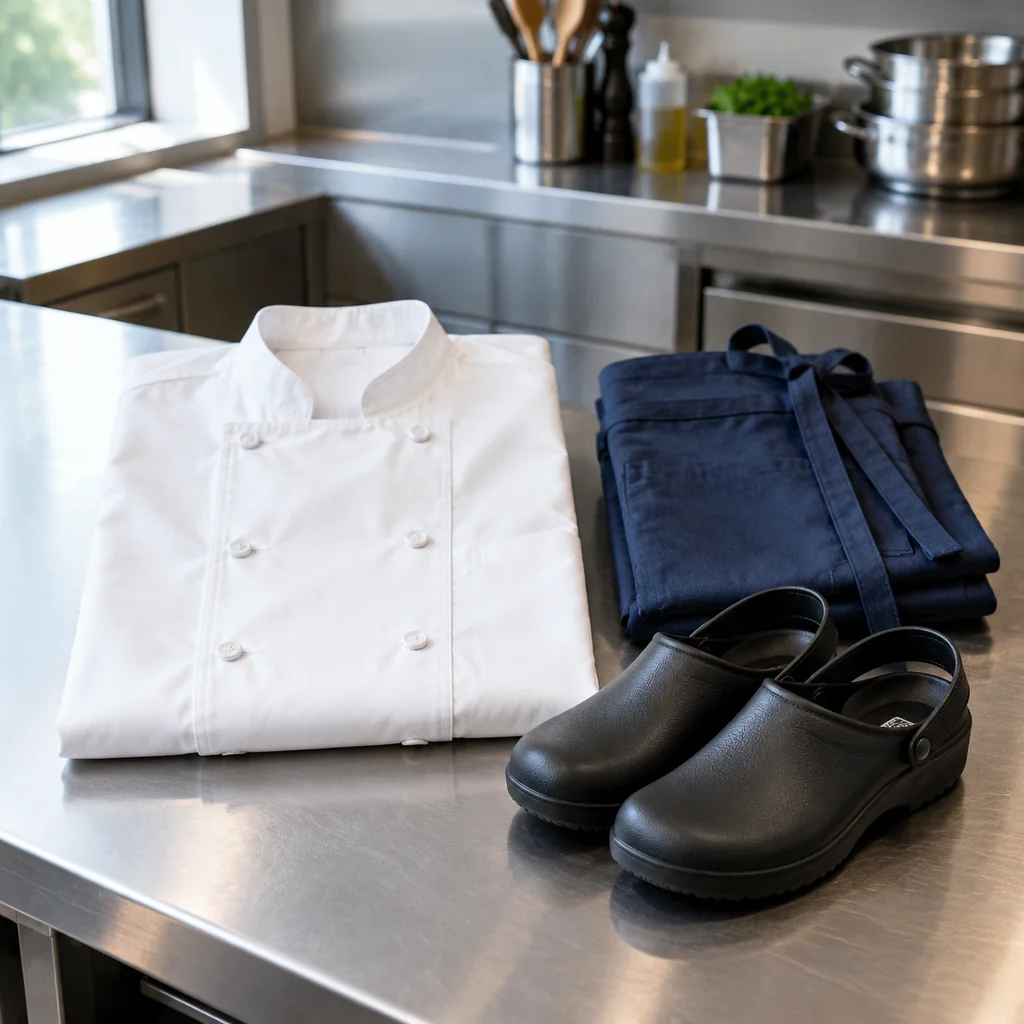
The chef’s coat
This is the centrepiece. It protects you and signals your role in the kitchen. Double-breasted designs are especially handy, because you can reverse the front panels to hide stains during service.
Aprons
An apron adds another layer of protection, and it’s easy to swap when it gets messy.
Trousers
Go for durable pants with a loose fit. They give you room to move and cut the risk of burns from hot spills.
Footwear
Non-slip shoes are a must. Busy kitchens get slippery, and a fall is the last thing you need mid-service.
Headgear
A chef hat or hairnet covers hygiene and tradition in one go, and it finishes off a clean, professional look.
Why fabric choice matters
The fabric makes a real difference to comfort and performance. Lightweight, breathable materials like cotton or cotton-poly blends are ideal. They let air circulate, so you stay cooler through long hours in a hot kitchen.
Moisture-wicking fabrics are worth a look too. They draw sweat away from the body, which keeps you comfortable.
Finally, durability counts as well. Chef coats go through frequent washing, heat and stains from food and liquids. High-quality fabrics with stain-resistant finishes help the uniform keep its professional look after repeated use.
Sustainable options
Sustainability is becoming a bigger factor for culinary professionals. Many chefs want attire that matches their commitment to environmental responsibility. Coats made from recycled polyester or organic cotton are becoming more widely available, and you don’t have to give up quality or style to choose them.
Confidence starts with the fit
How you look and feel in your kit can change how you cook. A coat that fits well and is tailored to your body lets you move freely and work without restriction. And knowing you look the part can boost your self-esteem, so you feel more authoritative and capable in the role.
Custom touches help too. Embroidered logos or personalised name tags let you show off your brand or your individuality, and that reinforces your identity and pride in the craft. Confidence in how you look often turns into confidence in how you perform. Want to find your perfect attire? You can go straight to Chefworks.
The bottom line
Dressing for culinary success means putting safety, function, professionalism and personal expression first. Choose high-quality, well-fitted attire that reflects your values and your role, and you’ll work better, feel better and give diners a better experience. Your clothing isn’t just about looking good. It’s a tool for success in a fast-paced, demanding industry. As always, many thanks for reading, and until next time, keep it clean and keep cooking!
Dressing for culinary success FAQ
Why does a chef’s uniform matter?
It protects the cook, keeps the food clean and shows professionalism. A double-breasted coat or an apron guards against burns, spills and cuts, and hats or hairnets keep hair out of the food.
What fabric is best for a chef’s coat?
Lightweight, breathable cotton or a cotton-poly blend. It lets air circulate and keeps you cooler in a hot kitchen. Moisture-wicking fabrics are handy too, because they draw sweat away from the body.
Why are chef coats double-breasted?
The front panels can be reversed to hide stains during service. That’s a big part of why the design is so functional.
Are there sustainable options for chef attire?
Yes. Coats made from recycled polyester or organic cotton are becoming more widely available.

You might also love
More in Kitchen Tips & How-To
Essential Japanese Ingredients to Add to Your Pantry
Updated: July 12, 2026 Whether you are cooking for friends and family or treating yourself to a delicious meal for one, there…
Read
8 Healthy Food Swaps to Cut Back on Carbs and Improve Your Diet
Updated: July 12, 2026 Sticking to a balanced, nutritious diet is essential not only when you want to lose some pounds. In…
Read
Healthy Vegetarian Recipes For Weight Loss
Updated: July 12, 2026 Introduction Healthy vegetarian recipes for weight loss are a great way to enjoy delicious meals that are low…
Read
How to Choose the Perfect Cake for Any Occasion
Updated: July 12, 2026 The right cake can ensure that every celebration becomes memorable. You always wonder, perfect for a birthday party,…
Read
Cooking With Wine: Expert Advice on How to Do It Right
Updated: July 12, 2026 Wine is a versatile product that can be used for both drinking and cooking. It can bring together…
Read
How To Package Food Products For Retail?
Updated: October 22, 2026 OK, my Foodie Friends, making great food is only half the job. Selling it in a shop means…
Read