
Chicken and Chorizo Recipes: Risotto, Pasta, Orzo, Paella and More
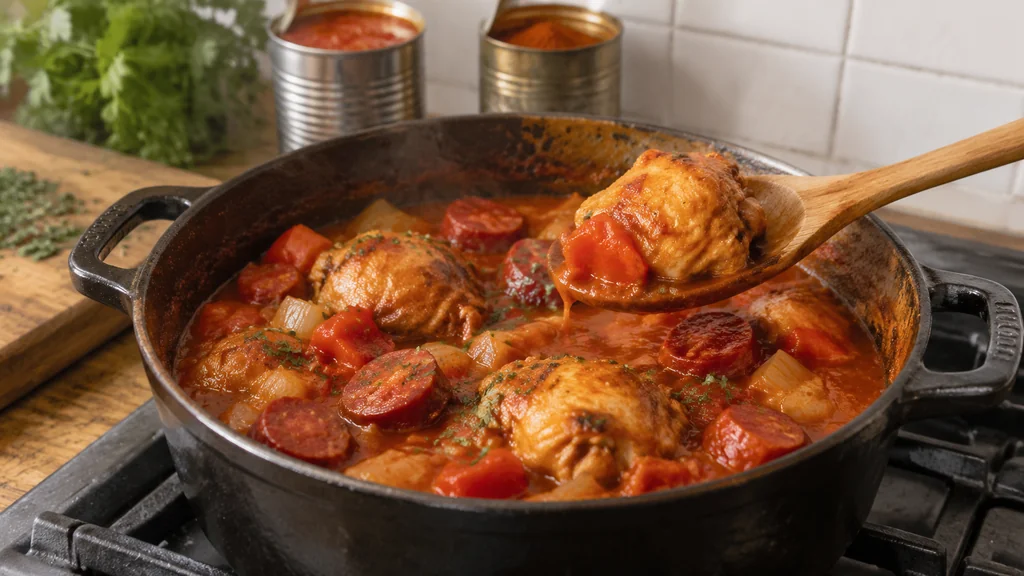
Table of Contents
Chicken and chorizo is the most forgiving pairing in my kitchen. The chorizo gives up its paprika-stained fat, the chicken takes it on, and you get deep flavour from two cheap ingredients. Below are the versions I actually cook, with the timings and the traps.
Why chicken and chorizo works so well
Chorizo is a cured pork sausage built on smoked paprika, and that paprika is the whole trick. Cook it gently and the fat runs orange, carrying garlic and smoke into everything it touches. Chicken thighs are the best partner because they have enough fat and connective tissue to survive a second cooking without going stringy. Breast works in a quick pasta, but it will dry out in a stew.
The other reason is economics. A modest amount of chorizo seasons a large pan of rice or pasta, so you get a lot of flavour for a small outlay. That is why the Spanish and Portuguese kitchens have leaned on it for centuries. If you want a sense of how far the sausage travels, Goa in India was ruled by the Portuguese for 450 years, and the local chouriço there is made with a vinegar and spice marinade rather than the dry-cured style we buy here.
Buying advice. Cooking chorizo, the soft kind you slice and fry, is what you want for rice and pasta. The firm slicing chorizo is for eating cold with bread. If the pack says semi-cured, treat it as cooking chorizo and use it up quickly. Check the label for the paprika type if you care about heat, because picante and dulce behave very differently in a pan.
One more thing worth knowing. Chorizo is salty, so season the rest of the dish late and lightly. I have ruined more than one pan of rice by treating the chorizo as if it were plain sausage.
The pan, the fat and the fond
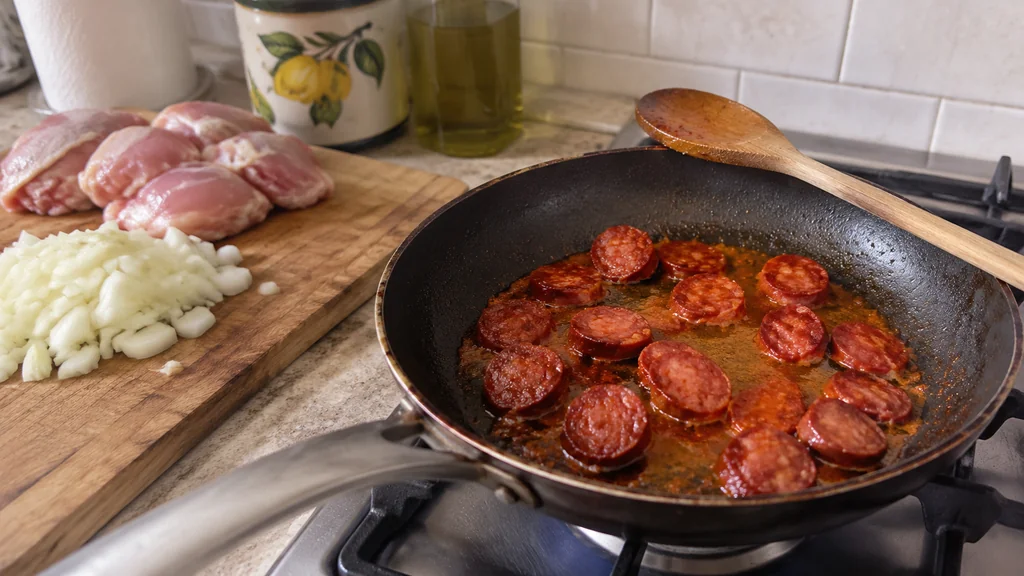
Everything in this article depends on one habit. Start the chorizo in a cold, dry pan over medium heat and let it come up to temperature slowly. The fat renders out gradually, the slices crisp at the edges, and you are left with a pool of red oil that is worth more than any stock cube.
Do not crowd the pan. Two layers of chorizo means the slices steam instead of fry, and you lose the crisp edge that makes the whole dish sing. Cook them in batches if you must, then tip them back in at the end.
The brown crust stuck to the base of the pan after the chicken goes in is your flavour reserve. Deglaze with a splash of white wine or a spoon of the stock and scrape it up with a wooden spoon. That single move is the difference between a decent supper and one people ask you to make again. A heavy-based pan holds heat better and gives you a more even crust, which matters most in a paella where you want a little socarrat at the base.
Chicken and chorizo risotto
Risotto is the version I make most often, because it is a one-pan dinner that feels like a treat on a Tuesday. The method is standard risotto with a Spanish accent. Soften onion, add the rice and fry it for 2 minutes so the grains get a glassy edge, then splash in white wine and let it bubble away before you start adding stock a ladle at a time.
The chorizo goes in early, with the onion, so its fat becomes the cooking medium. The cooked chicken goes in at the end. Stir in chorizo, cooked chicken, peppers, sweetcorn and peas and keep going for a further 5 minutes until everything is heated through. That late addition keeps the chicken tender and the peas bright.
Use thighs you have poached or roasted ahead. A leftover roast chicken is ideal, and this is the recipe where a Sunday bird earns its keep. Keep the stock hot in a separate pan, because cold stock stalls the cooking and makes the rice gluey.
Finish off the heat with a knob of butter and a handful of grated manchego or a sharp cheddar. Let it sit for a minute before serving so it settles. Risotto that sits too long goes stiff, so loosen with a splash of hot stock if you need to.
Creamy chicken and chorizo pasta
This is the fastest route to dinner in the whole article, and the one I turn to when the fridge is thin. Get the pasta water on first, because everything else takes less time than the boil.
Fry the chorizo until the fat runs, add sliced chicken breast or thigh and brown it properly, then soften a little onion and garlic in the same pan. Pour in a splash of white wine and let it reduce, then add cream or crème fraîche and let it thicken slightly. Toss the drained pasta through the sauce with a little of the starchy cooking water, which emulsifies everything and stops the sauce splitting.
The trap here is adding cream to a pan that is too hot. Take it off the heat first, stir the cream in, then return it to a low flame. Curdled cream cannot be rescued. A pinch of smoked paprika reinforces the chorizo, and a squeeze of lemon at the end cuts through the richness.
If you want to stretch it further, a handful of spinach wilted into the sauce at the last minute does the job without changing the character. Same for frozen peas, added straight from the freezer.
Chicken and chorizo orzo
Orzo is the quiet winner of this whole family. It behaves like rice but cooks like pasta, so you get a risotto-style dish without the stirring. Toast the dry orzo in the chorizo fat for a minute before adding liquid, and it keeps a bit of bite.
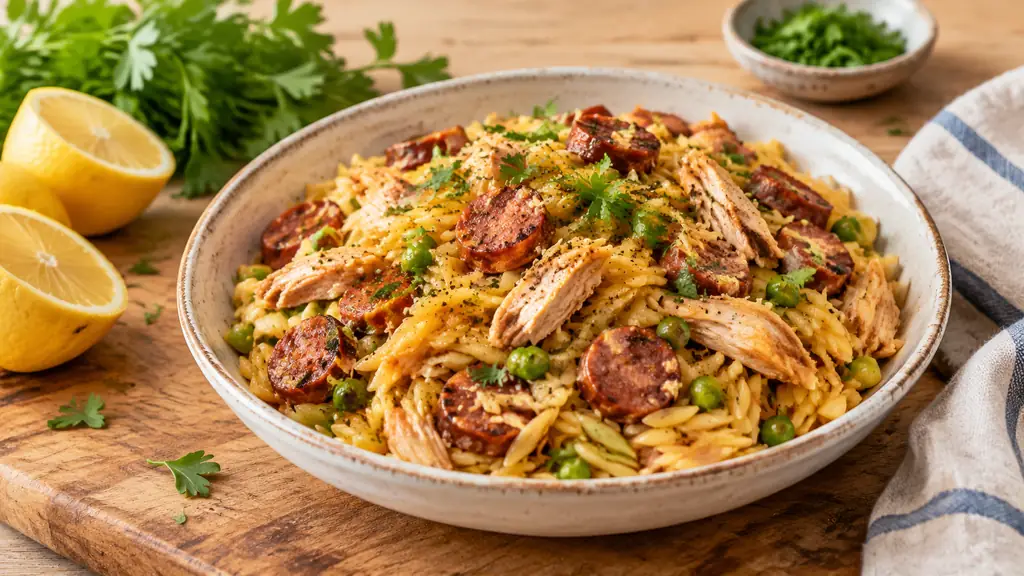
The method is simple. Fry chorizo and chicken, add onion and garlic, tip in the orzo and stir to coat, then add hot stock a little at a time or all at once and simmer until the pasta is tender and the liquid has gone starchy. Add a handful of peas near the end. Finish with lemon zest and parsley.
Orzo catches at the base of the pan more readily than rice, so stir it more often than you would a risotto. If it looks dry before the pasta is cooked, add more hot stock rather than water, which dilutes the flavour.
This is also the best version for feeding a crowd on a budget, because orzo is cheap and a little chorizo goes a long way. It reheats better than risotto, which turns to stodge in the fridge. Pack it into lunch boxes with a little extra stock stirred through on reheating.
Chicken and chorizo paella recipe
Paella is the dish people are most nervous about and the one that rewards patience. The method I follow is close to the Good Food magazine version published in March 2016, and it works because it builds flavour in stages rather than dumping everything in at once.
Cook sliced onions slowly on low heat for about 10 minutes until they soften and sweeten. Add garlic and stir for 1 minute before the chorizo goes in, so the garlic does not burn. Brown the chicken pieces in the same pan, then remove them and set aside while you build the rice.
Add the rice and coat it in the oils and spices for about 2 minutes before the stock goes in. This step is what separates paella from a wet rice dish, because the grains get sealed and stay separate. Pour in hot stock, return the chicken to the pan and simmer for about 20 minutes. Then scatter frozen peas over the top and simmer for a further 5 minutes until the rice is cooked.
Do not stir once the stock is in. That is the rule that gives you the crust at the base. If you are using a wide pan, rotate it on the hob rather than stirring, so the heat moves around. Rest it off the heat under a tea towel for a few minutes before serving, and the rice will finish steaming through.
Saffron is traditional but expensive. A pinch of turmeric gives colour without the price tag, and smoked paprika reinforces the chorizo. Neither is authentic, and both are delicious.
Chicken and chorizo rice, stew and pie
Rice, stew and pie are the three ways this pairing stretches into a proper meal, and each one has its own logic.
For a simple chicken and chorizo rice, treat it as a one-pot pilaf. Fry the chorizo, brown the chicken, add onion and garlic, then rice and hot stock, cover and cook gently until the liquid is absorbed. A tight-fitting lid matters more than anything else. Rest it off the heat for ten minutes before you lift the lid, and the grains finish evenly.
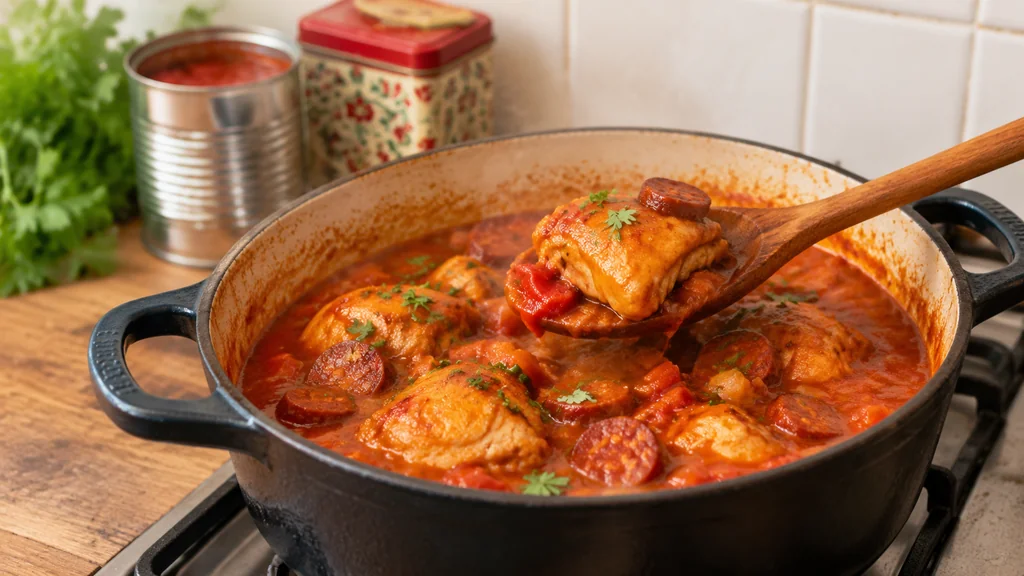
The stew is the winter version. Brown chicken thighs, soften onion and chorizo, add tinned tomatoes and a little smoked paprika, then simmer gently until the chicken gives way under a spoon. Add a tin of chickpeas near the end for bulk. This is the version that improves overnight, so make more than you need.
The pie is where this pairing really earns its place at the table. A chicken and chorizo filling with a puff pastry lid is a weekend centrepiece, and the chorizo does the seasoning for you. If you want a pastry starting point, my easy chicken and leek pie recipe with a puff pastry lid shows how I handle the lid and the crimp. For a deeper, more savoury filling built on the same principles, this chicken and mushroom pie inspired by Jamie Oliver is a good template to adapt, swapping the mushrooms for chorizo and a little extra paprika.
Whatever the format, cool the filling before it goes under pastry. A hot filling steams the underside of the lid and you get a soggy layer instead of a crisp one. Brush the top with beaten egg and bake hot until the pastry is puffed and deeply golden.
Mistakes I have made, and how to avoid them
I have cooked this pairing badly enough times to have a list.
- Adding chorizo to a cold pan with oil. It does not need oil, and the oil stops the fat rendering properly.
- Overcrowding the pan so the chorizo steams. Cook in batches and accept the extra minute.
- Seasoning early. Chorizo is salty, so taste before you add salt.
- Stirring rice dishes constantly. Once the stock is in, leave it alone.
- Using breast meat in a long-simmered stew. Thighs hold up; breast does not.
- Adding cream to a boiling pan. Take it off the heat first.
- Skipping the rest. Rice, risotto and pie filling all benefit from a few minutes off the heat.
The one I still get wrong is patience with the onion. Ten minutes on low heat feels like forever when you are hungry, but rushing it means the sweetness never develops and the finished dish tastes flat.
When to buy, and what to look for
Cooking chorizo is best used within a few days of opening, and it freezes well in slices. Buy it from a counter if you can, so you can feel whether it is firm or soft. Soft means cooking chorizo. Firm means slicing chorizo.
For chicken, thighs are the better buy for anything simmered, and they are cheaper. Bone-in thighs give more flavour to a stew, but boneless skinless thighs are quicker and easier for rice and pasta. Check the label for the rearing standard if that matters to you, and buy British where you can.
Paprika is the other ingredient worth spending on. Sweet smoked paprika from Spain has a rounder flavour than the supermarket own-brand jars, and a little goes a long way. Store it in a dark cupboard, because it fades.
Chicken and Chorizo FAQ
How long should I fry chorizo before adding chicken?
Add the chicken once the fat is running and the slices have coloured, and brown the chicken in that fat rather than adding fresh oil.
Can I make chicken and chorizo risotto ahead of time?
Risotto is best eaten straight away, because it stiffens as it cools. If you must make it ahead, keep it slightly looser than you want it, cool it quickly, and reheat with a splash of hot stock, stirring until it loosens again.
What is the difference between cooking chorizo and slicing chorizo?
Cooking chorizo is soft, semi-cured and meant to be sliced and fried, so it renders fat and holds its shape. Slicing chorizo is firm and fully cured, meant for eating cold, and it will dry out and toughen if you fry it.
How many recognised Portuguese chouriço varieties are there?
There were 8 recognised varieties of chouriço in Portugal in 2023, according to the EU geographical indications register. The styles differ by region, cure and spice mix, which is why the flavour varies so much between packs.
Can I use chicken breast instead of thighs in these recipes?
Breast works in the pasta and in a quick rice dish, where it cooks fast and stays tender. In a stew, paella or pie filling, use thighs, because breast dries out and turns stringy over a long simmer.

You might also love
More in Chicken & Poultry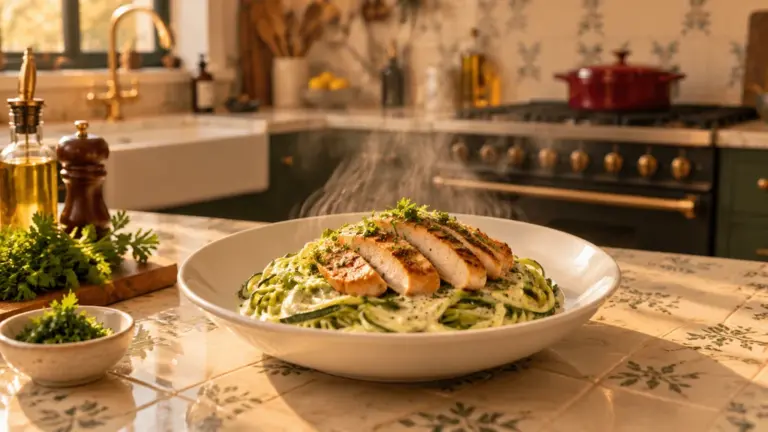
Delicious Paleo Chicken Alfredo Recipes
Updated: October 31, 2026 Craving a creamy and indulgent pasta dish without the guilt? Look no further! We’ve got you covered with…
Read
Chicken vs Hot Dog: The Ultimate Game Night Food Showdown
Chicken vs hotdog for game night: nutrition compared, how many to buy, safe cooking temps, and which one actually wins the showdown.
Read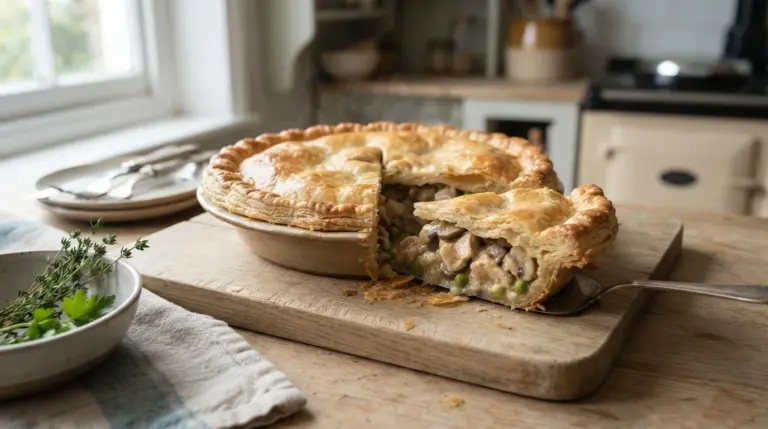
Chicken and Mushroom Pie (Jamie Oliver-Inspired)
Our own chicken and mushroom pie, inspired by Jamie Oliver's puff-pastry one-pan style. Ingredients, method, and what his real recipe contains.
Read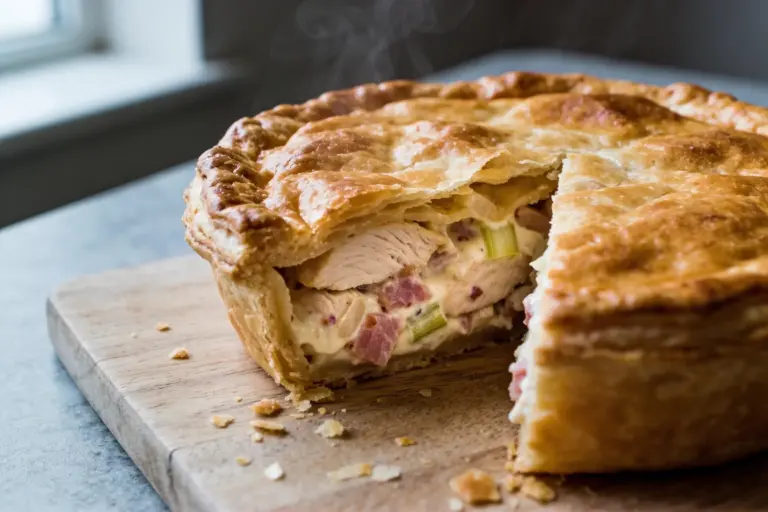
Chicken and Ham Pie
A creamy chicken and ham pie with a golden puff pastry top, made with thigh meat for the best texture. Includes make-ahead,…
Read
Sweet Pepper & Lemon Chicken Cacciatore
Updated: July 12, 2026 Today we fancied Italian. The problem with fancying Italian, however, is that it always tends to be pizza…
Read
Black Pepper and Garlic Chicken Thigh Curry
Updated: September 29, 2026 Every thought of making your own Indian curry at home? Look at this wonderful black pepper and garlic…
Read