
Chicken and Ham Pie
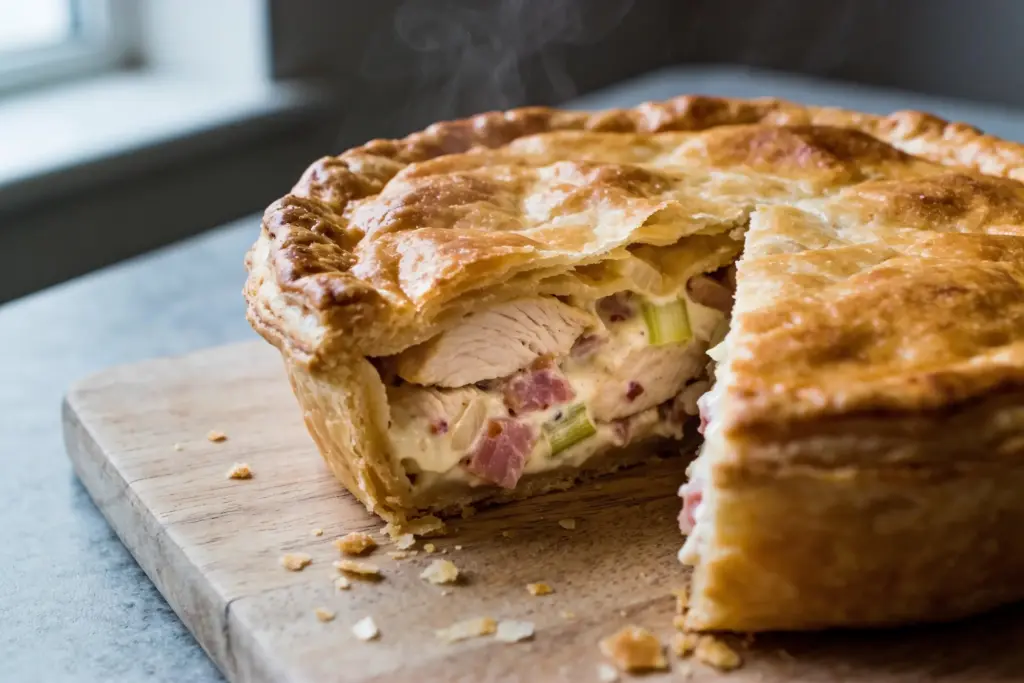
Table of Contents
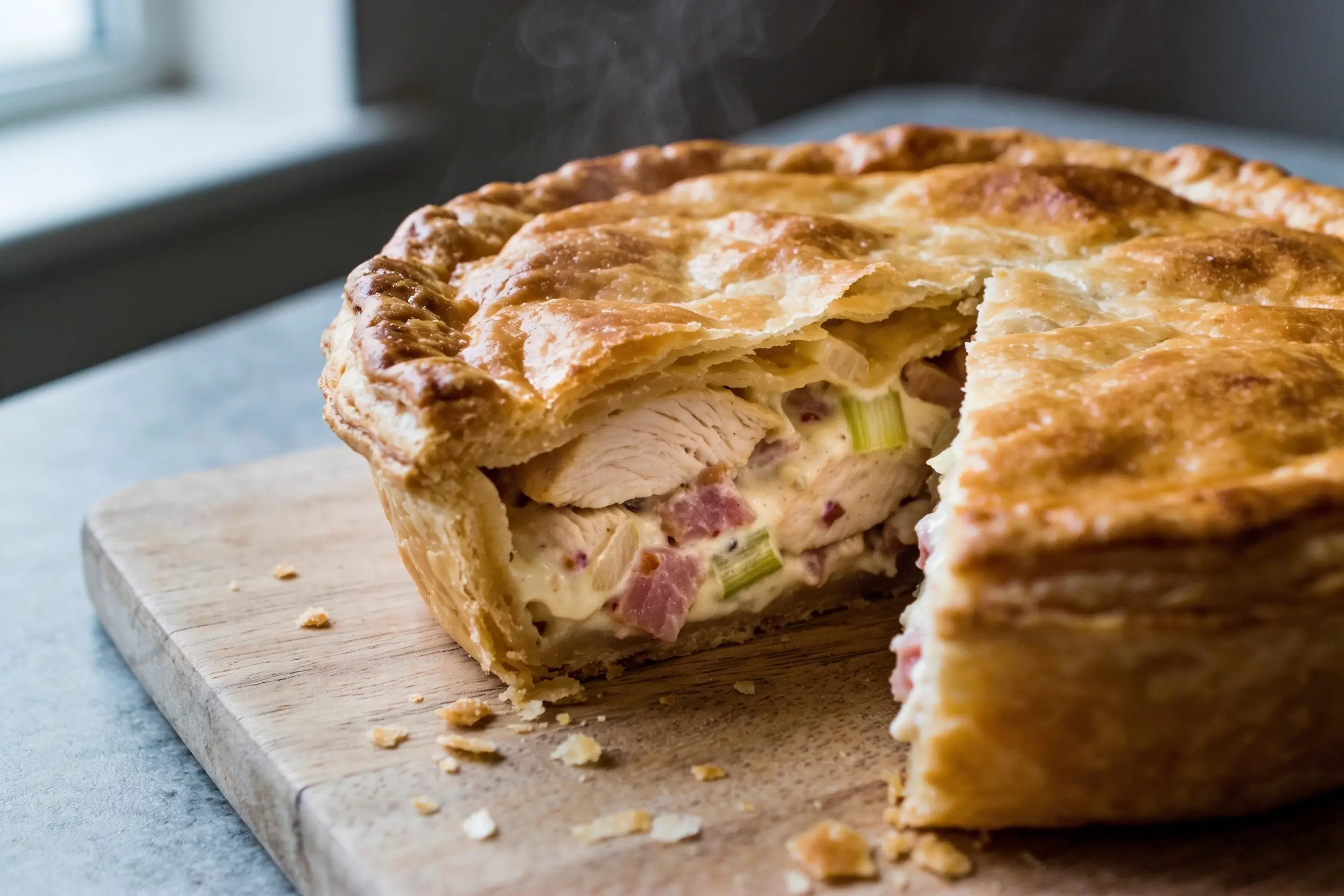
Chicken and ham pie is a creamy filling of chicken thigh and diced ham, thickened into a sauce that holds its shape, then capped with a sheet of golden puff pastry. The trick that keeps it from turning into a soggy stew is a thick sauce. I make mine with thigh meat because it stays juicy through the whole simmer, and I finish the sauce with a spoonful of Dijon mustard, which cuts through the richness quietly in the background. The pastry goes on top only, which keeps it properly flaky against a filling that would turn a bottom crust to paste.
Why this chicken and ham pie works
This is the kind of dinner that feeds a table without much fuss. The filling is forgiving. Simmer it a few minutes longer than the recipe says and nothing goes wrong. It sits happily in the fridge for a day or two before you top and bake it, so you can get the filling done before a busy week actually starts. It also reheats well as leftovers, so a pie built for four to six people can quietly stretch across two dinners without anyone noticing the second helping was a repeat.
It also belongs to a small family of pies I keep coming back to. If you like this one, my fish pie recipe follows the same logic with smoked haddock and salmon, and the cheddar-topped shepherd’s pie swaps pastry for mash. All three lean on the same idea. Get the filling right, and the topping just has to hold its nerve in the oven.
What chicken should you use?
Use thigh, not breast, and don’t apologise for it. Thigh meat has more fat and connective tissue running through it, which means it stays moist across a much wider window of cooking time. You can simmer it a little too long in the sauce and it will still be tender. Breast meat has almost none of that insurance. Overcook it by even a few minutes and it turns stringy and dry, which is exactly what tends to happen once it’s been sitting in a hot sauce while you deal with the pastry.
If you’ve come round to cooking with thigh meat generally, it earns its keep well beyond this pie. I use it in Chinese chicken thighs for a quick weeknight dinner, in a slower creamy sherry and thyme chicken, and in a proper chicken thigh curry when I want more spice. Same cut, four completely different dinners.
Ham or gammon?
Either works, and it isn’t a big decision. Ready-cooked ham is the easy route. Dice it and stir it in near the end of cooking, since it just needs warming through. Raw gammon takes more planning, because it needs poaching or roasting first before it goes anywhere near the pie filling. What you get for that extra step is a smokier, more savoury flavour that a supermarket ham slice won’t quite match. If you’ve got leftover gammon from a roast already in the fridge, use it. If you’re starting from scratch on a weeknight, reach for sliced or cubed cooked ham and don’t overthink it. A thick-cut ham steak, diced, works just as well as pre-packed ham slices, and it’s often better value if you’re buying it specifically for the pie.
Shortcrust or puff pastry?
Puff pastry is the better topping here. Because this pie has a topping only and no base, puff pastry gets to do what it does best. It rises into flaky, buttery layers, with no wet filling sitting underneath to turn it soggy. The lamination that makes puff pastry rise in dramatic layers works entirely to your advantage when it sits on top and puffs upward, catching the oven’s heat.
Shortcrust is the sturdier option and a reasonable choice if pastry makes you nervous. It’s more forgiving to roll, holds its shape better if your kitchen is warm, and gives you a more even, crumbly bite. I’d still reach for puff first. But if the last shortcrust pastry you made turned out well and the last puff pastry didn’t, use what worked for you.
Ingredients
This makes enough for a 1.5 to 2 litre pie dish. That’s roughly 24 to 26cm across. It serves four to six. Nothing here is unusual or hard to find, which is part of why this pie earns its place in a normal weekly shop. Gather these for the filling and sauce first:
For the filling and sauce
| Ingredient | Amount |
|---|---|
| Chicken thighs, boneless and skinless | 500g, cut into chunks |
| Cooked ham (or poached gammon), diced | 200g |
| Onion, chopped | 1 medium |
| Leek, sliced | 1 |
| Carrots, diced | 2 |
| Celery sticks, diced | 2 |
| Butter | 50g |
| Plain flour | 50g |
| Chicken stock | 500ml |
| Milk or double cream | 100ml |
| Dijon mustard | 1 tbsp |
| Thyme leaves or chopped parsley | 1 tbsp |
| Frozen peas (optional) | 100g |
| Salt and black pepper | To taste |
That’s the whole filling sorted in one table. The topping needs just two things on top of that.
For the topping
| Ingredient | Amount |
|---|---|
| Ready-rolled puff pastry | 1 sheet (about 320-375g) |
| Egg, beaten | 1, for egg wash |
A shop-bought sheet of puff pastry is fine here — homemade buys you nothing a good one from the chiller cabinet doesn’t already give you.
Method
- Melt the butter in a large, deep pan over a medium heat. Add the onion, leek, carrot and celery, and cook gently for 8-10 minutes, stirring now and then, until softened but not coloured.
- Stir in the flour and cook for a minute or two, coating the vegetables, to get rid of the raw flour taste. Take the pan off the heat and gradually whisk in the stock, a splash at a time, until it’s smooth with no lumps.
- Return the pan to the heat and bring to a gentle simmer, stirring, until the sauce thickens enough to coat the back of a spoon. This usually takes 3-4 minutes.
- Add the chicken, ham, mustard and thyme. Simmer gently for 12-15 minutes, stirring occasionally, until the chicken is cooked through and the sauce has thickened further.
- Stir in the milk or cream and the peas if using. Season with salt and pepper, then take the pan off the heat and let the filling cool for about 10 minutes before it goes anywhere near the pastry. Hot filling under cold pastry steams the underside and softens it before it’s had a chance to bake properly.
- Spoon the filling into your pie dish. Roll out the pastry if it isn’t ready-rolled, lay it over the top, trim the excess and crimp the edges to seal. Cut two or three small slits in the top to let steam escape.
- Brush the pastry all over with the beaten egg. Set the oven to 200°C fan. That’s 220°C conventional, or gas mark 7. Bake for 30-35 minutes, until the pastry is deep golden and well puffed.
- Check the chicken is properly cooked before you serve. The Food Standards Agency’s guidance on gov.uk is specific here. Chicken is safe once it reaches 70°C for two minutes at the core. A shorter equivalent is 75°C for 30 seconds. A thermometer beats guessing, and I keep one in the kitchen drawer for exactly this reason. As a backup if you don’t have one, the filling should be steaming hot throughout with clear juices and no pink meat. My full breakdown of safe temperatures and reheating is in Cooked Chicken: Safe Temperatures, Reheating and Storage, worth a read if you cook chicken often.
Make it ahead, storing and reheating
You can build this pie in stages, making the filling one evening and topping and baking it the next. Make the filling up to two days ahead and keep it covered in the fridge. When you’re ready to eat, top it with pastry straight from cold and bake as normal, adding a few extra minutes if the filling is still cold from the fridge.
Leftovers keep for about two days in the fridge once they’ve cooled and gone in promptly, and you should only reheat them once, until piping hot all the way through.
Freezing needs a bit more care than a flat yes or no. The cooled, unbaked filling freezes well on its own, and defrosting it overnight in the fridge before topping and baking fresh is the safest route for texture. Freezing the whole pie once it’s assembled or already baked is riskier. The creamy sauce can split as it thaws and reheats, and pastry that’s been frozen and reheated can become soft. If you’ve got the freezer space and the choice, freeze the filling and deal with the pastry fresh each time.
For planning a bigger spread around it, my notes on Sunday roast timing and prep cover how to stagger a few dishes so nothing’s cold by the time you sit down, which applies just as well to a pie dinner as a roast.
Variations
Swap the vegetables to suit what’s in the fridge. Mushrooms, sweetcorn, or a handful of spinach all work well stirred in at the end, alongside the peas or in their place, and none of them change the method. If leeks are your thing, my chicken and leek dauphinoise leans on the same combination in a different, more indulgent direction.
For gluten-free, a 1:1 gluten-free flour blend generally works fine in the roux, though the sauce can behave slightly differently depending on the brand, so watch the thickness as you whisk in the stock. For dairy-free, plant butter and a plant milk will get you a pie that works, but it’ll taste noticeably lighter and less rich than the version made with real butter and cream. Both are reasonable adaptations, so treat the first attempt as a trial run.
Chicken and ham pie is one of those dinners worth having in regular rotation. It combines cheap ingredients, a filling that forgives a few extra minutes on the heat, and a pastry top that looks like far more effort than it took. Get the sauce thick and the chicken right, and the rest takes care of itself.
FAQ
What if I use chicken breast? Yes, though the pie will be less forgiving. Breast meat dries out if it’s overcooked even slightly, so keep the simmering time on the shorter end and check it early. Thigh gives you more room for error and a juicier result, which is why it’s the better default for this recipe.
Can I use leftover roast chicken? Yes, and it’s a good way to use it up. Shred or chop the cooked chicken and stir it in with the ham once the sauce has thickened. It’s already cooked, so it just needs a few minutes to warm through.
Can I make it gluten-free? Generally, yes. A 1:1 gluten-free flour blend works in the roux for most people, and gluten-free puff pastry is widely available for the topping. Results vary a little by brand, so treat your first attempt as a test and see how it behaves.
Can I freeze chicken and ham pie? It depends on which stage you freeze it at. The cooled, unbaked filling freezes well and is the safer option for texture. A fully assembled or baked pie can be frozen too, but the sauce may split and the pastry can go soft on reheating, so freezing at these stages requires more care.
Why is my filling too runny? Most often the roux didn’t cook long enough, or the sauce wasn’t simmered long enough to thicken properly before the chicken went in. Give it those extra few minutes on the heat, stirring, before you move on to the next step, and don’t rush the stock in all at once.
What size dish do I need? A 1.5 to 2 litre pie dish suits the quantities in this recipe. That’s around 24 to 26cm across, and it serves four to six. A slightly smaller or deeper dish works too, so long as there’s enough room for the pastry to sit above the filling without touching it.
How do I know the chicken is cooked through? Use a thermometer ideally. The Food Standards Agency’s benchmark is 70°C for two minutes at the core. A shorter equivalent is 75°C for 30 seconds. Without a thermometer, look for filling that’s steaming hot throughout with clear juices and no pink meat left anywhere in the pie.
The Yum Yum Club · Kitchen Tested Recipe
Chicken and Ham Pie
Prep: 20 mins · Cook: 45 mins · Total: 1 hr 5 mins
Ingredients
5 servingsFor the filling and sauce
For the topping
Nutrition Facts
Per Serving: 1
Nutrition values are estimates calculated per serving from the ingredient list.
Instructions
-
1
Melt the butter in a large, deep pan over a medium heat. Add the onion, leek, carrot and celery, and cook gently for 8-10 minutes, stirring now and then, until softened but not coloured.
-
2
Stir in the flour and cook for a minute or two, coating the vegetables, to get rid of the raw flour taste. Take the pan off the heat and gradually whisk in the stock, a splash at a time, until it's smooth with no lumps.
-
3
Return the pan to the heat and bring to a gentle simmer, stirring, until the sauce thickens enough to coat the back of a spoon. This usually takes 3-4 minutes.
-
4
Add the chicken, ham, mustard and thyme. Simmer gently for 12-15 minutes, stirring occasionally, until the chicken is cooked through and the sauce has thickened further.
-
5
Stir in the milk or cream and the peas if using. Season with salt and pepper, then take the pan off the heat and let the filling cool for about 10 minutes before it goes anywhere near the pastry.
-
6
Spoon the filling into your pie dish. Roll out the pastry if it isn't ready-rolled, lay it over the top, trim the excess and crimp the edges to seal. Cut two or three small slits in the top to let steam escape.
-
7
Brush the pastry all over with the beaten egg. Set the oven to 200°C fan (220°C conventional, gas mark 7). Bake for 30-35 minutes, until the pastry is deep golden and well puffed.
-
8
Check the chicken is properly cooked before you serve: it should reach 70°C for two minutes at the core (or the equivalent 75°C for 30 seconds), steaming hot throughout with clear juices and no pink meat.

You might also love
More in Chicken & Poultry
Honey Chicken: 4 Delicious Styles, From Crispy Takeaway to Sticky Honey Soy
Updated: October 12, 2026 Great honey chicken is tender meat under a glossy, balanced glaze that tastes of more than just sugar.…
Read
Mushroom Duxelle Stuffed Chicken Breast
Updated: September 29, 2026 This mushroom duxelle stuffed chicken breast recipe is a delight to make and very tasty. It will visually…
Read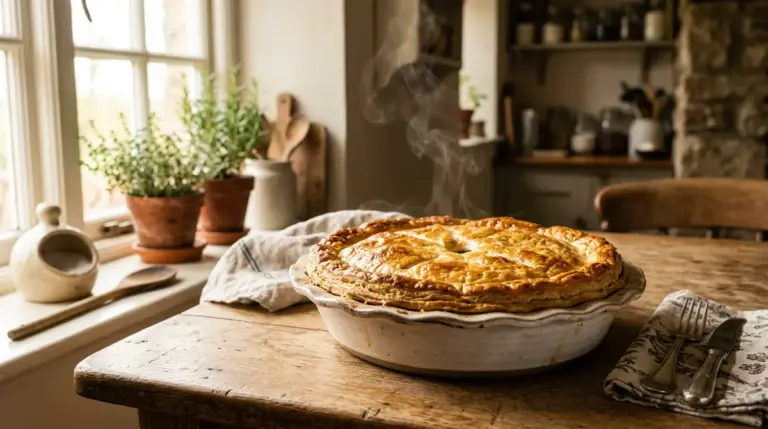
Easy Chicken and Leek Pie Recipe with Puff Pastry Lid
A comforting British chicken and leek pie with creamy filling, tender thighs, leeks, white wine and a golden puff pastry lid. An…
Read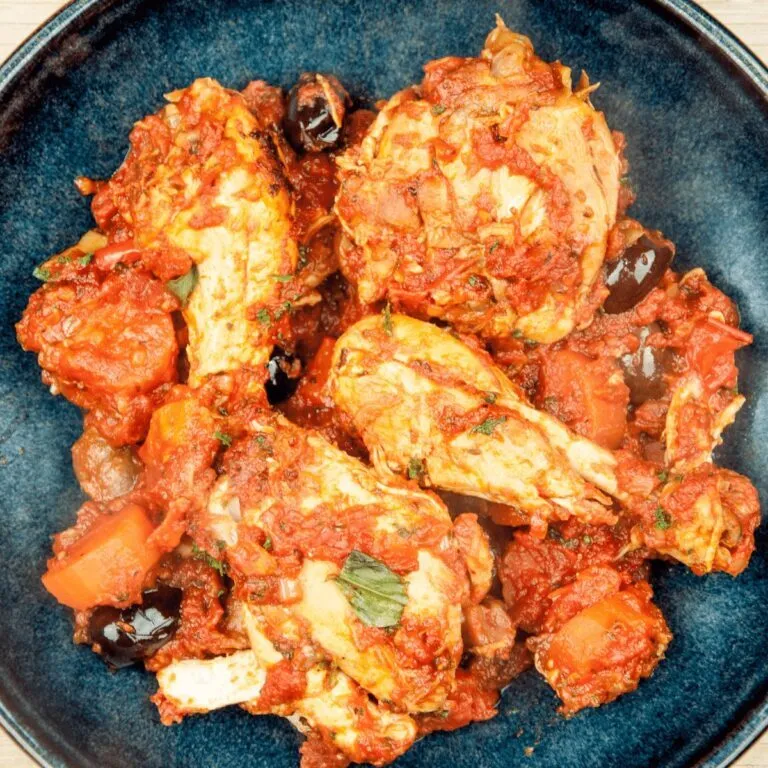
Sweet Pepper & Lemon Chicken Cacciatore
Updated: July 12, 2026 Today we fancied Italian. The problem with fancying Italian, however, is that it always tends to be pizza…
Read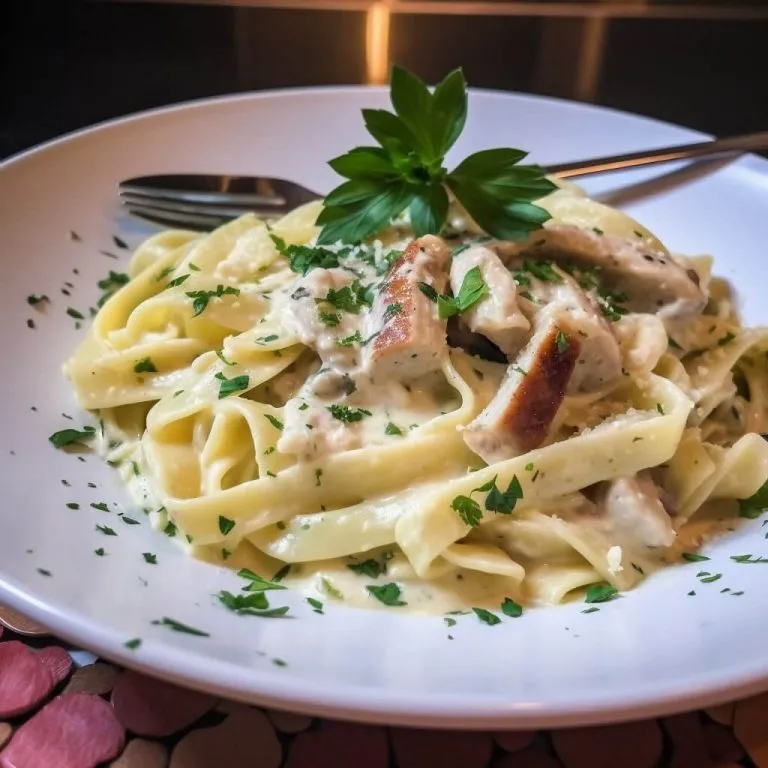
Delicious Paleo Chicken Alfredo Recipes
Updated: July 12, 2026 Craving a creamy and indulgent pasta dish without the guilt? Look no further! We’ve got you covered with…
Read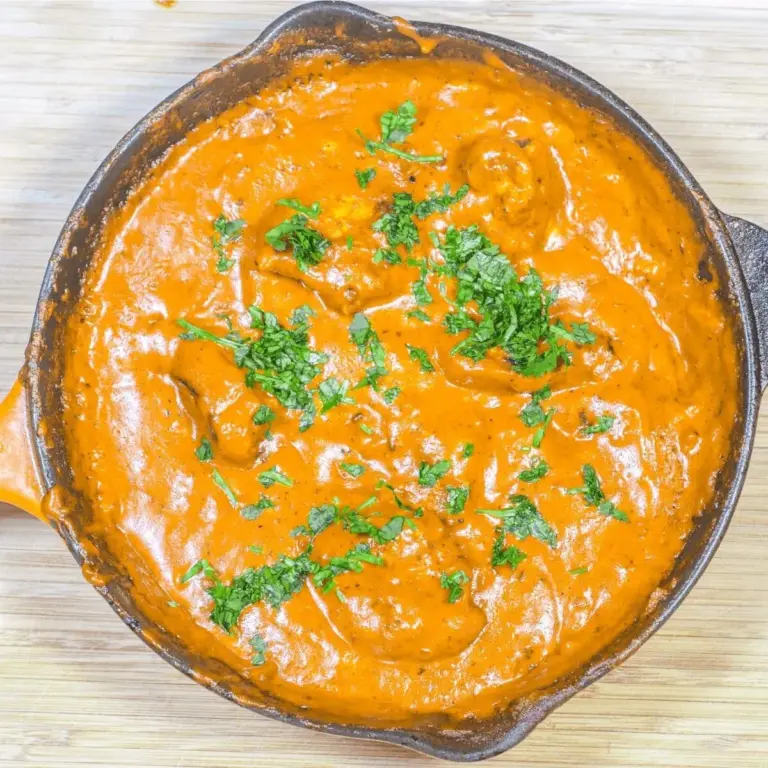
Aromatic Tandoori Chicken Tikka Masala
Updated: July 25, 2026 Aromatic tandoori chicken tikka masala. What a recipe! You can’t ge much more British than this. Haha ????.…
Read