
How to Make Your Own Bouquet Garni (Fresh Is Always Better)
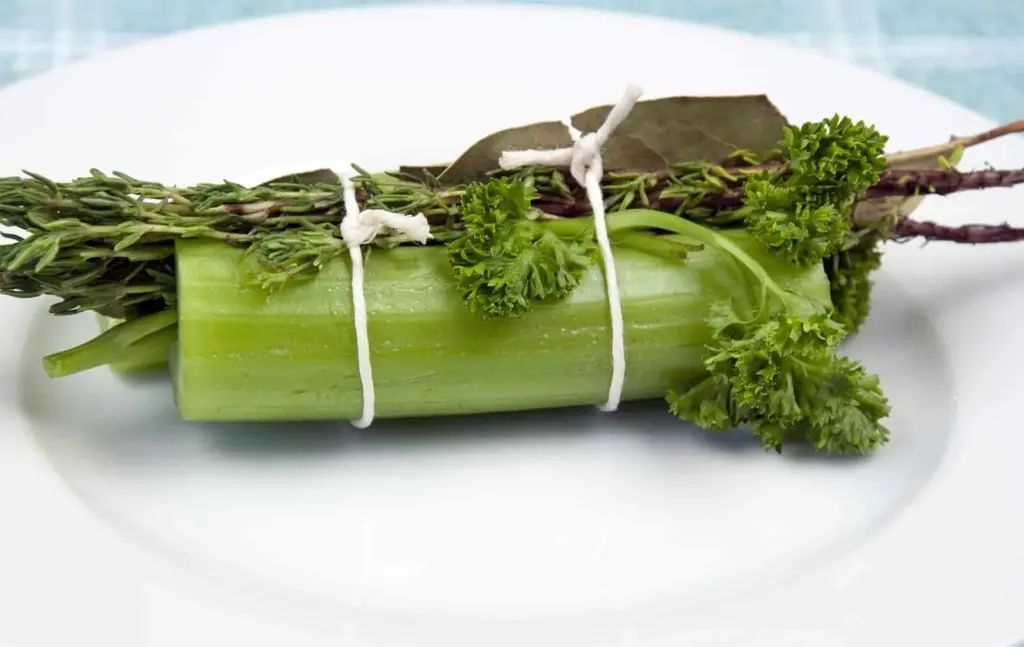
Table of Contents
This post may contain affiliate links. As an Amazon Associate we earn from qualifying purchases.
A bouquet garni is simply a small bundle of fresh herbs tied together and dropped into whatever you are cooking — a stew, a sauce, a braise, a stock. You pull it out before serving. That is the whole idea. But making your own from fresh herbs instead of reaching for a dried tea bag takes about two minutes and makes a genuinely noticeable difference to the flavour of a dish.
I started making my own bouquet garni about ten years ago after a particularly flat-tasting coq au vin. The sauce was technically correct but somehow dull. I traced it back to the dried herb sachet I had tossed in. Since then I have never gone back. Fresh herbs infuse differently — brighter, more aromatic, more complex.
Updated June 2026 — by Steve Deacon
What exactly is a bouquet garni?
A bouquet garni (French for “garnished bouquet”) is a bundle of aromatic herbs used to season cooking liquids during simmering. The classic combination is flat-leaf parsley, fresh thyme, and one or two bay leaves. You tie them together — or tuck them inside a piece of celery — simmer them in your liquid for 20 to 45 minutes, then remove and discard before serving. The herbs flavour the dish without ending up on the plate.
The dried supermarket version does work in a pinch, but dried herbs sitting in a cupboard for eight months taste nothing like fresh ones picked the same week. If you have access to fresh parsley and thyme, there is no reason not to make your own.
What herbs go into a bouquet garni?
The short answer: parsley, thyme, and bay. That is the French classic. But the real answer is whatever makes sense for your dish.
Variations I use regularly:
- For fish stocks and seafood dishes: parsley, fennel fronds, a small leek leaf, and one bay leaf — celery stalks hold these together beautifully.
- For lamb and beef braises: thyme, rosemary, bay, and a sprig of sage — rosemary is pungent so keep it small.
- For chicken and light sauces: flat-leaf parsley, tarragon, thyme, and bay — a gentle combination that does not overpower.
- For tomato-based sauces: basil, bay, and oregano work well, though I often use basil as a loose addition near the end rather than inside the bundle.
One rule: avoid delicate herbs like basil or mint in long braises. They turn bitter after 30 minutes of simmering. Save them for finishing.
How do you make a bouquet garni step by step?
You need fresh herbs, a piece of celery, and kitchen string. The celery is optional — some people just tie the herbs directly with string — but I find the celery casing keeps everything tidy and adds a mild, savoury background note.
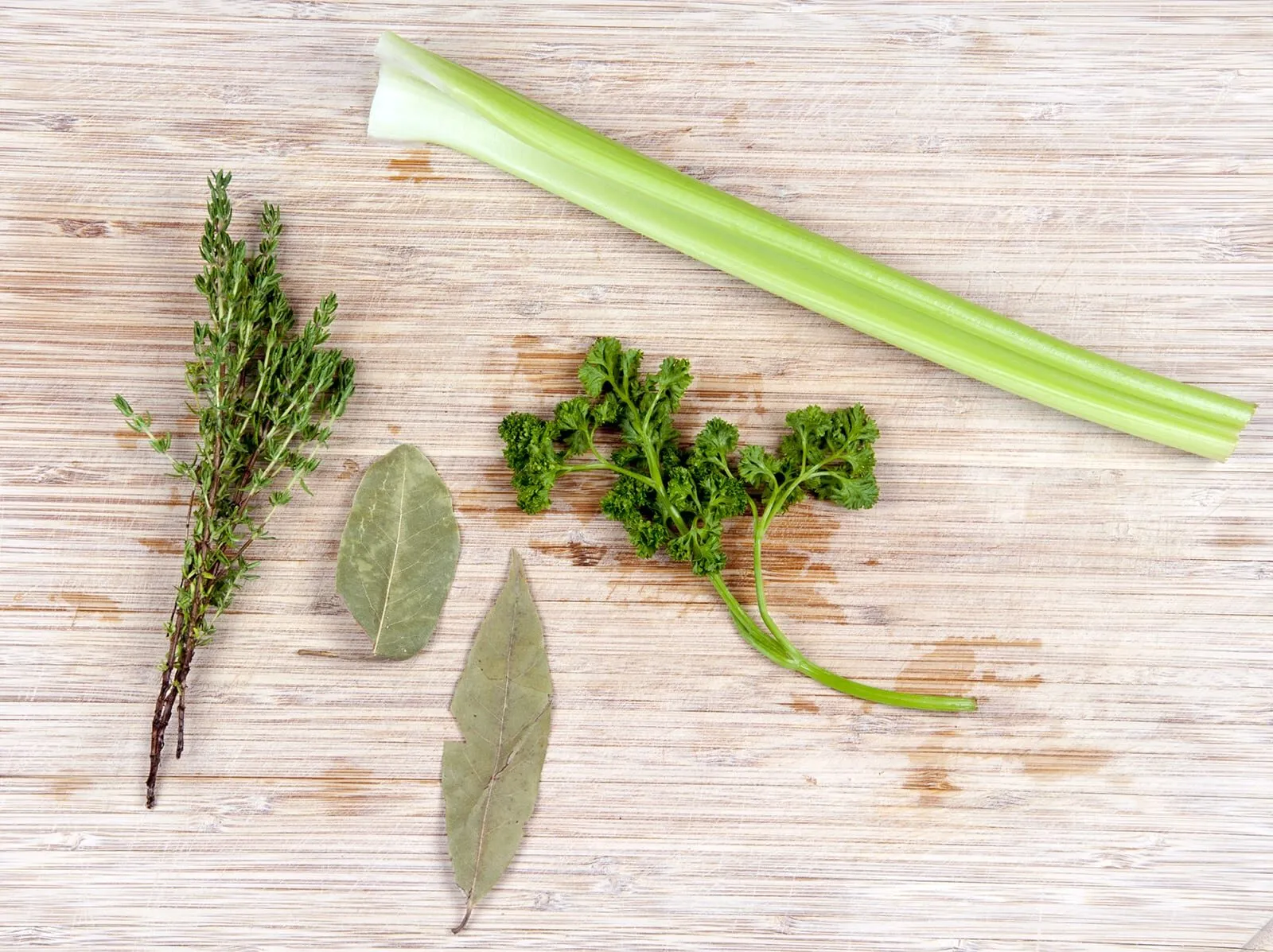
Step 1. Cut a piece of celery into two sections, each around 7 to 8 cm long. You want pieces long enough to wrap around the herb bundle.
Step 2. Lay your herbs in the centre of one piece of celery. A few sprigs of parsley, two or three thyme stalks, and a bay leaf is a good starting amount for a dish serving four to six people.
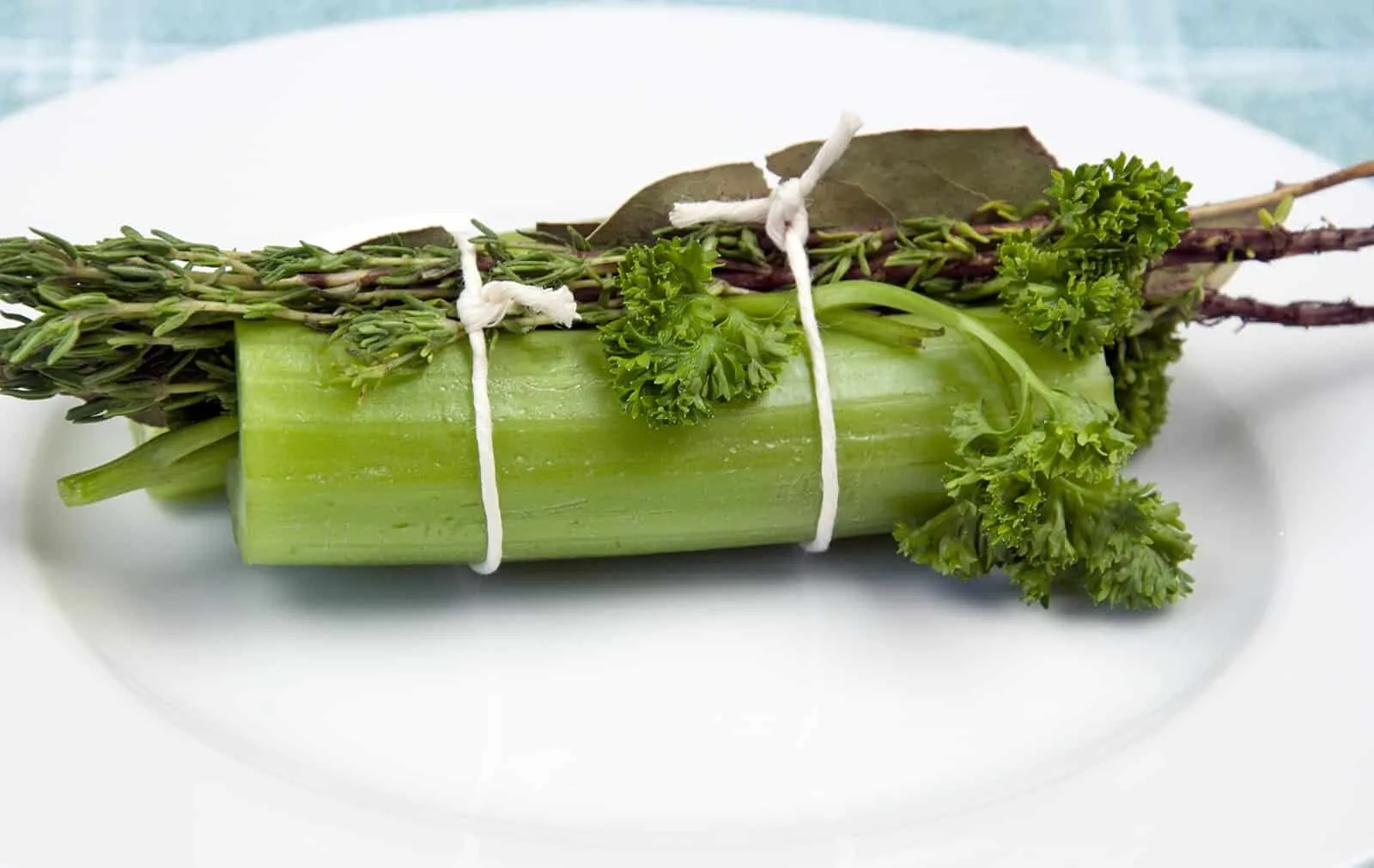
Step 3. Place the second piece of celery on top, sandwiching the herbs. Now tie kitchen string tightly around both ends to hold it all together. Kitchen string is unwaxed cotton — do not use synthetic twine, which can melt or release chemicals. If you do not have kitchen string, simply tie the herbs together directly.
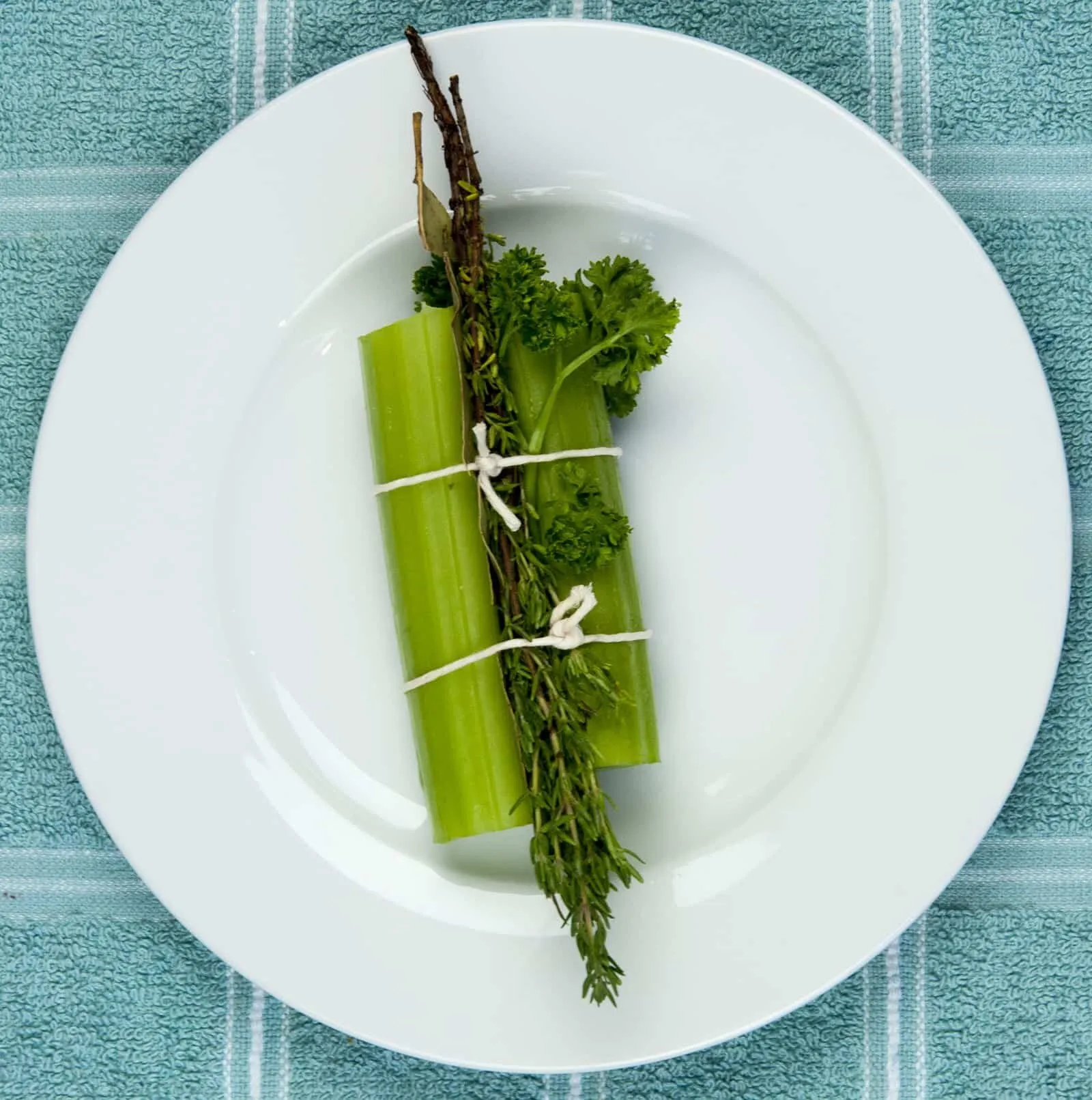
Step 4. Drop it into your pot at the start of cooking. For a stew or braise, add it when you add the liquid. For a stock, add it with the bones. Remove and discard after cooking — the bundle will have given everything it has.
Can you use a muslin bag instead of celery?
Yes. A small square of muslin (cheesecloth) tied with string is the classic alternative. It works well for powdered spices like peppercorns, cloves, or dried chilli that would escape a celery bundle. For strictly fresh herbs though, celery or direct tying is simpler — no muslin to source or wash.
How long does a bouquet garni stay in the dish?
Between 20 minutes and the full cooking time, depending on what you are making. For a 45-minute mussel dish, it goes in at the start and comes out before serving. For a 3-hour lamb shoulder braise, it can stay in the entire time — the celery and thicker stalks hold up. Parsley stems are more robust than parsley leaves, which is why most bouquet garni recipes use the stems rather than the leafy tops.
I used one in my mussels with white wine, garlic and cream last weekend and the difference it made to the broth compared to dried herbs was considerable. Same with the braising liquid in slow roasted lamb chops — a bouquet garni is the kind of detail that separates a good sauce from a great one.
What surprised me about making my own
The first time I compared a dish made with a dried herb sachet against one made with a fresh bouquet garni side-by-side, the gap was bigger than I expected. The fresh version had lift. The dried version tasted slightly musty. Not unpleasant — just flat.
The other thing that surprised me: how rarely the celery bundle actually adds a celery flavour. It acts more as a neutral casing, which is exactly what you want. You taste the herbs, not the celery.
Frequently asked questions
Can you make a bouquet garni in advance?
Yes. Assemble it, wrap loosely in damp kitchen paper, and refrigerate for up to 24 hours. After that the herbs start to wilt and lose their volatile oils. Make it on the day if you can.
Do you have to use celery?
No. You can tie the herbs directly with kitchen string. Celery is a traditional casing that keeps things neat and adds a very mild background flavour. It is practical rather than essential.
What is the difference between bouquet garni and herbes de Provence?
Bouquet garni is a bundle of fresh (occasionally dried) herbs used to flavour cooking liquid then removed before serving. Herbes de Provence is a dried herb blend — lavender, thyme, rosemary, oregano, marjoram — stirred directly into a dish and left in. Different technique, different flavour profile.
Can you freeze a bouquet garni?
You can freeze the component herbs individually — thyme and bay freeze well, parsley does too though it softens. Assembling a bouquet garni from frozen herbs is fine for braises and stocks where texture does not matter. I would not bother assembling and freezing it as a bundle.
How much bouquet garni for a standard recipe?
For a stew or braise serving 4 to 6, one bundle made with 3 to 4 parsley stalks, 2 to 3 thyme sprigs, and 1 bay leaf is enough. For a large stock pot (2 or more litres), double it. The ratio is roughly one bundle per litre of liquid for stocks.
Making your own bouquet garni takes two minutes and costs almost nothing if you grow herbs or buy a mixed bunch. Give it a try next time you make a stew or a sauce — it is one of those small habits that makes real cooking feel genuinely different from following a packet.
Find more cookery techniques on The Cookery Techniques Larder.

You might also love
More in Kitchen Tips & How-To
Top 10 Foods That Will Help You Build Lean Muscle
Updated: July 12, 2026This post may contain affiliate links. As an Amazon Associate we earn from qualifying purchases. Both physical activity and…
Read
The Sunday Roast Timing Cheat Sheet (+ What to Prep the Day Before)
Updated: October 22, 2026This post may contain affiliate links. As an Amazon Associate we earn from qualifying purchases. OK, Foodie Friends. A…
Read
How to Prepare a Mango (Slice, Score, and Fan in 90 Seconds)
Updated: July 28, 2026This post may contain affiliate links. As an Amazon Associate we earn from qualifying purchases. To prepare a mango,…
Read
Obscure Facts About the Whipped Cream You Probably Didn’t Know About
Updated: October 21, 2026This post may contain affiliate links. As an Amazon Associate we earn from qualifying purchases. Now, hands up if…
Read
How Can I Keep My Wine Cellar Cool?
Updated: October 21, 2026This post may contain affiliate links. As an Amazon Associate we earn from qualifying purchases. People reckon wine cellars…
Read
The chemistry behind the technique of softening meat with tenderizers
Updated: October 22, 2026This post may contain affiliate links. As an Amazon Associate we earn from qualifying purchases. OK, my Foodie Friends,…
Read
4 comments