• Skip to primary navigation
  • Skip to main content
  • Skip to primary sidebar
  • Skip to footer

The Yum Yum Club

  • Home
  • Recipes
  • Smoothies
  • Techniques
  • Blog

Cooked Chicken: Safe Temperatures, Reheating and Storage, Explained Properly
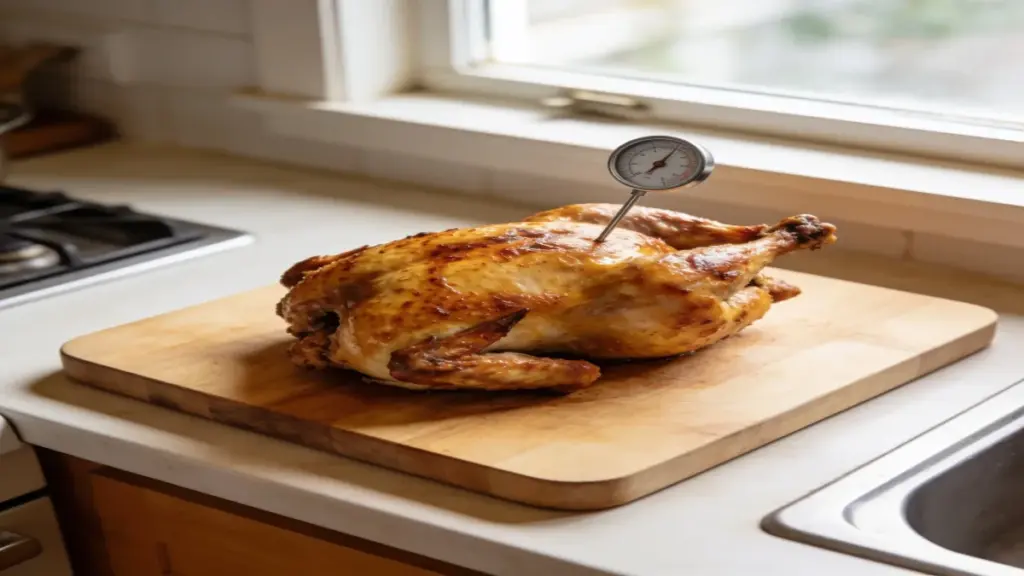
Table of Contents

  • What temperature should chicken be cooked to?
  • How to tell chicken is cooked without a thermometer
  • Can you cook chicken from frozen?
  • How to reheat cooked chicken
  • Storing cooked chicken safely
  • How to tell cooked chicken has gone off
  • Cooked chicken nutrition
  • What to do with leftover cooked chicken
  • The one thing not to do: washing raw chicken
  • FAQ
  • Sources
Updated: August 24, 2026

This post may contain affiliate links. As an Amazon Associate we earn from qualifying purchases.

Chicken is cooked when the middle reaches 70°C (158°F) for 2 minutes. Alternatively, you can hold it at 65°C (149°F) for 10 minutes. Juices should run clear when you cut into the thickest part, and there should be no pink meat left.

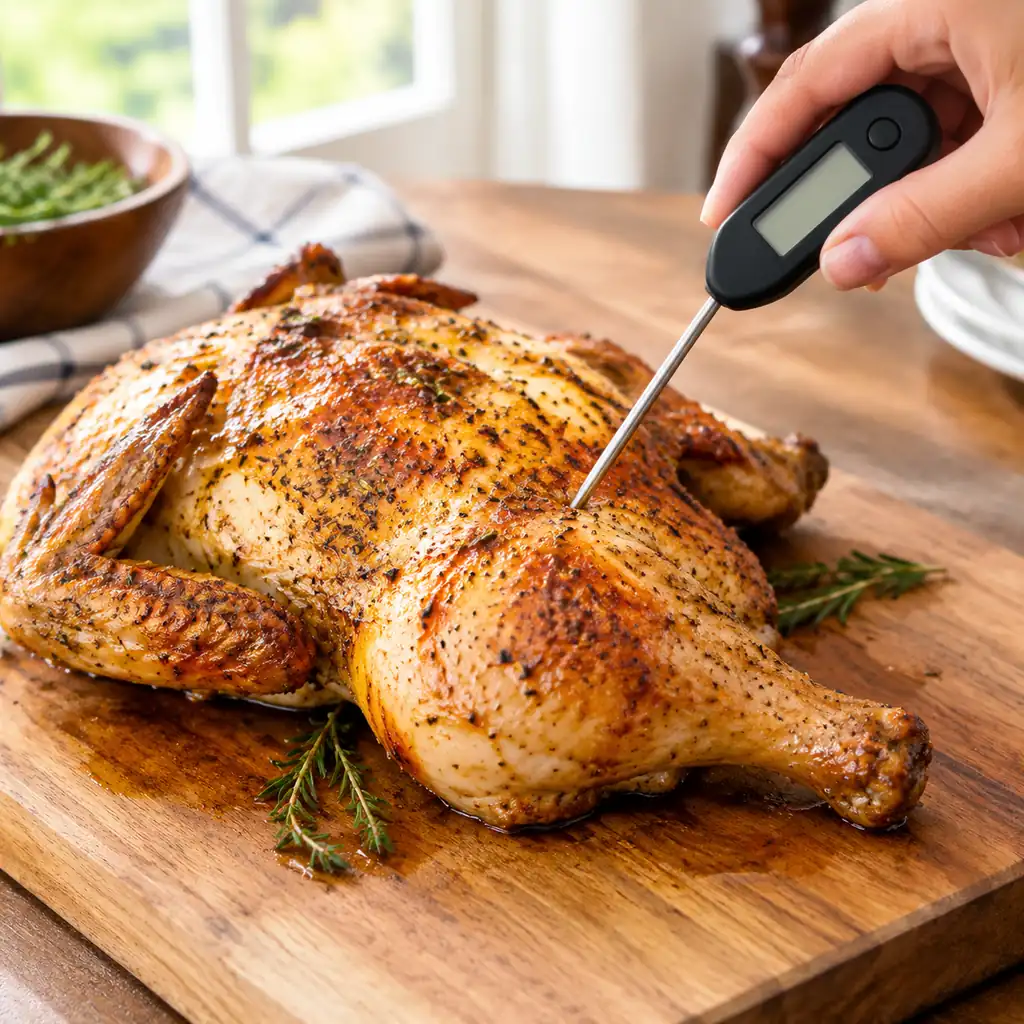
Roasted whole chicken on a wooden board with a probe thermometer inserted into the breast

What temperature should chicken be cooked to?

The Food Standards Agency rule is simple. The centre of the meat needs to reach that temperature and hold it for 2 minutes, or you can use a lower temperature for longer. Poultry carries bacteria throughout the meat, making the middle critical to food safety. The outside can look fully done well before the centre is safe.

TemperatureTime heldFahrenheit
70°C2 minutes158°F
65°C10 minutes149°F

Take the reading in the thickest part of the meat. That means the centre of a breast, or deep into the thigh near the bone on a whole bird. Avoid the surface or bone, which reads warmer than the meat around it.

You’ll see 165°F quoted constantly online. That’s the USDA’s version for the same safety target, aimed at US kitchens with Fahrenheit dials. British packaging, FSA guidance, and UK oven thermometers use a lower Celsius figure. Holding that temperature for 2 minutes reaches the same safe endpoint. If your probe reads in Fahrenheit, use 158°F. The higher US figure will simply overcook the meat.

How to tell chicken is cooked without a thermometer

Cut into the thickest part with a clean knife. Juices should run clear with no pink or red tint, and there should be no raw or pink flesh left, especially near the bone. The meat should be steaming hot all the way through.

Colour and juice checks serve as a fallback method. A digital probe thermometer removes guesswork entirely and costs little at UK supermarket prices. Visual signs can mislead in both directions. Chicken on the surface can appear fully cooked when the centre is still underdone. Marinated or smoked chicken stays pink when fully cooked, creating further confusion. If you cook chicken regularly, a thermometer upgrades your reliability.

Shape matters for heat distribution. A thin breast fillet cooks fast and evenly enough that clear juices are a reasonable sign. A whole roast chicken, stuffed joint, or thick bone-in thigh presents a different problem. The shape means heat reaches the centre unevenly. The bone shields surrounding meat from cooking at the same rate. A thermometer earns its value here. Probe the thickest part of the thigh, near the bone. See our guide to preparing a whole roasted chicken for guidance on timing whole birds. The breast finishes cooking well before the thigh on a whole bird.

Can you cook chicken from frozen?

No, not as a general rule. Defrost raw chicken fully before cooking. The problem is straightforward. The outside cooks through well before the centre reaches a safe temperature. You end up with chicken that looks and smells done while the middle remains raw and full of bacteria. This applies to raw chicken purchased fresh or frozen loose.

The exception is printed on the packet. Some pre-prepared frozen chicken products are manufactured and tested for cooking from frozen. The pack states this explicitly with its own instructions. These differ from loose frozen chicken breasts or thighs from the freezer aisle and require different handling.

To defrost chicken properly:

  • Move it to the fridge. Large joints and whole birds need a day or more depending on size.
  • Keep it on a plate or in a container so liquid doesn’t drip onto other food.
  • Once fully defrosted, use it within a day. Don’t leave defrosted raw chicken sitting in the fridge for days before cooking.
  • Don’t refreeze raw chicken once it’s been defrosted unless you’ve cooked it first.

How to reheat cooked chicken

Reheat cooked chicken only once. Heat it until steaming hot all the way through. This rule applies to oven, hob, and microwave.

  • Oven: cover with foil to prevent drying out. Check the centre is steaming hot before serving. This is the gentlest method for larger pieces or whole cooked chicken.
  • Frying pan or wok: shred or slice the chicken first to ensure even heating. Add a splash of water or stock to prevent catching. Keep it moving.
  • Microwave: cover loosely and stir or turn the chicken halfway through so no cold spots remain in the middle. Microwaves heat unevenly, and cold centres harbour bacteria.

Fried chicken leftovers need a different approach to keep the coating crisp. Read how to reheat fried chicken so it stays crispy for the full method.

Reheat only the portion you will eat. Reheating the same batch a second or third time breaks the “reheat once” rule, even if each individual reheat looks fine.

Storing cooked chicken safely

Get cooked chicken into the fridge within 1–2 hours of cooking. Keep the fridge at 0–5°C. Eat it within two days or freeze it if you won’t get to it in time.

Storage stepRule
Cooling before fridgeWithin 1–2 hours of cooking
Fridge temperature0–5°C
Eat within (fridge)2 days, or freeze
Frozen cooked chicken, once defrostedEat within 24 hours, don’t refreeze

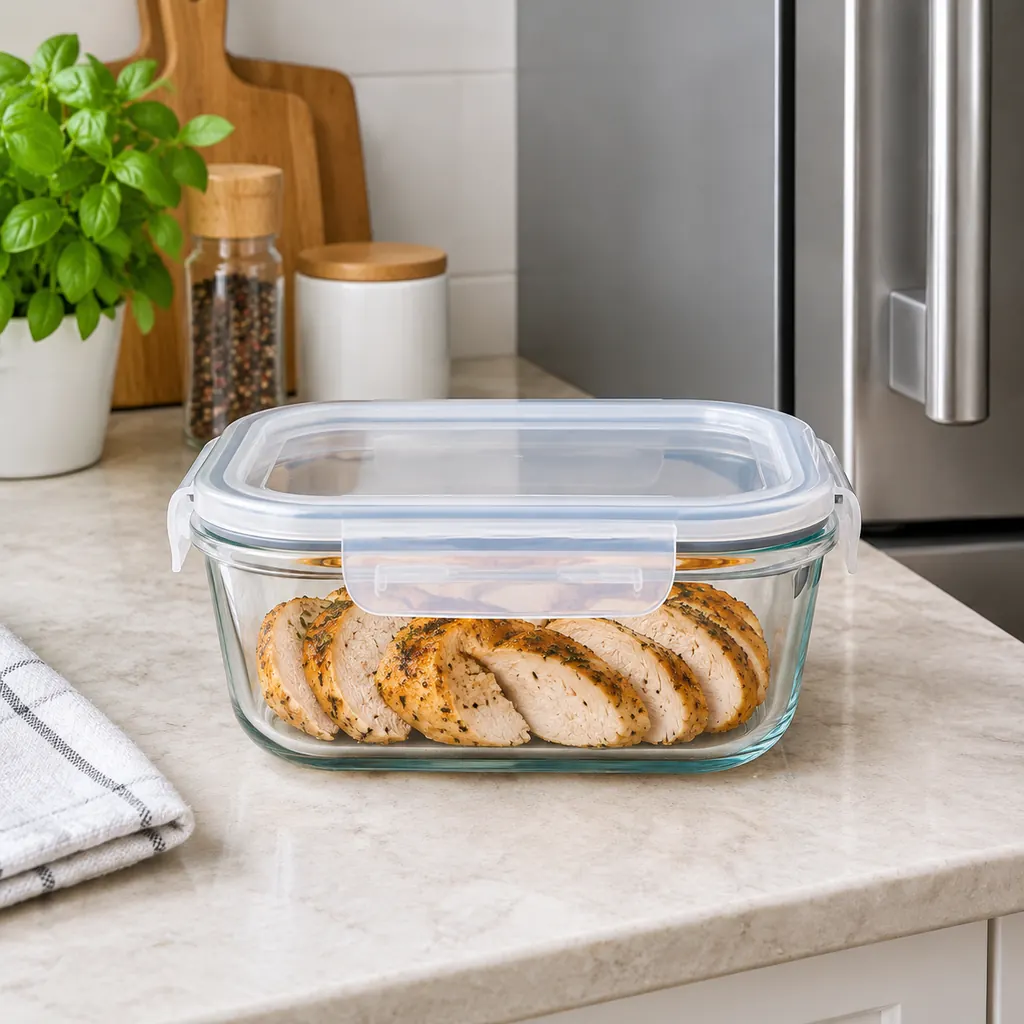
Don’t leave cooked chicken on the counter while it cools. Move it into a shallow container and into the fridge once it stops steaming. Don’t wait for it to reach room temperature on the counter for hours. Splitting a whole cooked chicken into smaller pieces before refrigerating also helps it cool and chill faster and more evenly.

You don’t need to reheat leftovers before eating them. Cold cooked chicken straight from the fridge is fine in a sandwich or a salad, provided it went into the fridge within two hours of cooking and has sat there since. Skipping the reheat doesn’t skip the clock, though. The same eat-within-two-days rule still applies whether the chicken ends up warmed through or eaten cold from the container.

When 48 hours looks tight, freezing is the better choice. Cool the chicken the same way. Portion it before freezing so you’re not defrosting more than needed. Label with the date. A label beats guessing “sometime last month.” The same defrosting and 24-hour rules apply when you take chicken from the freezer. Freezing extends your timeline without changing how carefully you must handle the meat.

For labelling, container choice, and freezer rotation beyond chicken, our guide to storing leftovers properly covers the general rules this section only touches for poultry.

How to tell cooked chicken has gone off

Trust your nose first. Chicken that’s turned smells sour or simply wrong the moment you lift the lid, and that smell alone is reason enough to bin it. Texture is the next check. Run a finger over the surface. A tacky film or a slick, slimy coating means bacteria have been multiplying, even though the meat can still look fine sitting on a plate. Appearance helps a little too. Cooked chicken that has been sitting too long tends to lose the look it had when it went into the fridge, though colour is the weakest of the three signs and never the one to rely on.

None of these signs guarantee safety on their own. Plenty of food-poisoning bacteria don’t change how meat looks or smells at all, so chicken can turn dangerous well before it seems off in any obvious way. That’s why the storage windows above still decide whether chicken is safe to eat, whatever a sniff test suggests. Smell, texture, and colour are useful early warnings. They tell you when something has probably gone wrong. A clean smell and a normal colour never prove a piece of chicken is safe past its time, since the bacteria that cause real harm work quietly. When in doubt, throw it out. It’s a small loss set against a night of food poisoning.

Cooked chicken nutrition

Nutrition varies with cut, skin, and cooking method. A roasted skinless breast is leaner than a fried thigh with skin. Frying boosts fat content above poached or roasted versions. The figures below come from the USDA’s FoodData Central and align with UK food-composition sources, though UK-specific data with comparable detail isn’t publicly available.

NutrientPer 100 g (roasted, skinless breast)
Energy165 kcal
Protein31 g
Fat3.6 g

Skin-on chicken, dark meat like thigh or leg, and anything fried will all read higher on fat and calories. Use this table as a baseline for the leanest common cut. It undercounts the fat and calories in skin-on or fried chicken.

What to do with leftover cooked chicken

  • Shred it into a sandwich or wrap with mayo and salad.
  • Toss it through simple pasta with garlic, chilli flakes, and lemon. Creamy chicken alfredo is another quick option.
  • Use it in fried rice or noodle stir-fry. It reheats well as part of a hot dish.
  • Add it cold to a grain or leaf salad for a quick lunch.
  • Stir it into curry sauce or soup at the end of cooking. It’s already cooked and only needs warming through. Black pepper and garlic chicken thigh curry is an easy weeknight option.
  • Turn it into quick chicken and sweetcorn soup or pie filling.
  • For a spiced Asian marinade, our Chinese chicken thigh recipes use the same shredded, ready-cooked method, starting from raw thighs before any cooking begins.

Shredding or dicing a whole cooked chicken the moment it’s cool enough to handle is a habit worth building on its own. A few minutes at the counter once it’s cool enough to handle means several weeknight dinners are already halfway done, whether that turns into fried rice one night or a quick salad another. Keep the shredded meat in one container and the diced pieces in another if different meals are planned, since chunkier dice holds up better in a curry than it does folded into a sandwich.

The one thing not to do: washing raw chicken

Don’t rinse raw chicken under the tap before cooking. Rinsing doesn’t make it safer and can make things worse. Proper cooking is what gets rid of the bacteria in raw chicken; a rinse under the tap plays no part in that. What rinsing does do is splash water droplets carrying campylobacter across your hands, taps, and worktop. Campylobacter is the most common cause of food poisoning in the UK, and the majority of cases link to poultry.

If you’ve always rinsed chicken out of habit, skip the tap instead. Pat it dry with kitchen paper if you wish, and let cooking temperature handle safety.

This habit feels like good hygiene because rinsing meat before cooking is second nature for many home cooks, carried over from washing fruit and vegetables. Chicken works differently. A rinse can lift dirt off the surface of a carrot or an apple, but raw poultry carries bacteria deep in the meat, and heat is the only thing that destroys it. Water simply spreads that bacteria further around your kitchen. Wash chopping boards, knives, and worktops with hot soapy water after handling raw chicken. That’s the job rinsing was never actually doing.

FAQ

What temperature should I cook chicken to? Both Celsius and Fahrenheit thermometers can reach the same safe endpoint. UK guidance from the FSA holds 70°C for 2 minutes in the centre of the meat. The US equivalent matches this point. Use whichever suits your thermometer’s scale; they reach the same safety level in different units.

Is chicken safe at 65°C? Yes, as an alternative to the higher temperature for 2 minutes. The centre must hold this lower temperature for at least 10 minutes. Both are FSA-recognised equivalents; extended times achieve the same safety level.

How long does cooked chicken last in the fridge? Cooked chicken keeps for two days in a fridge running at 0–5°C, provided it went into the fridge within an hour or two of cooking. If you won’t eat it in that timeframe, freeze it instead.

Is it okay to cook frozen chicken without defrosting? No, not for raw chicken bought fresh or frozen loose. Defrost it fully in the fridge first, since the outside cooks before the centre reaches a safe temperature. The exception is packaged products labelled for cooking from frozen, which follow their own pack instructions.

What’s the best way to reheat cooked chicken? Pick the method that suits your dish. You can use the oven, hob, or microwave. Heat it until steaming hot all the way through with no cold spots. Reheat only once. Shredding or slicing chicken before reheating helps it heat evenly, especially in a microwave.

Do you need to thaw chicken before cooking it? Yes, for raw chicken in general. Thaw fully in the fridge, which can take a day or more for larger pieces. Use it within 24 hours of being fully defrosted. Packaged products marked for cooking from frozen are the exception and follow their own label instructions.

How many calories are in cooked chicken breast? A roasted, skinless chicken breast provides roughly 165 calories per 100g. It contains about 31g protein and 3.6g fat (USDA figures for meat only). Skin-on or fried chicken and darker cuts deliver higher energy and fat amounts than this lean baseline.

Sources

  • FSA / GOV.UK — Cooking your food: https://www.gov.uk/government/publications/cooking-your-food/cooking-your-food
  • FSA / GOV.UK — How to chill, freeze and defrost food safely: https://www.gov.uk/government/publications/how-to-chill-freeze-and-defrost-food-safely/how-to-chill-freeze-and-defrost-food-safely
  • FSA / GOV.UK — Cross-contamination guidance: https://www.food.gov.uk/safety-hygiene/why-avoiding-cross-contamination-is-important
  • Which? — Foods you should never cook straight from frozen: https://www.which.co.uk/news/article/foods-you-should-never-cook-straight-from-frozen-aAGPr6T8lDwu
  • USDA FoodData Central (Chicken, broilers or fryers, breast, meat only, cooked, roasted): https://fdc.nal.usda.gov/
Steve Deacon

Steve Deacon

Writer

Hi, I'm Steve, a former member of the dreaded corporate world who's decided to give it all up and do something I wanted to do for a change!

View all posts by Steve Deacon →

Leave a Comment

About Steve Deacon

Hi, I'm Steve, a former member of the dreaded corporate world who's decided to give it all up and do something I wanted to do for a change!

Previous Post: « Minced Beef Recipes: 20 Dinners from One Pack

Reader Interactions

Leave a Reply Cancel reply

Your email address will not be published. Required fields are marked *

Recipe Rating


Primary Sidebar

6 of the Best Single Pot Chicken Recipes

Top 10 Foods That Will Help You Build Lean Muscle 

Top 10 Foods That Will Help You Build Lean Muscle 

Top 5 Delicious Recipes to Try While Maintaining a Keto Diet

Top 5 Delicious Recipes to Try While Maintaining a Keto Diet

Paleo Chicken Alfredo

Delicious Paleo Chicken Alfredo Recipes

https://theyumyumclub.com/2019/03/12/chicken-thigh-curry/

Black Pepper and Garlic Chicken Thigh Curry

Sweet pepper & lemon chicken cacciatore. An Italian take on a French classic. Chicken thighs cooked in traditional tomato and herb sauce. Yum! | theyumyumclub.com

Sweet Pepper & Lemon Chicken Cacciatore

This creamy chicken gnocchi recipe brings the taste of Italy right to your own kitchen. Black olives. Sun-dried tomatoes. Baby spinach. Sounds good right? Yum! | theyumyumclub.com

Creamy Chicken Gnocchi

Kitchen Calculators

Kitchen Calculator. Convert oven temperatures | https://personalcalculator.net/oven-temperature-calculator/

Popular Recipes

Parmesan & Paprika Haddock Baked in Garlic Butter. Gather the ingredients together | https://theyumyumclub.com/2019/04/29/parmesan-paprika-haddock-garlic-butter/

Parmesan & Paprika Haddock Baked in Garlic Butter

April 29, 2019

This Chinese chicken thigh recipe is so simple and wonderfully tasty. A marinade of honey, soy sauce, ginger, garlic and sesame. Sounds fantastic right? Yum! | theyumyumclub.com

Chinese Chicken Thighs

February 22, 2019

This honey soy pork tenderloin recipe is a magnificent fusion of flavours from east and west. Honey, soy, thyme, rosemary, garlic. It has them all and more! Yum!

Honey Soy Pork Tenderloin

April 4, 2019

Extra soft and chewy flapjacks | https://theyumyumclub.com/2019/06/01/extra-soft-and-chewy-flapjacks/

Extra Soft and Chewy Flapjacks

June 1, 2019

Footer

– AMAZON AFFILIATE DISCLAIMER –

theyumyumclub.com is a participant in the Amazon Services LLC Associates Program, an affiliate advertising program designed to provide a means for sites to earn advertising fees by advertising and linking to amazon.com.

Recent Posts

  • Cooked Chicken: Safe Temperatures, Reheating and Storage, Explained Properly
  • Minced Beef Recipes: 20 Dinners from One Pack
  • Fish Pie Recipe: Creamy, Make-Ahead & Foolproof
  • Slow Cooker Tasting Bland and Watery? 7 Fixes That Actually Work
  • The Sunday Roast Timing Cheat Sheet (+ What to Prep the Day Before)
  • About
  • Business Diary
  • Calculators

info[at]theyumyumclub[dot]com

  • E-mail
  • Facebook
  • Instagram
  • Pinterest

Theyumyumclub.com Copyright © 2026 · Sitemap · Log in