
Chicken Balls
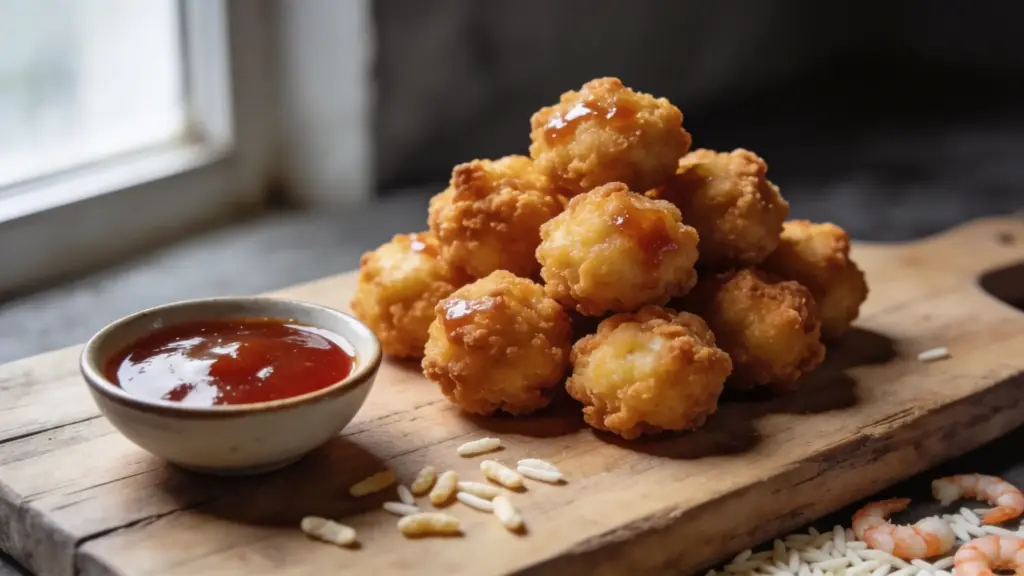
Table of Contents
This post may contain affiliate links. As an Amazon Associate we earn from qualifying purchases.
Chicken balls are the British-Chinese takeaway classic. Bite-sized pieces of chicken in a light, puffed batter are deep-fried twice until the shell shatters, then served with a glossy sweet and sour sauce for dipping. They aren’t really a Chinese dish. Nobody has ever pinned down exactly who first battered chicken this way for a British high street; it’s the kind of story every takeaway tells, though the dish itself barely registers on a menu back in China. This is my own tested version. I use thigh over breast because it survives the second fry without drying out, and the sauce goes in its own bowl at the table so the coating is still crackling by the time it reaches your plate.
What are chicken balls?
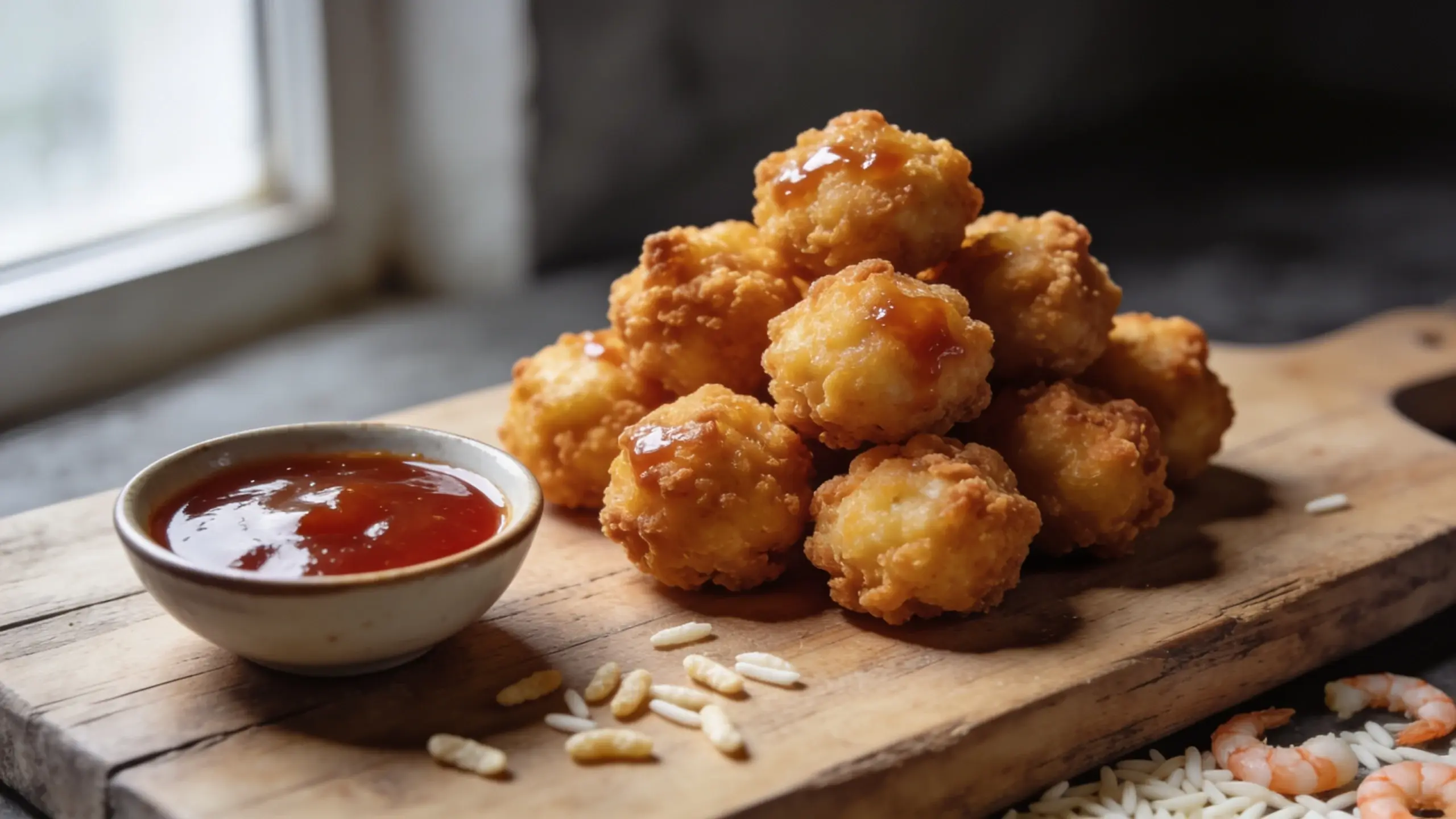
A chicken ball is battered, deep-fried chicken, cut small and round enough to eat with a fork or your fingers. Sweet and sour is simply the sauce that comes alongside it, and in a UK takeaway the two are almost always sold and eaten together as one order called “chicken balls in sweet and sour sauce.”
The dish is widely believed to be a British-Chinese invention, cooked up here in Britain to suit takeaway tastes. The story usually told is that Cantonese restaurateurs, cooking for customers who already loved fish-and-chip-shop food, developed a deep-fried, battered chicken dish that fitted straight into that same appetite. It caught on, and versions of it now sit on nearly every UK takeaway menu, largely unknown back in China itself.
If you’ve had the site’s general Tso chicken, you already know this family. It’s battered fried chicken in a sticky, sweet sauce. Sweet and sour chicken balls are the plainer, more British cousin. It’s the kind you’ll find on a chippy menu, rarely in a restaurant.
What you’ll need
Two decisions carry the whole recipe. First, thigh over breast. Thigh has enough fat and connective tissue to stay juicy through two fries, while breast can turn dry and stringy on the second one. Second, cornflour. It’s the starch doing most of the crisping work, dusted dry onto the chicken and mixed into the wet batter. My chicken thighs post makes the fuller case for the cut.
For the chicken
- 600 g boneless, skinless chicken thighs, cut into roughly 3 cm pieces
- 1 tbsp light soy sauce
- 1 tsp sesame oil
- ½ tsp white pepper
- 1 tsp cornflour
- 2 tbsp cornflour, for dry dusting
For the batter
- 120 g plain flour
- 60 g cornflour
- 1 tsp baking powder
- ½ tsp salt
- 1 egg
- 140-160 ml ice-cold sparkling water
- 1-1.2 litres neutral oil (sunflower, vegetable or groundnut), for frying
For the sauce
- 4 tbsp tomato ketchup
- 3 tbsp rice vinegar
- 3 tbsp caster sugar
- 1 tbsp light soy sauce
- 150 ml pineapple juice
- 2 tsp cornflour, mixed with 2 tbsp cold water
How to make chicken balls
Serves 4 as a starter. For a main course with rice, allow 2–3 per person.
Prep twenty minutes plus 20–30 minutes marinating; cook about twenty minutes. Total time is around an hour.
- Toss the chicken pieces with the soy sauce, sesame oil, white pepper and 1 tsp cornflour. Cover and marinate for twenty to thirty minutes at room temperature, or longer in the fridge.
- Tip the marinated chicken into a bowl with the 2 tbsp dry cornflour and toss until every piece is evenly coated. This dry layer is the step most home cooks skip, and it’s why a wet batter alone can slide clean off in the fryer.
- Whisk the plain flour, cornflour, baking powder and salt together. Beat in the egg, then add the ice-cold sparkling water a splash at a time, whisking, until the batter coats the back of a spoon like double cream. Mix it just before you fry and keep it cold.
- Heat the oil in a deep, heavy pan, filled no more than a third full, to 170-175°C. A cube of bread should turn golden in about 30 seconds at this heat.
- Working in small batches so the oil temperature doesn’t drop, dip each piece into the batter, let the excess run off, and lower it in gently. Fry for 3-4 minutes, turning once, until pale gold and set.
- Lift the pieces onto a wire rack and rest for about 5 minutes. The trapped steam escapes through the shell; the second fry crisps the exterior and restores the coating’s crunch.
- Bring the oil to its second frying temperature, around 185 degrees. Fry the rested chicken again, in the same small batches, for 1-2 minutes, until deep golden and audibly crackly.
- Check the largest piece is cooked through by cutting it open. The juices should run clear with no pink meat, and it should be steaming hot at the centre. Safe temperature is 70°C held for 2 minutes, or 75°C for 30 seconds. My full walkthrough on judging cooked chicken goes into this properly.
- Drain on kitchen paper for a minute, then serve straight away with the sauce on the side so the shell stays crisp as long as possible.
The sweet and sour sauce
This sauce is ketchup, vinegar and sugar in roughly equal measure, loosened with a little pineapple juice and thickened until it’s glossy enough to cling to a spoon.
Put the ketchup, vinegar, sugar, soy sauce and pineapple juice in a pan and bring to a gentle simmer, stirring until the sugar dissolves. Mix the cornflour smoothly with the cold water first, then whisk into the simmering sauce and cook 30-60 seconds until glossy. To skip the starch, simmer the mixture down without cornflour until syrupy; thinner, brighter, faster.
Taste before serving. Sources disagree by a factor of three on sugar against vinegar; this comes down to personal preference. Too sharp, add sugar a teaspoon at a time. Too sweet, add a splash more vinegar.
A homemade sauce like this comes out a deep red-brown, the colour of rich gravy. The bright orange-red you see in takeaway tubs usually comes from added food colouring, so expect your version to look noticeably different.
Is the chicken cooked through?
Yes. The centre should reach 70°C and be held there for 2 minutes. Alternatively, 75°C for thirty seconds is safe. The chicken is cut small and hidden inside an opaque batter shell, so a golden coating tells you absolutely nothing about what’s happening in the middle. Temperature testing is essential.
Without a thermometer, cut into the thickest piece from your batch as a backup check. The juices should run clear, with no pink or fleshy-looking meat, and it should be steaming hot all the way through. Check more than one piece if you’re at all unsure, since batch sizes vary.
Tips for the crispiest chicken balls
- Keep the batter cold, and mix it late. A cold batter meeting hot oil is what makes it puff properly. Mixing it half an hour ahead and letting it sit on the side loses that lift.
- Fry in small batches. Crowding the pan drops the oil temperature, which causes a greasy coating. It’s almost always a temperature problem. Give the pieces room. My notes on frying with less oil go into batch size and oil control in more detail.
- The second fry is for colour and crunch. By the time you drop the rested chicken back in, it’s already done; this fry is purely about building the shell.
- A single frying temperature also works. I use two temperatures because it gives the deepest colour without overcooking the middle, but holding one temperature, around 170-175°C, for both fries is a genuine alternative some good cooks use, and it still produces a crisp result.
Air fryer and oven versions
Yes, you can make these in an air fryer or oven. Expect a crisp, much less greasy result with a gentler, softer finish than deep-frying produces. A thin, wet batter like the one here slides off the air fryer wire and won’t set around the chicken.
For the air fryer, use a firmer coating such as a plain flour-and-cornflour dredge or a lighter egg-white batter. Cook at a high temperature, around 190–200°C. Fry for 12–16 minutes, turning halfway through and spraying lightly with oil. Shop-bought frozen coated pieces work equally well.
For the oven, use the same firmer coating and cook at 200°C on the fan setting. For conventional ovens, use 220°C (gas mark 7). Cook for roughly 25 minutes. Turn at the 15-minute mark.
Either way, cook to the safe core temperature above and treat the clock as a guide only; two ovens and two air fryers rarely behave identically, and the timings here come from different setups cooking slightly different things. My piece on whether an air fryer needs preheating is worth a look before you start if you’re new to one.
Substitutions and variations
The same method works well beyond chicken thigh. Breast is fine, cut the pieces a touch larger since it dries out faster. Pork loin and raw prawns both work, though prawns cook much faster and will overcook badly across a full double fry, so pull them earlier. For a meat-free version, cubes of firm tofu or cauliflower florets, cut to about 2.5 cm, take the batter well. Beef is the one swap I’d skip.
To make gluten-free, swap the plain flour for a gluten-free blend, or use cornflour alone for dusting and batter. It’s naturally gluten-free and crisps well. Standard soy sauce isn’t gluten-free; many people overlook this. Swap it for tamari and the whole dish becomes safe for a coeliac guest.
Skip the egg for a lighter batter (just flour, cornflour, raising agent and cold water) for a slightly crisper, less rich shell. This isn’t spicy by default; for heat, stir chilli flakes into the batter or sauce, or put sweet chilli on the table.
What to serve with chicken balls
Rice does most of the work here, either egg-fried or plain steamed, alongside prawn crackers if you want the full takeaway spread. Chips are an equally good side if you prefer them to rice.
For something with a bit more going on, my Thai-style sausage fried rice makes a good side, and a plate of sticky hoisin chilli ribs turns this into a proper takeaway-at-home spread. Keep the sauce in a separate bowl for dipping. Never pour it over the top, so the coating stays crisp on the trip from kitchen to table.
Storing, freezing and reheating
Cool the chicken balls and refrigerate within 1–2 hours. Eat leftovers within 48 hours. Keep the sauce in a separate container either way, since a sauced ball goes soft fast.
You can freeze them raw or cooked. For raw, battered chicken, open-freeze the pieces apart on a lined tray until solid, then bag and fry straight from frozen, never thawed; thawing first makes the coating slide off and turn soggy. For cooked chicken balls, cool quickly and get them into the freezer within about an hour, then reheat straight from frozen.
To reheat from the fridge, use an air fryer or a hot oven around 190°C, in a single, uncovered layer, for 5-10 minutes. From frozen, hold that heat for twenty to twenty-five minutes, uncovered for the crispest result. Cover loosely with foil only if they’re drying out, accepting a softer coating. Skip the microwave; it steams the batter soft. My notes on reheating fried chicken cover the same principles in more detail. Reheat leftovers once only, until steaming hot through.
Worth the pan of oil
This recipe dirties a pan of oil twice and asks for a bit of patience between the two fries. What you get back is a proper shattering shell and a sauce that actually tastes of something, both well beyond what most delivery boxes manage. Once you’ve made your own batch, the version from down the road starts to look like the compromise it always was.
FAQ
Are chicken balls Chinese?
Not really. They’re widely believed to be a British-Chinese takeaway invention, developed to suit customers who already loved deep-fried, battered food from the local chip shop. The dish is largely unknown in China itself, and no specific inventor, date or town is reliably documented, whatever story you’ve heard.
What’s in the sauce?
A classic sweet and sour sauce is tomato ketchup, a light vinegar such as rice vinegar, and sugar, roughly in equal parts, loosened with a little pineapple juice and a splash of soy sauce. It’s thickened either with a cornflour slurry for a thicker, clingier finish, or by simple reduction for something thinner and brighter.
Can you air fry chicken balls?
The wet, thin batter in this recipe won’t set properly in an air fryer and tends to run off. Use a firmer coating instead such as a flour-and-cornflour dredge or a light egg-white batter. Cook hot, from about one-ninety up to 200°C, for 12-16 minutes. Expect crisp results, well short of true deep-fried texture.
Can you freeze chicken balls?
Yes, both raw and cooked. Open-freeze raw, battered pieces on a tray until solid, then bag and fry straight from frozen, never thawed. Cool cooked chicken balls quickly and freeze within about an hour, then reheat from frozen. Always freeze the sauce in its own container, separate from the chicken.
Why aren’t my chicken balls crispy?
The oil wasn’t hot enough, the pan was too crowded and dropped the temperature, the batter was mixed too far ahead and gone warm, or the sauce went on before serving and softened the shell. Fix the oil temperature and batch size first. That solves most cases on its own.
Can I use chicken breast instead of thigh?
Yes, though breast dries out faster than thigh across two fries, so cut the pieces slightly larger and watch the timing closely. Thigh gives more margin for error and a juicier result, which is why it’s the cut I reach for by default, but breast will still give you a good result if that’s what you’ve got.

You might also love
More in Chicken & Poultry
Chinese Chicken Thighs
Updated: September 29, 2026 This post may contain affiliate links. As an Amazon Associate we earn from qualifying purchases. These Chinese chicken…
Read
Sweet Pepper & Lemon Chicken Cacciatore
Updated: July 12, 2026 This post may contain affiliate links. As an Amazon Associate we earn from qualifying purchases. Today we fancied…
Read
Classical Syrah Coq Au Vin
Updated: July 12, 2026 This post may contain affiliate links. As an Amazon Associate we earn from qualifying purchases. Classical syrah coq…
Read
Chicken and Ham Pie
A creamy chicken and ham pie with a golden puff pastry top, made with thigh meat for the best texture. Includes make-ahead,…
Read
Honey Chicken: 4 Delicious Styles, From Crispy Takeaway to Sticky Honey Soy
Updated: October 12, 2026 This post may contain affiliate links. As an Amazon Associate we earn from qualifying purchases. Great honey chicken…
Read
Black Pepper and Garlic Chicken Thigh Curry
Updated: September 29, 2026 This post may contain affiliate links. As an Amazon Associate we earn from qualifying purchases. Every thought of…
Read