
Chicken Balls
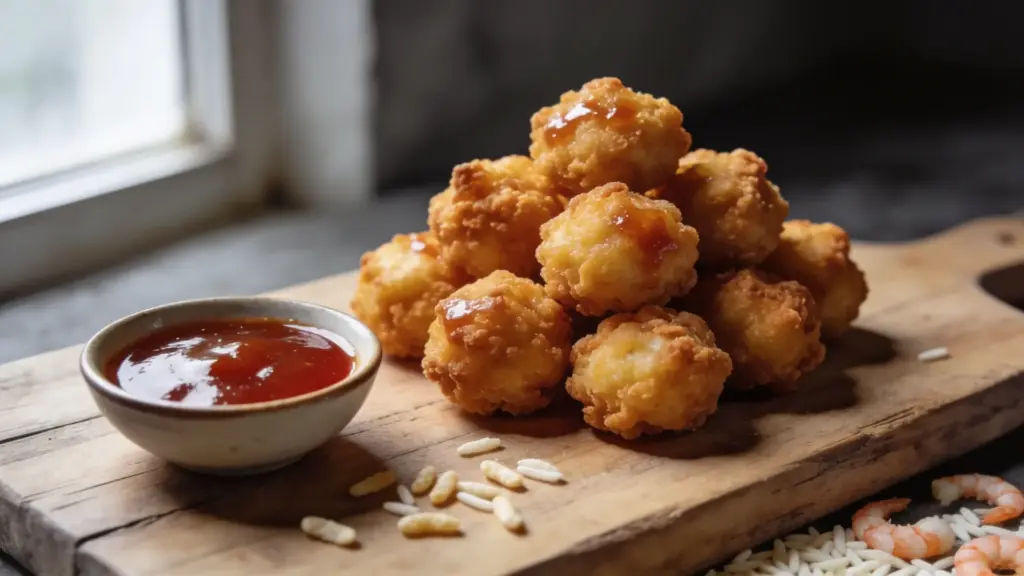
Table of Contents
Chicken balls. The great British-Chinese takeaway classic. Little bites of thigh in a light, puffed batter, fried twice until the shell shatters, then dunked in glossy sweet and sour sauce. They aren’t really Chinese at all, but they’re brilliant. Thigh survives the second fry without drying out, and the sauce sits in its own bowl, so the coating stays crackling.
The Yum Yum Club · Kitchen Tested Recipe
Chicken Balls
Prep: 20 mins · Cook: 20 mins · Total: 40 mins
Ingredients
4 servingsChicken
Batter
Sweet and sour sauce
Instructions
-
1
Marinate the chicken. Toss the pieces with the soy sauce, sesame oil, white pepper and 1 tsp cornflour. Cover and leave for 20 to 30 minutes.
-
2
Dust with cornflour. Toss the marinated chicken with the 2 tbsp dry cornflour until every piece is evenly coated.
-
3
Make the batter. Whisk the plain flour, cornflour, baking powder and salt. Beat in the egg, then whisk in the ice-cold sparkling water a splash at a time until the batter coats the back of a spoon like double cream. Mix it just before frying.
-
4
Heat the oil. Fill a deep, heavy pan no more than a third full and heat to 170-175°C.
-
5
First fry. In small batches, dip each piece in the batter, let the excess run off and lower it in. Fry for 3-4 minutes, turning once, until pale gold and set.
-
6
Rest. Lift onto a wire rack for about 5 minutes.
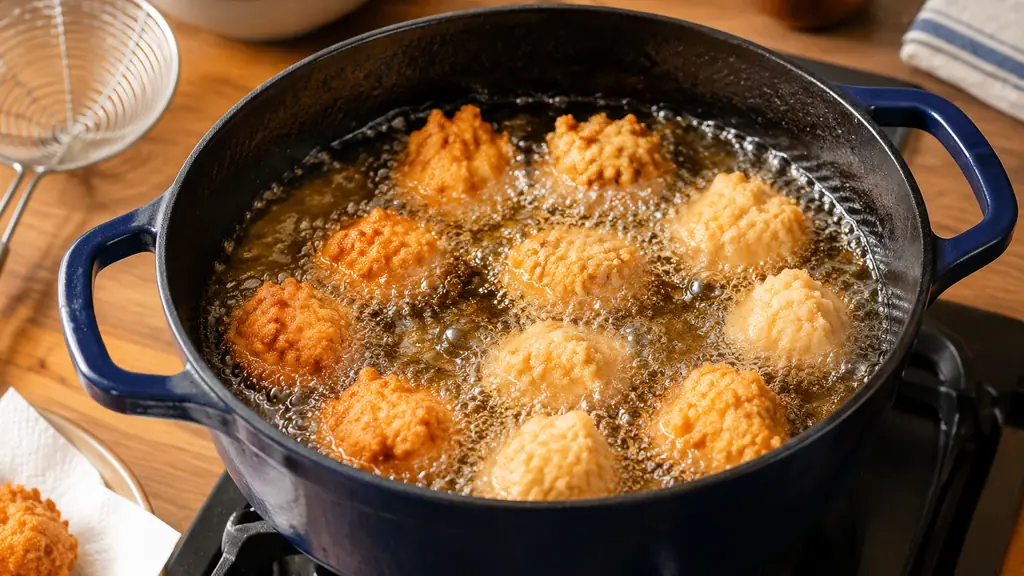
-
7
Second fry. Bring the oil to around 185°C and fry the rested chicken again, in small batches, for 1-2 minutes until deep golden and crackly.
-
8
Check it is cooked. Cut the largest piece open: juices clear, no pink, steaming hot. The safe core temperature is 70°C held for 2 minutes, or 75°C for 30 seconds.
-
9
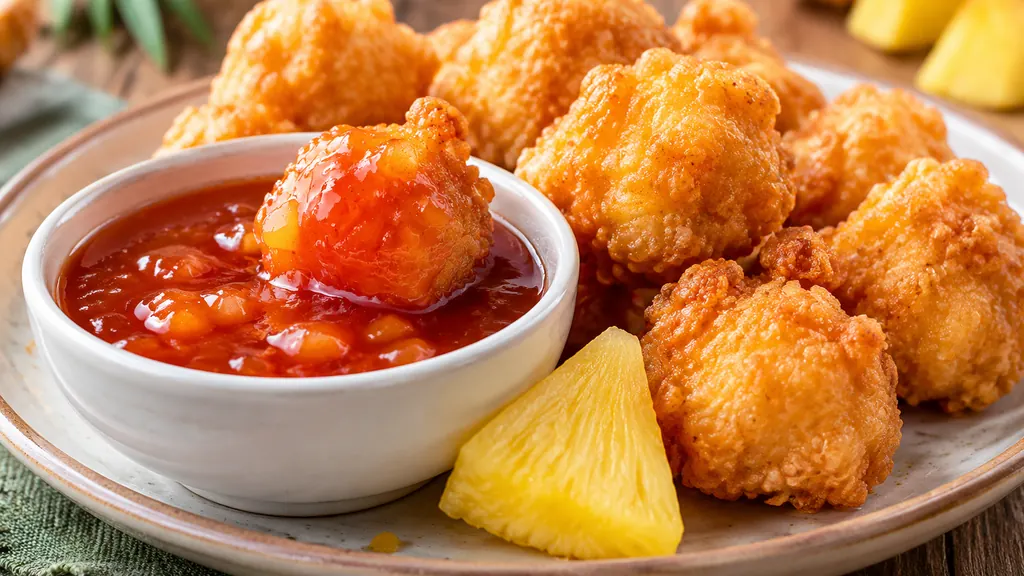
Make the sauce. Simmer the ketchup, vinegar, sugar, soy sauce and pineapple juice, stirring until the sugar dissolves. Whisk in the cornflour and water mix and cook 30-60 seconds until glossy.
-
10
Serve. Drain on kitchen paper for a minute, then serve straight away with the sauce on the side.
Kitchen Notes & Tips
- Keep the batter cold and mix it just before frying – that cold-to-hot contact is what makes it puff.
- Fry in small batches. Crowding the pan drops the oil temperature, and that’s what makes the coating greasy.
- Rest the chicken on a wire rack between fries so the trapped steam can escape before the second fry.
- Check the largest piece before serving: juices should run clear with no pink, and it should be steaming hot at the centre.
What are chicken balls?
Right, first things first. It’s battered chicken, deep-fried, cut small and round so you can pick it up with a fork or just get stuck in with your fingers.
Most people reckon it’s a British-Chinese invention, knocked up to suit takeaway tastes, and nobody has pinned down who first did it. If you’ve had our general Tso chicken, you already know the family. Battered fried chicken in a sticky, sweet sauce. This is the plainer, more British cousin.
Two choices do the heavy lifting
I go for thigh over breast every time. Thighs carry enough fat and connective tissue to stay juicy through two trips to the fryer, whereas breast can dry out and go stringy on the second. Then there’s cornflour. That’s the starch doing the crisping, dusted dry onto the chicken and stirred into the wet batter too. More in my chicken thighs post.
How it comes together
C’mon, let’s get frying. Every quantity, time and temperature is in the card above, so here are the bits that make the difference.
Dry-dust, then batter
That dry cornflour layer is the step most home cooks skip, and it’s why a wet batter alone can slide clean off in the fryer. Mix the batter just before frying, and keep it cold.
Fry twice
Fry in small batches. The first fry sets the chicken. Then it rests on a wire rack while the trapped steam escapes. The second fry builds the colour and the crunch. Listen for it. You’ll hear it.
Check the middle
A golden coating tells you nothing about what’s going on inside, because the chicken is cut small and tucked behind an opaque batter shell. So cut open the largest piece. Juices clear, no pink, steaming hot. Unsure? Check more than one. My walkthrough on judging cooked chicken goes into this properly.
The sauce
Ketchup, vinegar and sugar in roughly equal measure, loosened with pineapple juice and thickened until it’s glossy enough to cling to a spoon.
Taste it. Too sharp? Add sugar a teaspoon at a time. Too sweet? Splash in more vinegar. Yours will come out deep red-brown, not the bright orange-red of takeaway tubs, which usually comes from food colouring. It should look different!
Tips for the crispiest chicken balls
- Keep the batter cold, and mix it late. Cold batter meeting hot oil is what makes it puff, and that’s the whole trick.
- Fry in small batches. Crowding the pan drops the oil temperature and makes the coating greasy. My notes on frying with less oil cover batch size and oil control in more detail.
- One temperature also works. I use two for the deepest colour without overcooking the middle. Holding 170-175°C for both fries is a genuine alternative though, and still gives a crisp result.
Air fryer and oven versions
Yes, my Foodie Friends, both do the job, with less grease and a softer finish. A thin, wet batter slides off the air fryer wire, so use a firmer coating. A plain flour-and-cornflour dredge does it, or a light egg-white batter.
For the air fryer, go hot, turning halfway and spraying lightly with oil. Aim for around 190–200°C. It takes 12–16 minutes. For the oven, use 200°C fan. Conventional? That’s 220°C, or gas mark 7. Roughly 25 minutes does it, turning at the 15-minute mark. Treat the clock as a guide only.
Swaps and variations
Breast works fine, just cut the pieces a touch larger since it dries out faster. Pork loin works, and raw prawns do too, though they overcook badly across a full double fry, so pull them earlier. Tofu or cauliflower florets, cut to about 2.5 cm, take the batter well. Skip beef.
Gluten-free? Swap the plain flour for a gluten-free blend, or use cornflour alone, and use tamari, because standard soy sauce isn’t gluten-free. Leave the egg out for a touch crisper, less rich batter. Want heat? Stir chilli flakes into the batter or sauce.
What to serve with chicken balls
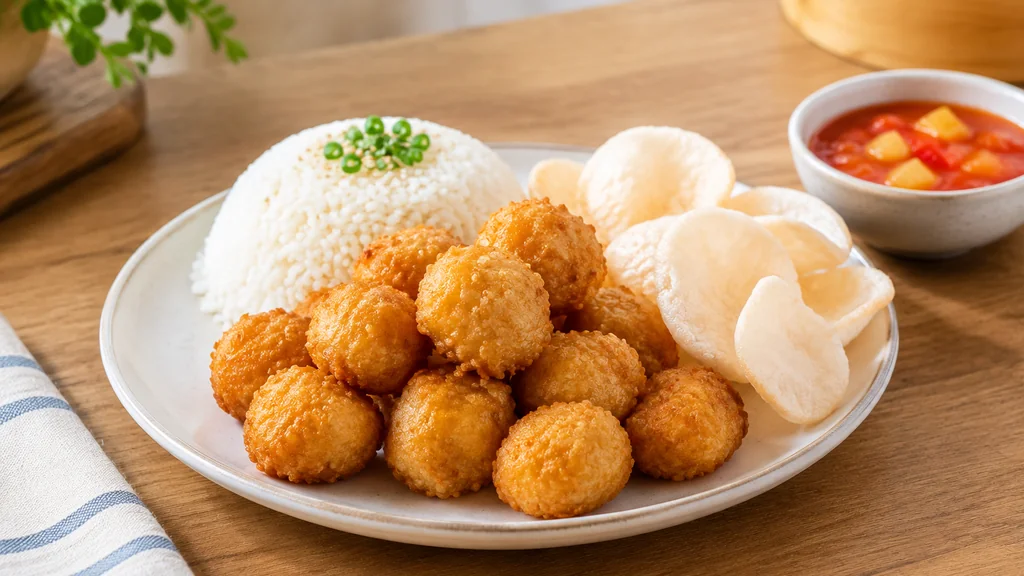
Rice does most of the heavy lifting, egg-fried or plain steamed, with prawn crackers to finish the takeaway spread. Try my Thai-style sausage fried rice or sticky hoisin chilli ribs. Keep the sauce in a separate bowl for dipping, not poured over the top.
Storing, freezing and reheating
Cool them, fridge them within two hours, and eat within 48. Keep the sauce separate, because a sauced ball goes soft fast.
Freezing works, raw or cooked. Open-freeze raw battered pieces on a lined tray, then bag them and fry straight from frozen, never thawed, or the coating slides off and goes soggy. Reheat from the fridge in an air fryer or hot oven at around 190°C, in a single uncovered layer. Allow 5-10 minutes, or a good 20-25 from frozen. Skip the microwave, it steams the batter soft. My notes on reheating fried chicken cover the rest. Reheat once only.
Worth the pan of oil
Two rounds in the oil, two lots of washing up, and a stretch of patience in between. Stick with it though. What comes back is a proper shattering shell and a sauce that tastes of something, both well beyond what most delivery boxes manage. Yum!
FAQ
Are chicken balls Chinese?
Not really. They’re widely believed to be a British-Chinese takeaway invention, knocked up to suit customers who already loved deep-fried, battered food from the local chip shop. The dish is largely unknown in China itself. And no specific inventor, date or town is reliably documented, whatever story you’ve heard.
What’s in the sauce?
A classic sweet and sour sauce is tomato ketchup, a light vinegar such as rice vinegar, and sugar, roughly in equal parts, loosened with a little pineapple juice and a splash of soy sauce. To thicken it you’ve got two options. A cornflour slurry gives a clingier finish, while simple reduction gives you something thinner and brighter.
Can you air fry chicken balls?
The wet, thin batter from this recipe won’t work. It won’t set properly and tends to run off. Go for a firmer coating instead, like a flour-and-cornflour dredge or a light egg-white batter. Cook it hot, for 12-16 minutes. The results will be crisp, but well short of true deep-fried texture.
Can you freeze chicken balls?
Yes, both raw and cooked. For raw ones, open-freeze the battered pieces on a tray until solid, then bag them up and fry straight from frozen. Never thaw them first. With cooked chicken balls, cool them quickly and get them in the freezer within about an hour, then reheat from frozen. Freeze the sauce in its own container, kept separate from the chicken.
Why aren’t my chicken balls crispy?
The oil wasn’t hot enough. The pan was too crowded and dropped the temperature. The batter was mixed too far ahead and gone warm. Or the sauce went on before serving and softened the shell. Fix the oil temperature and batch size first. That solves most cases on its own.

You might also love
More in Chicken & Poultry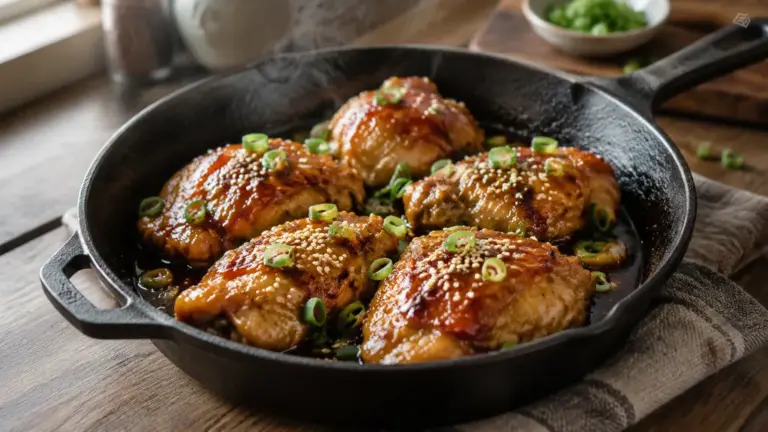
Honey Chicken: 4 Delicious Styles, From Crispy Takeaway to Sticky Honey Soy
Updated: October 12, 2026 Great honey chicken is tender meat under a glossy, balanced glaze that tastes of more than just sugar.…
Read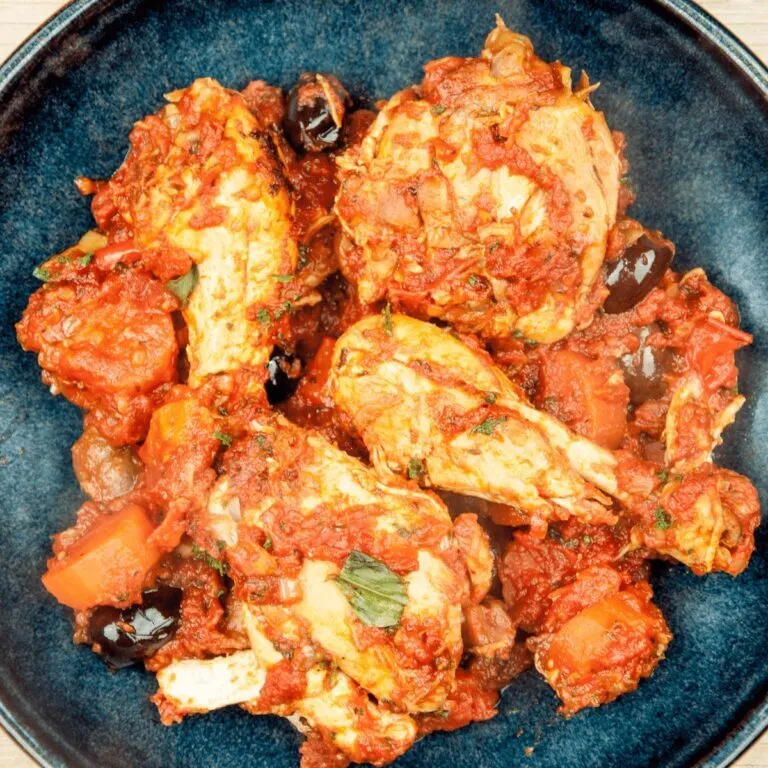
Sweet Pepper & Lemon Chicken Cacciatore
Updated: July 12, 2026 Today we fancied Italian. The problem with fancying Italian, however, is that it always tends to be pizza…
Read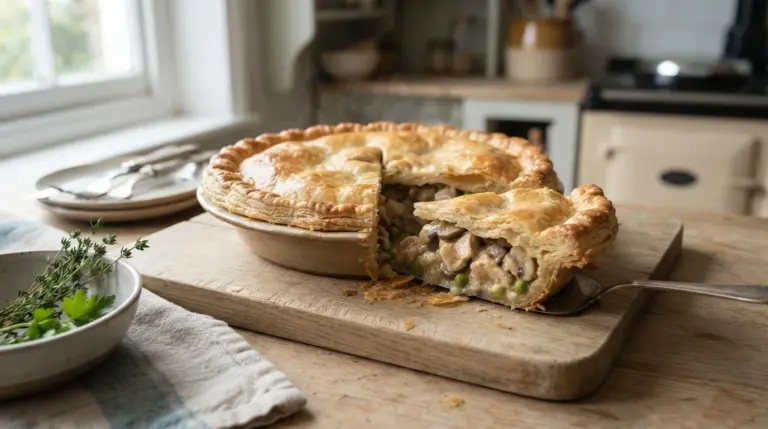
Chicken and Mushroom Pie (Jamie Oliver-Inspired)
Our own chicken and mushroom pie, inspired by Jamie Oliver's puff-pastry one-pan style. Ingredients, method, and what his real recipe contains.
Read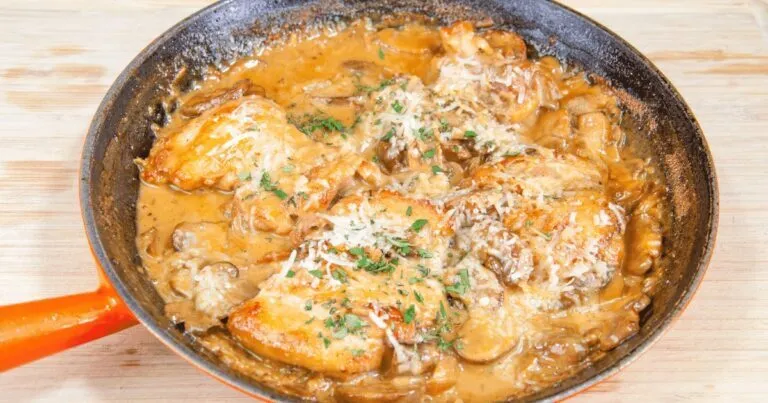
Creamy Sherry and Thyme Chicken Thighs
Updated: July 12, 2026 I love these single skillet recipes. They’re not quite as simple as an all in one slow cooker…
Read
Chicken and Leek Dauphinoise
Updated: November 5, 2026 For you regulars, you’ll know that I’ve made cheesy dauphinoise potatoes before. However, one of The Yum Yum…
Read
Easy Chicken and Leek Pie Recipe with Puff Pastry Lid
A comforting British chicken and leek pie with creamy filling, tender thighs, leeks, white wine and a golden puff pastry lid. An…
Read