
How to Prepare a Mango (Slice, Score, and Fan in 90 Seconds)
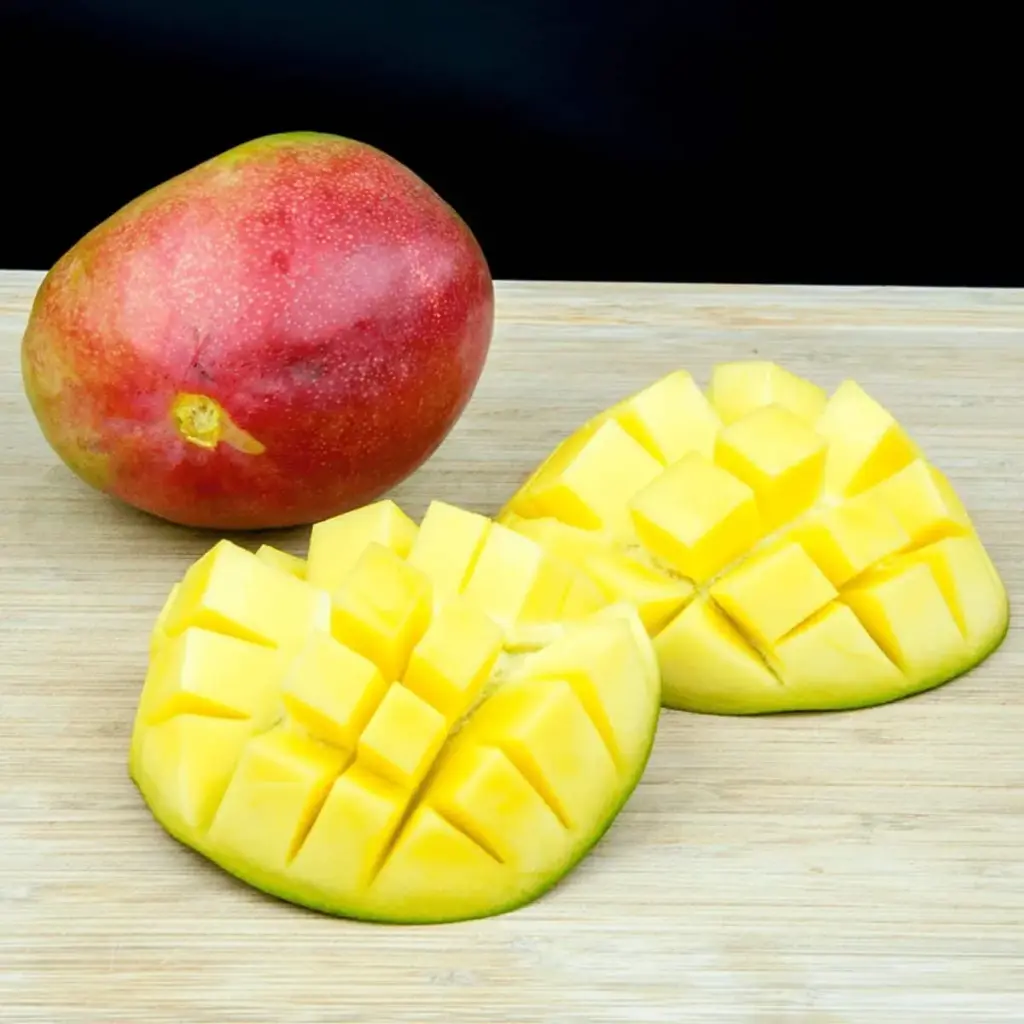
Table of Contents
This post may contain affiliate links. As an Amazon Associate we earn from qualifying purchases.
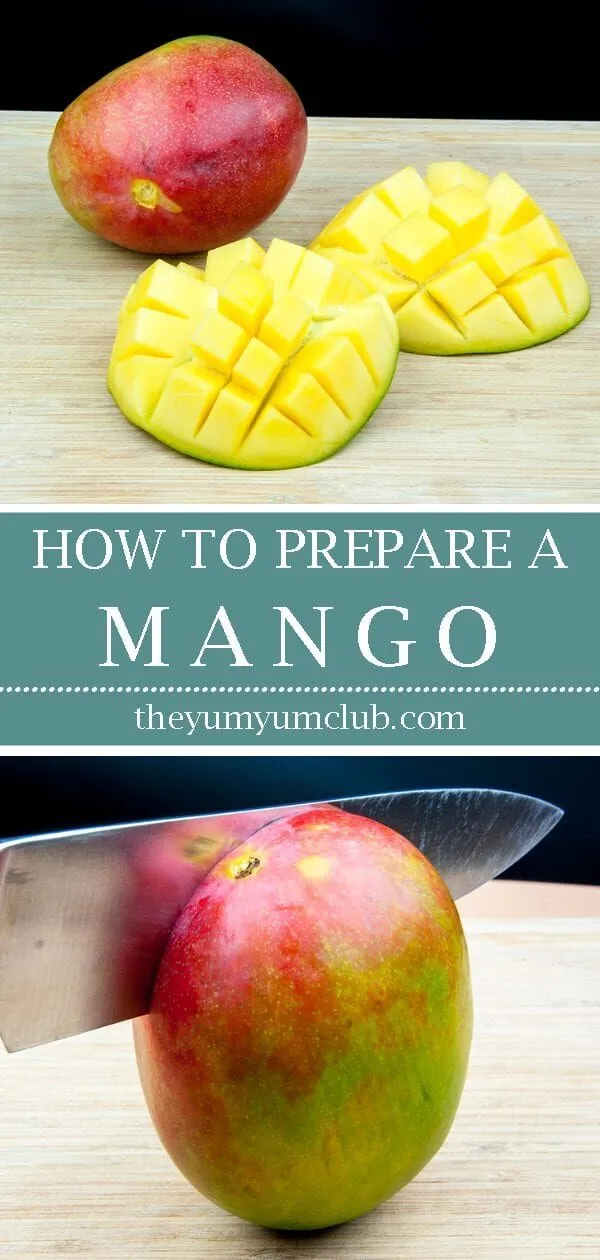
To prepare a mango, stand it on end and slice straight down each side of the flat stone to free two cheeks, score the flesh in a criss-cross grid without cutting through the skin, then push the skin up from underneath so the cubes fan out. Two cuts, a score, a push, and you have the buffet-style presentation in about 90 seconds. The reason you slice rather than cut around the fruit: the stone runs the full length of a mango and is flat, not round, so there is nothing to pivot a knife around the way you would with an avocado.
I started doing this for a summer dinner party about six years ago. It looked restaurant-quality on the plate and took less preparation time than slicing strawberries. Mangoes are forgiving fruit: even a rough attempt at this technique produces something better than trying to peel and dice a whole raw mango.
How do you know when a mango is ripe enough to prepare?
Press gently near the stem end. A ripe mango gives slightly under your thumb, not mushy but yielding. Firm all over means underripe; very soft or with large dented areas means overripe. Smell is also a good indicator: a ripe mango smells sweetly fruity at the stem end. A mango that smells of nothing is probably not ripe yet.
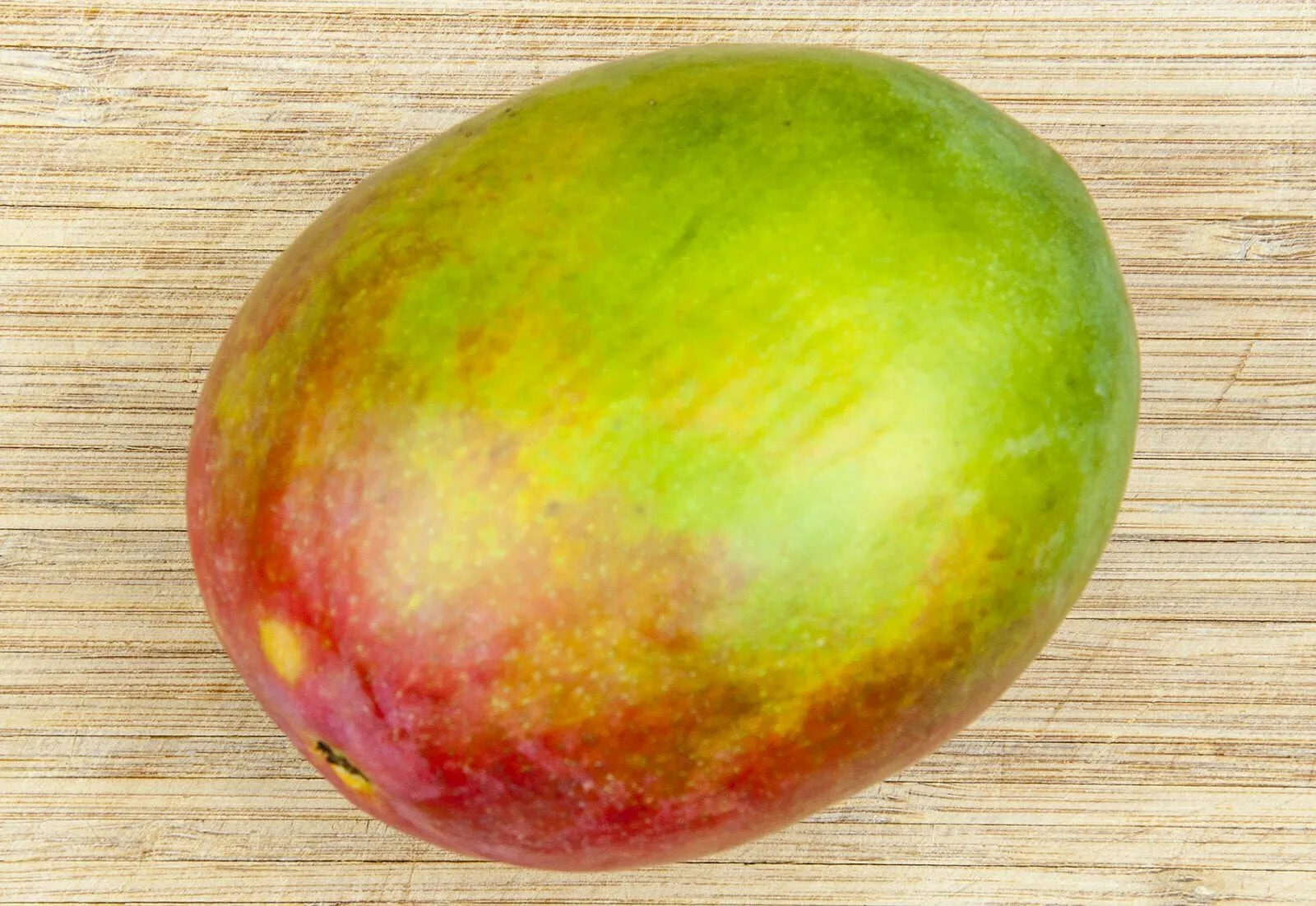
Colour varies enormously by variety. Alphonso mangoes are golden-orange when ripe. Tommy Atkins (the common supermarket variety in the UK) often stay partially green even when fully ripe. Do not rely on colour alone; use the press test.
How do you prepare a mango, step by step
Step 1: Wash and slice
Rinse the mango under cold water first. You do not peel or eat the skin, but you handle the outside of the fruit and then the flesh, so it is worth being clean about it.
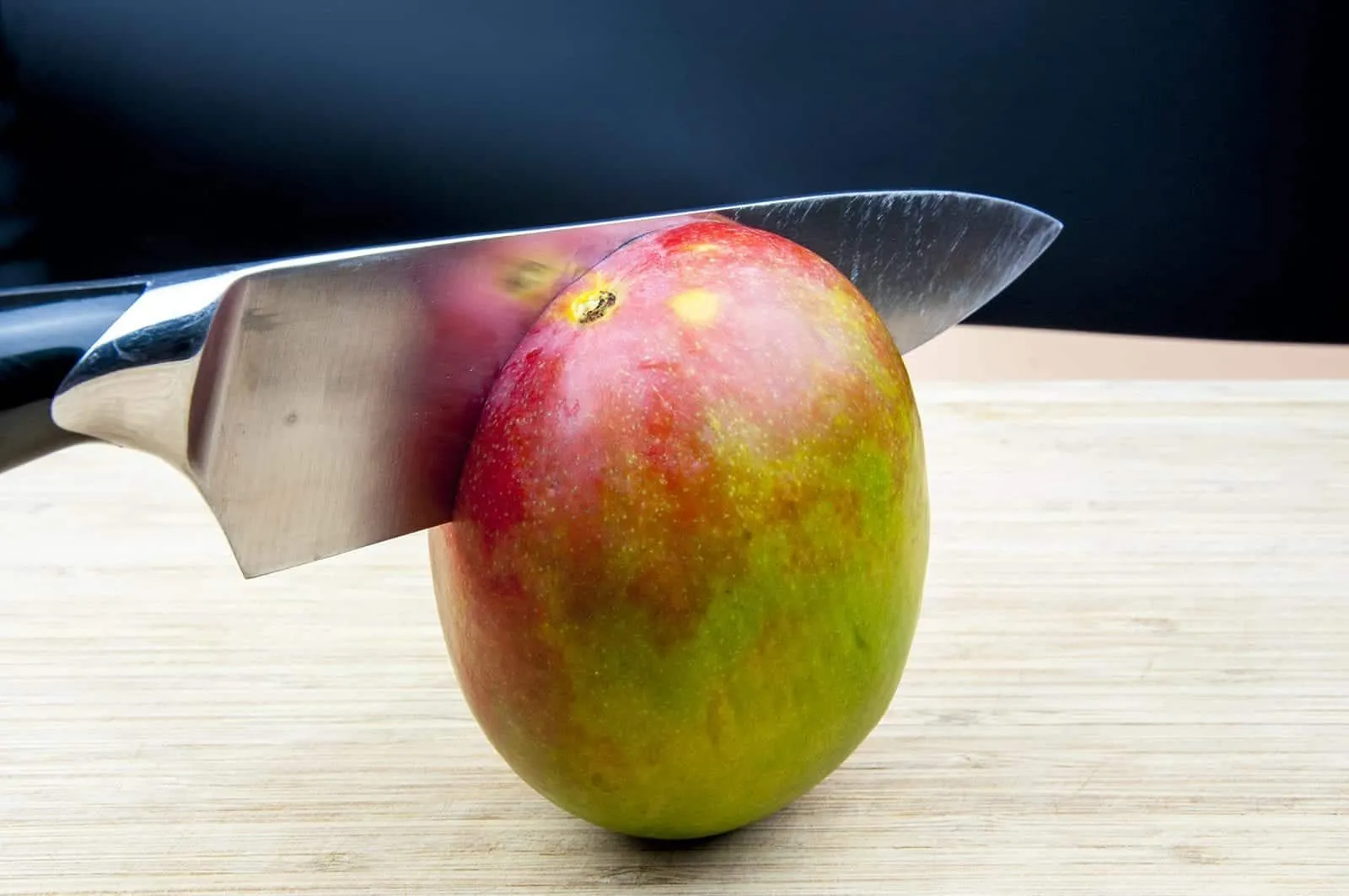
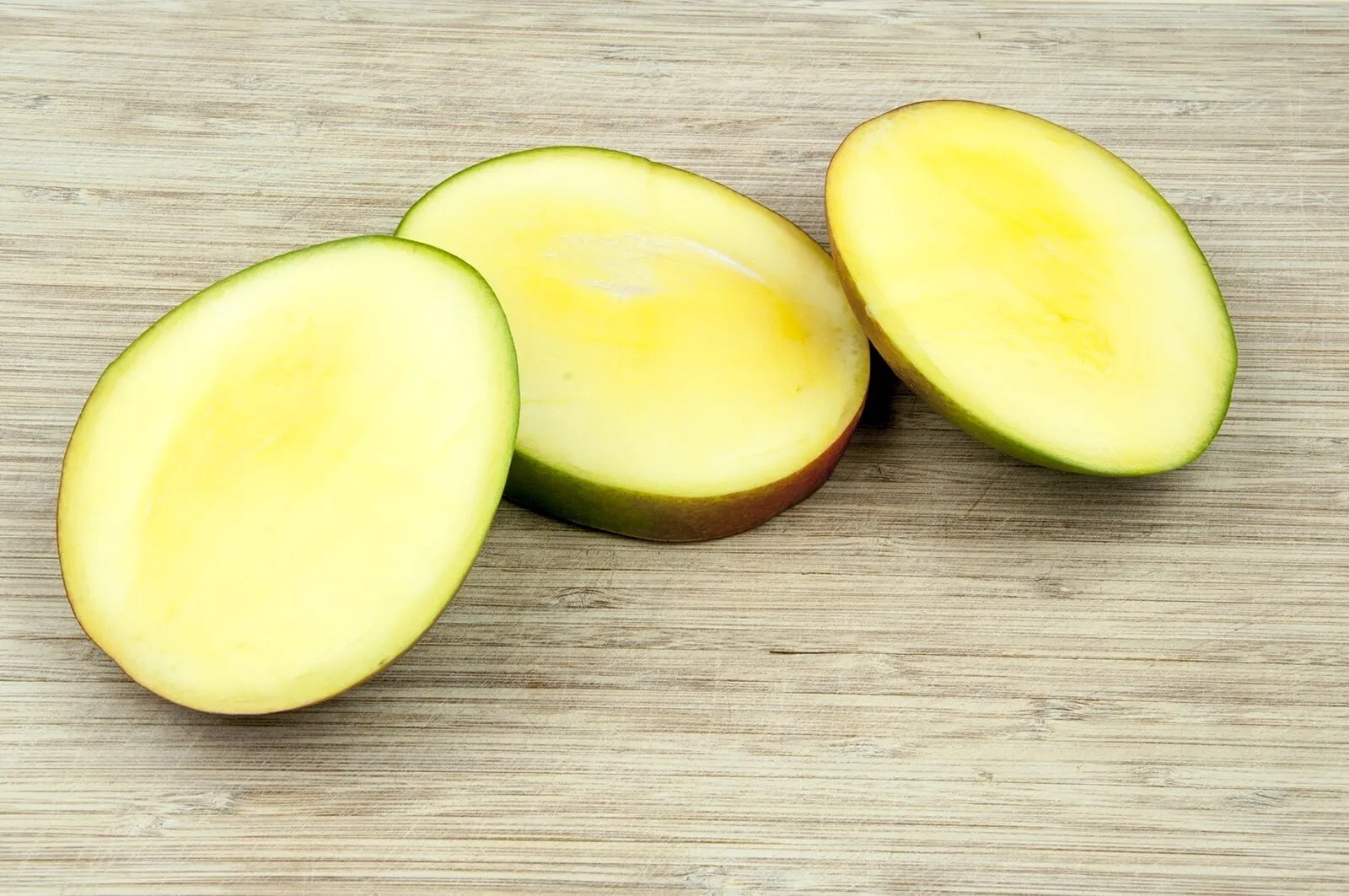
Stand the mango upright on a chopping board, stem end up. The flat stone runs vertically through the centre of the fruit. Your job is to slice around it. Position your knife about 1 cm off-centre to one side and slice straight down; you will feel the knife brush the stone. Repeat on the other side. You end up with two large “cheeks” and a central slice containing the stone, which you discard (or nibble clean over the sink, cook’s privilege).
Step 2: Score the flesh
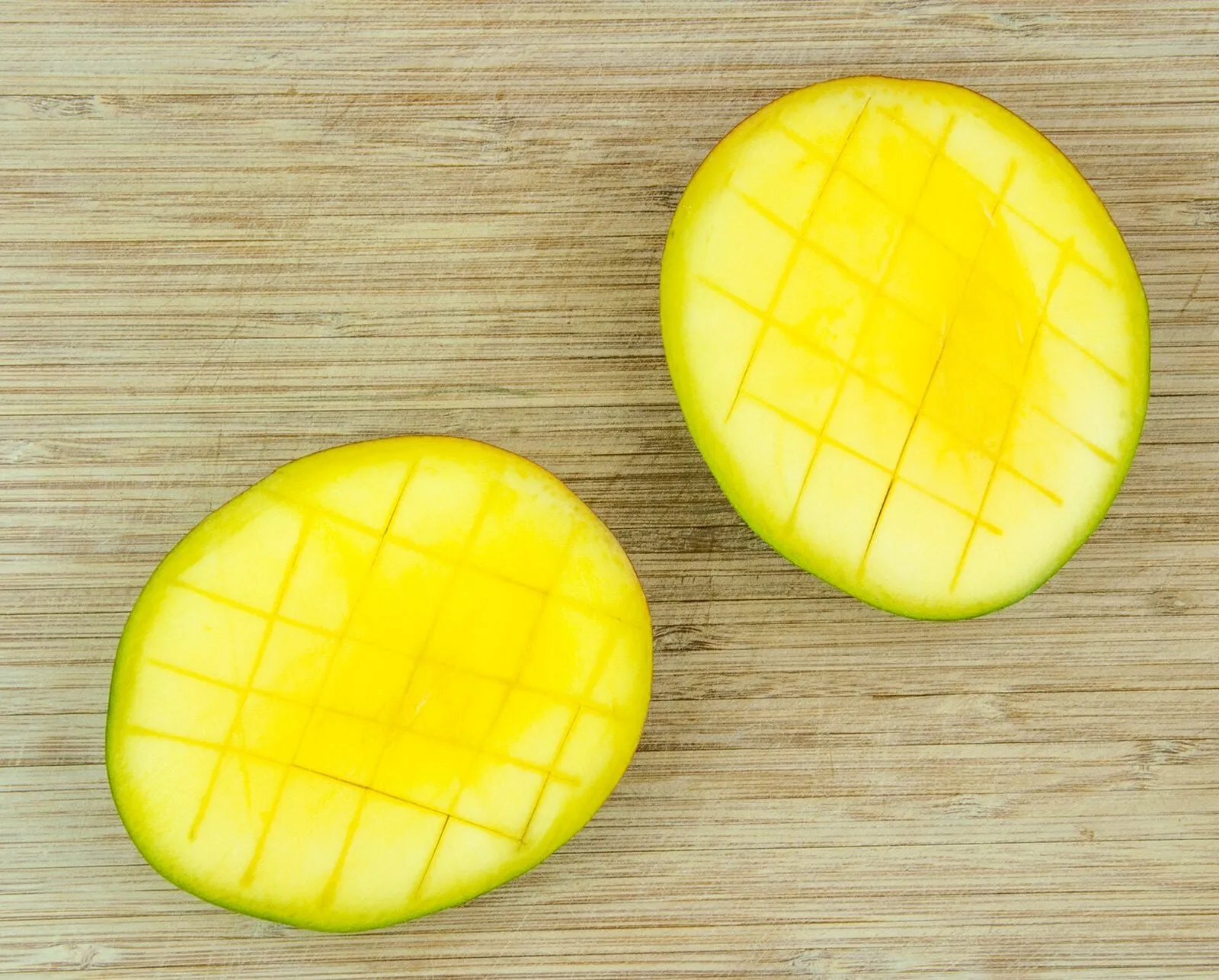
Hold one mango cheek skin-side down. Using a sharp knife, score the flesh in a diagonal grid pattern: parallel cuts about 1.5 cm apart one way, then repeat at a 90-degree angle to create diamonds. Cut deeply enough to reach just above the skin, but do not cut through it. The skin acts as a base that holds everything together when you push it inside out.
Step 3: Push and serve
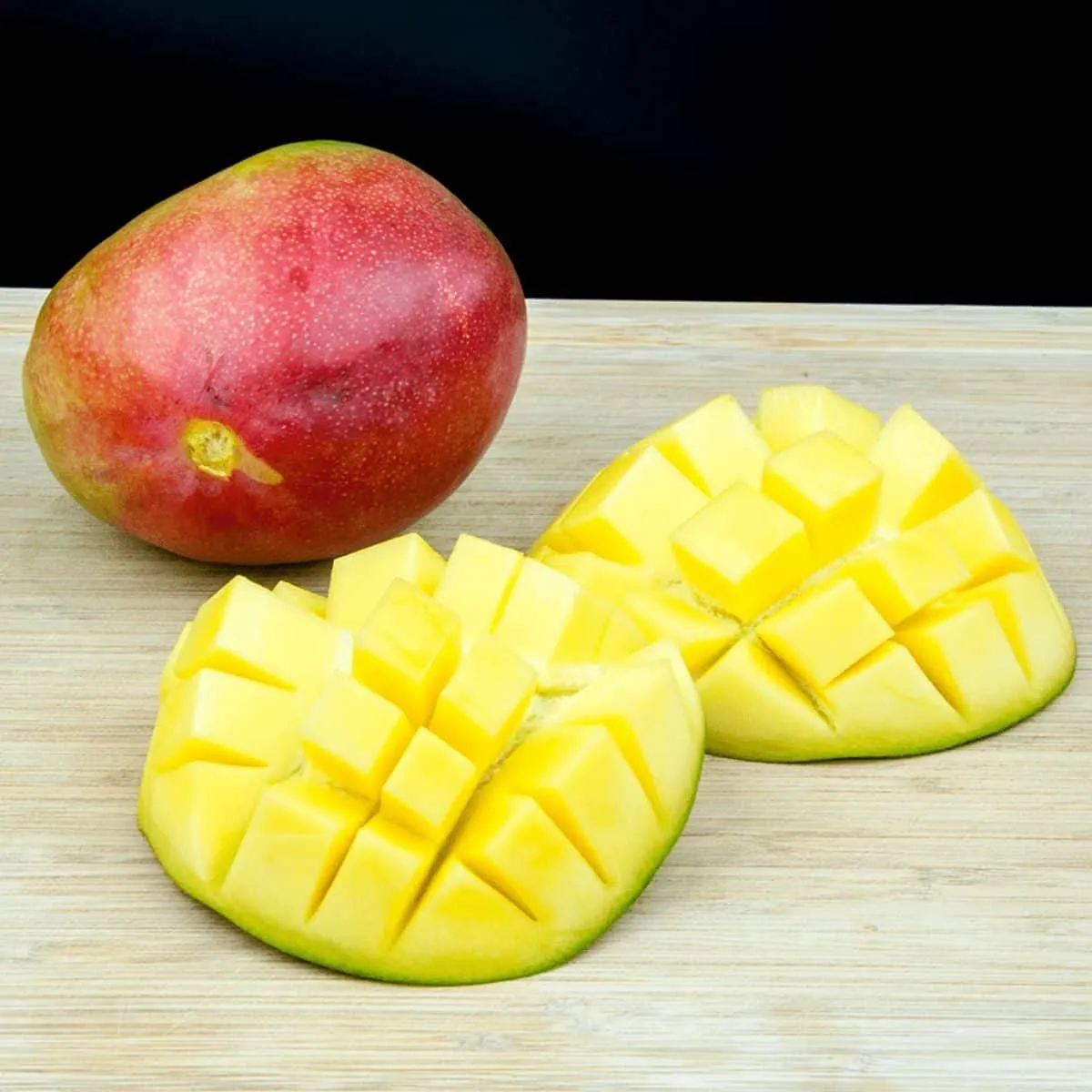
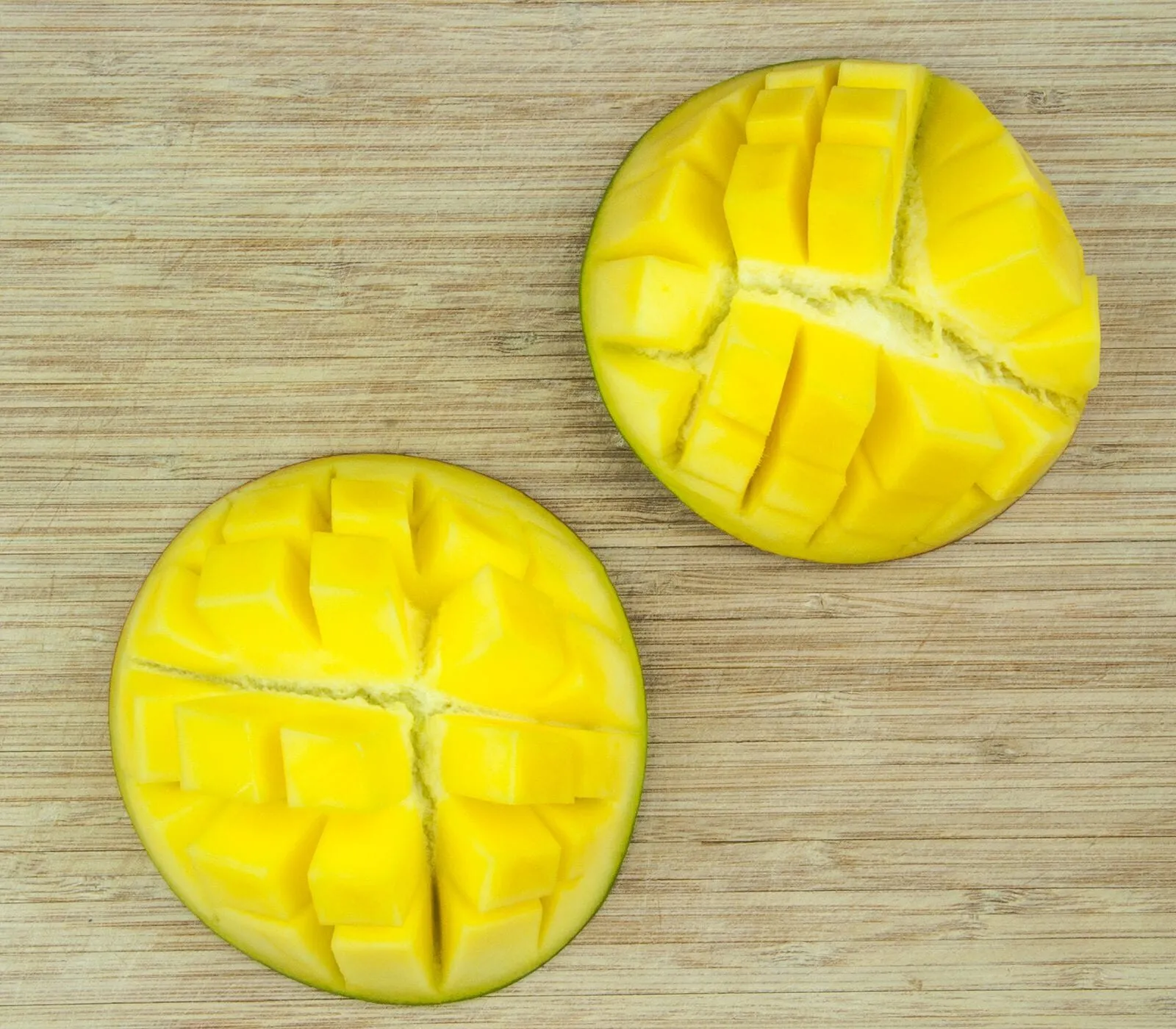
Hold the cheek in both hands and push the skin upwards from underneath with your thumbs. The scored flesh fans outward and separates into clean, distinct cubes in the classic “hedgehog” or “porcupine” presentation. The pieces can be eaten directly from the skin or sliced off at the base for a tidier presentation on a fruit platter.
A video walkthrough of the technique is available here if you prefer to see it in motion:
What can you do with the prepared mango?
The fan presentation works as a standalone dessert element or on a fruit platter. For diced mango (salsas, smoothies, or fruit salads), just run a spoon along the base of the scored cheek after pushing it out and the cubes fall off cleanly. This is considerably faster and tidier than peeling a whole mango and trying to cut around the stone.
A quick mango salsa (diced mango, finely chopped red onion, fresh coriander, lime juice, and a small amount of finely diced chilli) pairs well with grilled fish or alongside something like pan-fried cod. For something richer, diced mango folded through a green salad with avocado and toasted sesame seeds is a combination I come back to regularly in summer.
Leftover mango flesh from around the stone can be blended into a smoothie; there is more fruit there than it looks. The flesh around the stone is also the sweetest part of the mango, so worth working at with a teaspoon before discarding the stone.
What surprised me about this technique
The first thing is how much easier it is than trying to peel a whole mango. Peeling a round slippery fruit with a peeler while trying not to lose fingers is genuinely awkward. Slice the cheeks off first, then score, then push, and everything is stable and controlled at every stage.
The second thing: the central stone slice is not as wasteful as it looks. Stand it upright and you can cut thin strips of mango from the sides of the stone fairly easily. Not presentation-quality pieces, but perfectly good fruit for a smoothie or a quick snack.
Frequently asked questions about preparing mango
How do you peel a mango if you need it completely skinless?
The easiest method is to use the cheek technique above, then run a spoon or a thin knife between the scored flesh and the skin, and the cubes come off cleanly. Alternatively, peel the whole mango first with a sharp peeler (easier if the mango is firm and slightly underripe), then slice the flesh from the stone. For smooth preparations like mango puree or sorbet, either method works.
Can you prepare mango in advance?
Yes. Store prepared mango in an airtight container in the fridge for up to 24 hours. Unlike avocado, mango does not oxidise and brown quickly when cut, so advance prep is practical. A squeeze of lime juice helps maintain the colour and adds flavour. Do not freeze prepared fresh mango; the cell structure breaks down and the texture becomes watery on defrosting.
Why does my mango taste stringy?
Stringiness comes from the variety, not the preparation. Tommy Atkins, the most common supermarket mango in the UK, can be moderately stringy, especially near the stone. Alphonso mangoes (available from Asian grocers in season, usually April to June) are virtually fibre-free and considerably sweeter. Ataulfo or Honey mangoes are another stringless variety worth seeking out.
How do you ripen a mango quickly?
Place it in a paper bag with a banana at room temperature. Bananas emit ethylene gas, which accelerates ripening. A firm mango will usually soften within 24 to 48 hours this way. Do not put an unripe mango in the fridge; cold halts ripening almost entirely and can cause the flesh to develop an unpleasant, slightly fermented flavour.
Can you cook with mango?
Yes. Underripe mango is used extensively in Southeast Asian cooking: raw in salads (Thai green mango salad), pickled, or cooked in chutneys. Ripe mango works in sauces, glazes, desserts, and sorbets. It can be grilled briefly over high heat which concentrates the sweetness and adds a slight caramelised note.
Find more quick preparation guides on The Cookery Techniques Larder. And if you are building a fruit-forward summer spread, the healthy smoothies guide pairs well with freshly prepared mango.

You might also love
More in Kitchen Tips & How-To
Essential Japanese Ingredients to Add to Your Pantry
Updated: July 12, 2026This post may contain affiliate links. As an Amazon Associate we earn from qualifying purchases. Whether you are cooking…
Read
How to Choose the Perfect Cake for Any Occasion
Updated: July 12, 2026This post may contain affiliate links. As an Amazon Associate we earn from qualifying purchases. The right cake can…
Read
Curious about Meal Replacements? Here are 5 Reasons to Try Them Out
Updated: July 12, 2026This post may contain affiliate links. As an Amazon Associate we earn from qualifying purchases. If you’re trying to…
Read
Finding The Best Locations For Your Mobile coffee trailer Franchise
Updated: July 12, 2026This post may contain affiliate links. As an Amazon Associate we earn from qualifying purchases. Possessing a mobile coffee…
Read
8 Ways to Get Seniors With No Appetite to Eat
Updated: July 12, 2026This post may contain affiliate links. As an Amazon Associate we earn from qualifying purchases. Finding ways to ensure…
Read
How To Make The Right Mother’s Day Gifts With Food
Updated: July 12, 2026This post may contain affiliate links. As an Amazon Associate we earn from qualifying purchases. A hearty steak or…
Read
Hi. Very interesting article but it’s hard to find theyumyumclub.com in search results.
You are out of google’s top ten, so you can’t
expect big traffic. You need high quality backlinks to rank
in serps. And you can get them for free, just search in google:
forbesden’s tools