
How to Make Tomato Roses (A Classic Restaurant Garnish)
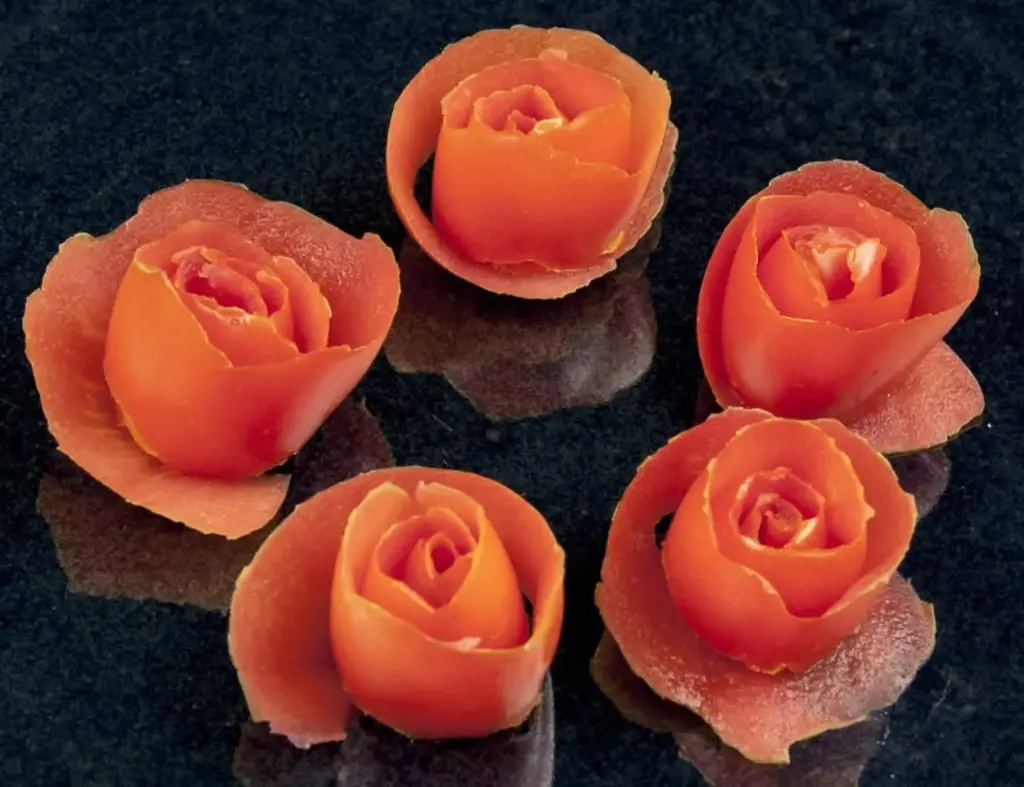
Table of Contents
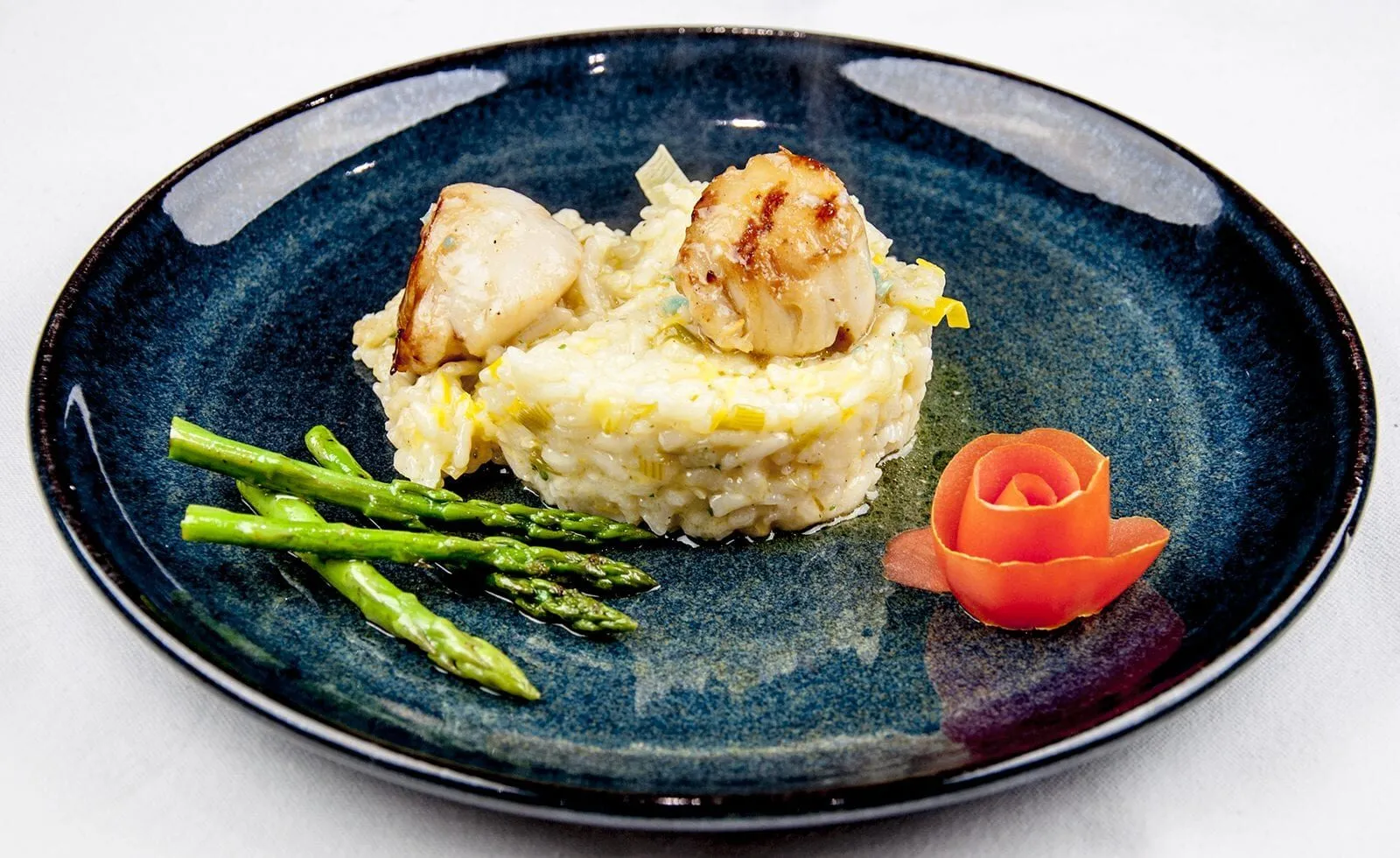
A tomato rose is one of those garnishes that looks considerably more difficult than it actually is. The first time I made one I assumed I had done it wrong — it seemed too easy. But there it was, a small curl of tomato skin shaped unmistakably like a flower, sitting on the plate next to a pan-fried scallop and looking entirely deliberate. Guests always comment on it.
The technique is straightforward: you peel the skin from a tomato in one continuous strip, then coil it tightly to form the rose shape. No special tools, no artistic talent required. A sharp peeler and a steady hand is all you need. Once you have made three or four you can do it in under a minute.
Updated June 2026 — by Steve Deacon
What is a tomato rose and when do you use one?
A tomato rose is a garnish made from a single continuous strip of tomato skin, coiled tightly to resemble a rose in bloom. It sits on a plate as a decorative element — adding colour, visual height, and a sense of care and craft to a dish. You find them on restaurant plates, buffet spreads, and anywhere presentation matters alongside flavour.
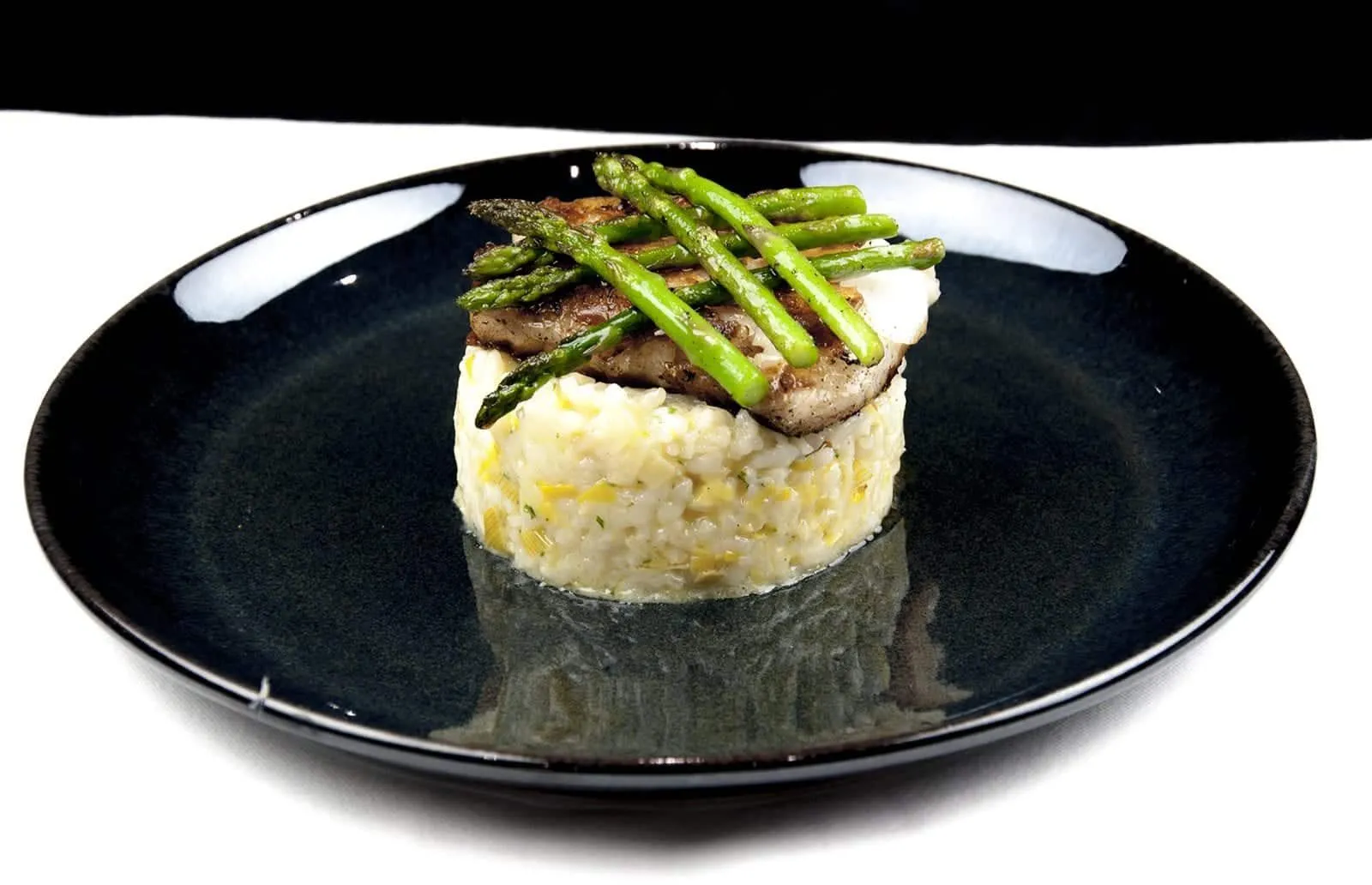
It works best on savoury plates where a pop of red makes visual sense: fish dishes, cold starters, cheese boards, charcuterie plates, or anything that benefits from a delicate, jewel-like focal point. I made one for Jen alongside pan-fried scallops on a leek risotto. Compare it to the plain cod plate I made for myself the same evening — the difference in visual impact from one small garnish is striking.
What type of tomato should you use?
Use a firm, ripe tomato with smooth skin — a standard round salad tomato or a large vine tomato works well. The skin needs to be intact and pliable, not cracked, wrinkled, or overly thick. Avoid very large beefsteak tomatoes (the skin tends to be thick and uneven) and avoid cherry tomatoes (too small to get a long enough strip). A medium tomato, around 150 to 200 g, gives you a strip of about 30 to 40 cm — enough to form a proper rose.
The tomato should be at room temperature, not cold from the fridge. Cold skin is more likely to crack as you peel.
How do you make a tomato rose step by step?
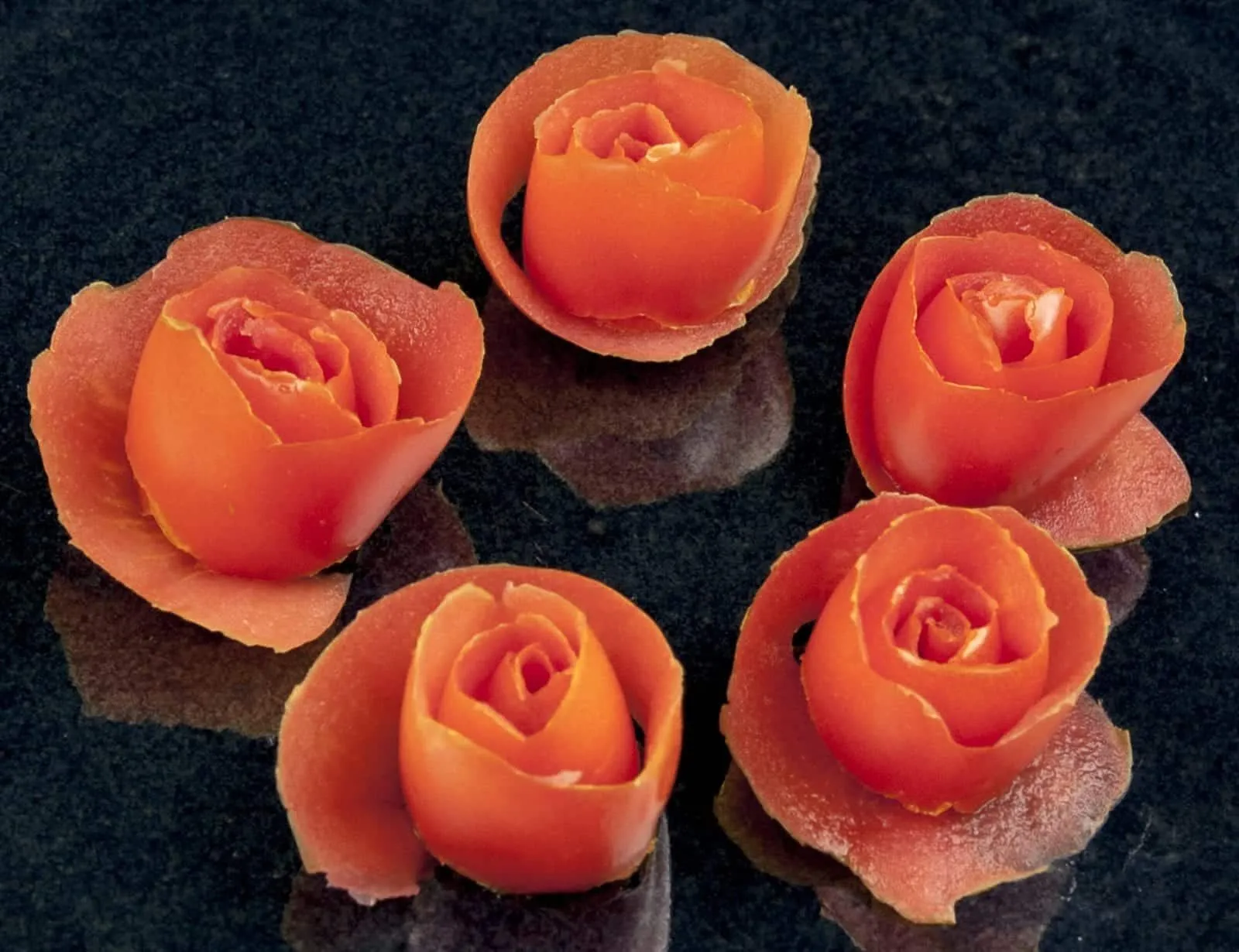
The whole process takes 60 to 90 seconds once you have the technique. Here is exactly how to do it.
What you need: one firm ripe tomato, a small sharp peeling knife or a sharp vegetable peeler.
Step 1. Hold the tomato in your non-dominant hand. Starting at the base (not the stem end), begin peeling the skin in a continuous spiral, working your way from the base up towards the top. Keep the strip roughly 1.5 to 2 cm wide. The key is not to break the strip — you want one single unbroken length of skin from base to top.
Step 2. Work slowly on your first attempt. The skin is fragile where it is thinnest, so apply even, gentle pressure with the knife. As you rotate the tomato, angle the knife slightly so you are taking just the skin without cutting into the flesh. The strip should be about 2 to 3 mm thick — thin enough to be pliable, thick enough not to tear.
Step 3. Once you have the full strip of skin, place it flat on your work surface. Starting from the base end of the strip (the first piece you cut), coil it tightly with the outer (red) side facing outwards. The first few coils form the tight centre of the rose. As you coil outwards the petals naturally open slightly.
Step 4. When you reach the end of the strip, tuck the end underneath the rose to secure it. Place the rose on the plate with the tucked end underneath so it is not visible. That is it.
A short video demonstration is available here if the written steps are not quite clicking:
What if the skin keeps breaking?
This is the most common problem on the first attempt. Three fixes:
- Use a sharper knife. A blunt peeler drags and tears. A properly sharp peeler or a small, sharp paring knife glides cleanly through the skin.
- Make the strip wider. A 2 cm strip is more forgiving than a 1 cm strip. Wider strips are easier to coil too.
- Use a firmer tomato. A very ripe, soft tomato gives as you peel, making even pressure hard to maintain. Slightly underripe is easier to work with for this technique.
If the strip does break, do not throw it away. You can coil the longer piece and use the shorter piece as an outer petal tucked underneath. With a little adjustment, even a two-piece strip produces a convincing rose.
How far in advance can you make tomato roses?
Up to about two hours in advance, kept covered with damp kitchen paper and refrigerated. Longer than that and the exposed flesh of the strip starts to dry out and the colour dulls slightly. For a dinner party, I make them about 30 to 45 minutes before plating. They hold their shape well at room temperature for the duration of a starter course.
The tomato flesh left behind after peeling is not wasted — dice it finely and you have a rough concasse that works well in a quick sauce or as a bruschetta base. Nothing goes to waste.
What other garnishes pair well with a tomato rose?
A small sprig of fresh chervil or flat-leaf parsley tucked alongside the rose adds green contrast. A few capers or a small caper berry placed next to it works for fish dishes. On a cheese board, a tomato rose alongside a small sprig of rosemary and a fig half makes the whole board look considerably more considered.
If you want to go further with garnish techniques, the Cookery Techniques Larder covers a range of presentation and preparation skills. And if you need a dish worthy of a tomato rose, the pan-fried scallops with leek risotto is exactly the kind of plate where this garnish earns its place.
Frequently asked questions about tomato roses
Do you need any special equipment to make a tomato rose?
No. A sharp small knife or a sharp vegetable peeler is all you need. Some professionals use a turning knife — a small curved blade — but it is not necessary. The technique is the skill, not the tool.
Can you make tomato roses from cherry tomatoes?
Technically yes, but the strip is so short you get more of a tomato curl than a rose. They are fiddly and the result is less dramatic. Standard round salad tomatoes give the best results.
Are there other vegetables you can make into roses?
Yes — cucumber, courgette, carrot, and even radish all lend themselves to similar spiral-peel garnishes. Cucumber skin has a beautiful dark green colour. Radish roses are made slightly differently, by scoring the radish in a cross-hatch pattern and leaving it in ice water to open. Each has its own technique.
Does the tomato rose need to be refrigerated on the plate?
If you are plating and serving within 15 minutes, no. For a buffet or a plate that will sit for longer, yes — cover loosely with cling film and refrigerate until service. The rose will flatten slightly if left uncovered at room temperature for more than 30 minutes.

You might also love
More in Kitchen Tips & How-To
The Importance of Properly Storing Leftovers: Tips for Safe and Delicious Meals
Updated: July 12, 2026 From an unexpected second helping of mashed potatoes to the leftovers from a large family gathering, many have…
Read
How To Reheat Fried Chicken To Make It Tasty
Updated: July 12, 2026There are nothing more gratifying than extra-tender, beautifully crispy chicken wings? Crispy chicken is often a delight. Either you…
Read
8 Healthy Food Swaps to Cut Back on Carbs and Improve Your Diet
Updated: July 12, 2026 Sticking to a balanced, nutritious diet is essential not only when you want to lose some pounds. In…
Read
Make Your Own Almond Milk
Updated: July 12, 2026Ever wondered how to make your own almond milk, or any nut-based milk for that matter? Well, it’s far…
Read
Finding The Best Locations For Your Mobile coffee trailer Franchise
Updated: October 26, 2026OK, my Foodie Friends, a mobile coffee trailer is only as good as the spot you park it on.…
Read
Seasonal Foods In Summer
Updated: July 12, 2026 Summertime food is great. As days get longer and hotter, seasonal food becomes more available. Summer’s fresh produce…
Read
A beautiful garnish, love your tomato roses!
Thanks again Elly! You’re the best!! 🙂