
Table of Contents
This post may contain affiliate links. As an Amazon Associate we earn from qualifying purchases.
This is the soup you order at the end of a Chinese takeaway menu without reading the rest of it. It’s chicken and sweetcorn soup with clear stock, silky ribbons of egg, and a faint sweetness that nothing else in the fridge quite matches. You can make it at home in 25 to 30 minutes, and it tastes closer to the takeaway version than any recipe built on cream or a flour roux. A cornflour slurry gives the broth its body, and beaten egg drizzled in slowly sets into thin strands. Pour it too fast, or into a hard boil, and it turns into scrambled bits. Tinned sweetcorn and leftover or freshly cooked chicken thigh get you most of the way there.
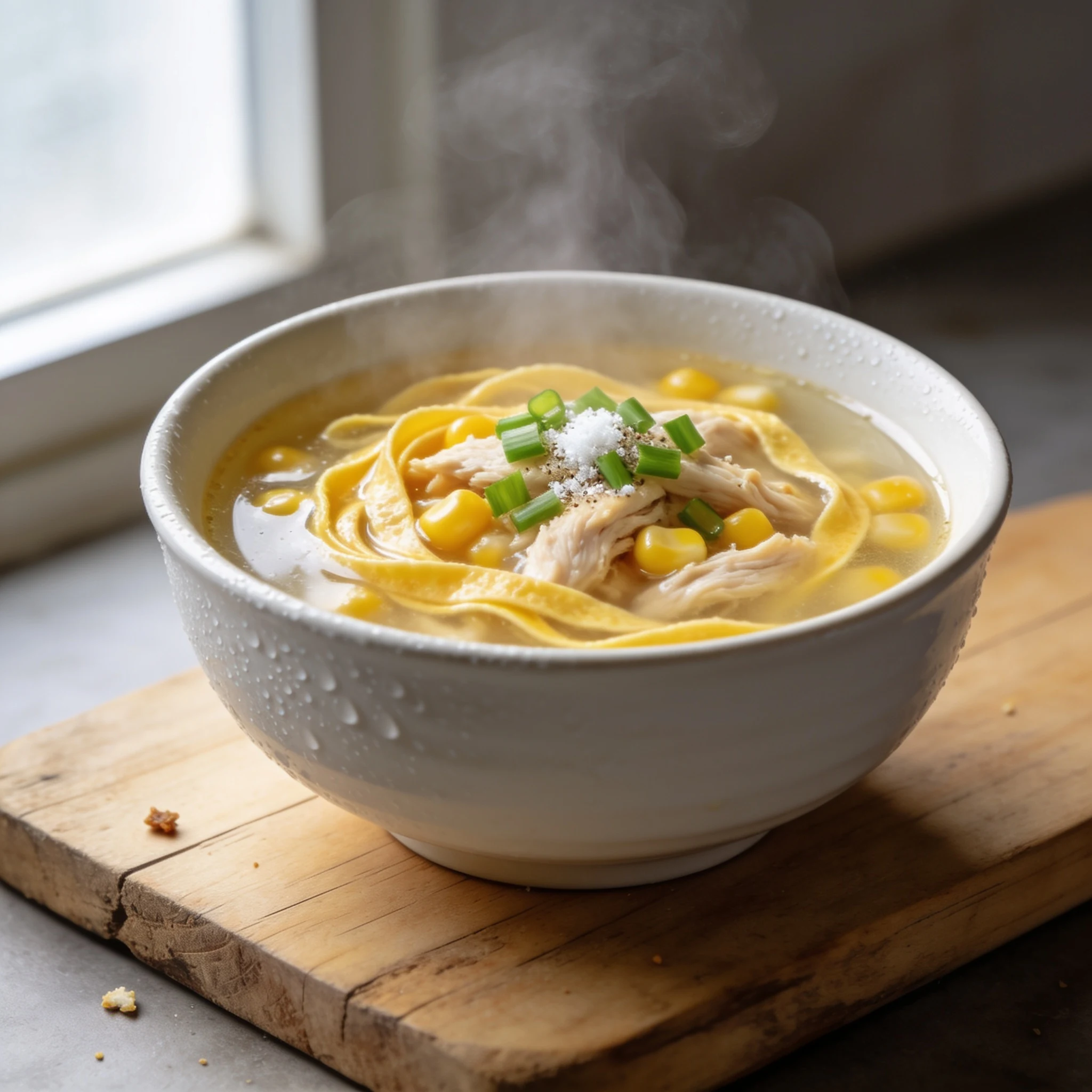
Why I Make This With Leftover Roast Chicken
Sunday roasts leave you with a bag of shredded chicken thigh meat and no plan for it by Tuesday. This soup is that plan. It’s the reason I keep a tin of sweetcorn and a tub of good stock in the cupboard even in weeks when I haven’t got round to a proper shop. If you like clear broths, you’ll also appreciate our clear soups guide.
If you’ve made my Chinese Chicken Thighs recipe, you already have the cut this soup wants. That’s thigh meat. Thigh holds its texture through a second simmer without turning stringy, and it shreds into pieces that actually feel like the ones in a takeaway bowl. Breast works too if it’s what you’ve got. It dries out faster and gives a thinner, less satisfying mouthful.
You don’t need to start from a roast. Poach two raw thighs in the stock while it heats, and you’ve built the base and cooked the protein in one pan, no extra washing up. Either way, this is a 25 to 30 minute soup from a cold start, which puts it well inside weeknight territory. It’s also the soup I make when someone in the house has a cold and just wants something warm and light.
Takeaway-Style vs Chunky Creamy UK Soup: Which One Are You Making?
Before you shop, decide which soup you actually want. UK recipe sites often blur “chicken and sweetcorn soup” into two different dishes, and they don’t use the same ingredient list.
| Takeaway-style (this recipe) | Chunky creamy UK-style | |
|---|---|---|
| Broth | Clear, light, thickened with cornflour | Thick, blended with potato or cream |
| Texture | Silky, egg ribbons throughout | Hearty, spoon-stands-up chowder |
| Cook time | 25–30 minutes, one pan | 40+ minutes, plus a blending step |
If you want the bowl that arrives with your prawn toast, this recipe is it. If you’re after something closer to a potato and sweetcorn chowder, skip the egg-drop step entirely and see the creamy variant in the Substitutions section below.
Ingredients for Chicken and Sweetcorn Soup (Serves 4)
- 250g cooked chicken thigh, shredded (or 2 boneless, skinless raw thighs, about 300g)
- 1 litre good chicken stock (a stock pot or cube dissolved in boiling water is fine)
- 1 x 325g tin sweetcorn kernels, drained
- 1 x 300g tin creamed sweetcorn
- 2 tbsp cornflour, mixed with 3 tbsp cold water
- 2 large eggs, beaten
- 2 spring onions, finely sliced, plus extra to garnish
- 1 tsp light soy sauce
- 1/2 tsp sesame oil
- 1cm piece fresh ginger, grated (optional, but worth it)
- Salt and white pepper, to taste
The creamed sweetcorn is the ingredient most home versions skip, and it’s the one that gets you closest to the takeaway texture. It thickens the broth slightly on its own and gives it that faint glossy sweetness. Drained sweetcorn alone tastes thinner and more watery once it’s diluted into a litre of stock.
Nutrition (Approximate, Per Serving)
Worked out from this recipe’s exact ingredients and quantities. Serves 4.
| Calories | Protein | Carbs | Fat |
|---|---|---|---|
| ~320 kcal | ~23g | ~36g | ~9g |
Method: How to Make Chicken and Sweetcorn Soup
- Cook the chicken, if starting raw. Bring the stock to a gentle simmer in a large saucepan, add the raw thighs, and poach for 12–15 minutes until cooked through. Lift out, shred with two forks, and set aside. If using leftover cooked chicken, skip to step 2.
- Build the base. With the stock still at a gentle simmer, stir in the drained sweetcorn, creamed sweetcorn, and grated ginger if using. Simmer for 3–4 minutes.
- Add the chicken back in. Return the shredded chicken to the pan and simmer for another 3–4 minutes so it heats through and picks up flavour from the stock.
- Thicken with the slurry. Give the cornflour and water mixture a quick stir (it settles fast) and pour it into the soup while stirring. Simmer for 2–3 minutes until the broth turns glossy and coats the back of a spoon.
- Drizzle in the egg. Turn the heat down so the soup is barely simmering, not boiling hard. Pour the beaten egg in a thin, slow stream, stirring the soup gently and continuously in one direction as you go. Done properly, the egg sets into fine ribbons in seconds rather than clumping.
- Season and finish. Stir in the soy sauce and sesame oil, then taste and adjust with salt and white pepper. White pepper is what a takeaway kitchen uses; black pepper works but changes the look of the broth.
- Serve. Ladle into bowls and scatter with the reserved sliced spring onion.
Tips for Getting the Egg Ribbons Right
- Beat the eggs properly first. Streaky, half-mixed egg gives you streaky, half-set ribbons. A fork and thirty seconds of whisking is enough.
- Lower the heat before you pour. A rolling boil scrambles egg into small clumps instead of thin strands. You want small, lazy bubbles, not a hard simmer.
- Pour slowly, in a thin stream. Tipping the whole bowl in at once is the single most common mistake and the fastest way to end up with clumps. A steady trickle from about 15cm above the pan gives the egg time to set as thin sheets as it hits the broth.
- Stir gently while pouring, don’t whisk. A slow circular stir with the back of a spoon or a chopstick keeps the ribbons intact; vigorous whisking breaks them into small bits.
- Mix the cornflour slurry again right before adding it. Cornflour settles to the bottom of the bowl within a minute or two, and pouring in the clear water on top gives you an unthickened soup and a lump of raw starch stuck to your spoon later.
Substitutions and Variations
Store cupboards vary, and households like variety.
- No creamed sweetcorn: use a second tin of regular sweetcorn kernels, then blitz a third of the soup with a stick blender before adding the chicken back in. It won’t be quite as glossy, but it thickens the broth in a similar way.
- Frozen instead of tinned: 300g frozen sweetcorn kernels work fine in place of the drained tin. Simmer them for an extra 2–3 minutes so they properly soften, since frozen corn starts colder and firmer than tinned.
- Vegetarian, corn-only version: drop the chicken, swap the stock for a good vegetable stock, and add a drained tin of butter beans or extra sweetcorn for bulk. The egg-drop technique and cornflour thickening work exactly the same way without meat in the pot.
- A bit of heat: a small pinch of white pepper is traditional, but if you want something sharper, a few drops of chilli oil stirred through at the table (not the pan) keeps the base recipe intact for anyone who doesn’t want spice.
- Chunky creamy UK-style: if the comparison table above sold you on the other version, swap the cornflour slurry and egg-drop steps for a peeled, diced potato simmered in the stock for 15 minutes, then blend most of the soup with a stick blender and stir through a splash of double cream at the end. No egg goes in this version at all.
- Ginger, dialled up or dropped: I like a bigger 2cm piece of ginger when I’ve got a cold coming on. Leave it out entirely if you’re cooking for anyone who finds it too sharp; the soup still works without it.
What to Serve With It
On its own, this soup works as a light lunch or a starter for most appetites.
- Prawn crackers or a handful of crispy wonton strips for the crunch a takeaway meal always has on the side.
- A soft-boiled egg, halved, on top if you want more protein and a second layer of egg in the bowl.
- Steamed jasmine rice on the side rather than in the soup, so the rice stays separate and doesn’t turn starchy in the broth.
- A simple side of stir-fried greens (pak choi or spring greens with a splash of soy) if you’re serving it as the main event of the meal.
- Pair it with something else from the takeaway-at-home lineup, like a bowl of pho bo or a plate of black pepper and garlic chicken thigh curry, if you’re cooking a bigger spread.
Storage and Reheating
Cool the soup and get it into the fridge within 2 hours of cooking, which is the window the Food Standards Agency recommends for cooked leftovers generally, soup included. Don’t leave the pan sitting on the hob to cool completely before refrigerating; it takes far longer than most people assume, and that’s exactly the window bacteria like.
Once chilled to 0–5°C, keep it in an airtight container in the fridge. Eat it within 2–3 days. If you know you won’t get to it in that time, freeze it instead. The broth freezes fine for up to 3 months, though the texture softens slightly on thawing and the egg ribbons lose a little of their structure. Freeze it before you’ve added the egg if you can, and stir the beaten egg in fresh after reheating. That keeps the ribbons at their best.
When you reheat it, whether on the hob or in the microwave, stir it through partway to avoid cold spots and make sure it reaches piping hot throughout. The FSA’s guidance is a core temperature of 70°C held for at least 2 minutes, and that’s the simplest target to aim for at home. Two other combinations are also approved. One is 65°C for 10 minutes. The other is 60°C for 45 minutes. Only reheat it once. Reheating and re-cooling repeatedly is when the risk climbs, so portion out only what you’ll eat in that sitting.
My Honest Take on This Recipe
I didn’t grow up eating this at home. It’s a takeaway dish I picked up and started making myself. What sold me on making it myself was realising how little it actually asks of you once you understand the egg-drop step. Most of the “difficulty” in a lot of recipes for this soup is invented. They’ll have you making a separate roux, or blending half the pot, when a cornflour slurry and a steady hand with the egg jug does the same job in less time.
Getting the pour right is what actually matters, and most recipes gloss over it in a single line. Pour too fast, and you’ve made an accidental egg-drop chicken soup with clumps floating in it. Too hot a simmer does the same thing. Get the heat right and pour slowly, though, and it comes together in under a minute. Then it looks like something you’d get served, made from just a tin and a couple of eggs.
It sits comfortably alongside the rest of the soup recipes on this site, from a proper carrot and coriander soup to a wild mushroom soup for the colder months. This one earns its place as the one I make most often, simply because it’s fastest and it uses up leftover chicken that would otherwise sit in the fridge losing its texture. If you’ve got a tin of sweetcorn and some cooked chicken thigh in the house, you’re closer to takeaway-standard soup than you probably think.
Frequently Asked Questions
Can I use chicken breast instead of thigh?
Yes, but expect a slightly drier, more stringy result once it’s been simmered twice. Thigh holds moisture and shreds more like the chicken you’d find in a takeaway bowl; breast works fine if it’s what’s in the fridge.
Why did my egg turn into clumps instead of ribbons?
There are two likely causes. The soup was at a full boil when you poured the egg in, or you tipped it in all at once when a thin, steady stream works best. Lower the heat to a bare simmer first, then pour slowly while stirring gently.
Can I make this without cornflour?
Cornflour (cornstarch) is what gives the broth its characteristic glossy, slightly thick body. You can leave it out and get a thinner, more brothy soup. It won’t match the glossy texture of the takeaway version, and the tinned creamed sweetcorn will need to do more of the thickening work on its own.
Is tinned or frozen sweetcorn better for this recipe?
Both work. Tinned is what most UK versions of this soup use, and it’s already soft, so it needs no extra cooking time. Frozen sweetcorn needs an extra couple of minutes in the pan to soften properly, since it goes in cold and firmer than tinned.
How long does chicken and sweetcorn soup keep in the fridge?
Cool and refrigerate it within 2 hours of cooking. It keeps for 2–3 days in the fridge. Store it at 0–5°C. Reheat it only once, and make sure it’s steaming hot all the way through before eating, not just warm at the edges.
Can I freeze it?
Yes, for up to 3 months, though the egg ribbons soften on thawing. If you can plan ahead, freeze the soup before adding the egg and stir a freshly beaten egg through after reheating instead.
What’s the difference between this and the creamy UK-style version?
This recipe is the clear, egg-drop takeaway style. It has a light broth, cornflour-thickened, with no dairy. The chunky UK variant swaps the egg step for a diced potato simmered and partly blended into the broth, finished with a splash of cream, and skips the egg entirely. See the comparison table near the top of this recipe for the full breakdown.
Do I need a wok for this?
No. A regular saucepan is all you need; there’s no stir-frying involved, and the whole recipe is built around one pan of simmering stock.

Leave a Reply