
How to Butterfly a Chicken Breast (So It Cooks Evenly, Every Time)
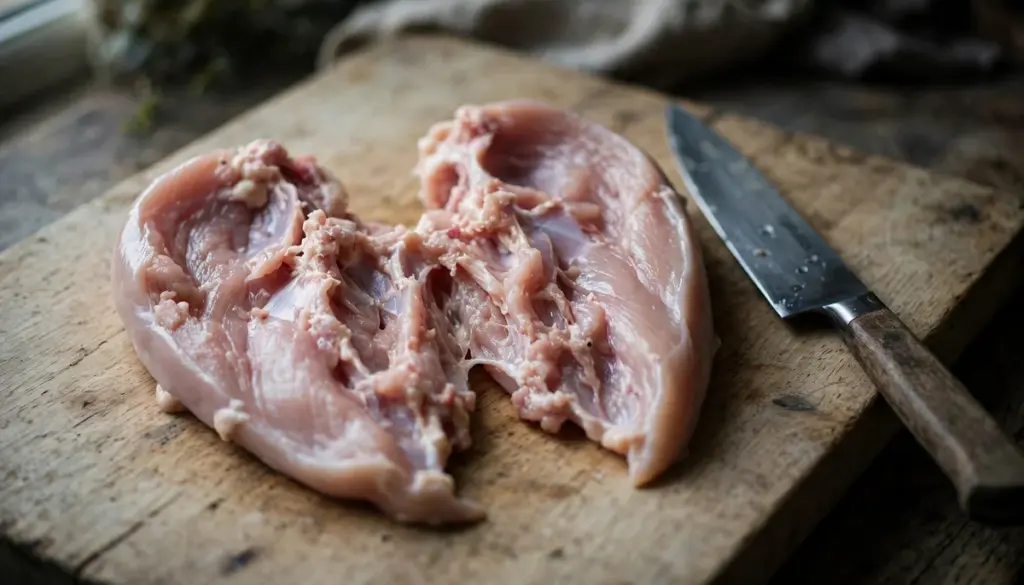
Table of Contents
This post may contain affiliate links. As an Amazon Associate we earn from qualifying purchases.
Butterflying means cutting a chicken breast almost in half horizontally and opening it flat like a book, so the whole piece is one even thickness. That stops the thin end drying out before the thick end is cooked through. If one end of your chicken breast is always leathery while the other is still pink, butterflying fixes it in under a minute with a sharp knife. This guide covers what the term means, why it works, what you need, the step-by-step cut, the mistakes that catch people out, how to tell it’s cooked safely, how it differs from spatchcocking, and a quick peri-peri-style way to use it.
What Does “Butterfly” Mean?
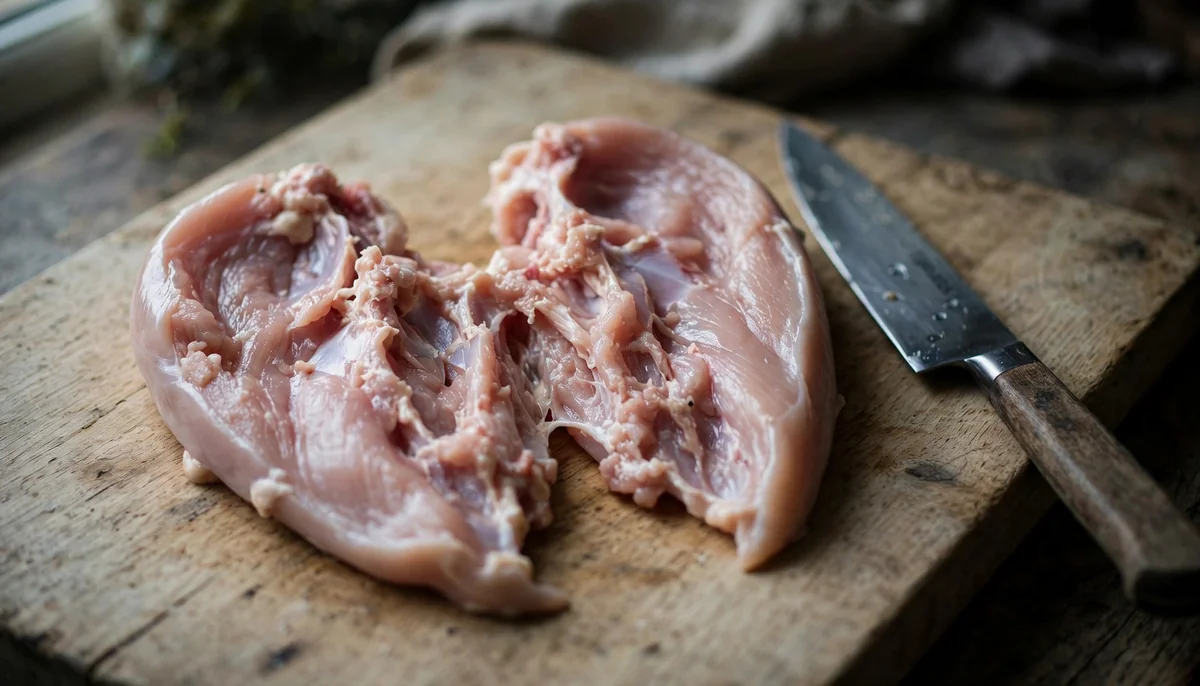
Butterflying is cutting a piece of meat almost in two while leaving the halves connected, then opening it flat like a book. The name comes from the resemblance to butterfly wings once it’s opened out (Wikipedia, Butterflying).
It’s one steady cut through the middle, well short of mincing. You keep a hinge of intact meat along one edge, and that hinge is what holds the two halves together as one flat piece. Once you’ve done it a couple of times, you’ll feel the moment the knife is nearly through and stop.
Why Butterfly a Chicken Breast
A raw chicken breast is thick at one end and tapered at the other. Cook it as it comes and the thin end overcooks and dries out long before the thick end reaches a safe temperature.
Butterflying gives you one even thickness, so the whole piece cooks at the same rate. It also opens up more surface area, which means a marinade reaches more of the meat instead of just sitting on the outside. You get a faster, more even cook and better flavour penetration from the same breast.
It’s also the base cut behind other chicken breast techniques. A mushroom duxelle stuffed chicken breast starts from the same opened-out shape, just rolled around a filling instead of left flat.
What You’ll Need
A sharp chef’s knife is the single thing that makes this easy or miserable. A heavy-bladed knife glides through; a flimsy one catches and tears the meat. You also want a stable cutting board that won’t slide while you’re working.
If you plan to flatten the breast further, keep cling film and a rolling pin or the flat side of a meat mallet to hand. That’s it. No special kit, no gadget.
How to Butterfly a Chicken Breast, Step by Step
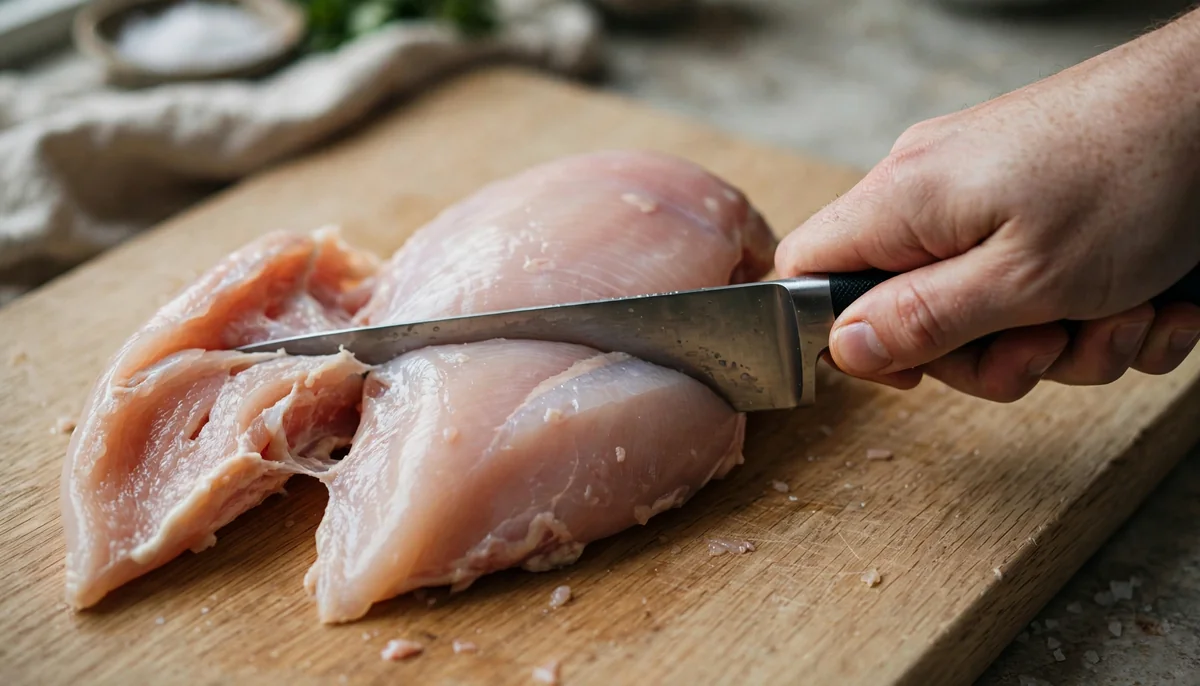
- Lay the breast flat on your board, smooth side up, and put your hand flat on top to steady it.
- Starting from the thicker side, slice horizontally through the middle of the breast. Stop about 1cm before the far edge, so the two halves stay joined like a hinge.
- Open it out flat like a book. You should have one even piece with a fold along one side.
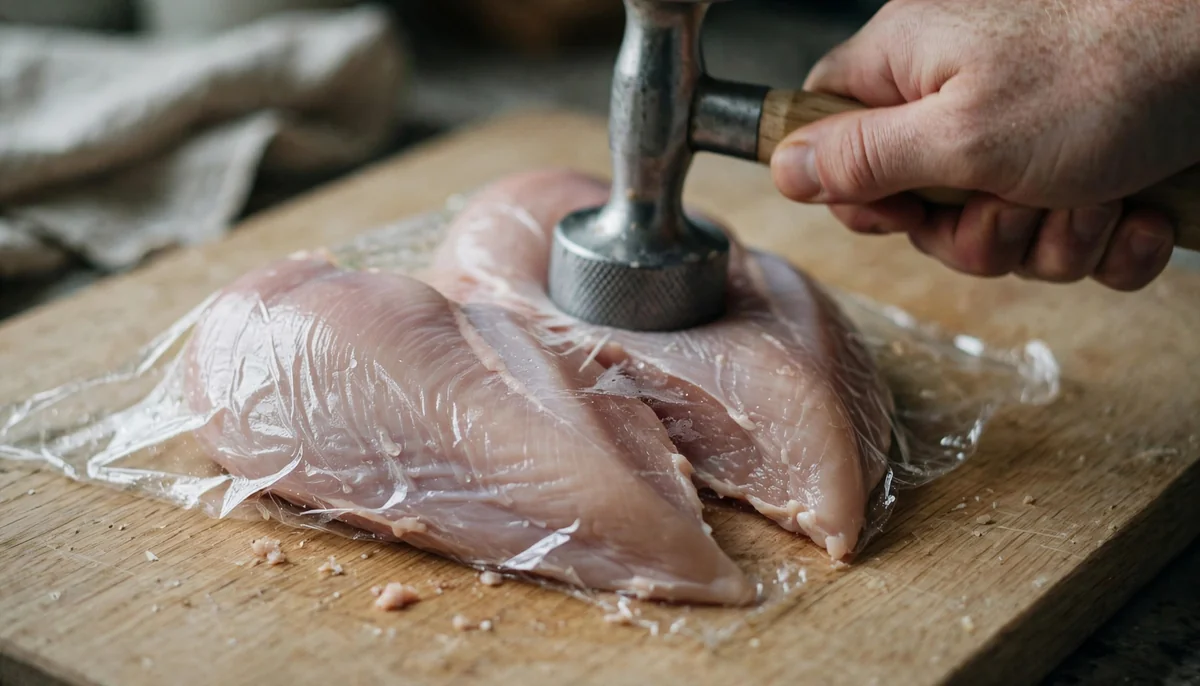
- If you want it thinner still, cover it with cling film and pound gently and evenly with a rolling pin or the flat side of a mallet. Work from the middle outwards so you don’t thin one end more than the other.
The part that trips people up is step two. Go slower than you think you need to near the far edge, and keep your fingers flat and clear of the blade.
Common Mistakes to Avoid
Cutting all the way through is the big one. You end up with two thin pieces when you wanted one hinged piece, and they’ll cook at different rates. Stop short of the edge and check before you commit.
Uneven thickness from pounding is the next. If you lean harder on one side, you flatten that end and leave the other thick, which puts you back where you started. Pound gently and evenly, and check with your palm across the surface.
A slipping knife usually comes down to a wobbly board or a breast that isn’t held flat. Sort both before you start cutting, not halfway through.
Cooking Times and Temperatures
Thickness and heat source change the timing too much to give one number, so don’t cook by the clock. Cook until a food thermometer reads 70°C (158°F) held for 2 minutes at the centre or thickest part. That’s the Food Standards Agency figure. The FSA-recognised equivalent is 65°C for 10 minutes.
That check works whether you’re on the hob, under the grill, or in the oven. Push the probe into the thickest part, wait for the reading to settle, and trust it over how the meat looks. Colour and juices alone won’t tell you it’s safe. The same thermometer-over-guesswork rule applies to cooked chicken generally, whether it’s a butterflied breast or leftovers you’re reheating.
Butterflied vs Spatchcocked: What’s the Difference
Butterflying a breast is cutting a single boneless piece open flat. Spatchcocking is the whole-bird version: the backbone is removed so a whole chicken presses flat while still bone-in (Wikipedia; Food Republic comparison).
So they’re related, but each is its own job. One is a single breast, the other is a whole chicken. If you’ve got a whole bird and want it flat, that’s spatchcocking it for a faster roast, the whole-bird version of this technique.
| Butterflying | Spatchcocking | |
|---|---|---|
| What it is | Cutting a single boneless chicken breast almost in half horizontally and opening it flat like a book, leaving a hinge of intact meat along one edge | The whole-bird version: the backbone is removed so a whole chicken presses flat while still bone-in |
| Why it works | Gives one even thickness so the whole piece cooks at the same rate, and opens up more surface area so a marinade reaches more of the meat | Presses a whole chicken flat once the backbone is removed |
| Scope | A single breast | A whole chicken |
Cut and size change the method; the heat and the timing follow from that.
A Quick Way to Use It: Peri-Peri Style
Butterflied chicken breast is strongly associated in British kitchens with homemade Nando’s-style peri-peri (Easy Peasy Foodie). A simple chilli, garlic and lemon marinade works its way into a butterflied breast faster than a whole one, because of the extra surface area and even thickness.
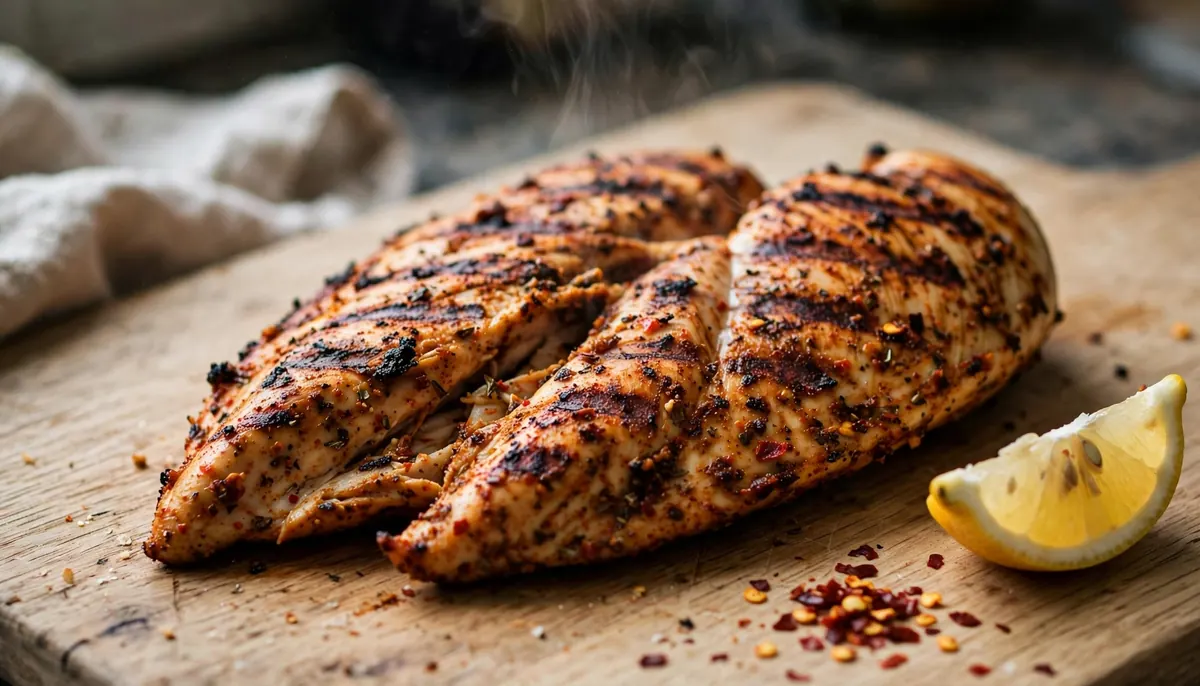
Marinate it long enough for the flavour to get in and short enough that it’s still a weeknight meal. Then cook it hot and fast, and check the temperature before it hits the plate. The same faster-marinade logic is why bone-in marinated chicken thighs or a sherry and thyme chicken take on flavour quickly too, thanks to the same extra exposed surface and faster penetration.
Handling Raw Chicken Safely
Use a separate board and utensils for raw chicken, and wash your hands and surfaces straight after handling it. Don’t rinse raw chicken under the tap, as that spreads bacteria via splashing.
Once you’ve cooked it, clean everything the raw meat touched before it meets anything else, and the same care applies to storing any leftovers safely once the meal’s done.
Getting It Right Every Time
The knife does the work, the thermometer confirms it’s safe. Butterfly the breast so it’s one even thickness, cook it hot enough to colour, and stop when the probe reads 70°C for 2 minutes. That turns an uneven breast into an even, fast-cooking one you can rely on. If chicken breast isn’t on the menu and you’re planning a bigger roast instead, the same timing discipline is behind our Sunday roast timing cheat sheet.
FAQ
Can you butterfly a frozen chicken breast? No. Thaw it fully first, both for an even cut and for even cooking. A frozen breast won’t slice cleanly, and it won’t cook at the same rate throughout.
How do you know when to stop cutting when butterflying a chicken breast? Stop about 1cm before the far edge so the two halves stay joined like a hinge. Go slower than you think you need to near the far edge, and check before you commit.
Do you need any special equipment to butterfly a chicken breast? No special kit or gadget is needed. A sharp chef’s knife and a stable cutting board are the essentials, with cling film and a rolling pin or the flat side of a meat mallet only if you want to flatten the breast further.
What temperature should a butterflied chicken breast reach to be safely cooked? Cook until a food thermometer reads 70°C (158°F) held for 2 minutes at the centre or thickest part, which is the Food Standards Agency figure. The FSA-recognised equivalent is 65°C for 10 minutes.
What is the difference between butterflying a chicken breast and spatchcocking? Butterflying is cutting a single boneless breast open flat, while spatchcocking is the whole-bird version where the backbone is removed so a whole chicken presses flat while still bone-in. One is a single breast, the other is a whole chicken.

You might also love
More in Chicken & Poultry
General Tso Chicken
Updated: July 12, 2026This post may contain affiliate links. As an Amazon Associate we earn from qualifying purchases. General Tso’s chicken is…
Read
Chicken and Mushroom Pie (Jamie Oliver-Inspired)
Our own chicken and mushroom pie, inspired by Jamie Oliver's puff-pastry one-pan style. Ingredients, method, and what his real recipe contains.
Read
Chinese Chicken Thighs
Updated: September 29, 2026This post may contain affiliate links. As an Amazon Associate we earn from qualifying purchases. These Chinese chicken thighs…
Read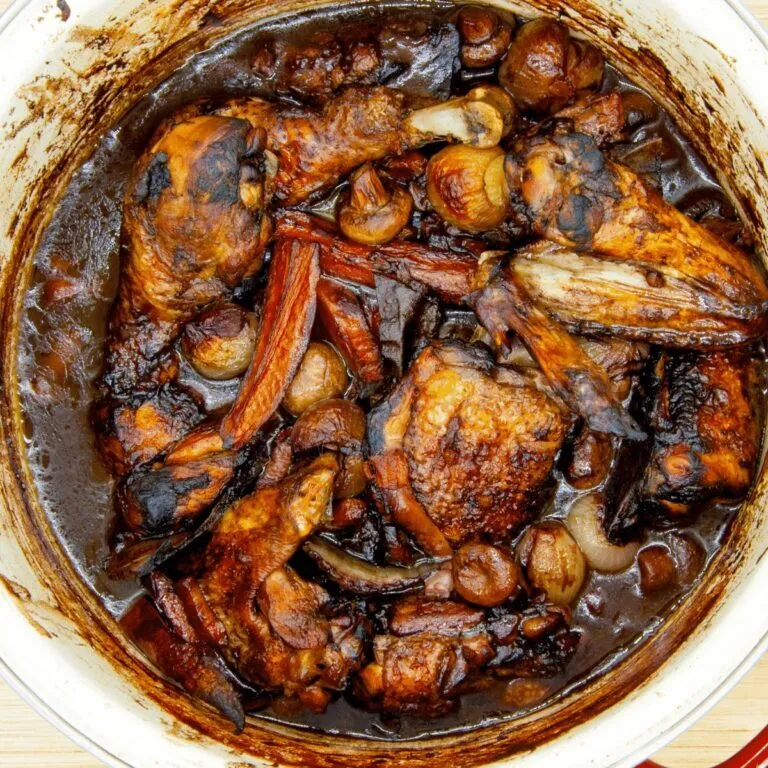
Classical Syrah Coq Au Vin
Updated: July 12, 2026This post may contain affiliate links. As an Amazon Associate we earn from qualifying purchases. Classical syrah coq au…
Read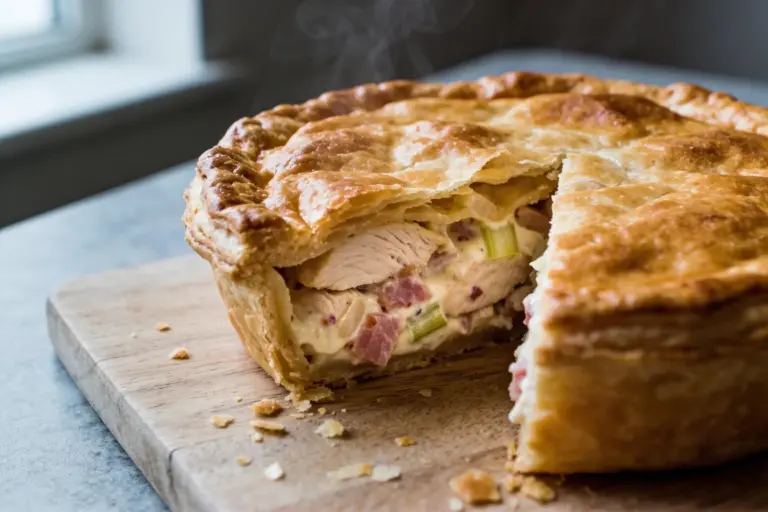
Chicken and Ham Pie
A creamy chicken and ham pie with a golden puff pastry top, made with thigh meat for the best texture. Includes make-ahead,…
Read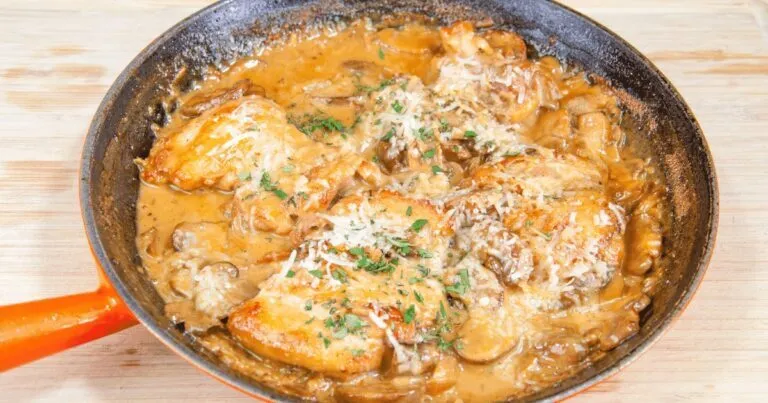
Creamy Sherry and Thyme Chicken Thighs
Updated: July 12, 2026This post may contain affiliate links. As an Amazon Associate we earn from qualifying purchases. I love these single…
Read