
How to Cook Chicken
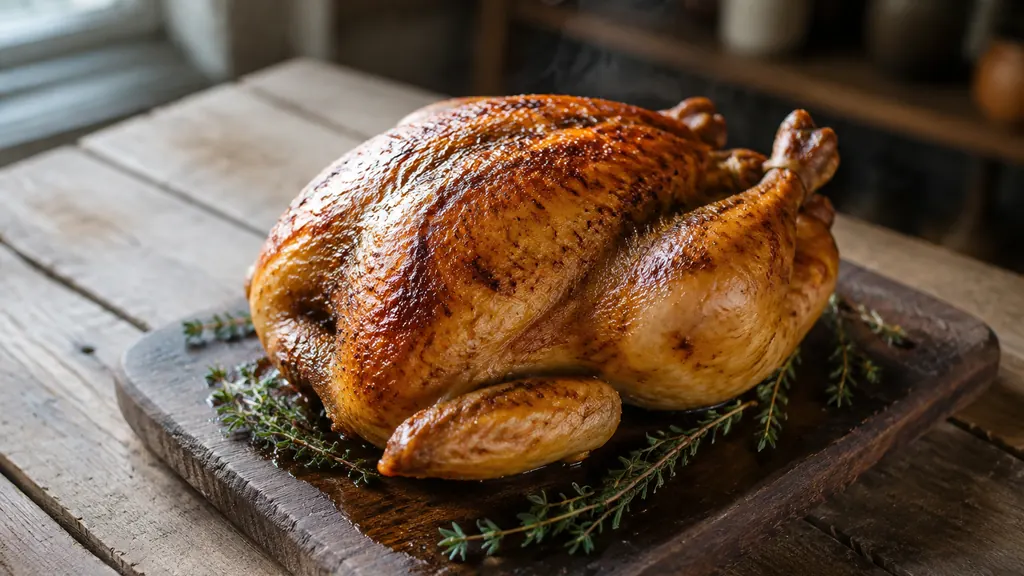
Table of Contents
This post may contain affiliate links. As an Amazon Associate we earn from qualifying purchases.
Cooking chicken properly is one of those skills that separates a stressful dinner from a relaxed one. Get it right and you’ve got juicy meat, crisp skin and a kitchen that smells like a proper Sunday. Get it wrong and you’re chewing through dry breast meat wondering where it all went pear-shaped.
Everyone who cooks chicken meets the same failures sooner or later. Dry breasts, pink centres, that moment of panic when you cut into a thigh and aren’t quite sure. What I’ve learned is that it comes down to two things. Temperature and timing. Nail those and everything else falls into place. This guide covers the methods I actually use, including roasting, pan-frying, poaching, air frying and slow cooking. I’ll give you the method for each, the one safety number you need to know, and the little cues that tell you when chicken is done without guessing. Start with the one number, then pick the method that suits your kitchen.
The Golden Rule: How to Tell Chicken Is Cooked
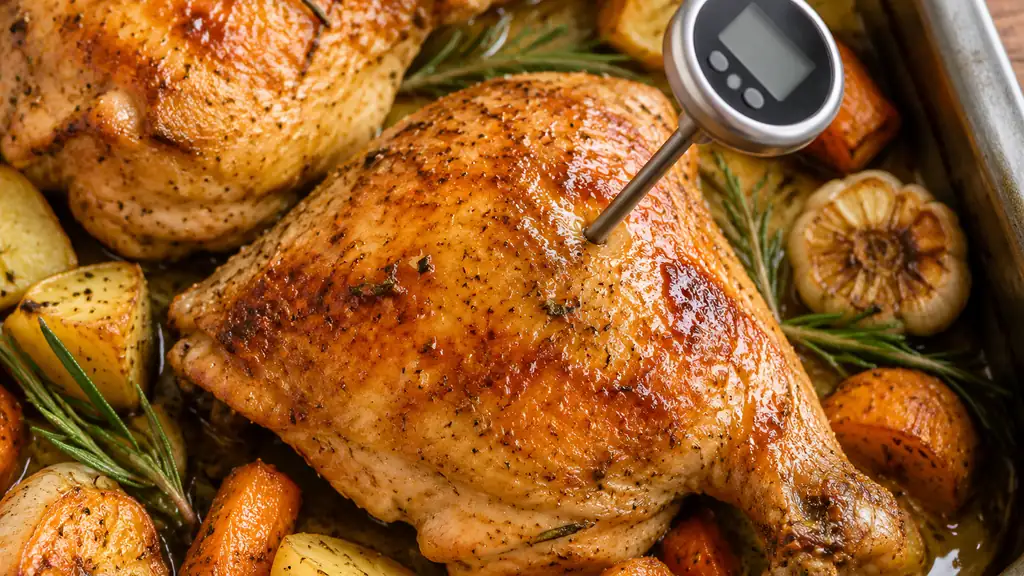
> The only number that matters. > > Push a meat thermometer into the thickest part of the meat: the centre of the breast, or the thickest part of the thigh without touching bone. It should read 75°C, the safe cooking temperature that Food Standards Scotland gives for poultry, and the one I check every single time. Don’t rely on the clock alone. > > No thermometer? Cut into the thickest part. The meat should be steaming hot, the juices should run clear and there should be no pink meat. The texture should feel firm rather than springy or squishy. > > A thermometer costs less than a takeaway and takes the guesswork out forever. Buy one.
That’s it. That’s the whole game.
Everything below is just about getting to that number without drying the meat out along the way. Each cut behaves differently, so the route changes while the destination doesn’t. Thighs forgive you, breasts punish you, and a whole bird sits somewhere in between. Whatever you cook, the probe settles the question. Colour and clock only tell you where to start looking.
How Long to Cook a Whole Chicken
A whole roast chicken is the benchmark. Get this right and you’ve got dinner, sandwiches the next day and a carcass for stock.
Oven and bird vary too much for one fixed minutes-per-kilo figure to be trustworthy, so use the roasting time printed on the pack as a starting point. Put the bird in a hot oven, then start probing before you think it’s ready. Push the thermometer into the thickest part of the thigh, away from the bone. When it reads the safe core temperature and the juices run clear, it’s done. The timing is a guide; the thermometer is the truth.
If you’re buying for a crowd, two smaller birds often cook more evenly than one huge one, and you get more skin.
For the full walkthrough on trussing, seasoning, basting and getting the skin properly crisp, see my guide to preparing the most delicious roasted chicken. That’s where I go into the details that make the difference between good and memorable.
How to Cook Chicken Breasts (Oven, Pan, Poaching)
Breasts are the trickiest cut. They’re lean, they dry out fast, and they go from juicy to sawdust very quickly. I use three methods.
Oven. Season the breasts, put them in a tin with a glug of oil, and roast in a hot oven. Cooking them on the bone with skin on protects the meat. Boneless skinless breasts need watching, so start probing early and take them out as soon as the thermometer says they’re done.
Pan, covered. This is a good weeknight method. Heat a little oil in a frying pan over a medium-high heat, lay the breasts in, and leave them undisturbed until the underside is golden. Flip, cover with a lid, and lower the heat. The lid traps steam and helps them cook through without drying. Probe the thickest part. If it isn’t there yet, give it a couple more minutes covered. Rest briefly before slicing.
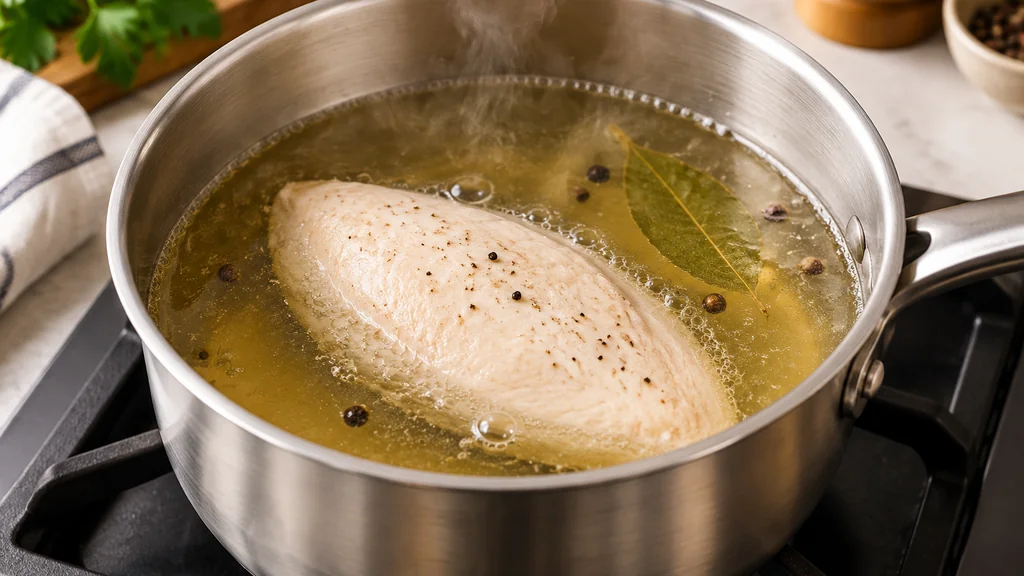
Poaching. This is the underrated one. Put the breasts in a pan, cover with stock or water, add a bay leaf and some peppercorns, and bring to a bare simmer. You want little bubbles, well short of a rolling boil. Poach until the thickest part is cooked through, checking with the thermometer. The meat stays incredibly moist. It’s brilliant for salads, sandwiches and anything where you want clean chicken flavour without browning.
Don’t panic.
The dry-breast problem comes down to fat. Breasts have almost no fat, so they have nothing to protect them from heat. Two fixes help. Brine them briefly before cooking, or cook them on the bone with the skin on. Either way, confirm the final temperature with a probe.
How to Cook Chicken Thighs (Oven and Pan)
Thighs are the forgiving cut. They’ve got more fat and connective tissue, which means they stay juicy even if you overshoot the timings slightly. If you’re learning to cook chicken, start with thighs.
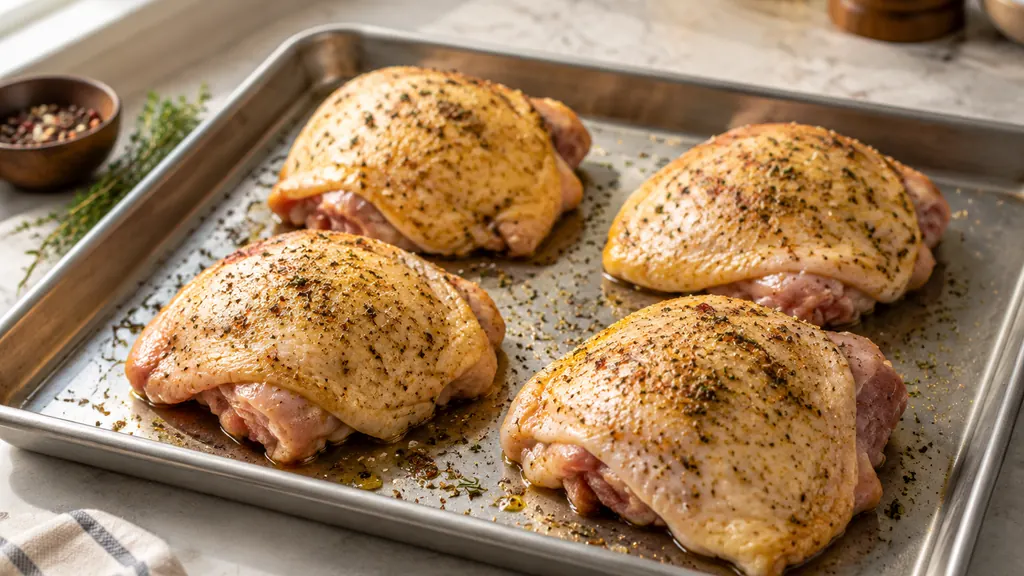
Bone-in, skin-on, in the oven. This is the sweet spot. The skin renders and crisps, the meat stays moist, and the bone adds flavour. Season well, put them skin-side up on a baking tray, and roast in a hot oven. No flipping needed. Probe the thickest part, not touching bone, and give them longer if they aren’t there yet, since the exact time depends on the size of the thighs, how hot your oven really runs and how many pieces share the tray. Rest them for a few minutes before serving, because the juices settle and the skin stays crisp while it sits on the tray.
Start with thighs.
Boneless, skinless, in the oven or pan. Boneless thighs are quicker but less forgiving than bone-in. In a pan, use a medium-high heat and turn them once. They’ve got enough fat to stay juicy, but don’t walk away, as they can still dry out if you push them too far.
Why do thighs beat breasts? It’s the fat and collagen.
Breasts are pure muscle with almost no intramuscular fat. Thighs have both, which means they baste themselves from the inside. You’ve got a much wider window between “done” and “ruined.” For a home cook, that’s a gift.
If you want a recipe that really shows off what thighs can do, try my Chinese chicken thighs. The marinade does half the work, and the thighs stay succulent even if you’re a bit heavy-handed with the timings.
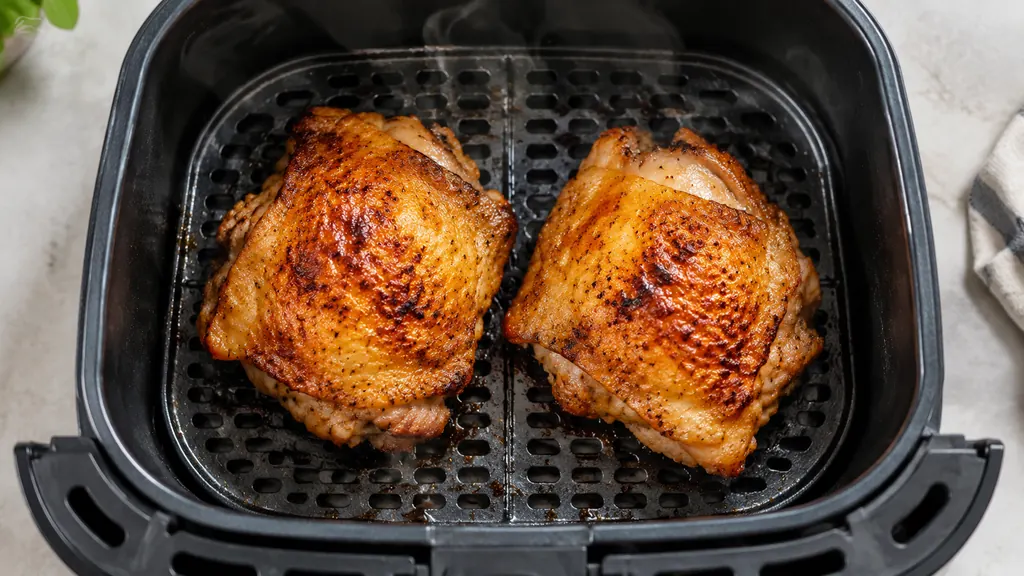
How to Cook Chicken in the Air Fryer
Air fryers are brilliant for chicken, though they’re not magic, and a lot depends on how crowded the basket is, how thick the pieces are and how powerful your particular machine runs. They’re small convection ovens, and they work best with cuts that cook relatively quickly, like thighs and breasts.
Thighs and breasts. Bone-in thighs work beautifully. Pat them dry, season well, and lay them in the basket in a single layer. Don’t crowd them. Turn them halfway through. The skin crisps up nicely because the air circulates around it. Breasts need a slightly lower heat so the outside doesn’t toughen before the inside cooks.
A small whole bird. Yes, you can do a whole chicken in an air fryer, but only a small one. It needs to fit without touching the top element. Air fryers vary wildly in power, so follow your manual’s guidance for timings and confirm with a probe in the thickest part of the thigh.
Preheat first.
Preheat your air fryer before adding chicken. It makes a real difference to how the skin crisps and how evenly the meat cooks. Cold air fryer, pale soggy skin. If you’re wondering whether your air fryer really needs preheating and the answer is yes, it’s worth the wait.
How to Cook Chicken in a Slow Cooker
Slow cookers are fantastic for chicken. There’s one big caveat: you must start from defrosted chicken. Never put frozen chicken in a slow cooker. The short version is that it spends too long at temperatures where bacteria multiply, so you can’t count on it reaching a safe temperature.
Whole bird. A whole chicken in a slow cooker comes out incredibly moist, almost falling apart. Season it well, sit it on a few balls of foil or a trivet so it’s not stewing in its own juices, and cook on low until it’s done. The skin won’t crisp. It’ll be pale and soft. If you want colour, flash it under a hot grill for a few minutes after it comes out. That gives you the best of both worlds, moist meat and crisp skin.
Thighs. Thighs are perfect for slow cooking. They’ve got enough fat to stay juicy through the long cook, and the collagen breaks down into gelatin, which gives you a rich, silky sauce. Throw in some soy sauce, garlic, ginger and a splash of stock, and you’ve got dinner with almost no effort. My black pepper and garlic chicken thigh curry is a good example of how little effort a slow-cooked thigh dish actually takes.
Check before serving.
Always check the internal temperature before serving. Slow cookers vary, and the “low” setting on one might be hotter than another. The thermometer is your friend here.
Can You Cook Chicken from Frozen?
> Defrost it fully first. Never put frozen chicken in a slow cooker. > > Thaw chicken thoroughly at the bottom of the fridge, covered, on a tray so it can’t drip onto other food. Then cook it as normal and probe it until the reading matches the safe number above.
If you do buy a product made to be cooked from frozen, follow the instructions on its packaging, since those are tested for that product, and still check the middle with a thermometer.
A slow cooker from frozen is a bad idea because it heats up gradually. A frozen chicken spends hours at temperatures where bacteria multiply, and the centre may take a long time to warm through. An oven surrounds the meat with high heat straight away. That’s why defrosting first matters so much for safety. It’s a safety issue, not a quality one.
How to Rest and Carve Chicken
Don’t skip the rest.
When you pull chicken out of the oven, the juices are hot and thin, and they’re looking for somewhere to go. If you cut straight in, they end up on the board instead of in the meat. Great British Chefs suggests resting it for at least 10 to 15 minutes after cooking. Cover loosely with foil so steam doesn’t make the skin soggy.
To carve, start with the legs. Cut through the skin between the thigh and the body, then bend the leg outwards until the joint pops. Cut through the joint and set the leg aside. Do the same on the other side. Then carve the breast. Cut down along the breastbone, then slice horizontally to release the whole breast. Slice against the grain.
Don’t bin the carcass. This is the budget angle that makes a whole bird better value than joints. After you’ve carved, pick off any remaining meat for sandwiches or salads, then throw the carcass in a pot with an onion, a carrot, a bay leaf and some peppercorns. Cover with water, simmer for a couple of hours, strain. You’ve got proper chicken stock for free. That’s soups, risottos and sauces sorted for the week.
Storing and Reheating Cooked Chicken Safely
In the fridge, the NHS advises cooling leftovers as quickly as you can, ideally within two hours, then store them in the fridge in a covered container and eat them within 2 days. After that, bin it.
Don’t push it.
In the freezer, cooked chicken keeps well. Wrap it well or bag it in portions. Defrost overnight in the fridge, never on the counter.
Reheating is where people get it wrong. Reheat once only, and make sure it’s steaming hot all the way through. The classic mistake is microwaving until the edges are steaming and the middle is lukewarm. Cut into the thickest part and check. If it’s not steaming hot all the way through, give it more time. And never reheat twice. Once it’s been reheated, that’s it. For fried chicken specifically, the oven is far better than the microwave. My guide on how to reheat fried chicken covers the method that keeps it crispy.
For more ideas on using up leftover chicken, including soups, pies, salads and sandwiches, see my guide to cooked chicken. There’s a lot you can do with a bit of leftover meat.
Frequently Asked Questions
What temperature should chicken be cooked to in the UK? 75°C is the safe cooking temperature Food Standards Scotland gives for poultry, and it’s the figure I’d use for any cut. Push a meat thermometer into the thickest part, avoiding bone, and check it reads that number. If you don’t have a thermometer, cut into the thickest part and check the meat is steaming hot, the juices run clear and there’s no pink.
How long does chicken breast take in the oven? It depends on thickness and your oven, so start probing early rather than trusting a number. Take it out when the thickest part is cooked through and the thermometer says it’s done. Cooking on the bone with the skin on takes longer than boneless.
Can you cook chicken from frozen in a slow cooker? No. Never. A slow cooker heats up too gradually, so frozen chicken spends hours at temperatures where bacteria multiply. Defrost it fully in the fridge first.
How do I check chicken is done without a thermometer? Cut into the thickest part and look: the meat should be steaming hot, the juices should run clear and there should be no pink meat. It’s less reliable than a thermometer, but works in a pinch. See the Golden Rule section at the top of this guide for the full walkthrough.
How long does cooked chicken keep in the fridge? Eat it within two days, kept covered in the fridge. Cool it as quickly as you can, ideally within two hours of cooking. After two days, bin it. If you want to keep it longer, freeze it.
—
Cooking chicken well comes down to a thermometer, a bit of patience, and knowing which cuts forgive you and which don’t. Thighs are your friend. Breasts need watching. Whole birds need resting. And knowing the number on the probe is what ties it all together.
Once you’ve got the basics, there’s plenty more to explore, from roast chicken to Chinese-style thighs to all the ways you can use up leftover chicken. Start with one method, get it right, then build from there.

You might also love
More in Chicken & Poultry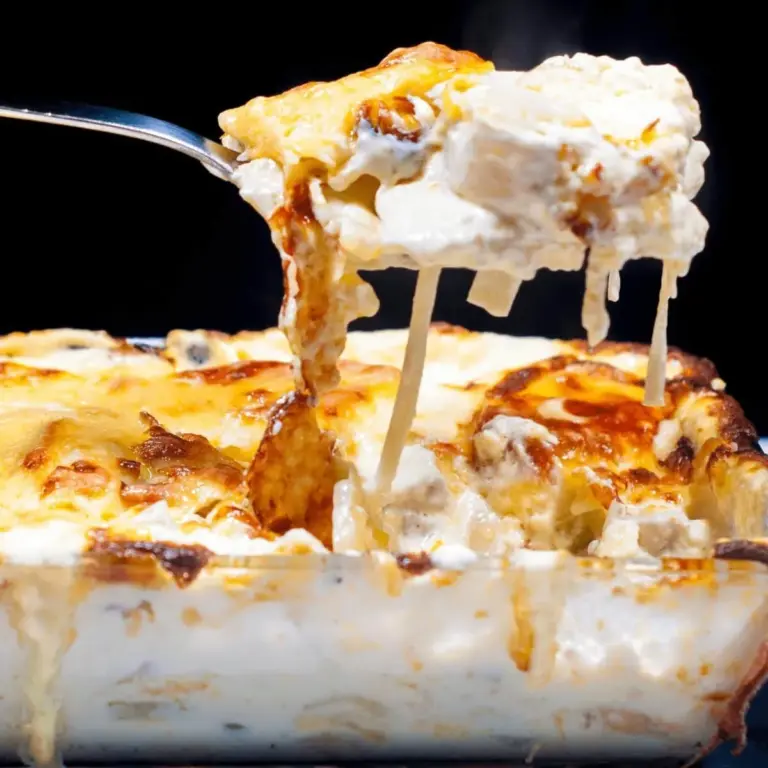
Chicken and Leek Dauphinoise
Updated: July 12, 2026This post may contain affiliate links. As an Amazon Associate we earn from qualifying purchases. For you regulars, you’ll…
Read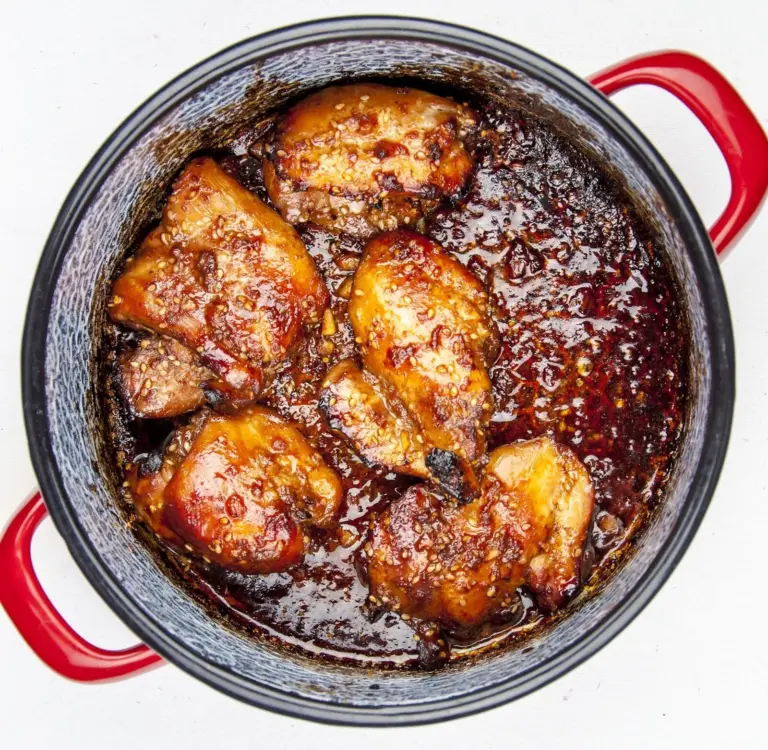
Chinese Chicken Thighs
Updated: September 29, 2026This post may contain affiliate links. As an Amazon Associate we earn from qualifying purchases. These Chinese chicken thighs…
Read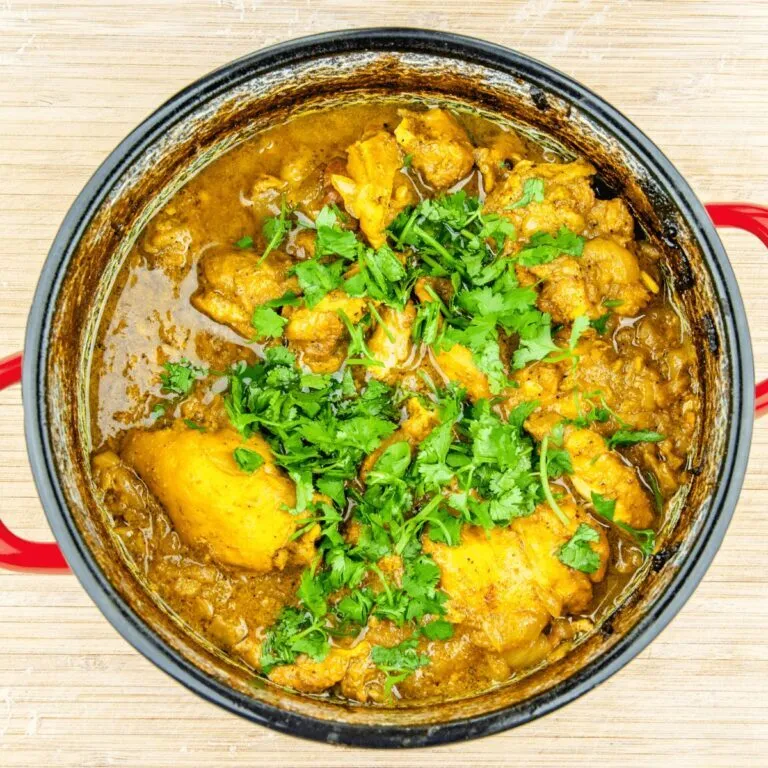
Black Pepper and Garlic Chicken Thigh Curry
Updated: September 29, 2026This post may contain affiliate links. As an Amazon Associate we earn from qualifying purchases. Every thought of making…
Read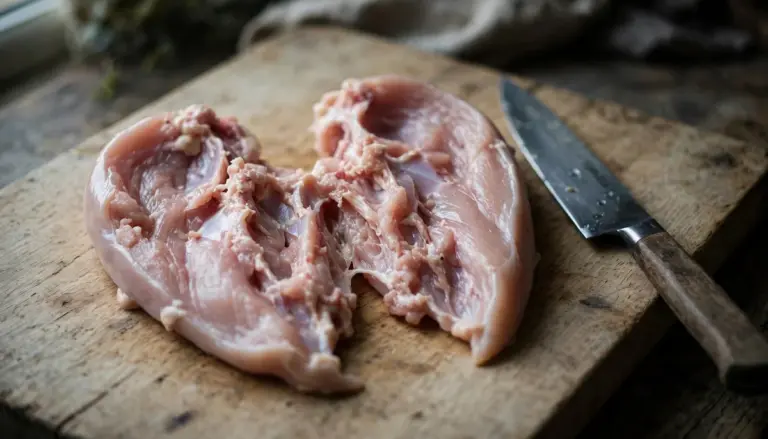
How to Butterfly a Chicken Breast (So It Cooks Evenly, Every Time)
Updated: October 12, 2026This post may contain affiliate links. As an Amazon Associate we earn from qualifying purchases. Butterflying means cutting a…
Read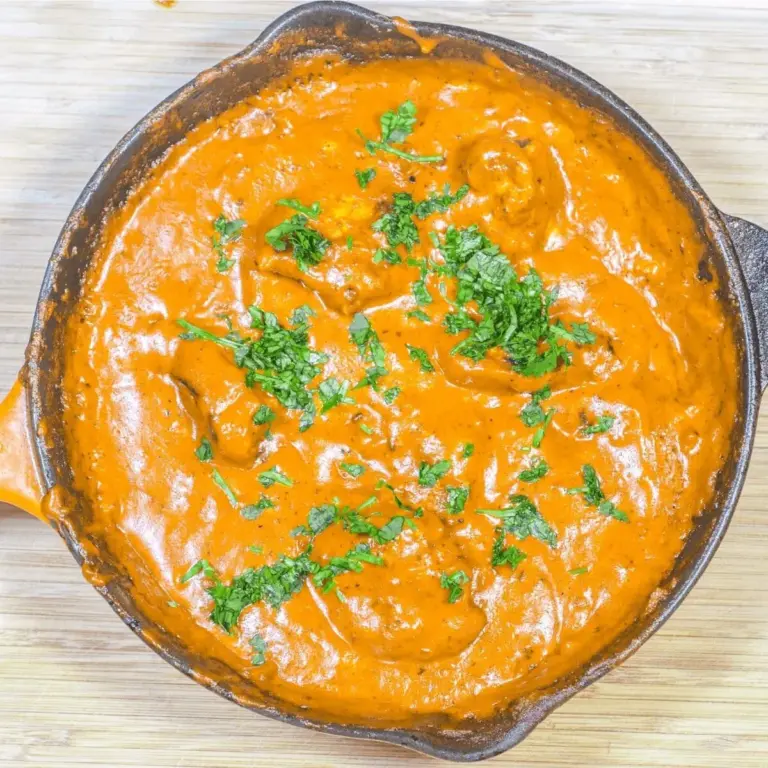
Aromatic Tandoori Chicken Tikka Masala
Updated: July 25, 2026This post may contain affiliate links. As an Amazon Associate we earn from qualifying purchases. Aromatic tandoori chicken tikka…
Read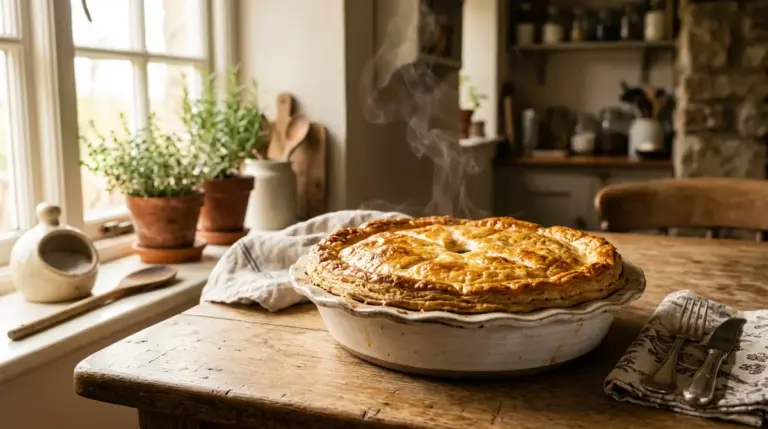
Easy Chicken and Leek Pie Recipe with Puff Pastry Lid
A comforting British chicken and leek pie with creamy filling, tender thighs, leeks, white wine and a golden puff pastry lid. An…
Read