
Slow Cooker Coca-Cola Ham
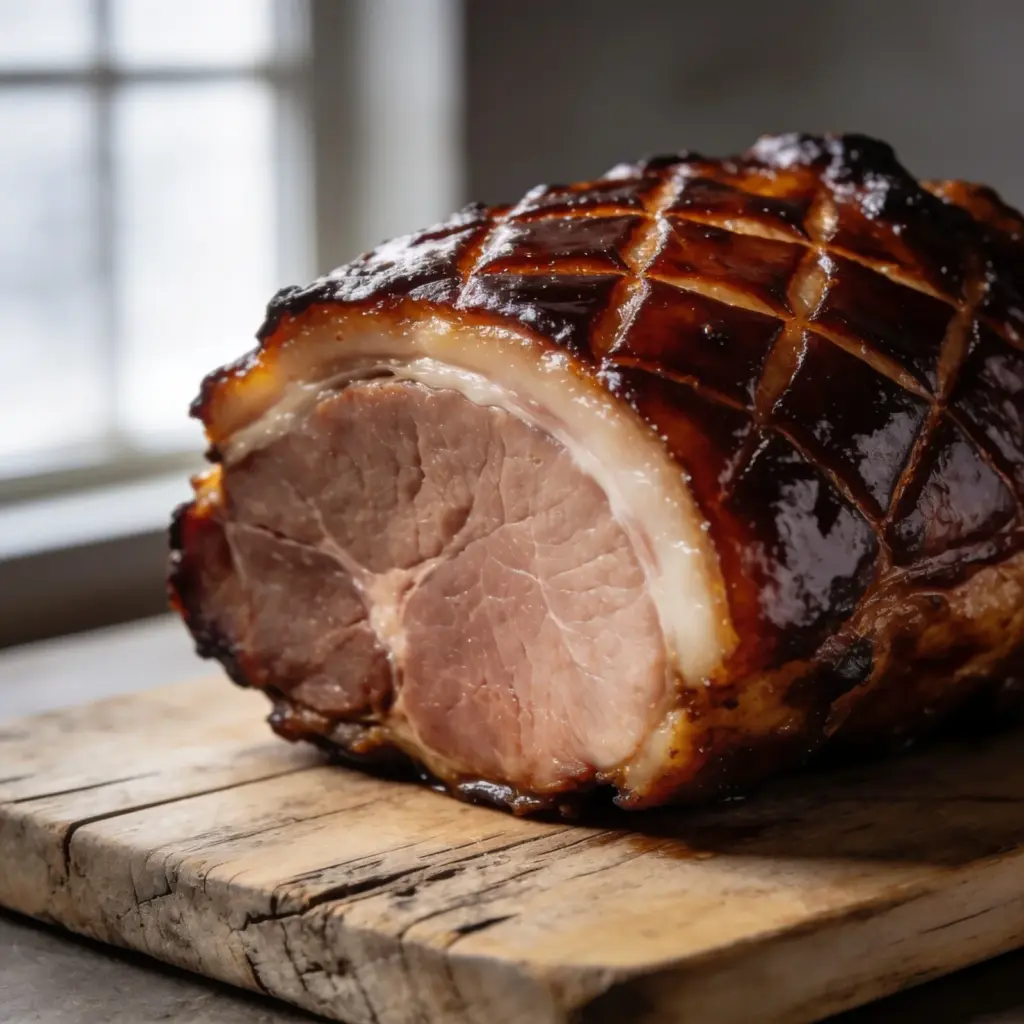
Table of Contents
This post may contain affiliate links. As an Amazon Associate we earn from qualifying purchases.
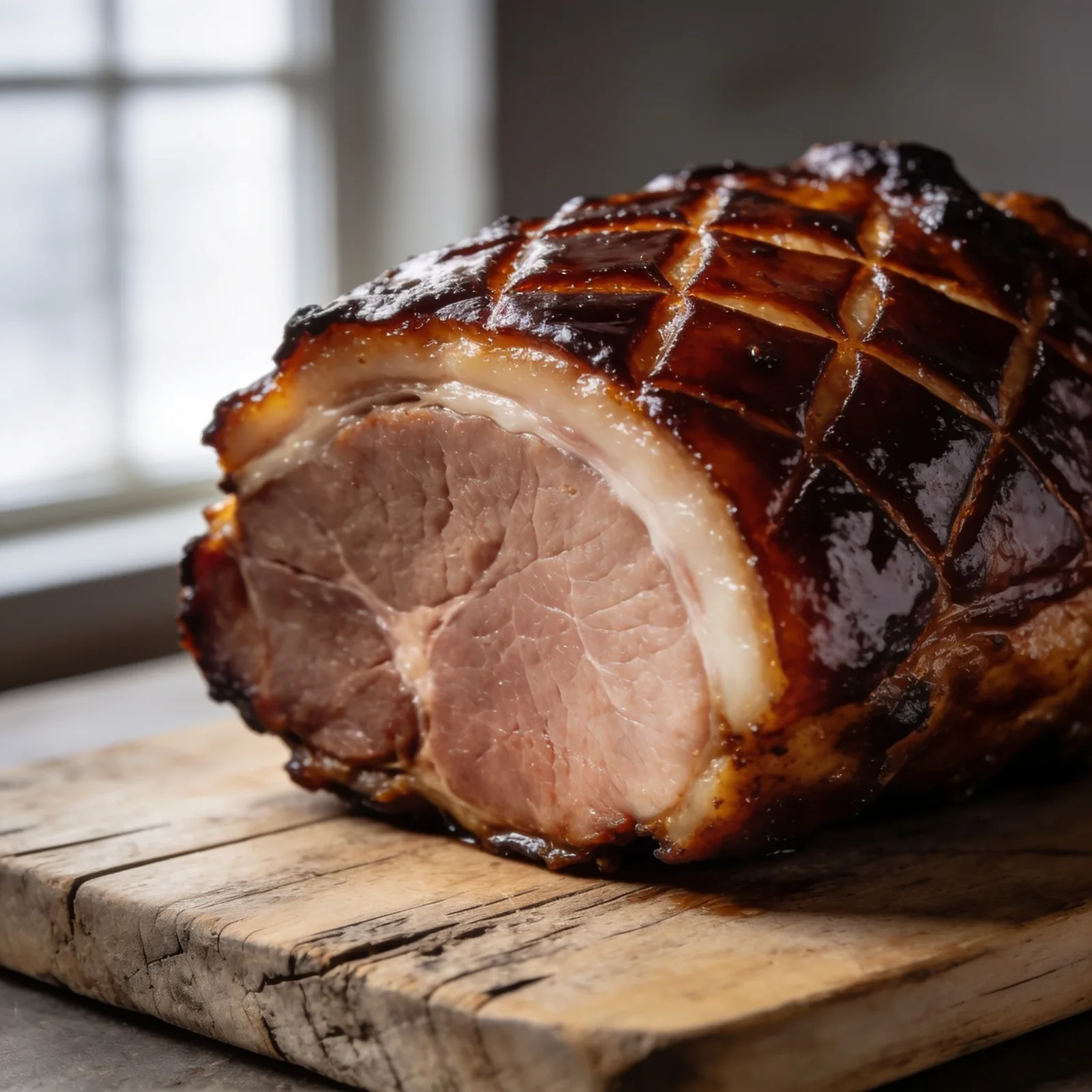
A raw gammon joint, slow-cooked in full-sugar cola with an onion, cinnamon, and peppercorns, then finished under a hot oven with a honey-mustard glaze, gives you a properly tender, deeply caramelised ham. The slow cooker handles most of the cooking. Then a quick oven blast sets the glaze and browns the top. This recipe is built for a raw, UK-style gammon joint—the kind you buy in a supermarket chiller that needs cooking through entirely.
| Setting | Cooking time |
|---|---|
| Slow cooker on LOW | 6–7 hours |
| Slow cooker on HIGH | 4–5 hours |
| Oven at 200°C (180°C fan) | 10–15 minutes |
If you’re standing in a UK supermarket looking at a joint labelled “gammon,” this recipe is built for exactly that cut. American food blogs often describe pre-cooked ham warmed in cola, using a different method and much shorter timing.
Gammon or ham: what are you actually buying?
Gammon is the raw, cured pork joint; ham is what you get once it’s been cooked. In the UK, this distinction actually matters at the butcher’s counter and in the supermarket chiller, because the two words aren’t interchangeable the way they often are in American recipes.
This trips people up constantly, especially with US recipes doing the rounds online. Many American recipes labelled “ham” start from a fully cooked product that simply needs reheating with a glaze. A UK gammon joint is raw pork. It must be cooked all the way through before it’s safe to eat. The slow cooker stage handles this essential work.
When you’ve got a raw gammon joint from Tesco or your local butcher, cook it as raw meat requiring full cooking. Once it comes out of the slow cooker and gets its oven glaze, it becomes ham.
What you’ll need
The ingredient list is short. Most of it is already in your cupboard or a quick supermarket trip away. Full-sugar cola is essential for the sticky, rich finish. Diet cola lacks the caramelising sugars, producing a flat, thin glaze.
For the gammon:
- Raw gammon joint, 1.4-1.6kg
- Full-sugar cola, 1.2 litres
- 1 onion, quartered
- 1 cinnamon stick
- 1/2 tbsp black peppercorns
- 1 bay leaf (optional)
For the glaze:
- 2 tbsp honey or maple syrup
- 1 tbsp wholegrain mustard
No stock or extra liquid needed beyond the cola itself. The gammon releases its own juices as it cooks, providing ample liquid for the slow cooker.
Equipment worth having ready: a slow cooker with a 3.5-6.5 litre capacity, a digital meat thermometer with a probe long enough to reach the centre of the joint, and a roasting tin for the oven-glaze stage. A pastry brush gives quick, even coverage when you glaze the joint.
How to cook gammon in cola in a slow cooker
Start by unwrapping the gammon joint and rinsing it briefly under cold water. Pat it dry with kitchen paper afterwards; a wet surface stops the glaze sticking properly later. Rinsing knocks back the surface saltiness and makes a real difference to the final flavour. It’s purely a seasoning step.
- Place the gammon in the slow cooker. Fat side up if it has a fat cap. Tuck the quartered onion, cinnamon stick, peppercorns, and bay leaf around it.
- Pour over the cola. Aim for enough to come roughly two-thirds up the side of the joint. It doesn’t need to submerge it completely; the slow cooker’s sealed lid keeps everything moist regardless.
- Set the slow cooker. Choose LOW or HIGH depending on your schedule. LOW requires 6–7 hours but gives a slightly more tender result. HIGH takes 4–5 hours if you’re short on time.
- Check the internal temperature before moving on. Use a meat thermometer in the thickest part of the joint, avoiding the bone. Aim for 71°C, the practical target most home cooks use. If it hasn’t reached that, cover and cook for another 30–45 minutes.
- Lift the gammon out and transfer it to a roasting tin. Discard the cooking liquid and aromatics, or strain and reduce it slightly if you want to spoon some over the finished ham (it’ll be quite salty, so taste before you commit).
- Score the fat, if there’s a fat cap. A shallow diamond pattern with a sharp knife helps the glaze soak in properly and stops the fat shrinking unevenly under high heat.
- Mix the glaze. Stir the honey (or maple syrup) with the wholegrain mustard until combined, then brush it generously over the top and sides of the joint.
- Finish in a hot oven. Set the oven to 200°C (or 180°C for a fan oven). Roast for 10–15 minutes, watching carefully toward the end. Sugar-based glazes can catch quickly as the glaze bubbles and caramelises.
- Rest for 10 minutes before carving. This lets the juices settle back into the meat instead of running out all over the board.
Slow-cooker meals can turn out flat if you don’t season early or you overfill the pot, two mistakes broken down in this guide to bland slow-cooker food.
Is it safe? Getting the internal temperature right
Because a UK gammon joint is raw meat, food safety applies throughout cooking. The UK Food Standards Agency requires a core internal temperature of 70°C held for 2 minutes (or the equivalent high-heat pulse at 75°C for 30 seconds). Most home cooks aim for 71°C as a practical safety checkpoint. Check in the thickest part of the joint, away from any bone. Don’t rely on cooking time alone; slow cookers and joint sizes vary.
People familiar with American-style ham often expect a shorter process. A pre-cooked US ham only needs reheating to the pasteurisation checkpoint. A raw UK gammon joint must be cooked through from raw, every time. The same core-temperature logic applies to other raw meat, such as cooked chicken.
A note on Diet Coke
Many people ask about Diet Coke, and there’s a persistent online claim that it reacts badly in a slow cooker. Snopes has thoroughly debunked that, with no documented incidents. Use regular cola, not diet. Diet cola lacks the sugars that drive caramelisation and create the sticky, rounded flavour this recipe needs. A diet cola version will be paler and flatter-tasting. Full-sugar cola is essential.
What to serve with coca-cola ham
Roast potatoes are the obvious pairing. Crisp, salty potatoes balance sweet, sticky glazed ham beautifully. Steamed or buttered greens (cabbage, green beans, or Brussels sprouts depending on the season) cut through the richness nicely. A simple apple sauce or a spoonful of piccalilli on the side gives the plate some sharpness against all that sweetness.
A quick mustard sauce made from the reduced pan juices, whisked with a bit of extra wholegrain mustard and a splash of cream, dresses the whole plate up without much extra effort. If you’re planning this as part of a bigger holiday or Sunday spread, the make-ahead logic in Sunday roast timing and prep applies directly to fitting this slow-cooked gammon joint into a fuller table without everything arriving cold at once.
Substitutions and variations
This recipe is forgiving because the core technique (slow-cooking raw gammon in cola) remains solid whether you swap glazes, seasonings, or timings. These swaps all work well:
- Cola brand: any regular, full-sugar cola works fine, including own-brand supermarket versions.
- Honey vs maple syrup: interchangeable in the glaze. Maple syrup gives a slightly deeper, less floral sweetness.
- Mustard: wholegrain gives texture and a milder bite; swap in Dijon if you prefer a smoother, sharper glaze.
- Joint size: adjust the slow-cooker time roughly in proportion to the joint weight. Always check the internal temperature rather than trusting a fixed time. Smaller joints (1kg) need less time, larger joints (2kg) need more.
- Aromatics: a couple of whole cloves or a star anise pushed into the cooking liquid add warmth alongside the cinnamon. Keep the total aromatics modest; the cola and glaze already carry most of the flavour.
A splash of orange juice added to the cola before cooking is a common variation too, adding a light citrus note to the finished glaze without changing the method or timings above.
If pork is your thing beyond this recipe, honey soy pork tenderloin offers a leaner cut with an Asian glaze. Streaky apple pork tenderloin pairs pork with dried fruit for a different direction. For another slow-cooker option, try this slow cooker beef stew, which browns the meat first, then cooks on LOW for 7-8 hours.
Storing and reheating leftovers
Cooked gammon keeps for up to 3 days in the fridge at or below 5°C. Cool it down and refrigerate within 1–2 hours of cooking. Cooked meat left at room temperature becomes a food safety risk beyond that window.
If you’re not going to get through it in 3 days, freeze it. Cooked gammon freezes well for 2-3 months in an airtight container or a good freezer bag, with as much air pressed out as you can manage. Label it with the date; it’s easy to lose track of what’s been in there and for how long.
When you reheat it, whether from the fridge or from frozen, only reheat cooked meat once. Reheat it until it’s steaming hot all the way through, to that same core-temperature standard the FSA sets for any previously cooked or frozen meat. Don’t reheat it, let it cool, and reheat it again; that’s when the real risk creeps in.
Leftover gammon makes a crispy hash with fried potatoes and onions. With enough left over, dice it into a proper pie. The chicken and ham pie recipe works well as a template. General storage and reheating guidance is available in storing leftovers properly.
Conclusion
Coca-Cola ham sounds like a novelty, but a slow cooker plus a meat thermometer takes the guesswork out of it. The slow cooker cooks the raw gammon safely through. A quick oven glaze caramelises the sugar into a sticky, dark crust with a glossy brown exterior. Get the temperature right, use full-sugar cola, and the joint handles a Sunday dinner, holiday spread, or quiet weeknight equally well.
FAQ
Can I use a pre-cooked ham for this recipe? Yes, as a shortcut. A pre-cooked US-style spiral ham goes into the slow cooker with cola, brown sugar, and a mustard glaze on LOW for 4–6 hours. The shorter timing works because it’s fully cooked already. Use a meat thermometer to reach the pasteurisation checkpoint (different from the raw-gammon recipe above).
Can I use Diet Coke in this recipe? Technically yes. Diet cola lacks the caramelising sugars, producing a flatter result with less gloss and roundness. The issue is flavour and texture, with no food safety impact. Full-sugar cola is required for the proper glossy, sticky finish this recipe delivers.
How do I know the gammon is cooked through? Check with a meat thermometer in the thickest part of the joint, away from the bone. Aim for the checkpoint mentioned in the recipe steps, which clears the FSA’s minimum of 70°C for 2 minutes with a bit of margin. A cheap digital probe thermometer is worth owning if you cook joints of meat regularly; it removes the guesswork entirely.
Can I freeze coca-cola ham? Yes. Once cooked and cooled, it freezes well for 2-3 months in an airtight container. Thaw it fully before reheating, and only reheat it once, until steaming hot throughout.
What size slow cooker do I need? A standard 3.5-6.5 litre slow cooker will comfortably fit a 1.4-1.6kg gammon joint. If you’re cooking a larger joint, check it’ll fit with the lid sealing properly before you start; a joint wedged against the lid won’t cook evenly.
Do I need to add any liquid besides the cola? No. The cola, plus the juices the gammon releases as it cooks, is enough liquid for the slow cooker. Adding stock or water on top just dilutes the flavour.
Can I make this ahead for a holiday meal? Yes, and it’s a good candidate for it. Cook and glaze it a day ahead, refrigerate, then reheat gently until steaming hot before serving, or reheat it whole in a moderate oven covered with foil.

You might also love
More in Meat & Roasts
Sriracha Beef Gangnam Style
Updated: July 12, 2026 This post may contain affiliate links. As an Amazon Associate we earn from qualifying purchases. Sriracha beef Gangnam…
Read
Beef Jerky: 10 Creative Ways to Use in Your Meals
Updated: July 12, 2026 This post may contain affiliate links. As an Amazon Associate we earn from qualifying purchases. If beef jerky…
Read
Ho Chi Minh Surf & Turf
Updated: July 12, 2026 This post may contain affiliate links. As an Amazon Associate we earn from qualifying purchases. Ho Chi Minh…
Read
Honey Soy Pork Tenderloin
Updated: July 12, 2026 This post may contain affiliate links. As an Amazon Associate we earn from qualifying purchases. Honey soy pork…
Read
Braised Short Ribs in Red Wine
Updated: September 29, 2026 This post may contain affiliate links. As an Amazon Associate we earn from qualifying purchases. This is one…
Read
Minced Beef Recipes: 20 Dinners from One Pack
This post may contain affiliate links. As an Amazon Associate we earn from qualifying purchases. One 500g pack of minced beef makes…
Read