
Chilli Chicken (Indo-Chinese Restaurant-Style)
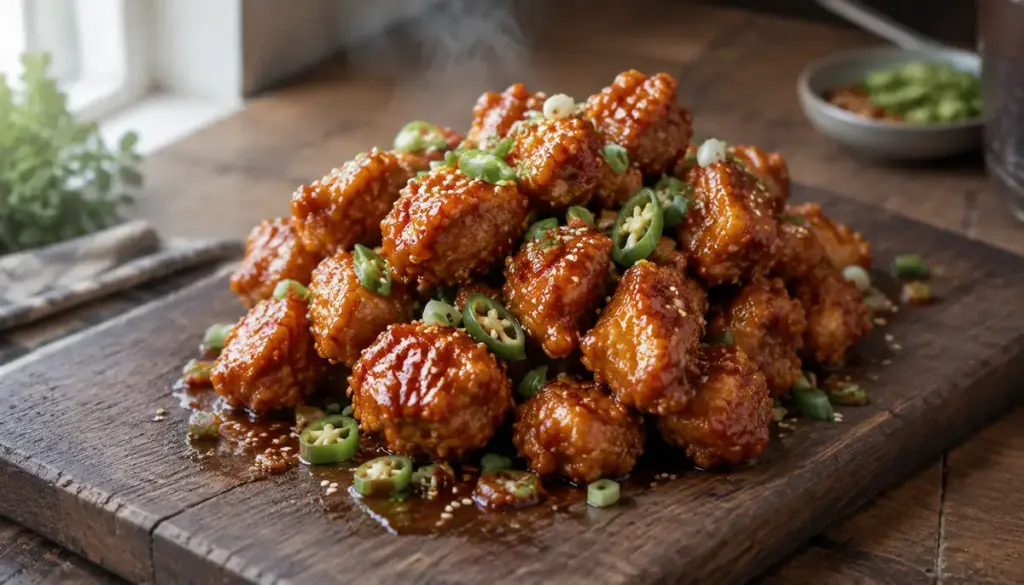
Table of Contents
Chilli chicken is the Indo-Chinese stir-fry for when you want garlic, ginger and green chilli, fast. It’s drier and far more pepper-forward than Chicken Manchurian, and nothing like battered, sweet General Tso’s chicken. This one’s unbattered, savoury and sharp, all done in one screaming-hot pan. About twenty minutes once the chopping’s done. Yum!
The Yum Yum Club · Kitchen Tested Recipe
Chilli Chicken (Indo-Chinese Restaurant-Style)
Prep: 20 mins · Cook: 20 mins · Total: 40 mins
Ingredients
Chicken and marinade
For frying
Chilli-garlic sauce
Stir-fry
For the gravy version only
Instructions
-
1
Cut the chicken thigh into bite-sized pieces, roughly the size of a large grape.
-
2
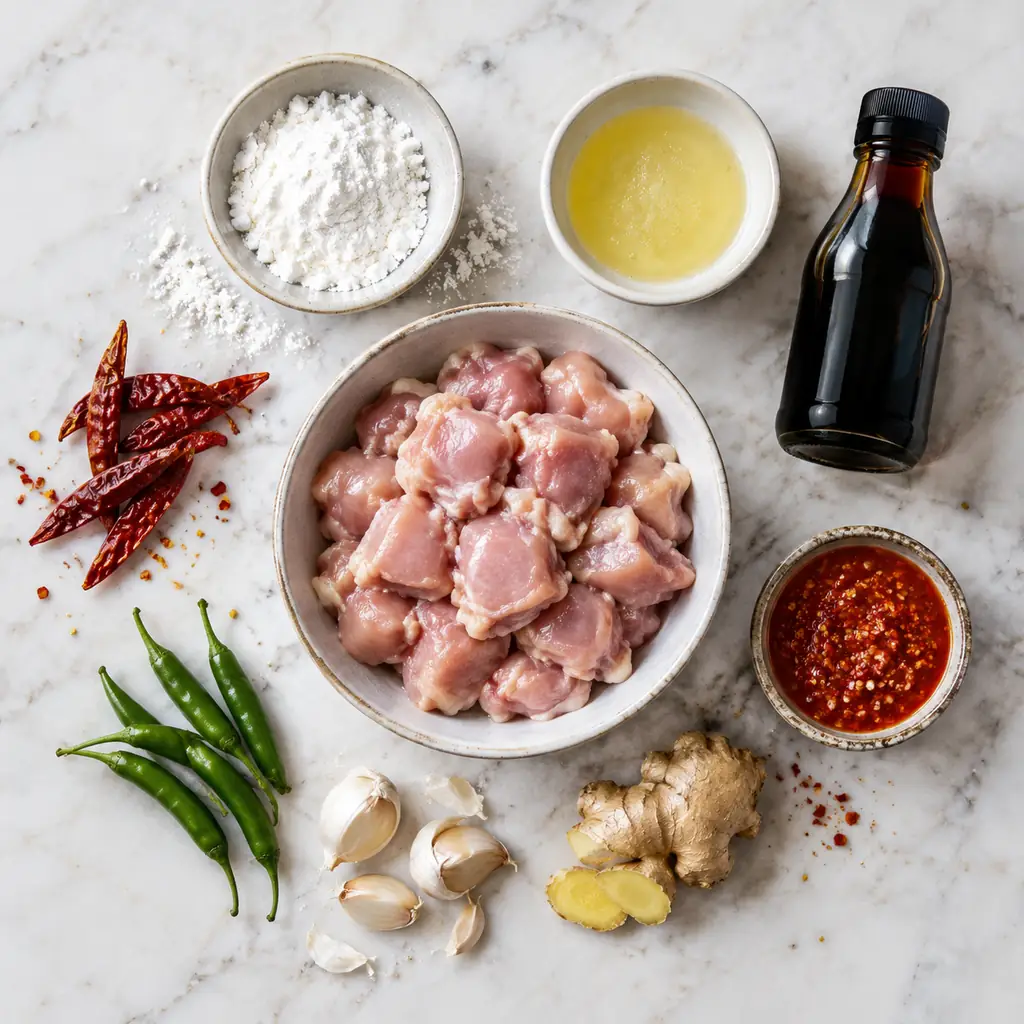
Mix the chicken with the soy sauce, cornflour, egg white and rice vinegar or dry sherry until every piece is slicked and slightly tacky. Leave it for at least twenty minutes (ten if you are short on time).
-
3
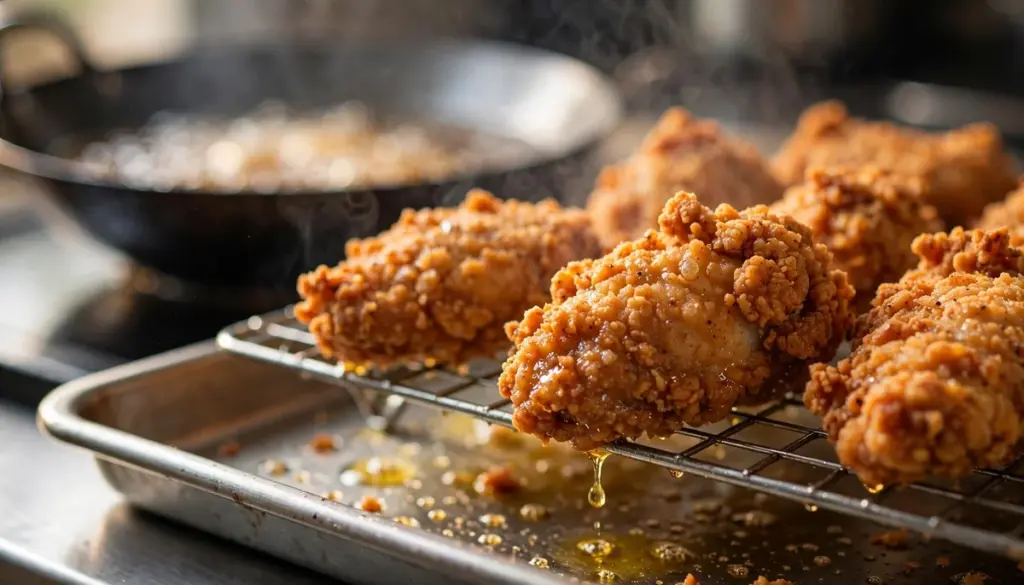
Heat a good depth of oil in a wok or deep pan to around 180C (350F). Toss the marinated chicken in cornflour, shaking off the excess, then fry in batches until golden and just cooked through. Lift out onto a rack.
-
4
For extra crispness, give each batch a second fry at a slightly higher temperature for about half a minute before draining.
-
5
Tip most of the oil out, leaving a slick in the pan, and set it over high heat. Add the garlic and ginger and stir for barely thirty seconds, until sweet and fragrant.
-
6
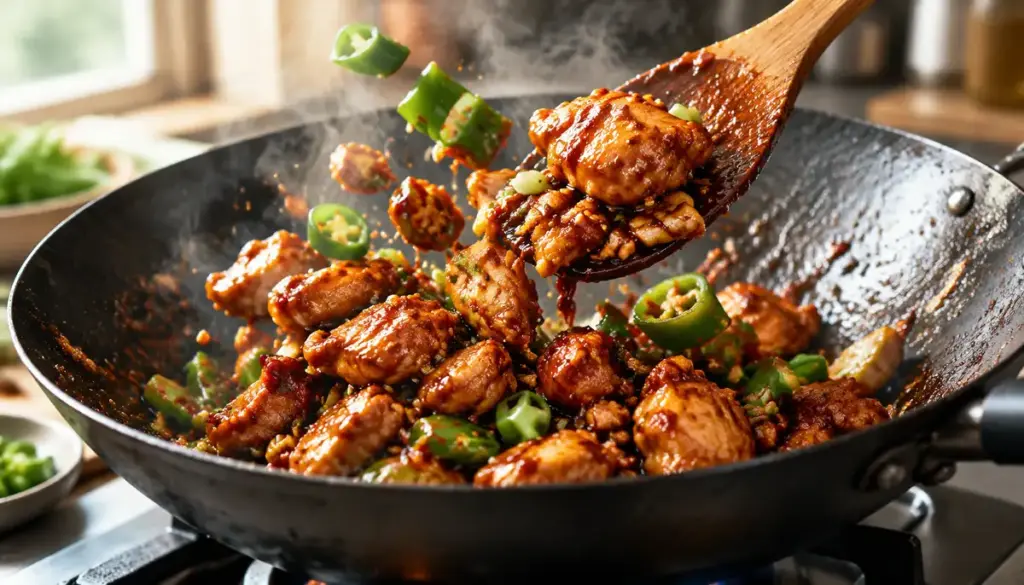
Add the onion and green pepper and stir-fry for a minute or two, until softened but still crunchy. Stir in the chilli garlic sauce, dark and light soy sauce, Kashmiri chilli powder, sugar and vinegar, and let it bubble for a moment.
-
7
Dry version: return the fried chicken to the pan, toss hard for thirty seconds until lacquered in the glossy red glaze, then add the spring onion and green chilli and serve straight away.
-
8
Gravy version: add a little water or stock to the pan and thicken it with a cornflour slurry (a teaspoon of cornflour stirred into a tablespoon of cold water). Let it bubble until glossy and coating the back of a spoon, add the chicken back, toss to coat and spoon over rice.
-
9
Finish with a few drops of toasted sesame oil off the heat.
Kitchen Notes & Tips
- Fry in batches and never overcrowd the pan, in the oil or at the stir-fry stage. Too much in the pan drops the temperature and everything steams instead of sears. Listen for a sharp, confident hiss.
- Give the marinade at least twenty minutes, or ten if you are short on time. The longer rest lets the cornflour cling, and that is what makes the coating hold in the hot oil.
- Double-fry. The first fry cooks the chicken through. The second, hotter, shorter fry drives off surface moisture and gives you the takeaway crackle.
- Watch the garlic and ginger like a hawk: they go from raw to toasty to bitter in a heartbeat. Keep the heat high, work fast and have everything chopped and within arm’s reach before the wok goes on.
- Make ahead: prep and fry the chicken several hours in advance and keep it uncovered in the fridge. Make the fresh sauce and toss everything together when you are ready to eat.
Storage & Reheating
Storage: Keep leftovers in an airtight container in the fridge and eat within a few days.
Reheating: Use a hot pan or hot oven, which crisps the outside again. Avoid the microwave, which steams everything to mush. Reheat until piping hot all the way through.
Equipment
- Wok or deep pan
Substitutions & Variations
Why this chilli chicken works
Making this at home gets you something a delivery never will. A delivered chilli chicken turns up steamed into submission, the coating gone soft, the green chillies limp. Cook it in your own kitchen, though, and the chicken stays crisp at the edges, the sauce clings tightly, and you decide just how much heat goes in. Once the chopping is done, it’s a twenty-minute dish.
It’s all about speed and heat here. The chicken wants a fierce hit of hot oil to get properly crisp, and the sauce comes together in that same rush, clinging to the crust before it has a chance to soften. So get everything chopped, measured and within arm’s reach before the wok goes on. Once that pan is hot, you’re moving.
Ingredient notes: chicken, marinade and sauce
For the chicken, go for thigh. That’s the verdict right across the other chicken thigh recipes and most of the chicken recipes here on the site. Why? Well, at the sort of heat this dish calls for, breast goes chalky after a minute or two too long in the pan. Thigh, on the other hand, stays juicy and soaks up the marinade far more generously.
Think of the marinade as a simple slurry. The cornflour in there is what helps the coating grip. Give it a longer rest and the cornflour has time to properly cling to the chicken, and that’s exactly what makes the coating hold once it hits the hot oil.
The character of this dish? That comes from the sauce. Chilli garlic sauce is the backbone here, a thick, ready-made paste of chopped chillies and garlic. Then you’ve got dark soy, which is thicker and less salty than the regular stuff, and it’s really there for that deep colour. Kashmiri chilli powder is next, a mild Indian chilli powder with a vivid red hue, used mainly for colour and a gentle bit of flavour. A pinch of sugar rounds it all out, and a little vinegar gives you that sharp finish.
A quick UK shopping tip for you. Chilli garlic sauce, dark soy and Kashmiri chilli powder nearly always sit in the Asian or world-foods aisle of a supermarket. So if you’ve been hunting for that Kashmiri chilli powder next to the paprika, well, that’s exactly why you couldn’t find it.
Frying: where the crunch comes from
Fry in batches, just a handful of pieces at a time. Why? Because the oil needs to keep sizzling the second the chicken hits it. That sizzle is your signal the temperature is holding steady. Listen for a sharp, confident hiss.
Crowd the pan and you’ll pay for it. Tip the whole bowl in at once and the temperature crashes. Next thing you know the pieces are sticking together, the coating goes all gluey, and what you’re left with is a sad, pale clump. The fix? Patience. Same story when you get to the stir-fry stage. Overload the pan and the temperature drops, so everything steams rather than sears, and that’s exactly how you end up with soggy vegetables.
Want that proper takeaway-style crackle? Then double-fry the chicken. The first fry is the gentle one, cooking the meat right through. The second fry is hotter and shorter, and what it does is drive off the surface moisture, which is exactly what gives you real crunch. Small extra step. Big difference. C’mon, it’s worth it.
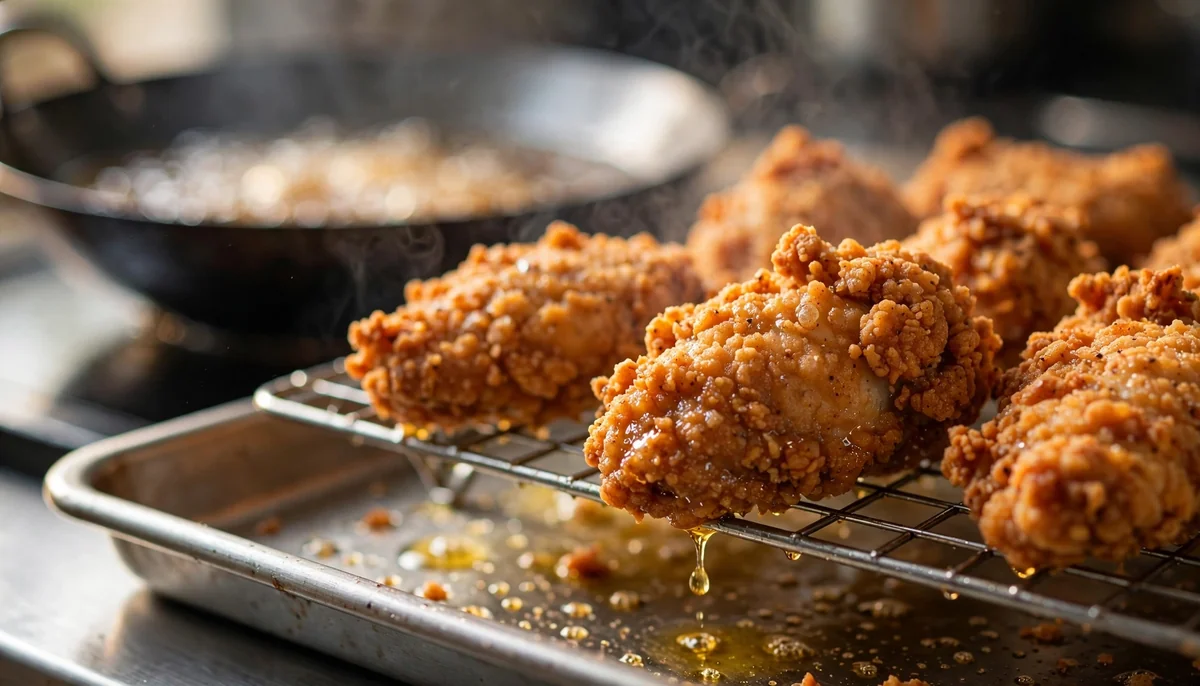
Go for a neutral oil that can take some serious heat. Vegetable, groundnut or sunflower oil all fit the bill nicely. They’ll happily cope with the first fry and the even hotter second one without breaking down or smoking too much. Steer clear of lower smoke point oils like olive or coconut, as they’ll burn and leave the chicken with a nasty off-flavour. Not keen on filling the pan right up with oil? No problem. Our guide to frying with less oil shows you how to keep that same crunch with a shallower fry.
Building the sauce without burning it
Garlic and ginger are the two to keep an eye on. Raw and sharp one moment, toasty and nutty the next, and bitter and burnt right after that. So keep everything moving in the pan and don’t wander off. The second it smells sweet and fragrant, in go the next ingredients.
Off the heat, finish with just a few drops of toasted sesame oil. That’s where the aroma comes in, without any greasiness. Want to get to know the oil a bit better before you buy a bottle? Our sesame oil guide walks you through the different grades and when to use each one.
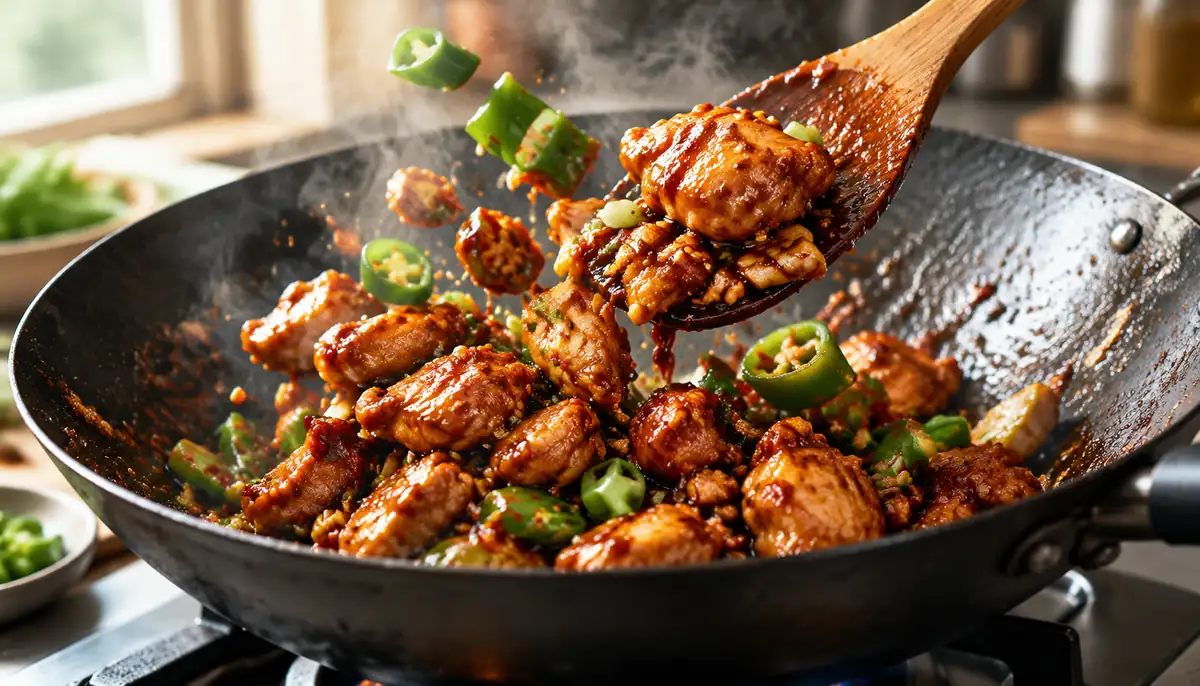
Dry or gravy: which one are you making?
Serve it dry if you’re having this as a starter or a snack, especially alongside drinks. That tight, clinging sauce means it’s easy to eat with your fingers or a fork, and it keeps its crispness far longer than the gravy version.
If you’re having it for dinner, treat it as a gravy. That extra sauce, plus the cornflour slurry, gives you plenty to soak right into the rice. And just like that, it eats like a proper meal rather than a little nibble. The glossy sauce should coat the back of a spoon.
Here’s where folks go wrong. They want it both ways, so they load up on sauce and skip the slurry entirely. The result? A thin, watery pool that wrecks the coating. So pick one and commit to it.
Substitutions and variations
The heat here is completely up to you. Want it gentler? Just use fewer green chillies, or swap in a milder chilli garlic sauce. And if you’re after more fire, leave the seeds in the fresh chillies.
Go for thigh if you can. It’s the better choice, for all the reasons above. Breast works fine too, mind, as long as you keep an eye on your timing. Cut it a touch larger, and the second it turns opaque, get it straight out of the oil.
For veg, the classic pepper-and-onion pairing is worth keeping. Fancy bulking it out? Add sliced aubergine, mushrooms or a handful of baby corn. Just cook the hard vegetables first so they keep some bite. Want to swap the protein entirely? Prawns work well and need barely two minutes in the hot oil before they turn opaque and curl. Paneer is the vegetarian route. Cube it, give it the same cornflour dusting as the chicken, and fry it a little longer than you’d expect so the outside firms up properly. Change one thing at a time so you can taste what each swap does.
What to serve with chilli chicken
Plain steamed rice is the obvious partner here, especially with the gravy version. Got leftover rice knocking about? Then egg-fried rice is even better. And for the dry version, noodles work beautifully.
It also works well as part of a spread alongside other Indo-Chinese dishes like chicken balls. And a cool cucumber salad with a squeeze of lime? Just the thing to balance the heat. Want the full takeaway-at-home spread? Then start the meal with a bowl of chicken and sweetcorn soup.
Storing and reheating leftovers
Keep leftovers in an airtight container in the fridge and eat them within a few days. The coating will soften when you reheat, and there’s no getting around that. But a hot pan or a hot oven gives you the best texture, because it crisps the outside back up again. Whatever you do, don’t use a microwave. It’ll steam the whole lot into mush. Our guide to reheating fried chicken walks through the same method in more detail. Get it piping hot all the way through before you serve. And if you want the exact safe temperature, see our cooked chicken guide.
OK, my Foodie Friends, remember the three rules: a hot pan, fast hands and no crowding. Get those right and you’ll wonder why you ever ordered it in. Dry for crunch, gravy for spooning, and eat it while it’s hot.
Chilli chicken FAQ
Is chilli chicken the same as Manchurian?
No, though they’re cousins. Both are Indo-Chinese, but Manchurian is built on a tomato-ketchup-and-soy gravy that’s saucier and sweeter. Chilli chicken is drier, sharper and far more pepper-forward, with the heat coming from fresh green chillies and chilli garlic sauce. Want something to spoon over rice with a milder kick? Go Manchurian. Want it tighter, spicier and less sweet? Reach for chilli chicken.
Is chilli chicken very spicy?
It’s as spicy as you make it. Restaurant versions run from a gentle warmth to a proper lip-tingling hit, but at home you’re in charge. Use fewer green chillies and a milder chilli garlic sauce for a mellow version. Leave the seeds in the fresh chillies if you want it fierce. Kashmiri chilli powder gives colour and flavour without overwhelming heat.
Cornflour or cornstarch?
Same thing. Cornflour is the British name for what Americans call cornstarch, and you’ll usually find it in the baking aisle. It does two jobs here. It helps the marinade grip the chicken before frying, and it thickens the gravy version when you mix it into a slurry with cold water.
Can I use chicken breast instead of thigh?
You can, but there’s a trade-off. Breast turns chalky fast under this kind of heat if it overcooks even slightly, where thigh forgives a late pull from the oil. Cut the pieces a touch larger than you would thigh, and lift them the second they turn opaque.
Can I make chilli chicken ahead of time?
Yes. Prep and fry the chicken several hours in advance, then store it uncovered in the fridge. When you’re ready to eat, make the fresh sauce and toss it all together, which takes just a few minutes. The chicken stays crisp longer and the sauce is hot and bright.

You might also love
More in Chicken & Poultry
Chicken vs Hot Dog: The Ultimate Game Night Food Showdown
Chicken vs hotdog for game night: nutrition compared, how many to buy, safe cooking temps, and which one actually wins the showdown.
Read
Chicken and Mushroom Pie (Jamie Oliver-Inspired)
Our own chicken and mushroom pie, inspired by Jamie Oliver's puff-pastry one-pan style. Ingredients, method, and what his real recipe contains.
Read
Classical Syrah Coq Au Vin
Updated: November 7, 2026 Classical Syrah coq au vin. You can’t get more French than this. So why call it classic? Because…
Read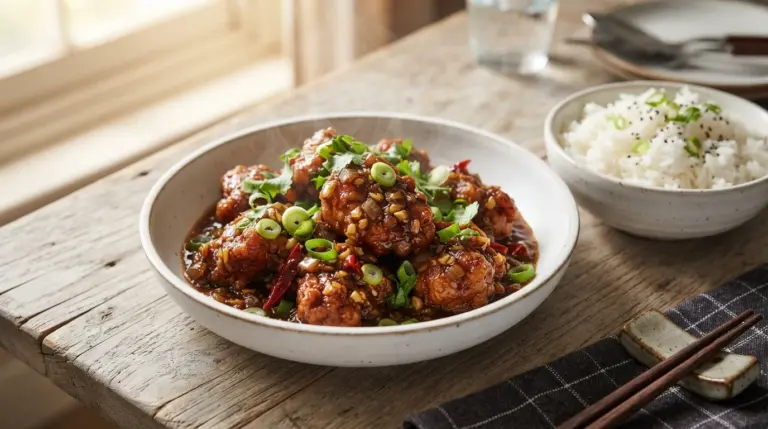
Chicken Manchurian: Crispy, Garlicky, Restaurant-Style at Home
Crispy fried chicken tossed in a garlicky, tangy-sweet sauce. Make it dry or gravy-style in under an hour, and see why chicken…
Read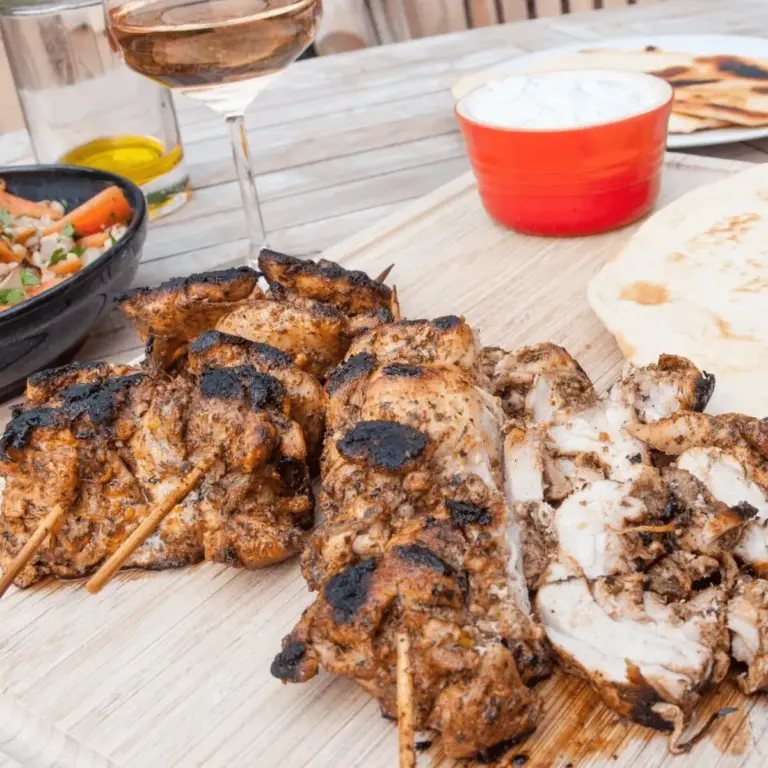
Aromatic Barbecue Chicken Gyros
Updated: July 12, 2026 For any of you who have tasted aromatic chicken gyros in an authentic Greek restaurant, you’ll know how…
Read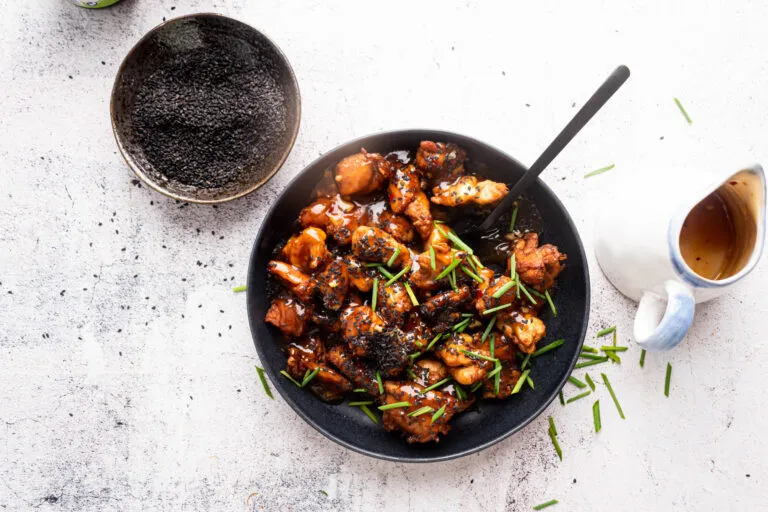
General Tso Chicken
Updated: July 12, 2026 General Tso’s chicken is a sweet and spicy deep-fried chicken dish that is popular in North American Chinese…
Read