
Table of Contents
This post may contain affiliate links. As an Amazon Associate we earn from qualifying purchases.
This is theyumyumclub’s own chicken and mushroom pie, built as a homage to Jamie Oliver’s puff-pastry one-pan version from his cookbook ONE. The recipe uses a leek-and-mustard cream filling under a golden, egg-washed pastry lid, with chestnut mushrooms doing most of the flavour work. Details of Jamie Oliver’s official version are included if you want to compare.
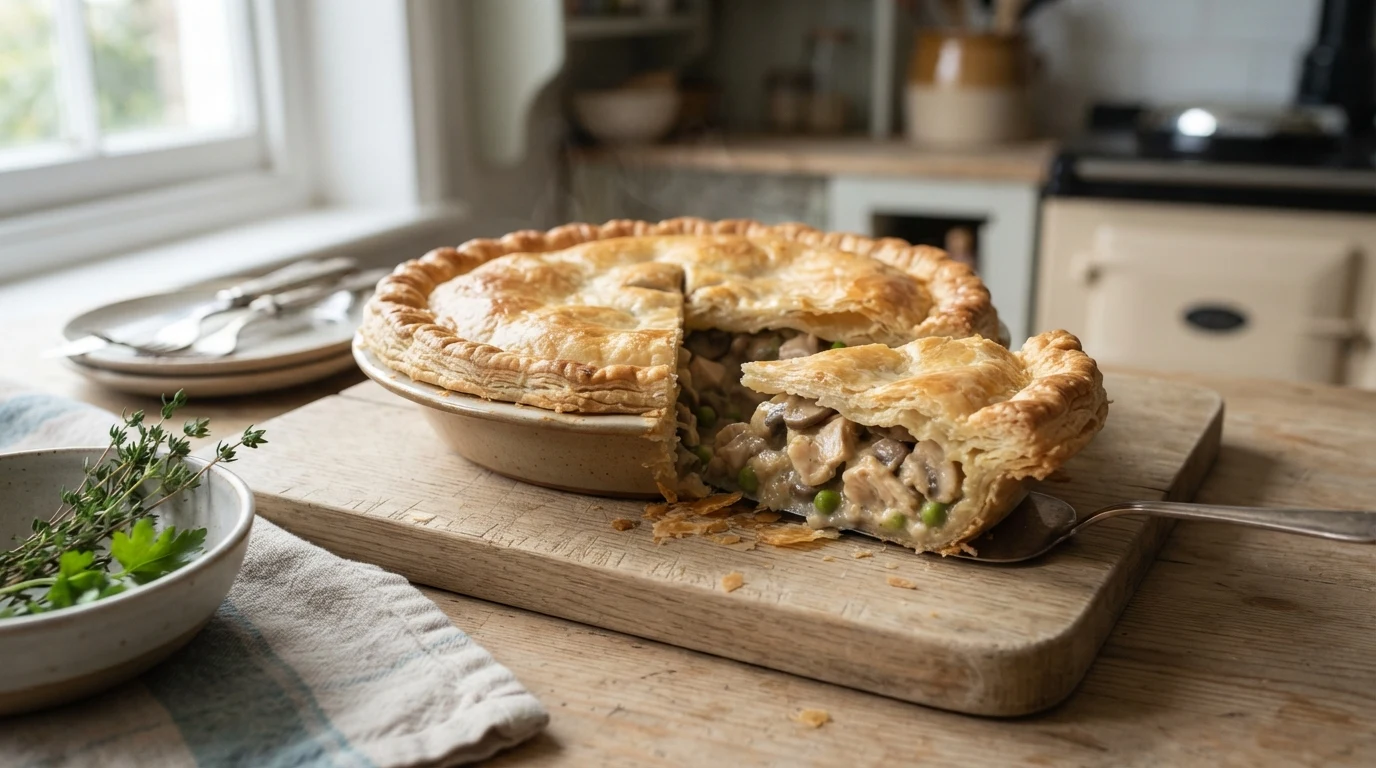
Is This Jamie Oliver’s Actual Recipe?
No, and it isn’t meant to be. This recipe is inspired by Jamie Oliver’s official Chicken & Mushroom Puff Pie, a dish from his cookbook ONE (page 82) that also appeared on Channel 4’s Jamie’s One Pan Wonders. His version serves four and comes together in 33 minutes flat, which is fast for a pie.
His method uses chicken thighs, spring onions, and a mix of mushrooms, cooked into a milk, flour, and mustard sauce. The puff pastry bakes separately from the filling, topped with peppery salad leaves like watercress, spinach, or rocket stirred through right at the end. His official ingredients call for thighs, the dark meat cut.
Our recipe borrows the one-pan, mustard-forward spirit of that dish with a different sauce and pastry approach, built in the same family of pie.
What You Need
The filling uses leeks and chestnut mushrooms with a cream-and-mustard sauce. Boneless chicken thighs go into this version (the same cut in our chinese chicken thighs) because they stay tender through a longer simmer than breast meat would.
Serves 4-6. Prep 20 minutes, cook about fifty minutes.
For the filling:
- 700g boneless, skinless chicken thighs, cut into bite-size chunks
- 25g butter
- 1 tbsp olive oil
- 2 leeks, trimmed and sliced
- 300g chestnut mushrooms, quartered
- 2 garlic cloves, crushed
- 2 tsp fresh thyme leaves
- 2 tbsp plain flour
- 150ml dry white wine (or extra stock, if you’d rather skip the wine)
- 300ml chicken stock
- 100ml double cream
- 1 tbsp Dijon mustard
- salt and black pepper
For the pastry:
- 320g ready-rolled puff pastry (or shortcrust, see below)
- 1 egg, beaten, for the egg wash
You’ll also need a large ovenproof pan or a pie dish, plus a baking tray if your dish doesn’t have handles that go straight into the oven. Nothing here is unusual or hard to find; it’s all standard supermarket stock, which is part of the point of a weeknight pie like this one.
Pastry: Puff or Shortcrust?
Puff pastry is the quicker choice for this recipe. Roll a sheet over the filling, brush with egg, and bake until golden and puffed. The result is delicate and shattered, melting on the tongue with all those paper-thin layers. Shortcrust makes a heartier pie with a base and lid, closer to a classic British pub pie with a fuller, more substantial crust all around. Shortcrust delivers a tender crumb with a bite to it, more compact and holding together better when you cut. It takes longer to prepare because you line the dish with pastry and build a full base and lid. Cutting neat slices for a crowd is easier this way, since the structured crust holds everything in place.
Either works for this filling. If you’ve made our cheddar-topped shepherd’s pie, shortcrust rewards the extra patience with a sturdier result. Let the occasion decide: puff for a quick midweek dinner, shortcrust when you have time and want something you can slice cleanly for guests.
Method
- Heat the oven to 200°C (180°C fan). Melt the butter with the olive oil in a large ovenproof pan or flameproof casserole over medium heat.
- Season the chicken chunks well, then brown them in batches for 4-5 minutes until golden on all sides. Don’t crowd the pan; working in smaller batches achieves better browning, letting each piece develop a deep crust. Look for a deep golden-brown crust that smells nutty and caramelised; that’s where the flavour comes from. When I’ve made this, trying to fit the chunks in just two batches has left me with steamed, grey pieces. Three batches takes an extra few minutes and delivers the deep caramelisation that carries the whole dish. Lift the pieces out onto a plate and set aside.
- Add the leeks and mushrooms to the same pan, using the fat left behind from the chicken. Cook for 6-8 minutes, stirring often, until soft and any liquid released by the mushrooms has evaporated. Don’t rush this step. A dry pan at this stage means a better-tasting sauce later on.
- Stir in the garlic and thyme and cook for 1 minute. Sprinkle over the flour and stir well so it coats everything in the pan, not just the vegetables.
- Pour in the white wine, scraping up any browned bits stuck to the base of the pan, and let it bubble for 2 minutes so the raw alcohol cooks off.
- Add the stock, cream, and mustard. Return the chicken to the pan and simmer gently for 10-12 minutes, until the sauce thickens enough to coat the back of a spoon. You’ll know it’s ready when you dip a spoon in and draw your finger across the back; the sauce should leave a clear trail that doesn’t immediately run back together. The filling shouldn’t look like soup; it should cling to the chicken pieces.
- Taste and adjust the seasoning, then transfer the filling to a pie dish if you haven’t cooked it in one already. Let it cool for a few minutes while you roll out the pastry.
- Lay the pastry over the dish, trim the overhanging edges, and crimp them with a fork so the lid seals properly. Cut two small slits in the top to let steam escape as it bakes.
- Brush the whole top with beaten egg, then bake for 25-30 minutes, until the pastry is deep golden and well risen. Rotate the dish halfway through if your oven browns unevenly.
- Rest the pie for 5 minutes before serving, so the filling settles and doesn’t run everywhere the moment you cut into it. Those five minutes matter more than they sound like they should.
Which Mushrooms to Use
Chestnut mushrooms are our default because they hold their shape and bring more depth of flavour than plain button mushrooms. Portobello works well too, sliced a little thicker, if you want an even meatier bite. Any mushroom variety works in this filling. A mixed pack from the supermarket is fine, and button mushrooms will still taste good even if the flavour ends up a touch milder. When I’ve made this pie, chestnut mushrooms kept their structure through the long simmer beautifully. Button mushrooms softened almost to mush and lightened the sauce, which taught me why chestnuts are the starter choice here. Wild mushrooms make a nice upgrade if you can find them at the market; expect to pay more for them.
When prepping mushrooms, wipe them gently with a damp cloth or a soft brush; they absorb liquid easily and will release extra moisture into the pan if you rinse them with water, which can thin your sauce. A light wipe removes any soil without waterlogging the flesh. You can leave smaller mushrooms whole, quarter the medium ones, or tear the larger specimens by hand if you prefer a more rustic texture. Slicing works just as well and gives a more even cook through the sauce. The goal is consistent size so they soften at the same rate as the leeks and chicken.
If you want to amplify the mushroom flavour further, our mushroom duxelle stuffed chicken breast recipe builds on that same pairing.
Is My Chicken Cooked Through?
Cut a piece open and check the temperature. The core needs to hit 70°C for 2 minutes according to UK government food-safety guidance. That’s the number to trust over a clock, always.
If you don’t have a thermometer, gov.uk lists approved alternative time-and-temperature combinations:
- 60°C held for 45 minutes
- 65°C held for 10 minutes
- 75°C held for 30 seconds
- 80°C held for just 6 seconds
Any of those gets the chicken safely cooked through. The visual check still matters. Juices should run without any pink tinge, and there should be no raw-looking meat at the centre of the largest piece you cut open. Our guide to cooked chicken and our piece on how to roast a whole chicken cover safe temperatures in more detail.
Serving Suggestions
Buttery mashed potato is the obvious match. The sauce needs something to soak into, and mash works better than almost anything else on the table. Make it creamy with a splash of milk and plenty of butter so the potato is fluffy enough to absorb all the mustard cream without turning gluey. Steamed greens cut through the richness well. Purple sprouting broccoli dressed with a knob of butter and a crack of sea salt works beautifully; green beans, when they’re in season, have a sweetness that balances the savoury filling. Wilted spinach, finished with a squeeze of lemon, brightens the whole plate. A sharp side salad with mustard vinaigrette echoes the sauce and ties everything together; use bitter leaves like endive or radicchio if you can find them, as they stand up to the cream without disappearing. If you’re feeding a crowd, extra gravy and a crusty loaf help catch the sauce left on the plate and soak up every last bit. Roast carrots or parsnips work well in colder months when you want something warmer than salad; toss them with honey and thyme to complement the filling’s own herbs.
Storage and Freezing
Cooked leftovers keep in the fridge for up to 3 days in a sealed container. Don’t leave the pie sitting out at room temperature for long before it goes in.
For the freezer, you have two options. Assemble the pie up to the point before the egg wash, wrap it tightly, and freeze it unbaked for up to about 2 months. Or bake it fully first and freeze the baked pie for roughly 2-3 months instead. Both routes work fine, so pick whichever one fits your schedule better on the day.
To cook from frozen, bake it covered for about an hour, then uncovered for another 20-30 minutes, until the pastry is properly golden all over. If you’d rather defrost it first, let it thaw fully in the fridge overnight and add roughly twenty-five minutes onto the normal bake time.
Whichever way you reheat it, any portion you serve needs to reach that same 70°C core temperature for 2 minutes before it lands on the plate. Freezing and reheating don’t change that rule one bit, so keep a thermometer handy if you’re batch-cooking this for the week ahead. Label whatever you freeze with the date; it’s easy to lose track of what’s been in there for six weeks versus six days once everything’s wrapped in foil.
Conclusion
This chicken and mushroom pie takes the one-pan spirit of Jamie Oliver’s original and develops it into something richer, with a mustard-cream sauce and an egg-washed pastry lid that bakes on top of the filling. It builds on the same idea. Tender chicken thighs, earthy chestnut mushrooms, and a golden pastry lid make the whole thing feel like comfort food. Serve it with mash and greens, and you won’t have much left over by the end of the meal.
FAQ
Can I use chicken breast instead of thighs? Yes, though thighs stay juicier through the simmering step here. If you swap in breast, cut the pieces a little larger and pull them from the pan slightly earlier, since breast meat dries out faster than thigh meat does.
Can this be made gluten-free? Swap the plain flour for a gluten-free flour blend and use a gluten-free puff or shortcrust pastry, both widely stocked in supermarkets now. Double-check your stock and mustard too, since some brands include gluten as a thickener you wouldn’t expect.
What pairs well with chicken and mushroom pie? Mash, steamed greens, and a mustard-dressed side salad all work well. For a matching menu, try a creamy chicken dish like our creamy sherry and thyme chicken, which uses the same mustard-and-cream logic.
Can I prep this pie in advance? Yes. Make the filling up to a day ahead and keep it covered in the fridge, then top it with pastry and bake when ready to eat. You can freeze the whole thing unbaked for up to two months.
Is chicken and mushroom pie a British classic? Yes, it’s a recognised classic within British savoury-pie cooking, sitting alongside dishes like fish pie and shepherd’s pie in the same broad family of comfort food.
What’s the difference between this pie and a chicken and ham pie? This one builds flavour from mushrooms and a mustard-cream sauce. A chicken and ham pie uses smoky, salty ham for a different approach. If you like this filling, that one’s worth trying next for a saltier take on the same idea.
Can I make this in individual pies rather than one big one? Yes, and it’s a good option for portion control or freezing. Divide the filling between small ramekins or pie tins, top each with its own piece of pastry, and cut the bake time down to around eighteen to twenty minutes since smaller pastry lids brown faster than one large one.

Leave a Reply