
Cooked Chicken: Safe Temperatures, Reheating and Storage, Explained Properly
Table of Contents
Quick answer, my Foodie Friends. Chicken is safely cooked when the middle hits 70°C and stays there for 2 minutes. A lower, longer option sits in the table below. Cut into the thickest part and the juices should run clear, with no pink meat left behind, whichever route you take.
What temperature should chicken be cooked to?
The Food Standards Agency rule is simple. The centre has to reach one of the two combinations below and hold it for the full time, so you either go hotter for less time or lower for longer. Here’s the thing. The outside can look done long before the middle is safe.
| Temperature | Time held | Fahrenheit |
|---|---|---|
| 70°C | 2 minutes | 158°F |
| 65°C | 10 minutes | 149°F |
Take your reading from the thickest part. For a breast, that’s the centre. For a whole bird, push deep into the thigh near the bone, but keep clear of the bone itself, as it reads warmer than the meat around it.
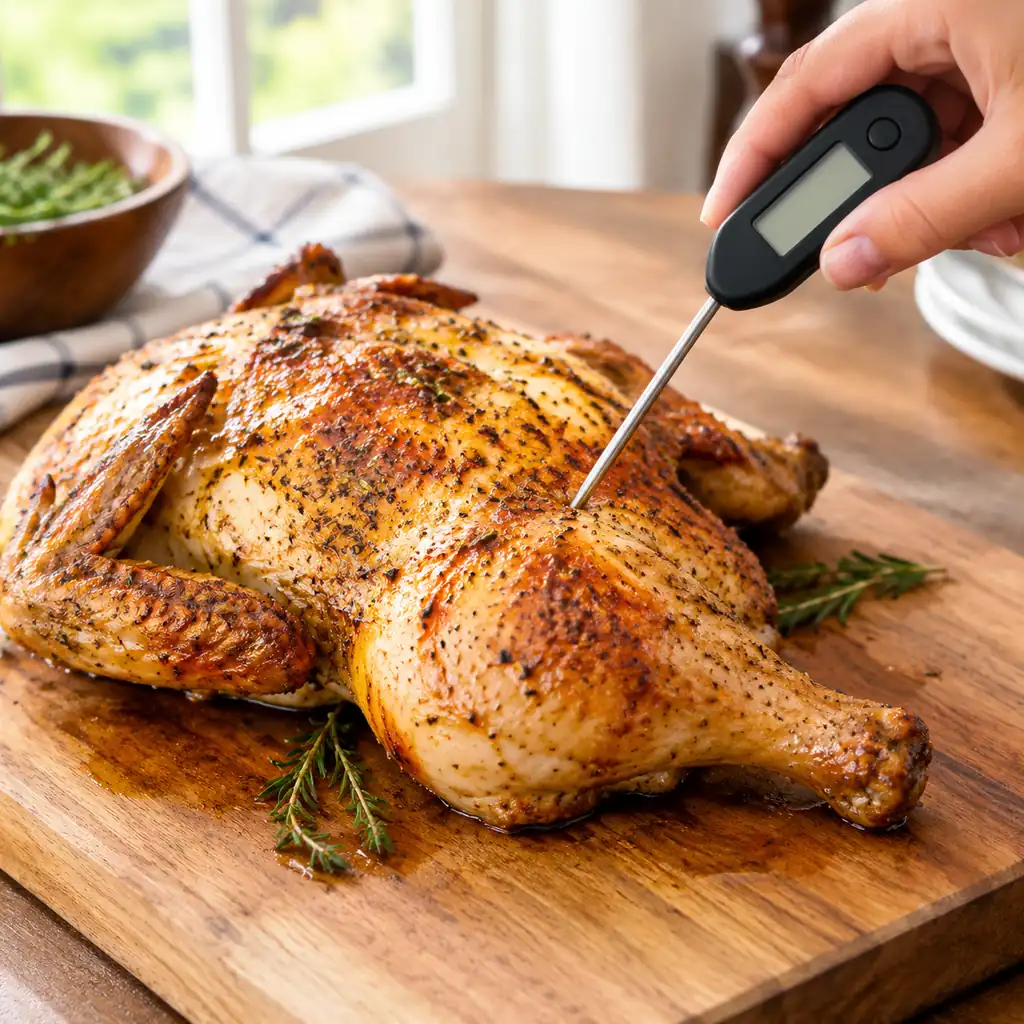
You’ll see 165°F quoted all over the internet. That’s the USDA number for the same safety target. UK guidance works in Celsius, and 70°C for 2 minutes reaches the same endpoint. If your probe reads in Fahrenheit, go with the 158°F in the table, because sticking to the higher figure will simply overcook the meat.
How to tell chicken is cooked without a thermometer
Cut into the thickest part with a clean knife. The juices should run clear, with no pink or red tint and no raw flesh, particularly near the bone. The meat should be steaming hot right the way through.
Treat that as your fallback. Chicken can look done outside while the centre is underdone, and marinated or smoked chicken can stay pink when it’s cooked. A digital probe costs very little, and it’s an easy upgrade, especially for a whole roast or thick bone-in thigh. See our guide to preparing a whole roasted chicken for timing whole birds.
Defrosting and cooking from frozen
Defrost raw chicken fully before you cook it, or the outside cooks well before the centre is safe. The exception is printed on the packet. Some pre-prepared frozen products are made for cooking from frozen, and those carry their own instructions that you should follow instead of the general rule.
- Defrost in the fridge. Large joints and whole birds need a day or more.
- Once fully defrosted, use it within a day.
- Don’t refreeze raw chicken after defrosting unless you’ve cooked it first.
How to reheat cooked chicken
Reheat cooked chicken just once, until it’s properly steaming hot all the way through. Only warm up what you’ll actually eat.
- Oven: cover with foil to stop it drying out.
- Frying pan or wok: shred or slice first, add a splash of water or stock, and keep it moving.
- Microwave: cover loosely and stir or turn halfway so no cold spots remain.
For fried chicken, see how to reheat fried chicken so it stays crispy.
Storing cooked chicken safely
Get cooked chicken into the fridge within 1–2 hours, in a shallow container once it stops steaming. Splitting a whole bird up helps it chill faster. Keep the fridge at 0–5°C and eat the chicken within two days.
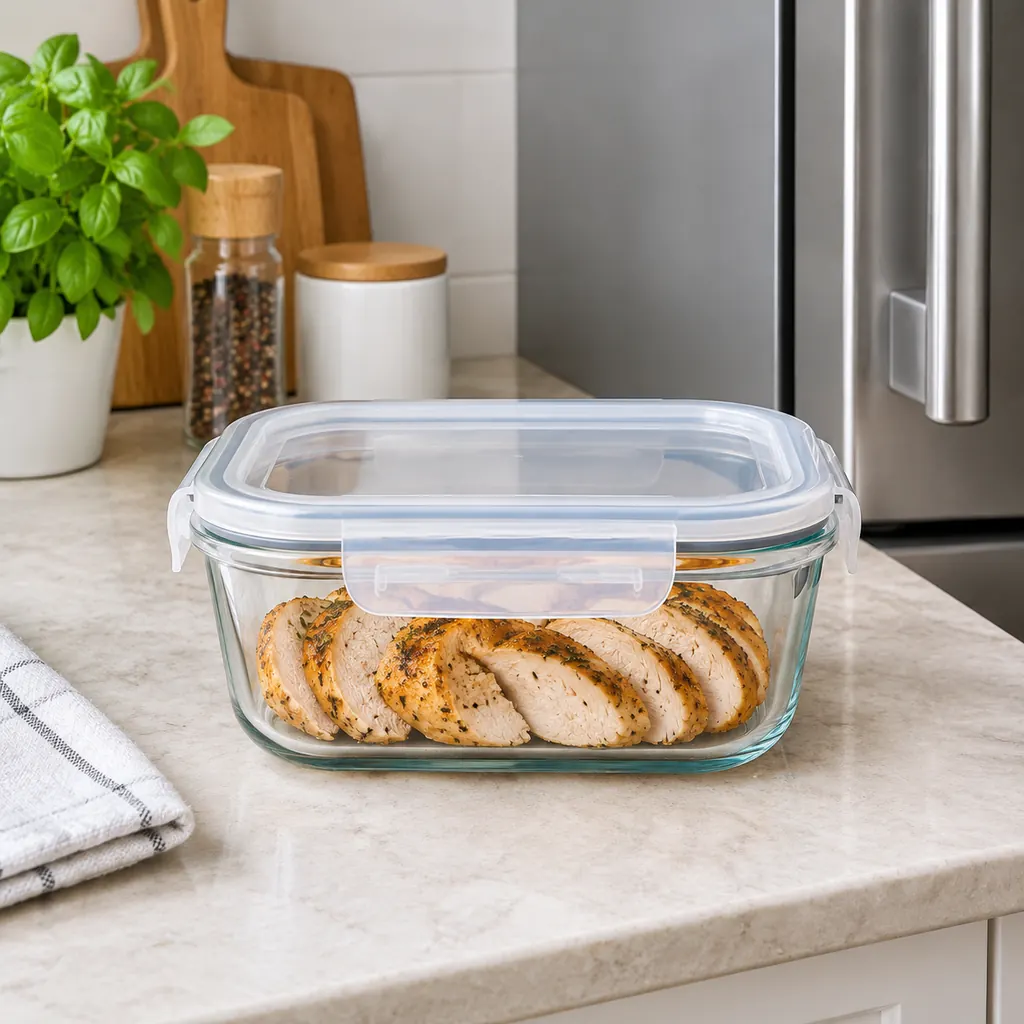
Cold cooked chicken is fine straight from the fridge, but the same rule applies whether you eat it cold or warm it through, and if that window feels tight, you can freeze it after cooling it the same way, portioning it up and labelling it with the date. Once defrosted, eat it within 24 hours and don’t refreeze. For the general rules, our guide to storing leftovers properly has you covered.
How to tell cooked chicken has gone off
Trust your nose first. Sour, or just plain wrong, is reason enough to bin it. A tacky or slimy surface means bacteria have been multiplying. Colour is the weakest sign, so never rely on it alone.
None of these signs guarantee safety, because many food-poisoning bacteria don’t change how meat looks or smells. The storage windows above decide. When in doubt, throw it out.
Washing raw chicken, and what to do with leftovers
Right, one habit to ditch. Don’t rinse raw chicken under the tap. It doesn’t make it safer, and it splashes water droplets carrying campylobacter across your hands, taps and worktop. Campylobacter is the most common cause of food poisoning in the UK, and most cases link to poultry. Cooking kills the bacteria. Wash boards, knives and worktops with hot soapy water after handling raw chicken instead.
Leftovers are a gift for midweek dinners. Yum! Shred them into a wrap or fried rice. Creamy chicken alfredo is another quick option. Stir it into curry at the end, as it only needs warming through. Our black pepper and garlic chicken thigh curry is an easy weeknight pick, or the Chinese chicken thigh recipes.
Sources: FSA and GOV.UK guidance on cooking your food, chilling, freezing and defrosting and cross-contamination, plus Which? on cooking from frozen.
The bottom line
Cook the centre to 70°C for 2 minutes, chill leftovers within 1–2 hours, eat them within two days and reheat once. Get those right and you’re sorted.
Cooked chicken FAQ
What temperature should I cook chicken to?
The safe endpoint is the same whether your thermometer reads Celsius or Fahrenheit. UK guidance from the FSA is 70°C held for 2 minutes in the centre. Use whichever scale you have.
Is chicken safe at 65°C?
Yes, as long as the centre stays at that temperature for the full time in the table above. The FSA treats it as equivalent to the hotter, shorter option.
How long does cooked chicken last in the fridge?
Two days, with the fridge at 0–5°C and the chicken chilled within 1–2 hours of cooking. Won’t get through it by then? Freeze it.
Can I cook chicken from frozen?
Not raw chicken, whether you bought it fresh or frozen loose. Defrost it fully in the fridge first. The exception is packaged products labelled for cooking from frozen, which follow their own pack instructions.
What’s the best way to reheat cooked chicken?
Oven, hob or microwave all work. Heat it until steaming hot all the way through, with no cold spots, and reheat only once. Shredding or slicing it first helps it heat evenly.

You might also love
More in Kitchen Tips & How-To
8 Ways to Get Seniors With No Appetite to Eat
Updated: July 12, 2026 Finding ways to ensure seniors with limited appetite have a healthy, balanced diet can be a significant challenge…
Read
10 Underrated Food Trends To Look Out For in 2022
Updated: July 12, 2026 Food is an essential part of our lives. Each of us wants to have good food at the…
Read
Seasonal Foods In Spring
Updated: July 12, 2026 Consuming a diet rich in fresh, in-season produce is a great way to ensure that you get the…
Read
can dogs eat cucumber
Updated: July 12, 2026 Cucumbers pose a choking and overeating hazard to dogs. Overeating anything, especially something your dog has never tried…
Read
How to Fry with Less Oil Without Sacrificing Crunch and Flavor
Updated: October 22, 2026 Frying is one of life’s simple pleasures, all golden and crunchy, but you don’t need a pan full…
Read
What Are the Benefits of Choosing a Corporate Catering for an Event?
Updated: July 12, 2026 Corporate catering services can provide various benefits for your business, including saving money on food costs, increasing employee…
Read