
Honey Chicken: 4 Delicious Styles, From Crispy Takeaway to Sticky Honey Soy
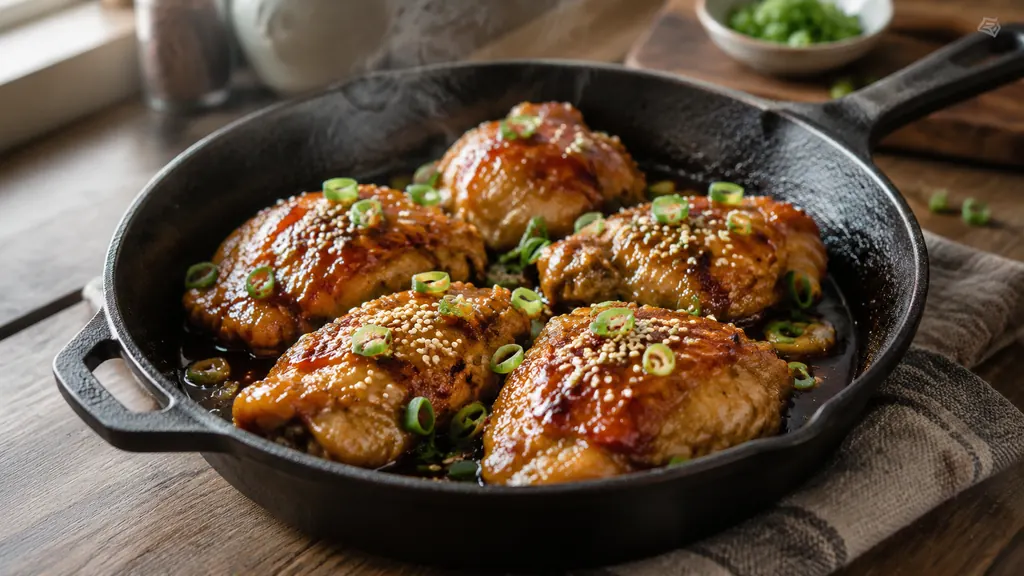
Table of Contents
This post may contain affiliate links. As an Amazon Associate we earn from qualifying purchases.
Great honey chicken is tender meat under a glossy, balanced glaze that tastes of more than just sugar. The one rule governs all of it. Honey starts to caramelise around 110°C and scorches easily once the pan gets near 160°C, so the glaze goes on in the final two to three minutes of cooking, or gets buffered with soy sauce, vinegar and aromatics. Chicken must reach 70°C held for at least 2 minutes, or 75°C instant, to be safely cooked. Boneless, skinless chicken thighs are the best cut for this, staying juicy where breast meat dries out. Below are four distinct styles worth mastering, from Sticky Honey Soy and Crispy Chinese Takeaway to UK Takeaway Honey Chilli and Hot Honey Chicken.
I’ve cooked honey chicken enough times to know the failure mode by heart. The first batch I made years ago went in with the glaze already on, straight into a screaming-hot pan, and within ninety seconds the honey had gone from amber to a dark, acrid brown that tasted of burnt toast. The chicken underneath was fine. The coating was ruined. What fixed it wasn’t a clever ingredient, it was sequencing. Cook the chicken first, build the sauce separately or add it at the very end, and let the residual heat do the glazing.
That single change is the difference between a sticky, lacquered finish and a bitter puddle. Everything else in this guide builds on it.
The Golden Rules of Honey Chicken: Why It Burns and How to Stop It
Honey is a concentrated sugar syrup, and those sugars start caramelising around 110–160°C. Scorching becomes a real risk as the pan approaches 160°C and more so towards 180°C, in direct high heat. Treat those as rough guides, since the exact point depends on the pan and the honey. In a hot skillet, that window is narrow. Blink and you’ve gone past glossy into scorched.
This is why honey behaves so differently from sugar in a sauce. It’s already liquid, so it coats and reduces faster than a thin sauce. Add it too early and you’re essentially frying sugar.
The 2-minute glazing window
Think of the glaze as a last-minute finish, brushed or tossed on right at the end. If you’re pan-searing, get the chicken cooked through and browned first, then drop the heat to medium-low, pour in the honey mixture, and toss for the last two minutes. You’ll hear a soft hiss as it hits the pan, and the sauce will visibly thicken and cling within about sixty seconds. Pull it off the heat the moment it coats the back of a spoon without running straight off.
If you’re baking, brush the glaze on for the final five minutes under the grill, watching it constantly. Honey under a hot grill goes from perfect to black in under a minute.
Balancing sweetness with salt and acid
Honey on its own is one-dimensional. The reason takeaway honey chicken tastes so moreish is the counterweights. Light soy brings salt and umami, a splash of rice vinegar or cider vinegar brings acidity, and grated garlic with fresh ginger bring aromatic bite. A typical ratio that works, per batch:
- 3 tbsp (about 60 g) runny honey
- 2 tbsp (30 ml) light soy
- 1 tbsp (15 ml) vinegar
- a teaspoon each of garlic and ginger
Taste it before it hits the pan. If it tastes flat, add more acid before reaching for the honey jar.
A pinch of salt in the glaze itself is worth adding too. It sharpens the sweetness noticeably, so don’t skip it.
Thighs vs Breast: Choosing the Right Cut for Honey Glazes
Boneless, skinless chicken thighs are the gold standard here, and it isn’t close. They carry more fat and connective tissue than breast, which means they stay juicy through the high-heat reduction that a sticky glaze demands. Breast meat has almost no margin. Overcook it by two minutes under a sweet glaze and you get dry, chalky slices wearing a sticky coat.
Why boneless chicken thighs are the gold standard
Thighs also take on flavour better. The meat is more porous and fattier, so a soy-honey-garlic marinade actually soaks all the way through in minutes. They’re forgiving if you wander off and leave them an extra minute, and they hold their shape when sliced into strips for the takeaway styles. If you want to go deeper into savoury Chinese thigh marinades, our Chinese chicken thighs guide covers the technique in more detail.
How to adapt for chicken breast or wings
Breast isn’t off the table, it just needs handling. Dice it smaller so it cooks fast and evenly, and consider velveting it with a cornflour and egg white coating, which forms a protective layer that keeps the meat tender. Wings work beautifully for the hot honey style, roasted on a wire rack so the fat drips away and the skin crisps. Bake them at 200°C for about 35 minutes, then glaze in the final five.
The 4 Honey Chicken Styles: At-a-Glance Comparison
| Style | Prep & Cook Time | Texture Profile | Heat Level | Best Chicken Cut |
|---|---|---|---|---|
| Sticky Honey Soy | 25–30 min | Sticky & tender | None | Thigh strips |
| Crispy Chinese Takeaway | 35–40 min | Glassy crunch | Mild | Diced breast or thigh |
| Honey Chilli | 40–45 min | Crispy shredded | Medium-spicy | Shredded thigh |
| Hot Honey | 30–35 min | Deep-fried crunch | Sweet fiery | Thigh cutlets or wings |
Style 1: Sticky Honey Soy Chicken Thighs (The Weeknight Classic)
This is the one I make most often, because it’s fast, unbattered, and built from things already in the cupboard. No deep-frying, no special equipment, and it comes together in the time it takes rice to cook.
The foolproof marinade and pan sauce
Whisk together the base marinade:
- 3 tbsp (60 g) runny honey
- 2 tbsp (30 ml) light soy
- 1 tsp dark soy, for colour
- 2 grated garlic cloves
- a thumb of fresh ginger, grated
- 1 tbsp (15 ml) rice vinegar
Marinate the thighs for at least 20 minutes if you have time — even ten minutes still helps.
For the pan sauce, reserve a few spoonfuls of the marinade before it touches raw chicken, then reduce it separately in a small pan with a knob of butter at the end. That gives you a separate pourable glaze to spoon over at the table, on top of the glaze already cooked onto the meat.
Pan-searing vs oven-baking
I tested both. The skillet version won on flavour. A heavy cast iron pan on the hob gives you proper browning and a fond on the base that dissolves into the glaze when you add liquid. The oven version won on ease and cleanup, and it’s more forgiving for a larger batch. If you’re cooking for four or more, roast the thighs in a baking tin at 200°C for 20 minutes. Then brush with glaze and grill for a final 4–5 minutes. If it’s just two of you, use the skillet. Before glazing or serving, check that the thickest piece has reached the safe core temperature; see the food-safety section below.
Style 2: Crispy Chinese Takeaway Honey Chicken
This is the golden, battered version you get in a foil tray, tossed in a translucent honey-lemon glaze. The chicken should shatter audibly the moment you bite into it.
The cornflour batter secret
The trick is a light cornflour-based batter — a heavy flour-only batter turns doughy and dense. Mix 100 g cornflour with 50 g plain flour, a teaspoon of baking powder, and enough cold water to make a thin, single-cream consistency. Too thick and you get doughy nuggets; too thin and it slides off. Fry at 175°C in batches, and don’t crowd the pan or the temperature drops and the batter drinks oil. For more on getting deep-fried batter right, our takeaway-style chicken balls post breaks down the frying stages.
The glaze toss
Here’s the part most home cooks get wrong. The glaze should be warm but off the heat when the chicken goes in. Toss for about twenty seconds, no more, so the sauce coats without steaming the crust. If your glaze is bubbling hot, it will soften the batter within a minute. Before tossing in the glaze, check that the chicken has reached the safe core temperature at its thickest point. A honey-lemon glaze is all you need, reduced until syrupy:
- 3 tbsp (60 g) honey
- 1 tbsp (15 ml) lemon juice
- 1 tbsp (15 ml) water
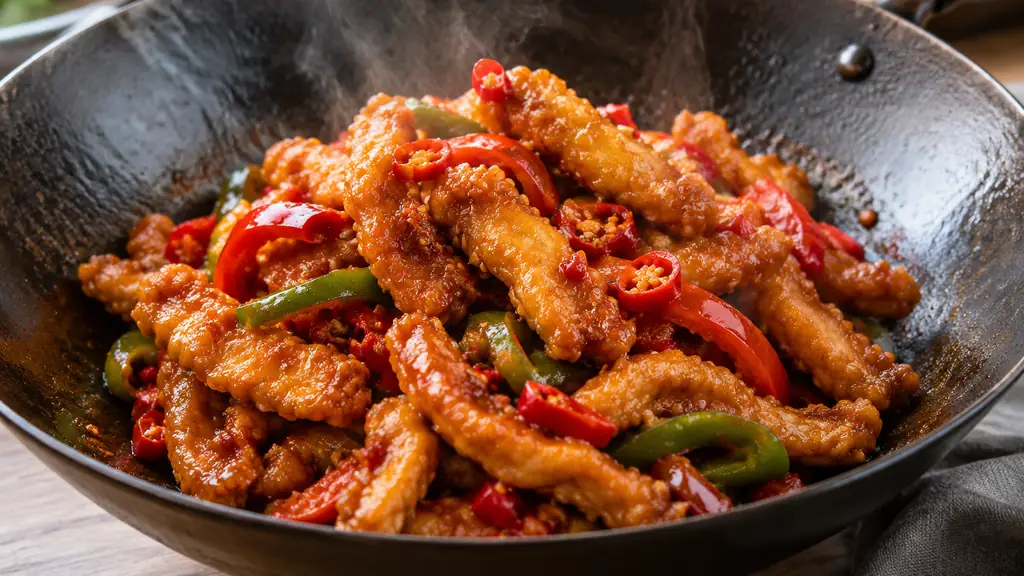
Style 3: Honey Chilli Chicken & Takeaway Recipe (The UK Favourite)
If you’ve ordered from a Chinese takeaway in Britain or Northern Ireland, you know this one. Crispy shredded chicken strips in a sweet-hot glaze with peppers and onions, somewhere between a main and a craving.
Authentic honey chilli chicken recipe breakdown
- Slice 500 g boneless chicken thighs into thin strips.
- Toss in a coating of 80 g cornflour, 1 tsp salt, 1 tsp white pepper, and 1 tsp Chinese five-spice.
- Heat oil to 170°C and fry the strips for 3 minutes. Remove and rest.
- Raise the oil to 190°C and fry again for 90 seconds until deep golden and crisp. This double-fry is what gives you the shatter. Check that the chicken has reached the safe core temperature at its thickest point before serving.
- In a separate wok, stir-fry sliced red and green peppers, a sliced onion, and 2–3 sliced fresh red chillies for 2 minutes.
- Add the glaze: 3 tbsp (60 g) honey, 2 tbsp (30 ml) sriracha or sweet chilli sauce, 1 tbsp (15 ml) light soy, 1 tbsp (15 ml) rice vinegar.
- Toss the fried chicken through the glaze off the heat for 20 seconds and serve immediately.
The double-fry is the step people skip, and it’s the one that matters most. A single fry gives you chicken that’s crisp for about two minutes before the sauce softens it. The second fry drives out more moisture and sets the crust harder, so it survives the glaze.
Adjusting the heat
For a family-friendly version, use one bird’s eye chilli and lean mostly on sweet chilli sauce, keeping the sriracha to a minimum. For proper takeaway heat, use three or four bird’s eye chillies with the seeds in, plus a teaspoon of chilli flakes in the glaze. Taste the glaze before it goes near the chicken and adjust. You can always add heat, you can’t take it out.
If you enjoy this style of crispy Chinese cooking, our restaurant-style chicken Manchurian is a natural next project.
Style 4: Hot Honey Chicken (The Fiery Modern Craze)
Hot honey is exactly what it sounds like. It’s honey infused with chilli, poured over crispy chicken. It borrows from Nashville hot chicken but stops short of the full spice assault, landing somewhere between a drizzle and a dip.
Making homemade hot honey
Warm the following in a small pan over low heat:
- 150 g runny honey
- 1 tbsp dried chilli flakes
- 1 tsp smoked paprika
- 1 tbsp (15 ml) apple cider vinegar
Keep it below a simmer, just warm enough to infuse, for about five minutes. Strain if you want a clean drizzle, or leave the flakes in for texture and heat. Store it in a jar. Chilling thickens it, so let it sit at room temperature for a few minutes and stir before drizzling.
Frying the chicken
Pat the chicken dry and dip each piece in buttermilk, then dredge in seasoned flour mixed with salt, white pepper, and a pinch of paprika. Let it rest on a plate for a few minutes so the coating clings. Heat oil to 175–180°C and fry the chicken for 4–5 minutes until golden and crisp, working in batches so you don’t crowd the pan. The chicken shouldn’t colour too dark. Aim for a pale golden crust that will catch any extra glaze without burning. Check that the chicken has reached the safe core temperature at its thickest point before glazing and serving; see the food safety section below.
Serving styles
Spoon it over crispy fried chicken fillets for a sandwich, drizzle it on roasted wings, or use it as a dip for chicken tenders. The vinegar is doing quiet work here, cutting through the fat and stopping the honey from tasting cloying. Don’t skip it.
What to Serve with Honey Chicken: 5 Perfect Pairings
Sweet, sticky chicken needs starch to soak up the glaze and something fresh to reset the palate. These five cover both.
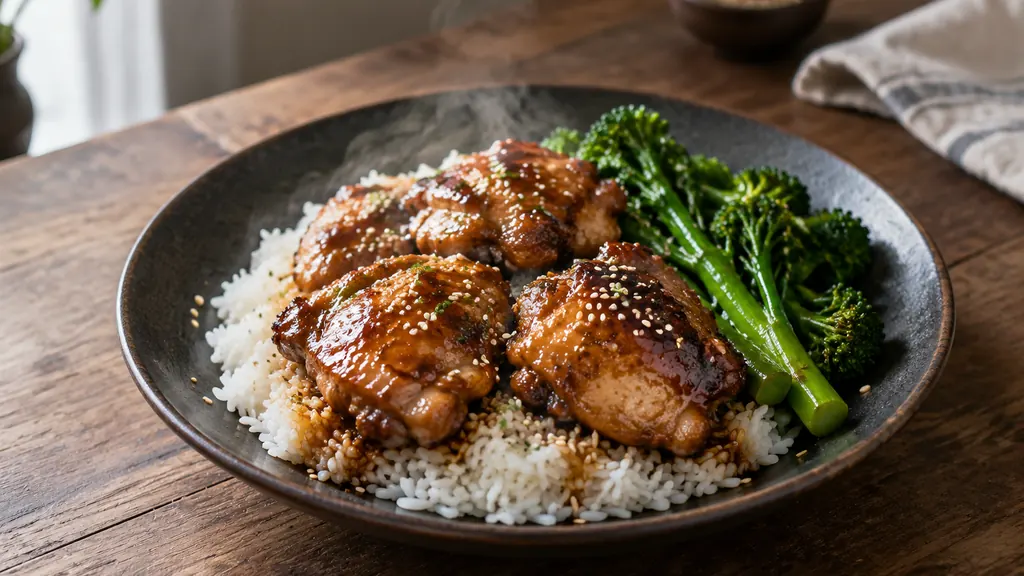
- Steamed jasmine or basmati rice. The default for a reason. Jasmine’s floral note suits the soy-based styles; basmati works better with the spicier versions.
- Egg fried rice. If you’re recreating the takeaway experience, this is the side that completes it. A chicken and sweetcorn soup to start and you’ve got the full set.
- Sesame wok-fried tenderstem broccoli or pak choi. Two minutes in a hot wok with a splash of soy and a scatter of sesame seeds. The slight bitterness balances the sweetness.
- Quick pickled cucumber and shallot ribbon salad. Rice vinegar, a pinch of sugar, a pinch of salt, twenty minutes in the fridge. The acidity is the point.
- Garlic egg noodles. Toss cooked noodles with butter, grated garlic, and a splash of the pan sauce. Good with the sticky honey soy thighs in particular.
For a different direction entirely, honey-glazed thighs also sit well alongside the kind of rich, savoury sauces in our creamy sherry and thyme chicken thighs and our black pepper chicken thigh curry, both of which use the same forgiving cut.
Food Safety: Safe Temperatures, Storing and Reheating
Chicken needs to be cooked through, and guessing by colour isn’t reliable. Use a digital probe thermometer. Every cook time and oven temperature earlier in this guide is a starting point, not a guarantee. The only test that matters is the core temperature below.
> Food safety checklist > > – Safe core temperature (FSA): minimum 70°C held for at least 2 minutes, or 75°C as an instant core reading. Both are equivalent time-temperature combinations. > – Refrigeration (FSA): cool leftovers and get them into the fridge within 1–2 hours of cooking. Store in an airtight container and eat within 2 days. > – Reheating (general kitchen practice, not an FSA figure): reheat only once, and make sure it is piping hot all the way through. > – Freezing: glazed chicken thighs freeze well. Freeze battered styles before saucing, or the coating goes soft on defrosting.
Our safe cooking temperatures and reheating guide goes into the detail if you want the full breakdown.
Frequently Asked Questions
How do I stop honey chicken sauce from burning in the pan? Add the honey glaze in the final two minutes of cooking, over medium-low heat, and keep the chicken moving. Honey’s sugars caramelise and then scorch quickly once the pan nears 160°C, so the glaze should never sit still in a screaming-hot pan. If it starts to darken faster than you’d like, pull the pan off the heat and add a splash of water or stock to cool it down.
Can I make honey chicken using chicken breasts instead of thighs? Yes, with adjustments. Dice the breast smaller so it cooks quickly and evenly, and consider velveting it with a cornflour and egg white coating to protect the meat. Breast has far less fat than thigh, so it dries out fast under high heat. Check it early with a probe and pull it at 70°C held for at least 2 minutes, or 75°C instant core reading.
What is the difference between honey chicken and honey soy chicken? Honey chicken is the broad category. It covers chicken glazed with honey in any style. Honey soy chicken is one specific version, where light and dark soy sauce are built into the glaze alongside the honey, giving it a savoury, salty depth and a darker colour. The soy is what stops it tasting like dessert.
How do I keep crispy honey chicken crunchy after adding the sauce? Toss the fried chicken in warm glaze off the heat for about twenty seconds, no longer. The glaze should be gently warm, just below a simmer. A double-fry method, frying once at 170°C and again at 190°C, sets a harder crust that survives the sauce far better than a single fry.
What gives UK takeaway honey chilli chicken its distinctive flavour? The combination of a cornflour coating, a double-fry for shatter-crisp texture, and a glaze that balances honey with sriracha or sweet chilli sauce, soy, and rice vinegar. Sliced peppers, onions, and fresh red chillies add aroma and a vegetal note that stops the dish being one-dimensionally sweet.
Can I make honey chicken in an air fryer? Yes, and it works well for the unbattered styles. Cook thighs at 190°C for about 16 minutes. Brush with glaze during the final 3 minutes. Check the thickest piece has reached the safe core temperature before serving. Battered takeaway styles don’t translate as well, because the coating needs deep oil to crisp properly. For air fryer versions, use a light cornflour dusting for the coating.
How do I reheat leftover honey chicken without drying it out? Reheat gently, covered, in a low oven or microwave until piping hot all the way through, and only reheat once. Add a teaspoon of water to the container before reheating to create steam. Crispy styles will lose their crunch on reheating no matter what you do, so they’re best eaten fresh.

You might also love
More in Chicken & Poultry
Sweet Pepper & Lemon Chicken Cacciatore
Updated: July 12, 2026 This post may contain affiliate links. As an Amazon Associate we earn from qualifying purchases. Today we fancied…
Read
Chicken and Ham Pie
A creamy chicken and ham pie with a golden puff pastry top, made with thigh meat for the best texture. Includes make-ahead,…
Read
How to Butterfly a Chicken Breast (So It Cooks Evenly, Every Time)
Updated: October 12, 2026 This post may contain affiliate links. As an Amazon Associate we earn from qualifying purchases. Butterflying means cutting…
Read
Aromatic Barbecue Chicken Gyros
Updated: July 12, 2026 This post may contain affiliate links. As an Amazon Associate we earn from qualifying purchases. For any of…
Read
Easy Chicken and Leek Pie Recipe with Puff Pastry Lid
A comforting British chicken and leek pie with creamy filling, tender thighs, leeks, white wine and a golden puff pastry lid. An…
Read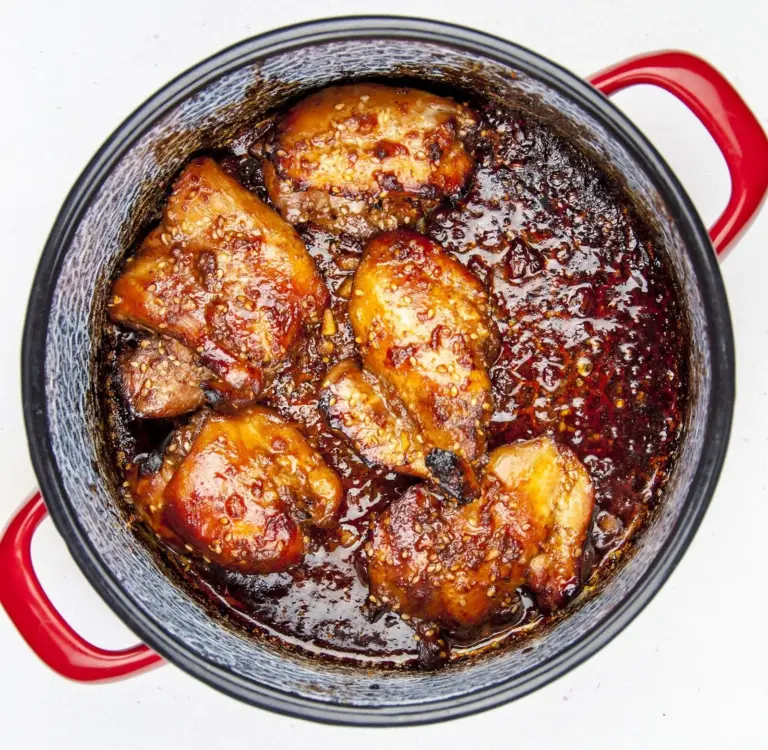
Chinese Chicken Thighs
Updated: September 29, 2026 This post may contain affiliate links. As an Amazon Associate we earn from qualifying purchases. These Chinese chicken…
Read