
Teriyaki Chicken Recipe
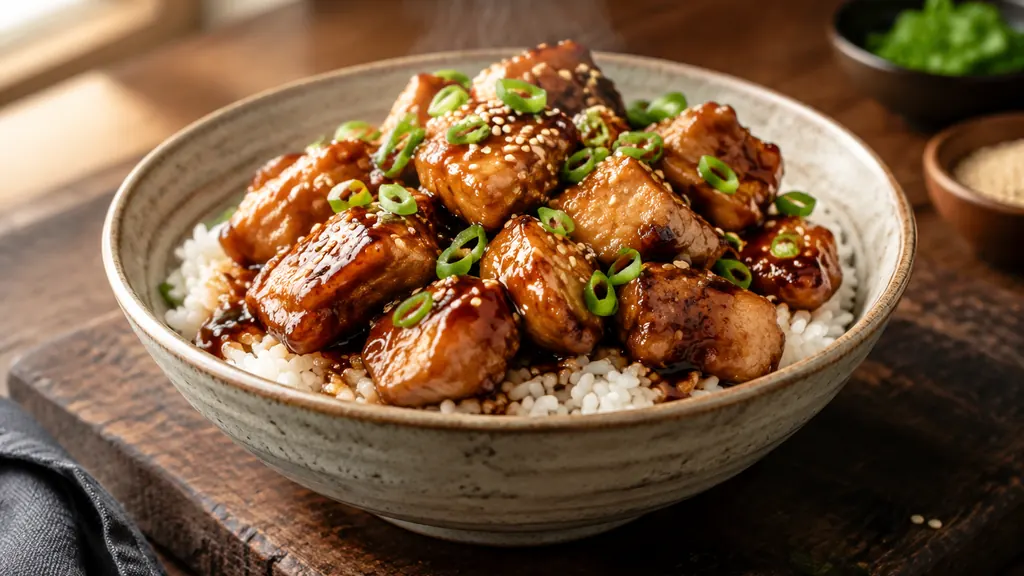
Table of Contents
Teriyaki chicken, done properly at home, is a different beast to the sticky, over-sweet takeaway version — closer in spirit to a restaurant-style Indo-Chinese stir-fry than to the gloopy stuff from a foil tray. This one is glossy, savoury and just sweet enough, with a sauce that clings to every piece rather than pooling at the bottom of the bowl. You sear bite-sized chicken thighs until deeply golden, simmer a quick homemade teriyaki sauce on the hob, then toss the two together off the heat. That’s it. Twenty-five minutes, one pan and a small saucepan, and you’re eating something that tastes like it took far longer. Serve it over steamed rice and watch it disappear.
Why This Teriyaki Chicken Recipe Works
The trick is keeping the sauce and the chicken apart until the very end. Most recipes have you tip everything into one pan and boil it down together, which is exactly how you end up with pale, steamed chicken sitting in a thin puddle. Here the chicken gets a hot pan to itself, so it browns properly, and the sauce thickens separately where you can actually see it happen.
The cornflour slurry is doing quiet, important work. It gives the sauce that glossy, coating-the-spoon body that a plain soy-and-sugar mix never quite manages. I tried this first without it, out of sheer laziness, and the result was a watery sauce that slid straight off the chicken and sat sadly under the rice. Won’t make that mistake twice.
And the balance is adjustable. More soy for savoury depth, a little more sugar if you like it sweeter, a splash of vinegar to sharpen it up. You taste as you go and tweak. If you want to see that same balancing act taken further into sticky, restaurant-style territory, honey chicken runs on the same sweet-savoury logic. That’s the whole game.
There’s a reason the searing step matters beyond colour, too. A hot, dry pan drives off surface moisture fast, so the chicken actually browns and picks up real colour, and that browning is where most of the savoury depth in the finished dish comes from. Dump raw chicken straight into simmering sauce and you skip that step entirely, which is exactly why boil-it-all-together teriyaki so often tastes flat.
What You Need
Everything here is a supermarket staple. The only slightly specialist bit is mirin, and even that’s easy to find once you know where to look.
For the Teriyaki Sauce
- 120ml soy sauce (regular soy sauce contains wheat, so it’s not gluten-free, see the FAQ)
- 60ml mirin, or the vinegar-and-sugar substitute below
- 2 tbsp light brown sugar
- 1 tbsp rice vinegar
- 2 cloves garlic, finely grated
- 1 tsp fresh ginger, finely grated
- 1 tbsp cornflour mixed with 2 tbsp cold water (your slurry, for thickening)
For the Chicken
- 700g boneless, skinless chicken thighs, cut into bite-sized pieces
- 1 tbsp neutral oil (vegetable or groundnut)
- Salt and black pepper
- 1 tsp sesame oil, to finish
- 1 tbsp toasted sesame seeds
- Sliced spring onion, to garnish
How to Make Teriyaki Chicken
Prep is 10 minutes and cooking is 15, so the whole thing’s on the table in no time. Get your rice going first. That’s the bit that always catches me out. If you want a feel for how a sear-first method behaves generally before you commit a whole pan of chicken thighs to it, this guide to cooking chicken properly covers the same browning principle.
Make the Sauce
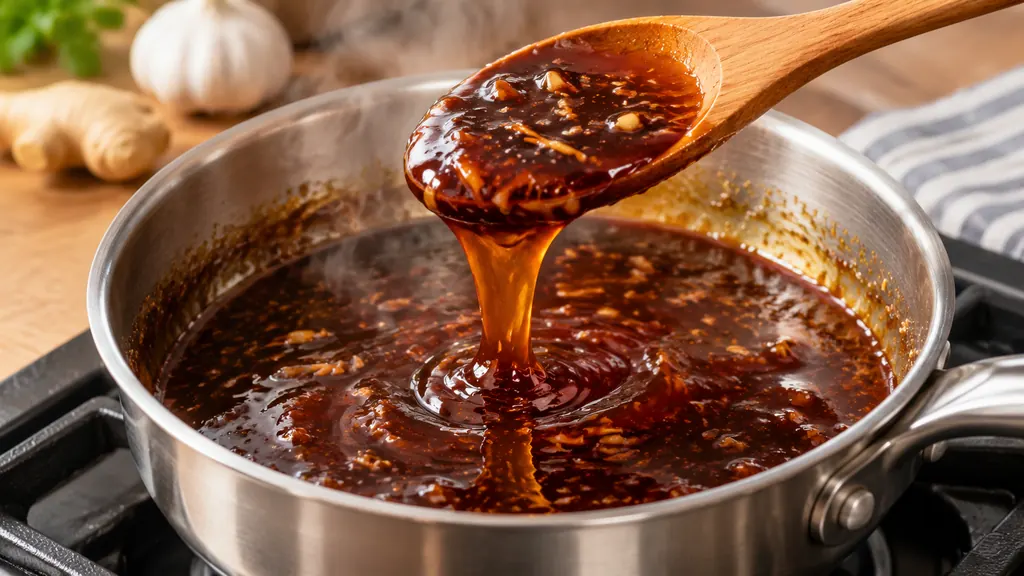
- Combine the base. In a small saucepan, stir together the soy sauce, mirin, brown sugar, rice vinegar, garlic and ginger.
- Simmer gently. Bring it to a gentle simmer over a medium heat. Keep it gentle. A hard boil risks catching and scorching the sugars.
- Thicken. Give the cornflour slurry a quick stir (it settles fast), then pour it in. Simmer for 1–2 minutes, stirring, until the sauce turns glossy and thick enough to coat the back of a spoon.
Set it aside off the heat while you deal with the chicken.
Cook the Chicken
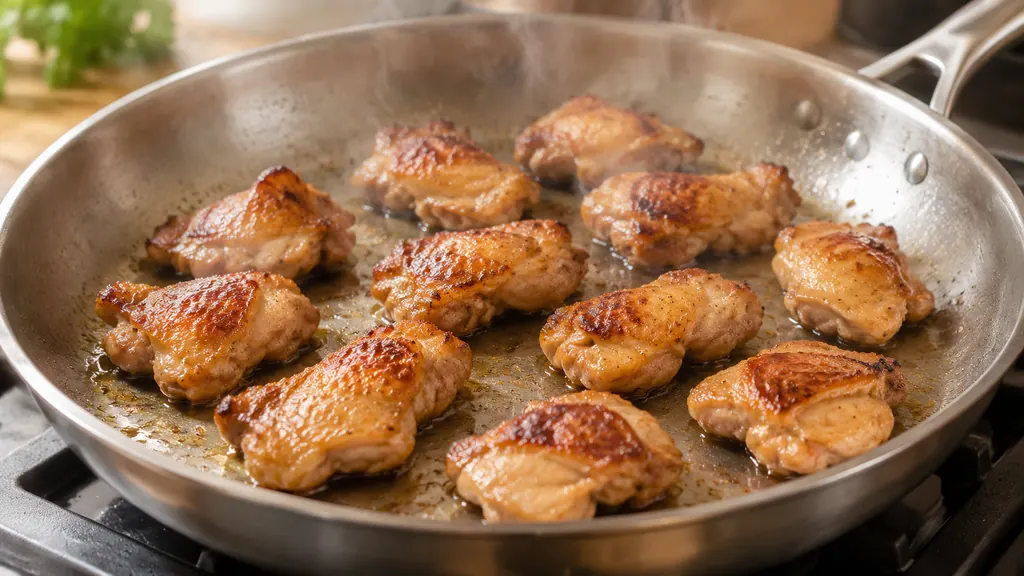
- Season. Pat the chicken pieces dry and season with salt and black pepper.
- Get the pan hot. Heat the neutral oil in a large frying pan or wok over a high-ish heat until it shimmers.
- Sear in batches. Add the chicken in a single layer. Don’t overcrowd the pan, or it’ll steam instead of browning. Cook for 6–8 minutes, turning, until deeply golden and cooked through. The thickest piece should reach 70°C at its centre and hold that for 2 minutes.
If your pan’s on the small side, do it in two batches. It takes a few minutes longer but the colour is worth it.
Bring It Together
- Off the heat. Tip the cooked chicken into the pan with the sauce, with the heat off. Toss to coat. The residual warmth is plenty to bring everything together.
- Finish. Drizzle over the sesame oil, then scatter with sesame seeds and sliced spring onion.
- Serve. Pile it over steamed rice and get stuck in.
Tips for the Best Teriyaki Chicken
Dry the chicken properly. Wet chicken hits hot oil and spits, then steams. A quick pat with kitchen paper makes a real difference to how it browns.
Don’t crowd the pan. This is the one that catches most people. Bite-sized pieces need space, or you get grey, pale chicken with no crust. Two batches beats one crowded pan every time.
Taste the sauce before it goes near the chicken. Sweet, salty and savoury all need to sit in balance. Too salty? A pinch more sugar and a splash of water. Too sweet? A little more soy or vinegar. Adjust while it’s still in the pan.
Keep the heat moderate on the sauce. Light brown sugar scorches quickly at high heat. A gentle simmer is all it needs.
Let the pan rest between batches if it’s smoking hard. A screaming-hot pan browns fast, but once it starts smoking, that’s too hot. Pull it off the heat for thirty seconds before adding the next batch of chicken. Scorched oil tastes bitter and that bitterness carries straight through to the sauce once everything’s tossed together.
Variations and Substitutions
Chicken Breast Instead of Thighs
You can absolutely use chicken breast, just know it cooks faster and dries out quicker than thigh. Cut it into slightly larger pieces than you would thigh, and start checking the temperature a minute or two earlier than you would for thigh. If you’re starting from whole breasts, butterflying the breast first helps it cook through more evenly before you dice it up. The same core-temperature rule applies: 70°C, held for 2 minutes. I’ve made this with breast and it works, but it’s less forgiving. Thigh gives you more room for error on a first go.
Vegetable Add-Ins
Thinly sliced red pepper, broccoli florets or mangetout all work. Stir-fry them in the hot pan before the chicken, or alongside in a separate batch, and fold them through at the end. Keep them crisp. Soggy veg in a glossy sauce is a sad thing. Aubergine, cubed and fried until soft, is a lovely addition if you’ve got one going spare. For a punchier, garlic-forward take on the same wok technique, chicken Manchurian is worth a look.
No Sake or Mirin?
Mirin is a lower-alcohol, sweeter rice wine than sake, and UK supermarkets commonly stock it in the world-foods aisle, often labelled “aji-mirin” or sweet rice wine. If you can’t find it, a rough stand-in is about 1 tbsp rice vinegar or white vinegar plus ½ tsp sugar for every tablespoon of mirin called for. Adjust to taste. It’s a practical kitchen fix that gets you close enough for a weeknight dinner. Just as a side note, don’t bother with sake as a swap here. It’s drier and less sweet, so you’d need to add sugar anyway.
- Mirin
- Lower-alcohol, sweeter rice wine. The right choice for this sauce.
- Sake
- Drier, less sweet — not a good swap here.
- Vinegar + sugar stand-in
- ~1 tbsp vinegar + ½ tsp sugar per tbsp mirin.
Storage and Reheating
Cool any leftovers within 1–2 hours. Keep them in the fridge and eat within 2 days.
For longer storage, freeze in an airtight container at -18°C or below. Best quality within 2–3 months. Defrost overnight in the fridge before reheating.
To reheat, a quick turn in a hot pan with a splash of water works better than the microwave, which can toughen the chicken. Keep the heat low and warm it through gently.
What to Serve With Teriyaki Chicken
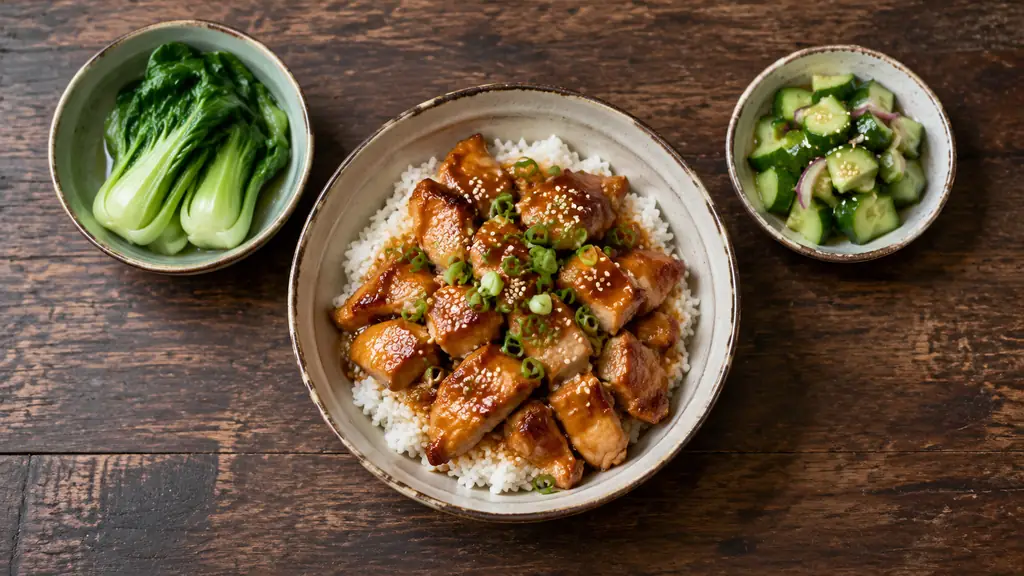
Steamed rice is the classic, and for good reason. It soaks up every bit of that sauce. Short-grain or jasmine both work well. Beyond that, a simple cucumber salad with a little rice vinegar cuts through the sweetness nicely. Steamed greens (pak choi, tenderstem broccoli) add freshness. Or go full comfort and pair it with a bowl of miso soup, or a UK takeaway-style chicken and sweetcorn soup, on the side.
Timing matters when you’re plating this up. Bring the rice to the table whilst the chicken is still hot, so the sauce soaks straight into warm grains. If you’ve got a choice of rice cooker settings, aim for the slightly firmer side, since overcooked mushy rice makes it harder for the sauce to cling and distribute properly. Jasmine works beautifully because it has just enough fragrance to stand up to the savoury–sweet balance without competing.
For a complete meal, pair the chicken with at least one cool, fresh element. If you want to keep everything quick, a handful of crisp lettuce or torn Chinese cabbage with a light vinegar dressing takes three minutes and opens up your palate between bites. Whichever vegetables or rice you choose, the real game-changer is temperature contrast. When you bring together hot glossy chicken, cool crisp salad, and warm rice on the same plate, those three textures and temperatures work together to make the whole dish feel far more refined than it actually is.
Noodles work just as well as rice if that’s what you’ve got in. Udon or straight-to-wok noodles soak up the sauce differently to rice, so toss them straight through the pan to get every strand coated. A scatter of extra spring onion and sesame seeds at the table lets everyone top up to taste.
Conclusion
This is one of those recipes that earns a permanent spot in the weeknight rotation. It’s quick, it’s made from things you probably already have, and the payoff is a plate of glossy, savoury, slightly sweet chicken that beats most takeaway versions. The separate-pan method and that cornflour slurry are the two things that make it work, don’t skip either. Give it a go, tweak the sauce to your taste, and enjoy the beauties.
FAQ
Can I use chicken breast instead of thighs? Yes — see the Chicken Breast Instead of Thighs section above for timing and temperature adjustments. Thigh is more forgiving if you’re making this for the first time.
Can I use bottled teriyaki sauce? You can, and it’ll get dinner on the table. But bottled sauces vary a lot. Many are thinner and sweeter than a homemade version. If you use one, taste it first and adjust with a little soy or vinegar. The homemade sauce here takes about five minutes and gives you control over the balance.
How do I fix sauce that’s too thin or too thick? Too thin? Simmer it a little longer, or whisk in a touch more cornflour slurry and cook for another minute. Too thick? Loosen it with a splash of water or stock, stirring over a low heat until it’s glossy again. Adjust in small increments. A little goes a long way.
Can I make this ahead? Yes. The sauce keeps in the fridge for a couple of days, and you can marinate the chicken in a little of it for an hour or so before cooking. Cooked leftovers should be cooled within 1–2 hours and refrigerated. Eat within 2 days, and reheat gently in a pan with a splash of water.
Is teriyaki chicken gluten-free? Not as written. Standard soy sauce, including common UK supermarket brands, is brewed with wheat and isn’t gluten-free. Tamari is the usual swap, but only if that specific bottle is labelled gluten-free, since formulations vary by brand. Check the label every time, and check your mirin too.

You might also love
More in Chicken & Poultry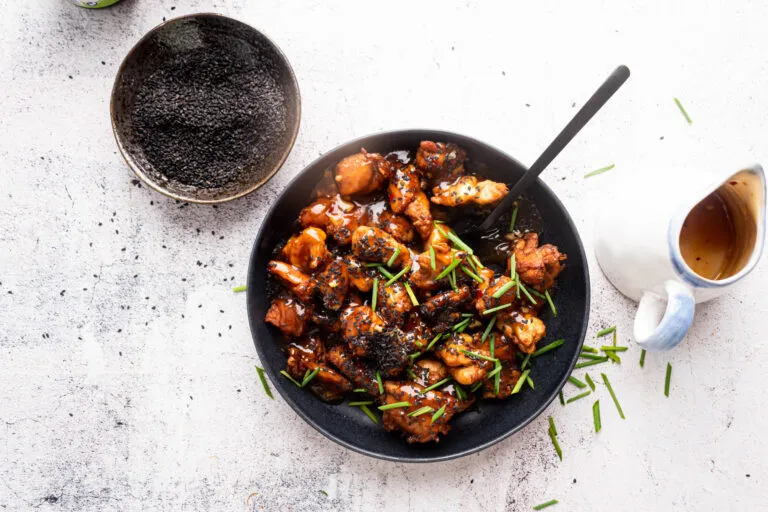
General Tso Chicken
Updated: July 12, 2026 General Tso’s chicken is a sweet and spicy deep-fried chicken dish that is popular in North American Chinese…
Read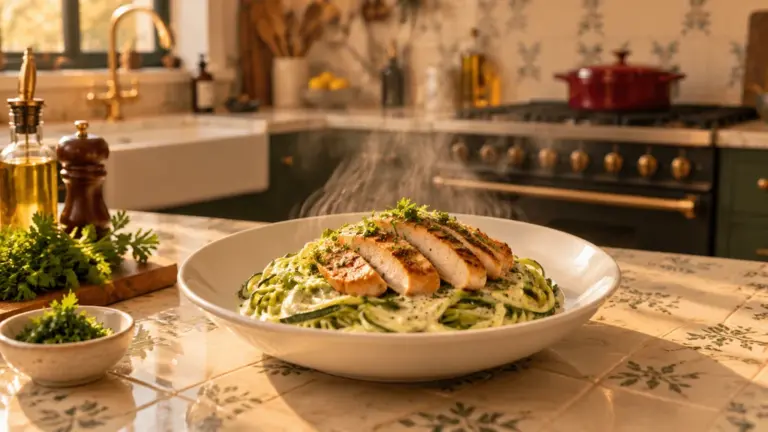
Delicious Paleo Chicken Alfredo Recipes
Updated: October 31, 2026 Craving a creamy and indulgent pasta dish without the guilt? Look no further! We’ve got you covered with…
Read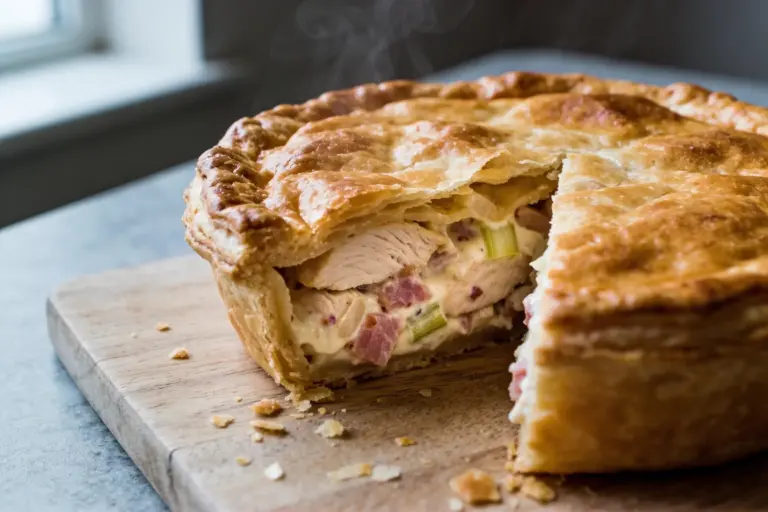
Chicken and Ham Pie
A creamy chicken and ham pie with a golden puff pastry top, made with thigh meat for the best texture. Includes make-ahead,…
Read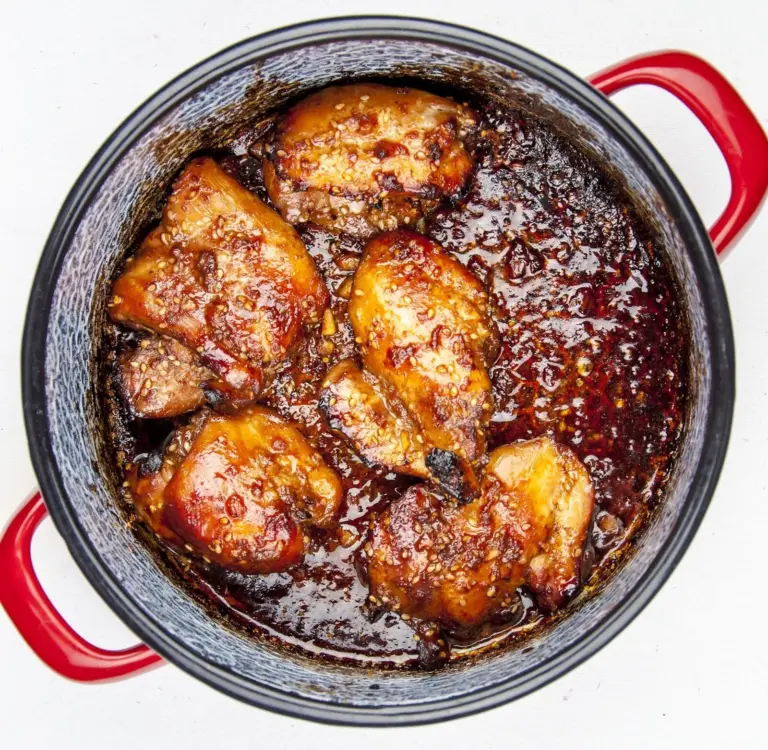
Chinese Chicken Thighs
Updated: October 27, 2026 Right, my foodie friends, here’s the whole trick. Six chicken thighs, a honey and dark soy marinade with…
Read
Aromatic Tandoori Chicken Tikka Masala
Updated: July 25, 2026 Aromatic tandoori chicken tikka masala. What a recipe! You can’t ge much more British than this. Haha ????.…
Read
Creamy Sherry and Thyme Chicken Thighs
Updated: July 12, 2026 I love these single skillet recipes. They’re not quite as simple as an all in one slow cooker…
Read