
Tarragon Chicken
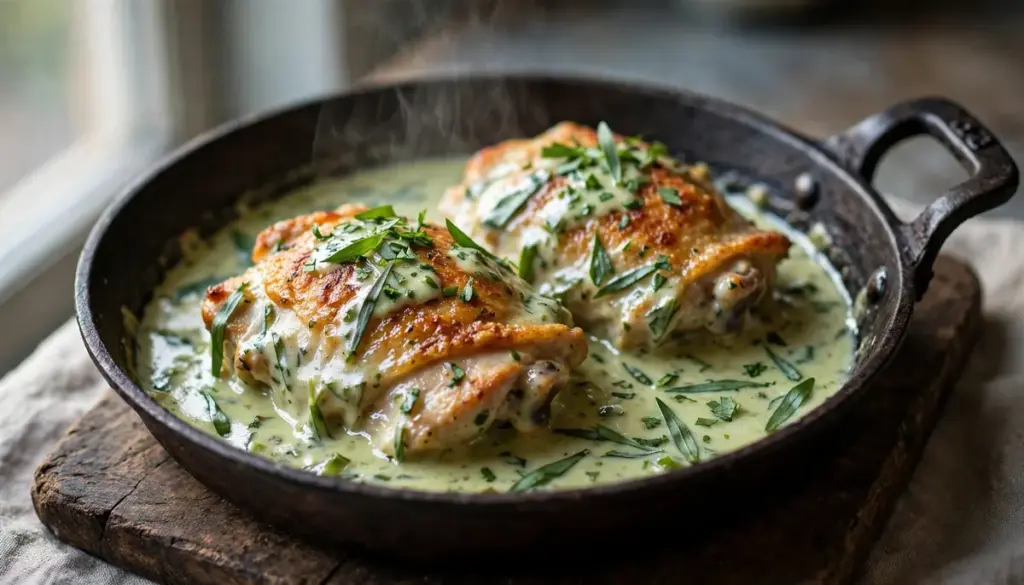
Table of Contents
This post may contain affiliate links. As an Amazon Associate we earn from qualifying purchases.
Tarragon chicken, or poulet à l’estragon if you’re being proper about it, is one of those dishes that feels far more elegant than the effort it demands. You brown some chicken, soften a shallot, splash in wine and cream, let the chicken poach gently in the sauce until it’s cooked through, then stir in a fistful of tarragon at the very end, and you have a sauce the colour of pale jade that tastes like a proper bistro lunch. I’ve cooked this on a Tuesday after work more times than I can count, and it has never once felt like a chore. The whole thing is about thirty to forty minutes, start to finish, and most of that is the chicken quietly poaching in its sauce while you get on with the rice.
What Is Tarragon Chicken?
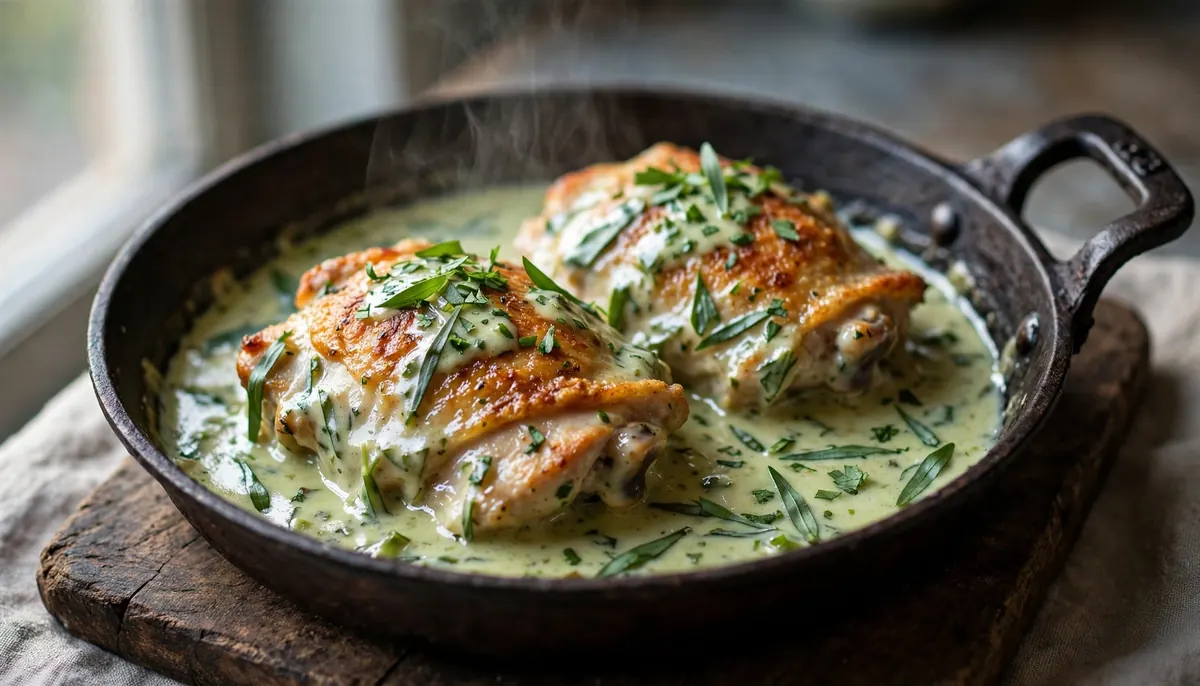
Tarragon chicken is a classic French bistro dish of chicken cooked in a creamy sauce flavoured with tarragon, usually built on a base of shallots, white wine and cream. The tarragon does the heavy lifting. It’s aniseedy and faintly grassy, and it cuts straight through the richness of the cream so the sauce stays bright rather than claggy. Older versions are often made with a whole jointed bird, but for a weeknight I use breasts or thighs and nobody has ever complained. You’ll sometimes see it called poulet à l’estragon on a menu, and it sits in the same family as chicken chasseur or coq au vin, minus the tomatoes and the long braise. Serve it with something plain that can soak up the sauce, and you’ve got dinner.
Ingredients You’ll Need
Nothing here is hard to find. The only thing worth a special trip is the tarragon itself, and I’ll come to the dried-versus-fresh question in a moment.
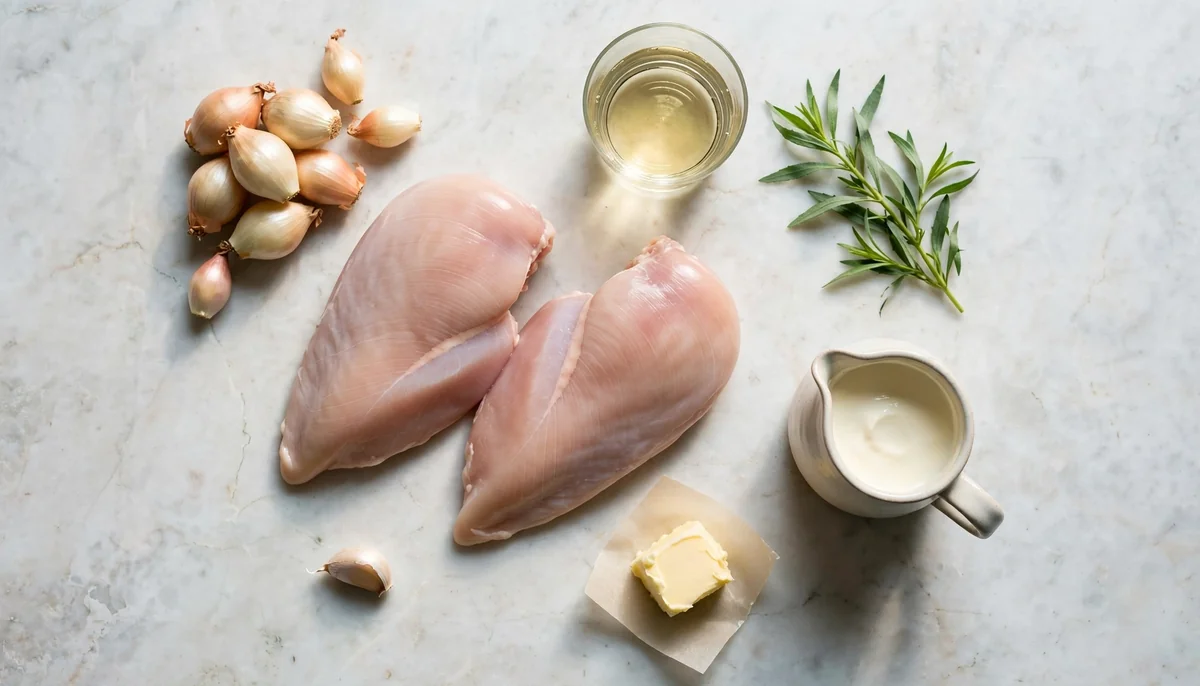
- Chicken: two breasts or four to six boneless, skinless thighs (more on which below)
- Shallots: two, finely chopped. A small onion works at a push, but shallots are sweeter and less aggressive
- Garlic: one clove, grated or crushed, optional but I like it
- Butter and a little oil: butter for flavour, a teaspoon of oil to stop it burning
- White wine or dry vermouth: a good glug, maybe 150ml
- Chicken stock: about 100ml, to round out the sauce
- Double cream: about 150ml. Single cream is more likely to split, so I’d skip it
- Tarragon: about 3 tablespoons of fresh leaves, chopped, or 1 tablespoon dried if you can’t get fresh
- Dijon mustard: a teaspoon, if you fancy the variation below
- Salt and black pepper
If you’re building a herb bundle for something else this week, our guide to making your own bouquet garni is worth a look, since tarragon is a natural player in one.
How to Make Creamy Tarragon Chicken
Here is the method the way I’d talk you through it if you were standing in my kitchen. The full recipe card with quantities sits just below the method, so adjust the wine, stock and cream a little to the size of your pan.
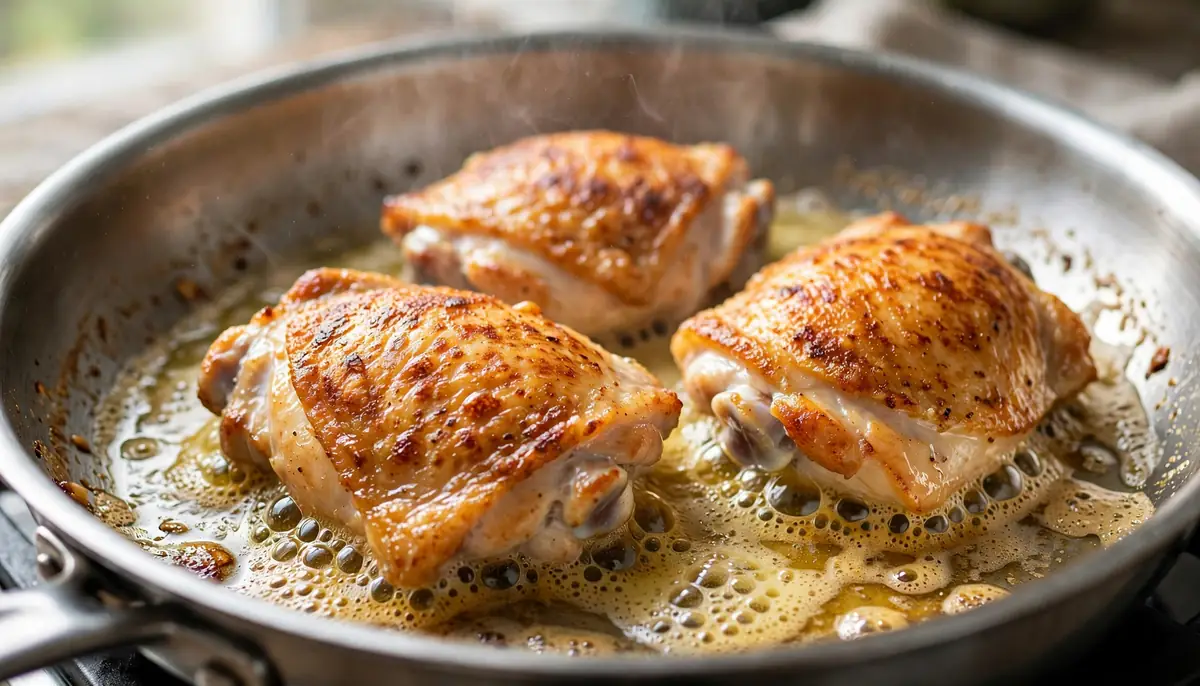
- Season and brown the chicken. Pat the pieces dry, season well, and lay them into a hot pan with the butter and oil. Don’t move them for a few minutes. You want a proper golden crust, not a pale grey one. The sound should be a steady, confident sizzle, not a frantic spit. Our pan-seared lamb loin chops guide covers the same hot-pan, don’t-move-it technique if you want more detail on getting a proper crust.
- Set the chicken aside. Lift it out onto a plate. It won’t be cooked through yet, and that’s fine.
- Soften the shallots. Turn the heat down to medium-low, add the shallots and garlic to the same pan, and cook until translucent and sweet-smelling, scraping up the browned bits as you go. This is where the sauce gets its backbone.
- Add the wine. Pour it in and let it bubble hard for a minute or two, until the sharp alcohol smell cooks off and you’re left with something rounder. If you’re using vermouth, same amount, same step, and it’ll smell faintly of herbs as it reduces.
- Add stock and cream. Stir them in, bring to a gentle simmer, then return the chicken and any resting juices to the pan.
- Poach gently. Lid on, low heat, until the chicken is cooked through (about 12 to 15 minutes for breasts, 20 to 25 for thighs). The sauce should thicken enough to coat the back of a spoon. If it’s still thin, take the lid off and let it reduce for a few minutes.
- Finish with tarragon. Stir the chopped tarragon through right at the end, off the heat. Cooking it hard dulls the flavour, so this is a last-second job.
The first time I made this, I added the tarragon with the cream and simmered it for ten minutes. The sauce went a muddy olive colour and tasted vaguely of hay. Fresh tarragon goes in at the end, always.
The Yum Yum Club · Kitchen Tested Recipe
Creamy Tarragon Chicken
Ingredients
4 servingsInstructions
-
1
Season and brown the chicken. Pat the pieces dry, season well, and lay them into a hot pan with the butter and oil. Don’t move them for a few minutes. You want a proper golden crust, not a pale grey one. The sound should be a steady, confident sizzle, not a frantic spit.
-
2
Set the chicken aside. Lift it out onto a plate. It won’t be cooked through yet, and that’s fine.
-
3
Soften the shallots. Turn the heat down to medium-low, add the shallots and garlic to the same pan, and cook until translucent and sweet-smelling, scraping up the browned bits as you go. This is where the sauce gets its backbone.
-
4
Add the wine. Pour it in and let it bubble hard for a minute or two, until the sharp alcohol smell cooks off and you’re left with something rounder. If you’re using vermouth, same amount, same step, and it’ll smell faintly of herbs as it reduces.
-
5
Add stock and cream. Stir them in, bring to a gentle simmer, then return the chicken and any resting juices to the pan.
-
6
Poach gently. Lid on, low heat, until the chicken is cooked through (about 12 to 15 minutes for breasts, 20 to 25 for thighs). The sauce should thicken enough to coat the back of a spoon. If it’s still thin, take the lid off and let it reduce for a few minutes.
-
7
Finish with tarragon. Stir the chopped tarragon through right at the end, off the heat. Cooking it hard dulls the flavour, so this is a last-second job.
Storage & Reheating
Storage: Cool leftovers quickly and keep them refrigerated in a sealed container for about two days, a cream sauce is best not pushed past that. Freezing is possible but the cream turns slightly grainy on thawing; freeze the chicken and wine base before the cream goes in and finish with cream on the night.
Reheating: Reheat gently in a pan over low heat with a splash of stock or water, stirring now and then. Avoid full-power microwaving, which splits the sauce; if you must, use short bursts on a low setting.
A note on chicken breast versus thigh
I’ve made this both ways, more than once. Thighs win on flavour, breasts win on speed and leanness, and I usually reach for thighs on a Sunday and breasts on a Wednesday.
Thighs are harder to overcook, stay juicy through a longer simmer, and their slightly darker flavour stands up to the tarragon better. They need roughly 20 to 25 minutes in the sauce. Breasts cook faster, around 12 to 15 minutes, but they dry out the moment you stop paying attention. If you’re using breasts, keep the heat properly low and check them early. If you’re using thighs, you can be a bit more relaxed. If you like the sound of a creamy thigh dish, our creamy sherry and thyme chicken thighs runs on much the same principle with a different herb.
Fresh versus dried tarragon
Fresh is better, full stop, but dried is perfectly decent and I keep a jar for the weeks when the supermarket has none. Use roughly a third of the amount, added earlier with the stock so it has time to soften. Fresh goes in at the very end. The FAQ below has the exact ratio.
Wine or vermouth?
Use dry vermouth 1:1 in place of white wine. It’s a touch more herbal and a touch sweeter, which suits tarragon beautifully. The real advantage is practical. An opened bottle of vermouth keeps for months in the fridge, whereas leftover wine lasts a few days at best before it turns to vinegar. I keep a bottle of vermouth in the door for exactly this reason.
Tips and Variations
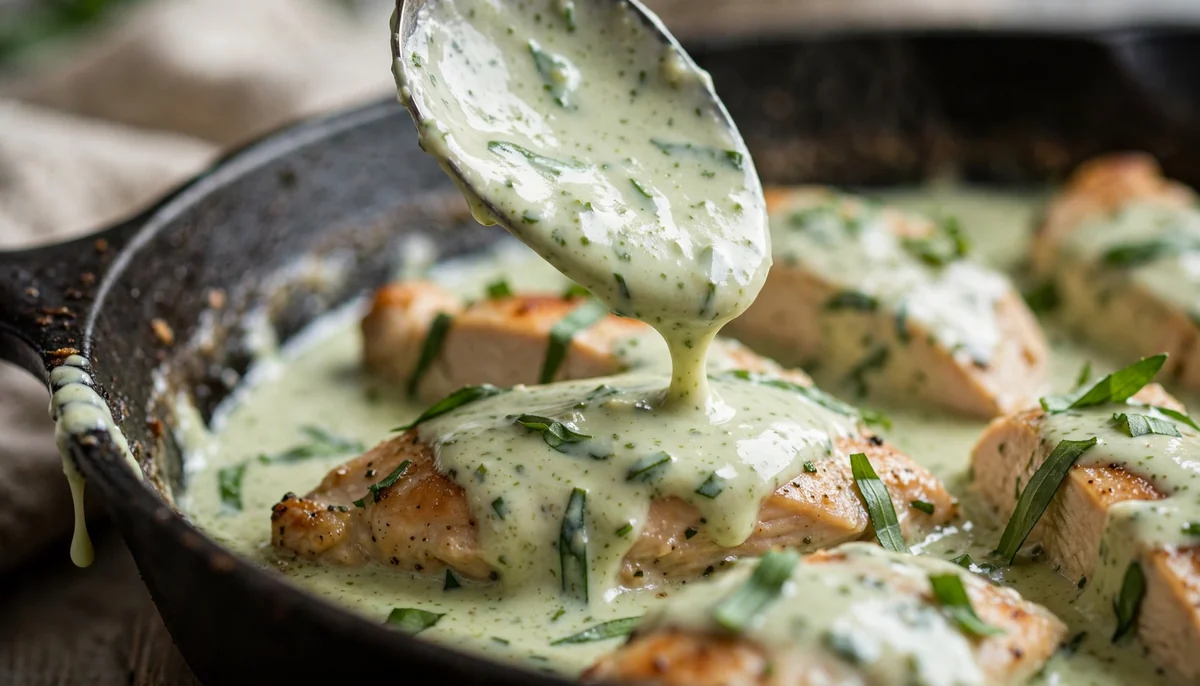
- Don’t let the cream boil hard. A gentle simmer keeps it smooth. A rolling boil is how you end up with a grainy sauce.
- The mustard and shallot variation. Stir a teaspoon of Dijon into the shallots before the wine goes in. It adds a gentle background heat and thickens the sauce slightly. I do this maybe half the time. Our chicken and ham pie leans on the same mustard-through-a-creamy-sauce trick if you want to see it worked into a different dish.
- Add a squeeze of lemon at the very end if the sauce tastes flat. Cream needs acid.
- A pinch of cayenne works if you want a little warmth behind the aniseed.
- If the sauce splits, take it off the heat and whisk in a tablespoon of cold cream or a knob of cold butter. It usually comes back.
What to Serve With Tarragon Chicken
Rice is my default. Long-grain, plain, slightly under-seasoned, because it’s there to carry sauce and nothing else. Egg noodles are the other strong choice, and they might be the best of the lot, because they tangle around the chicken and hold the cream in a way rice can’t quite manage.
Crusty bread is for a different mood. If you’ve reduced the sauce a little too far, or you’re eating straight from the pan on a Friday night, tear off a chunk and mop. It’s the least elegant option and the most satisfying.
Green beans, peas, or a sharp little rocket salad on the side will cut through the richness. Mashed potato also works if you want something more substantial. A simple green salad with a sharp vinaigrette does the same job if you’d rather skip the starch altogether, and it’s what I reach for most often on a weeknight. If creamy chicken dinners are your thing, our chicken and mushroom pie is worth bookmarking for the next cold night.
Storage and Reheating
Cool leftovers quickly and refrigerate them. I find they keep best for about two days in a sealed container, and I wouldn’t push it past that with a cream sauce.
Reheat gently, in a pan over low heat with a splash of stock or water to loosen the sauce, stirring now and then. Do not microwave-blast a cream sauce on full power, it’ll split and you’ll be left with oily curds. If you must use the microwave, do it in short bursts on a low setting. The same gentle-reheat rule applies to any cream-based bake, including our fish pie, which is built to be made ahead and warmed through the same careful way.
Freezing is possible but the cream will change texture on thawing, going slightly grainy. If you want to freeze it, do so before the cream goes in, freeze the chicken and wine base, then finish with cream on the night.
On safe temperature: chicken is done when it hits 70°C for 2 minutes, probed in the thickest part, or the FSA-equivalent of 75°C for 30 seconds. Don’t guess by colour alone. We’ve written more on this in our post on cooked chicken safe temperatures if you want the detail.
Tarragon Chicken FAQ
Can I make tarragon chicken without wine? Yes. Use the same volume of chicken stock with a squeeze of lemon, or a tablespoon of white wine vinegar topped up with stock. Vermouth is the better substitute if you have it, working 1:1 for wine.
Is dried tarragon a good substitute for fresh? It’s a decent one. Use about 1 teaspoon of dried for every tablespoon of fresh, roughly a third, and add it earlier in the cooking so it can soften and release its flavour.
Why did my cream sauce split? Almost always too much heat. Cream sauces need a gentle simmer, never a rolling boil. If it does split, pull it off the heat and whisk in a knob of cold butter or a spoonful of cold cream.
Can I make this ahead? You can cook it fully and reheat gently the next day, and it’s arguably better that way as the flavours settle. I wouldn’t keep it in the fridge much longer than two days with a cream sauce.
It’s a forgiving dish, this one. Get the pan hot enough to brown, keep the sauce below a boil, and add the tarragon at the last moment. Do that and you’ll have something that tastes like you tried much harder than you did.

You might also love
More in Chicken & Poultry
Sweet Pepper & Lemon Chicken Cacciatore
Updated: July 12, 2026 This post may contain affiliate links. As an Amazon Associate we earn from qualifying purchases. Today we fancied…
Read
Delicious Paleo Chicken Alfredo Recipes
Updated: July 12, 2026 This post may contain affiliate links. As an Amazon Associate we earn from qualifying purchases. Craving a creamy…
Read
Chicken Balls
Steve's own chicken balls recipe using thigh, double-fried for a shattering shell, with a sweet and sour sauce you taste and adjust…
Read
Chicken Manchurian: Crispy, Garlicky, Restaurant-Style at Home
Crispy fried chicken tossed in a garlicky, tangy-sweet sauce. Make it dry or gravy-style in under an hour, and see why chicken…
Read
General Tso Chicken
Updated: July 12, 2026 This post may contain affiliate links. As an Amazon Associate we earn from qualifying purchases. General Tso’s chicken…
Read
Easy Chicken and Leek Pie Recipe with Puff Pastry Lid
A comforting British chicken and leek pie with creamy filling, tender thighs, leeks, white wine and a golden puff pastry lid. An…
Read